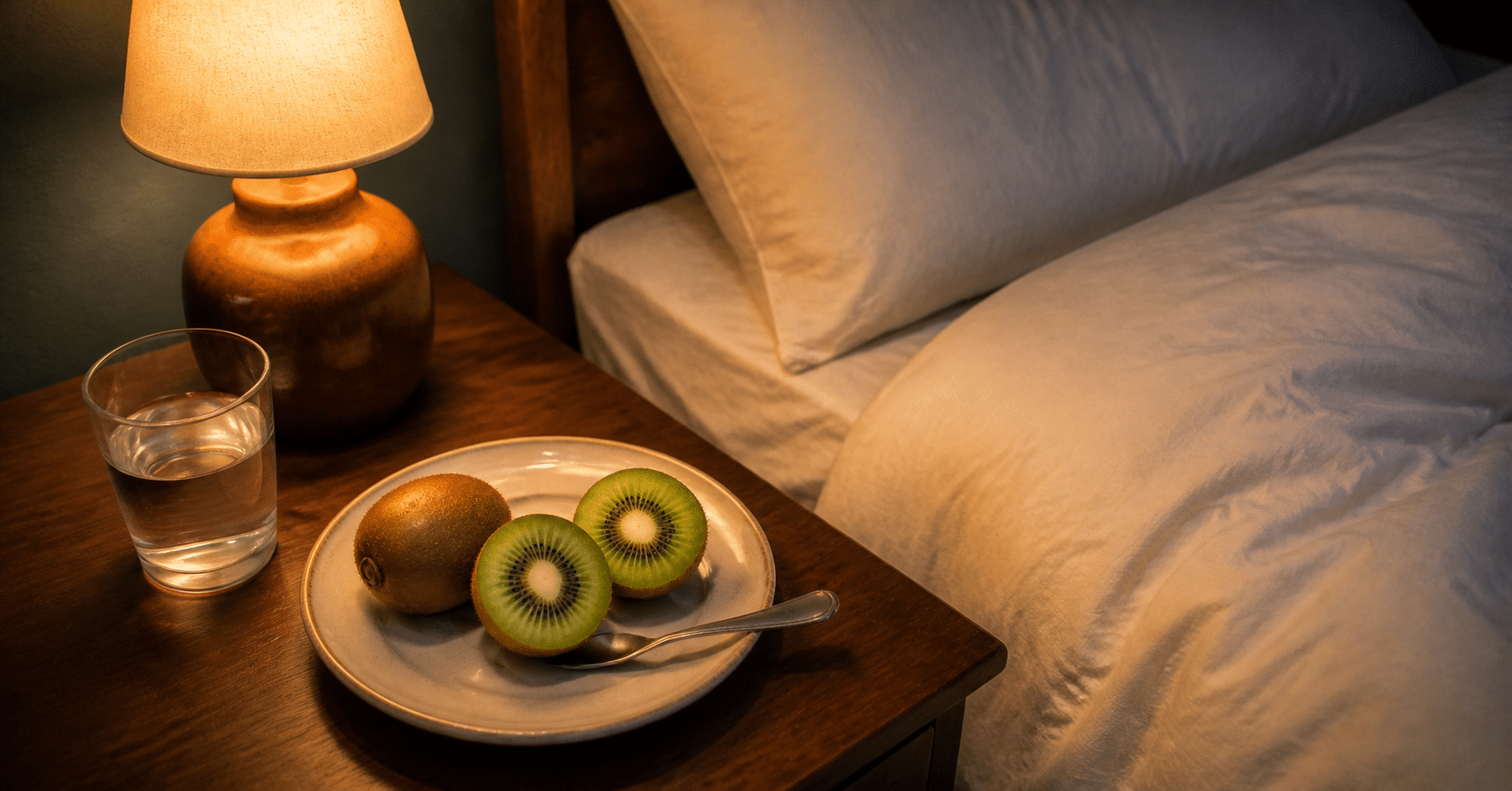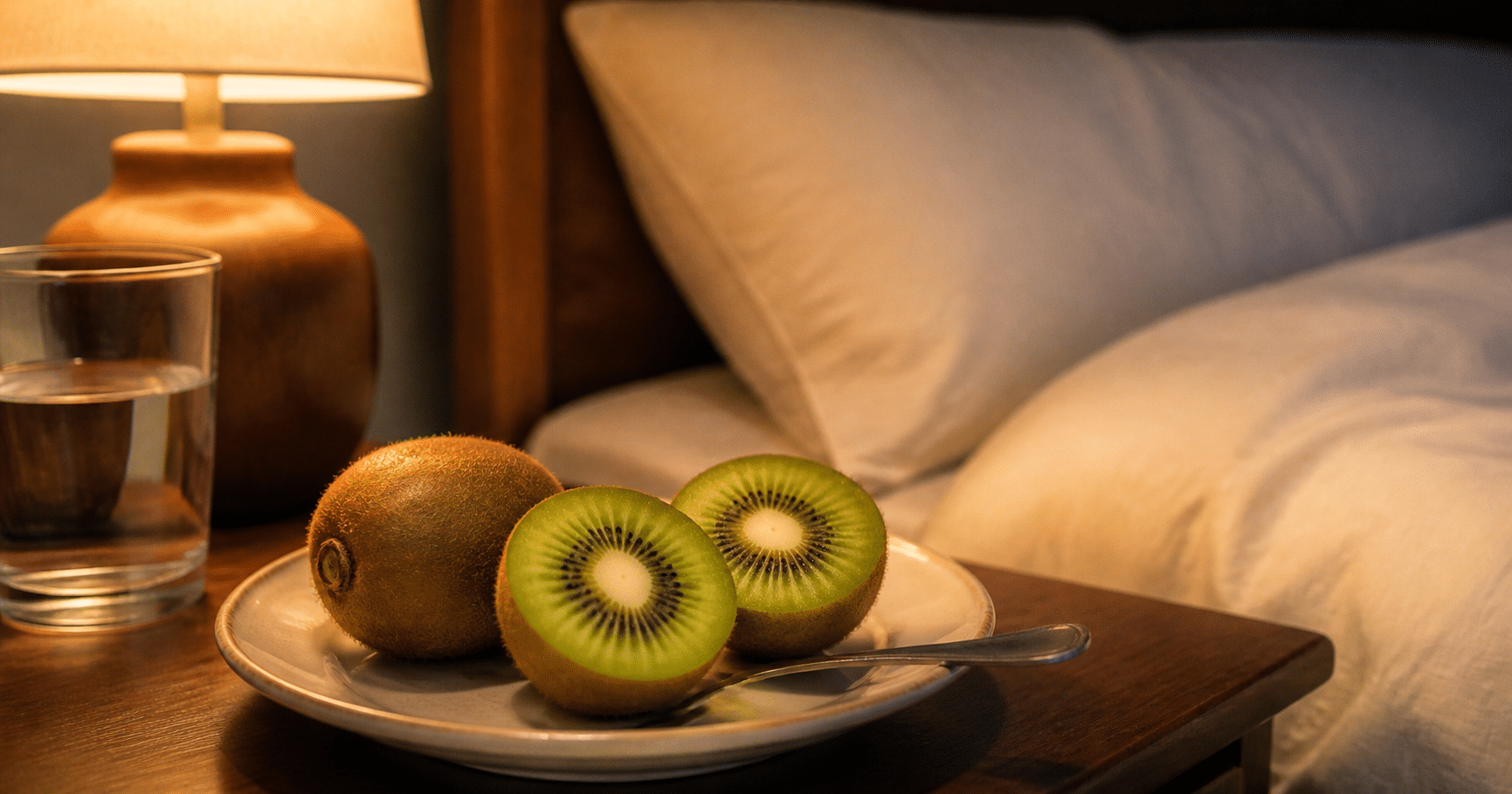
A kiwi before bed sounds almost too simple to be a sleep strategy. Yet a small human study found that adults who ate kiwifruit in the evening reported better sleep after several weeks, prompting a reasonable question: could this fuzzy, tart fruit make it easier to fall asleep or stay asleep?
The finding is intriguing, but it is not proof that kiwi treats insomnia. The study was small and had important limitations, and researchers still do not know which parts of the fruit—if any—might explain the results.
Here’s what the research actually suggests, what it can’t tell us, and a practical way to try kiwi as an evening snack without expecting it to work like a sleep medication.
What the Research Says About Kiwi and Sleep
The most frequently cited study, published in 2011 in the Asia Pacific Journal of Clinical Nutrition, followed 24 adults who reported sleep difficulties. Participants ate two kiwifruit about an hour before bedtime every night for four weeks. The researchers assessed sleep using diaries and activity-monitoring devices.
By the end, participants reported improvements in several measures, including how quickly they fell asleep and how long they slept. Some measurements from the activity monitors also improved. Those results are promising enough to justify further research—but the study did not include a comparison group eating a different snack or no snack. It was also small, so it cannot establish that kiwi caused the changes or that the results would apply broadly.
Kiwifruit contains nutrients and plant compounds that have been proposed as possible explanations, including serotonin, melatonin, antioxidants, and folate. But finding a compound in a food does not show that eating the food changes sleep in a meaningful way. For example, serotonin in food does not simply pass into the brain, and researchers have not identified a confirmed “sleep dose” of kiwi or a proven mechanism behind the study’s results.
Three Useful Takeaways From the Evidence
1. The early results are encouraging, not conclusive
The study measured changes over time in a small group, but without a control group it is difficult to separate a food’s effect from other influences. Sleep can shift with stress, daily routines, expectations, or changes in health. Larger, well-designed trials are needed to determine whether kiwi itself improves sleep.
2. Kiwi is a snack, not a substitute for sleep care
If you enjoy kiwi, eating it in the evening can be a reasonable part of a wind-down routine. But persistent trouble falling asleep, frequent waking, or daytime exhaustion deserves attention beyond a fruit-based remedy. Sleep apnea, pain, medication effects, depression, and other conditions can disrupt sleep and may need professional evaluation.
3. The study’s timing is a practical clue, not a prescription
Participants ate the fruit about an hour before bed. That gives curious readers a simple approach to try, but it does not prove that one hour is an ideal window—or that two fruits are necessary or appropriate for everyone. The study’s routine should not be mistaken for an established treatment schedule.
A Simple Evening Kiwi Snack
This is simply a convenient way to enjoy the fruit in the evening, not a therapeutic recipe. The original study used two kiwifruit before bed, but you can choose an amount that suits your appetite and dietary needs.
Ingredients
- 1 or 2 ripe kiwifruit
- Optional: a few spoonfuls of plain yogurt, if you want a more filling snack
Step-by-Step Instructions
- Rinse the kiwifruit under cool running water and pat dry.
- Cut off the ends. Peel with a small knife or vegetable peeler, or cut the fruit in half and scoop out the flesh with a spoon.
- Slice or dice the fruit and eat it plain. Add yogurt if desired.
- If you’re curious whether the routine suits you, have it as an evening snack and notice how you sleep over time. Keep other bedtime habits as consistent as possible so you’re not changing several things at once.
Prepare it just before eating for the freshest texture. If you prefer a snack earlier in the evening, there is no evidence that kiwi must be eaten immediately before lights out.
When an Evening Kiwi May Not Feel So Sleep-Friendly
Kiwi’s tartness can bother people who experience nighttime heartburn or reflux, especially if they eat shortly before lying down. If that applies to you, skip the bedtime timing or choose a snack you already know sits well. There is no need to push through discomfort for a possible benefit that has not been firmly established.
Also avoid kiwi if you have a known allergy to it. People with certain pollen or latex allergies can react to kiwi as well; if you have had a reaction to kiwi or related foods, follow your clinician’s guidance rather than testing it at bedtime.
For a more reliable foundation, pair any evening snack with habits that support sleep: keep a consistent wake time, make the bedroom comfortable and dark, and limit late-day caffeine if it affects you. A piece of fruit can fit into that routine, but it cannot compensate for every sleep disruptor.
The Bottom Line on Kiwi Before Bed
A small study suggests that eating kiwi in the evening may be associated with better sleep, but the evidence is too limited to say that the fruit reliably improves sleep or treats insomnia. Enjoy it if you like it and tolerate it well; think of it as a nutritious snack, not a guaranteed remedy.
The most useful test is whether it fits comfortably into your own routine—and whether your sleep improves without overlooking problems that need more than a change in snack.