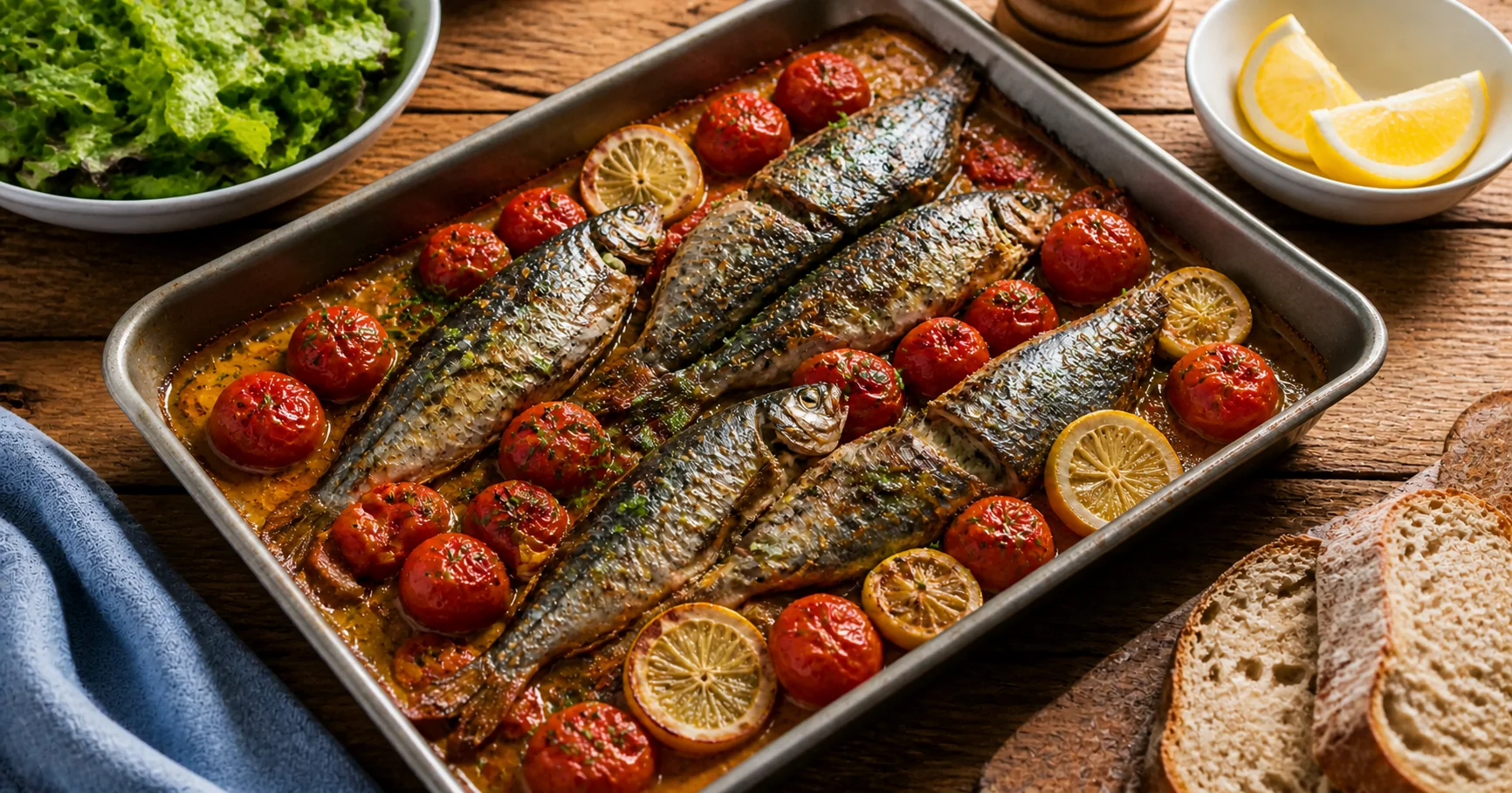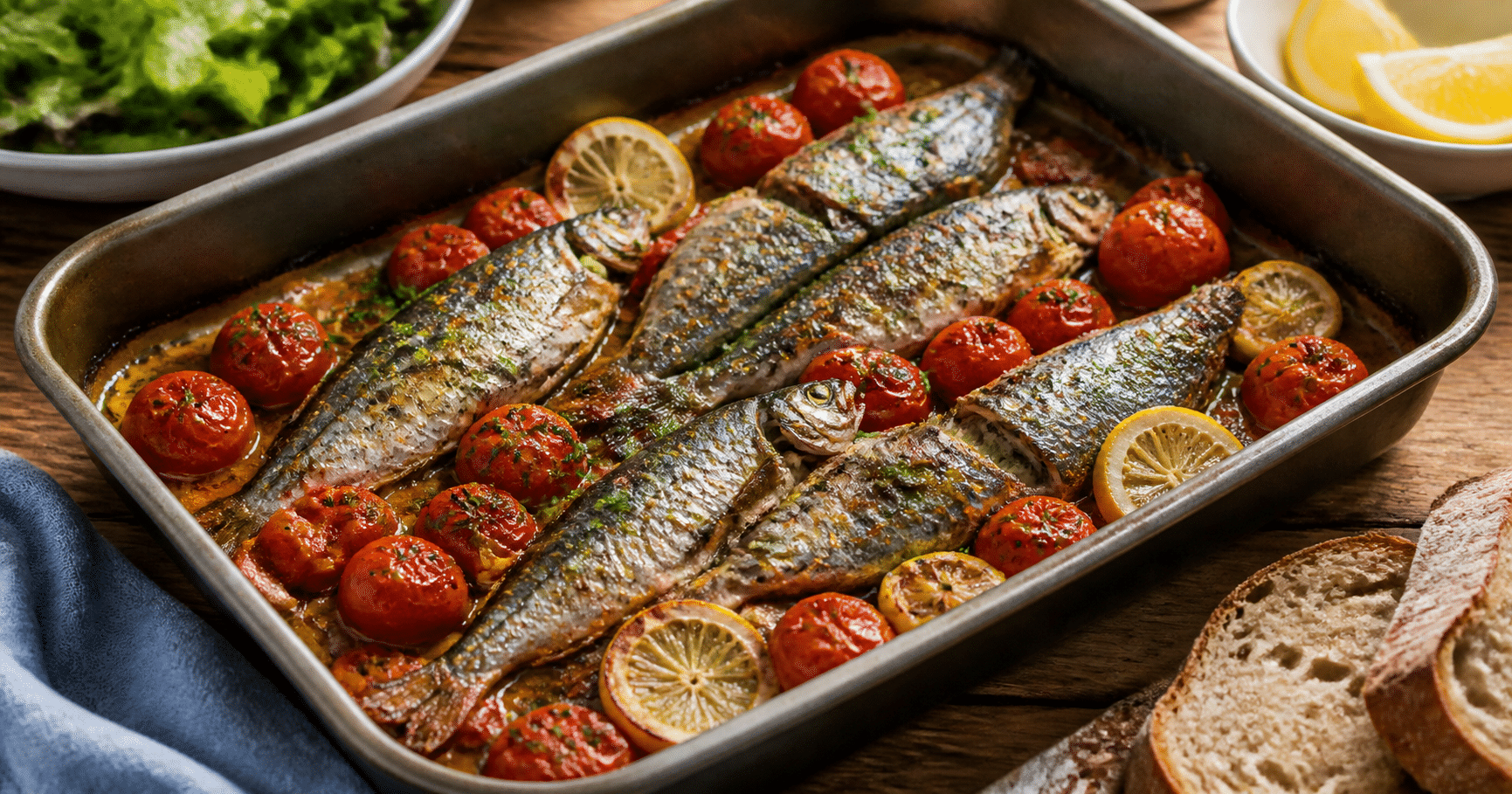
A pan of roasted sardines and tomatoes makes a satisfying dinner from a short list of ingredients. The sardines turn tender and savory, while the tomatoes soften into a bright, lightly sweet sauce that’s good for spooning over bread, potatoes, or grains.
Sardines are also among the seafood choices naturally rich in omega-3 fats, especially EPA and DHA. They’re small, generally low in mercury, and quick to cook—useful qualities for a weeknight meal.
One detail can make this dish easier to get right: tomatoes take longer to soften than small sardines take to cook. Giving the tomatoes a head start helps prevent overcooked fish, and the recipe below explains how to time both on one pan.
You’ll also find what the omega-3s contribute, how to choose sardines, and a few practical ways to serve the finished dish.
Why Sardines and Tomatoes Work Well Together
Sardines are oily fish, meaning their flesh contains marine omega-3 fats, including EPA and DHA. These fats are part of a balanced diet and are associated with heart health; eating sardines is not a treatment for a medical condition, and one meal can’t guarantee a particular health outcome.
Tomatoes bring a different nutritional contribution. They contain lycopene, a naturally occurring plant pigment, along with vitamin C and other nutrients. Roasting softens the tomatoes and concentrates their flavor as moisture evaporates. Olive oil helps carry the flavors through the pan, but there’s no need to assume that this particular combination produces a special medical effect.
The pairing is practical as well as flavorful: juicy tomatoes balance the sardines’ richness, and lemon and parsley add freshness. If you’re watching sodium, start with little or no added salt and taste before seasoning—especially if you’re using salted fish or serving the dish with salty bread or olives.
Three Details That Make This Dinner Better
1. Choose the right sardines
For this recipe, look for fresh sardines that have been cleaned and gutted. Ask the fish counter if you’re unsure; sardines are small, and the preparation can be a fiddly job at home. Frozen sardines work too if they’re fully thawed in the refrigerator and patted dry before cooking.
Sardines are generally a low-mercury seafood choice. If fresh fish isn’t available, canned sardines are convenient for other meals, but they won’t roast like fresh ones. They can also be saltier, so check the label if sodium is a concern.
2. Give the tomatoes a head start
Cherry or grape tomatoes release juices as they roast, creating an easy pan sauce. Start them in the oven first, then add the sardines. This simple timing adjustment lets the tomatoes blister and soften without leaving the fish in the heat too long.
3. Keep an eye on doneness
Sardines cook quickly, and their exact timing depends on their size and your oven. The flesh should look opaque and separate easily. For a clear food-safety check, the FDA recommends cooking fish to an internal temperature of 145°F; check the thickest part with a food thermometer when possible.
How to Make Roasted Sardines and Tomatoes
This recipe serves four as a main course with a side dish. It takes about 10 minutes to prepare and roughly 20 minutes to roast, depending on the size of the fish.
Ingredients
-
- 1½ pounds fresh sardines, cleaned and gutted
-
- 1 pint cherry or grape tomatoes
-
- 2 tablespoons olive oil, divided
-
- 2 garlic cloves, thinly sliced
-
- ¼ teaspoon freshly ground black pepper
-
- ¼ teaspoon salt, or less to taste
-
- 1 lemon, half sliced and half cut into wedges
-
- 2 tablespoons chopped fresh parsley
Step-by-Step Instructions
-
- Heat the oven to 425°F. Pat the sardines dry. Arrange the tomatoes in a baking dish or on a rimmed sheet pan, then toss them with 1 tablespoon of olive oil, the garlic, and a little pepper.
-
- Roast the tomatoes for 10 minutes, until they begin to soften and release some juice.
-
- Take the pan out of the oven. Nestle the sardines among the tomatoes, drizzle with the remaining olive oil, and season lightly. Tuck lemon slices around the fish.
-
- Return the pan to the oven and roast for about 8–12 minutes. Check early if the sardines are especially small. They’re ready when the flesh is opaque and reaches 145°F at its thickest point.
-
- Finish with parsley and a squeeze of lemon. Taste the tomatoes and pan juices before adding more salt.
Serve right away with crusty whole-grain bread to catch the juices, or spoon the fish and tomatoes over warm potatoes, brown rice, or white beans. A simple green salad makes the meal feel complete without competing with the bold flavor of the fish.
Make the Most of Leftovers and Substitutions
Fresh fish is best cooked and eaten promptly. Refrigerate leftovers within two hours in a covered container and use them within three to four days. Reheat gently until hot, or flake the cold sardines into a salad or onto toast; handle the fish carefully, since small bones may remain.
If sardines aren’t available, another small oily fish can work, but cooking time will vary with its size and thickness. For a no-fuss pantry alternative, serve canned sardines with freshly roasted tomatoes rather than putting them in the oven for the full cooking time.
For the best texture, dry the sardines before they go into the pan and check them before the tomatoes look completely finished. Fish keeps cooking briefly after it comes out of the oven.
A Simple, Flavorful Way to Eat More Seafood
Roasted sardines and tomatoes bring together omega-3-rich fish, soft, savory tomatoes, and bright lemon in a dinner that needs little more than a pan and a few minutes of attention. The key is to roast the tomatoes first and avoid leaving the sardines in the oven longer than necessary.
Keep the sides simple, taste before salting, and let the pan juices do some of the work. A good seafood dinner doesn’t need a complicated sauce.