Breakfast can be a good place to bring Mediterranean-style eating into an ordinary day: think whole grains, fruit or vegetables, beans, nuts, olive oil, and satisfying sources of protein. The pattern is less about a signature dish than the ingredients you choose regularly.
It is often described as “anti-inflammatory,” but no breakfast can switch inflammation off or treat a health condition. The more useful idea is to build meals around foods that provide fiber and unsaturated fats, while making highly refined grains, sugary add-ons, and processed meats less central.
One easy-to-miss detail: a bowl of oatmeal or a slice of whole-grain toast is not automatically a balanced meal. Pairing it with protein, healthy fats, or produce can make breakfast more sustaining and give the meal a closer fit with the Mediterranean pattern.
Below, you’ll find the reasoning behind that approach, several simple combinations, and a savory tomato-and-white-bean toast recipe that works even if eggs aren’t part of your morning routine.
What Makes a Mediterranean-Style Breakfast Different?
The Mediterranean pattern emphasizes vegetables, fruits, beans and lentils, whole grains, nuts, seeds, and olive oil. Fish, poultry, eggs, and dairy may also appear, while red and processed meats and sweets are eaten less often. It’s a flexible way of eating, not a strict menu or a requirement to cook traditional Mediterranean dishes.
Many foods in this pattern supply fiber, which supports digestion and helps feed gut microbes. Nuts, seeds, and olive oil provide mostly unsaturated fats; berries, greens, tomatoes, and herbs contribute a variety of plant compounds. These nutrients are part of an overall eating pattern associated in research with better health outcomes, but the effect of any one ingredient—or one breakfast—shouldn’t be overstated.
Studies of Mediterranean-style diets have also examined markers of inflammation, with results that can vary by study and by person. The practical takeaway is modest: choose a range of minimally processed plant foods and unsaturated fats often, rather than relying on a single “anti-inflammatory” food.
Build a Breakfast That’s Both Practical and Satisfying
1. Pair fiber with protein
Whole-grain bread, oats, and fruit can add fiber, but breakfast may feel more filling when you pair them with protein. Try plain Greek yogurt with berries and walnuts, or whole-grain toast with mashed beans and an egg. Protein needs vary, so these are meal ideas—not a prescribed amount.
2. Use olive oil, nuts, and seeds in everyday portions
Extra-virgin olive oil, walnuts, almonds, chia seeds, and ground flaxseed can add unsaturated fats and flavor. A drizzle of oil over savory toast or a small handful of nuts on oatmeal is usually more practical than treating these ingredients like supplements. They are nutritious but energy-dense, so a little can go a long way.
3. Make produce a regular part of the meal
Fruit is an easy addition to yogurt or oatmeal; vegetables can work just as well at breakfast. Sautéed spinach, tomatoes, peppers, or leftover roasted vegetables pair with eggs, beans, or toast. Fresh, frozen, and no-salt-added canned produce can all be useful options.
4. Watch the toppings and the defaults
Flavored yogurt, sweetened granola, pastries, and breakfast meats can add substantial added sugar, refined grains, or sodium. You don’t have to avoid them entirely. Instead, make plain yogurt, unsweetened oats, fruit, and whole-grain bread regular choices, then add sweetness or richer foods to suit your taste.
Tomato-and-White-Bean Breakfast Toast
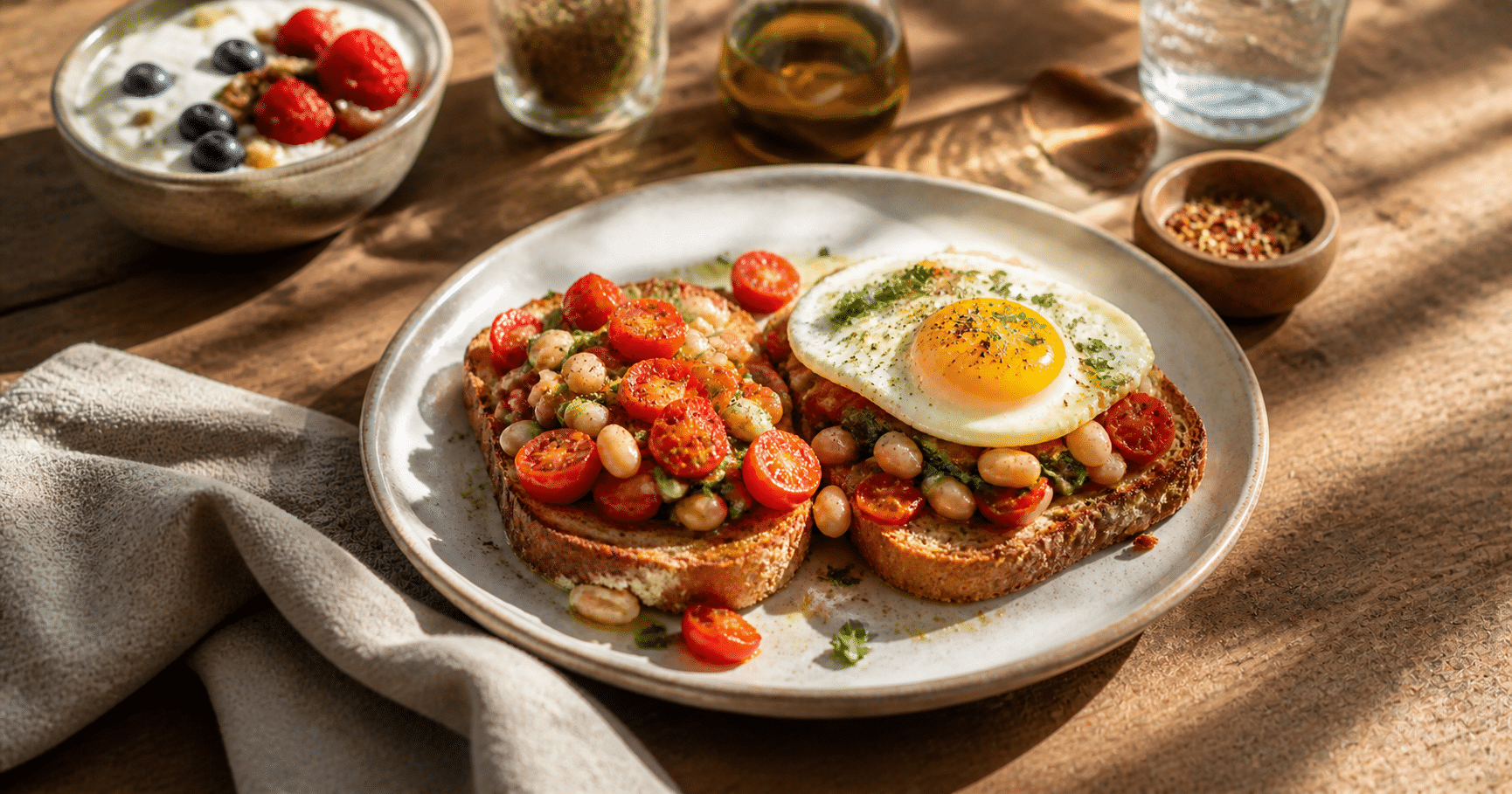
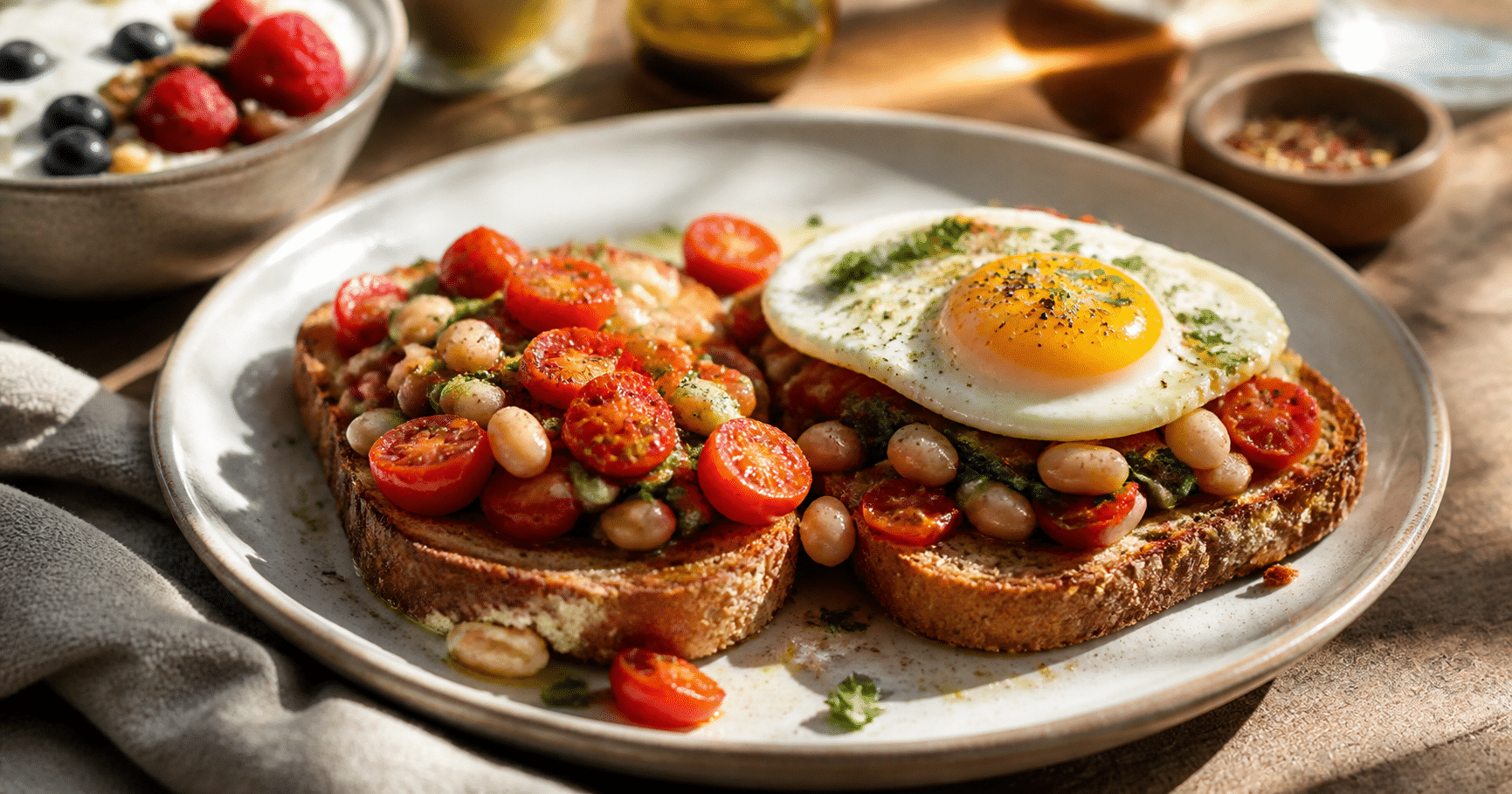
This warm, savory meal brings together whole-grain bread, beans, greens, and olive oil. It makes two servings and takes about 20 minutes. Add an egg if you like, or keep it plant-based.
Ingredients
- 1 tablespoon extra-virgin olive oil, plus a little more for serving if desired
- 1 small garlic clove, finely chopped
- 1 cup cherry tomatoes, halved
- 1 can (15 ounces) no-salt-added cannellini beans, rinsed and drained
- 2 cups baby spinach
- 1 teaspoon lemon juice, plus more to taste
- 2 slices whole-grain bread
- 2 eggs, optional
- Black pepper and chopped parsley or basil, to taste
Step-by-Step Instructions
- Warm the olive oil in a skillet over medium heat. Add the garlic and cook for about 30 seconds, stirring so it doesn’t brown.
- Add the tomatoes and cook for 3 to 4 minutes, until softened. Stir in the beans and cook for another 3 to 4 minutes, gently mashing a few beans with the back of a spoon to make the mixture creamy.
- Fold in the spinach and cook just until wilted. Stir in the lemon juice and black pepper. Taste before adding salt, especially if your beans or bread are salted.
- Toast the bread. If using eggs, cook them in a separate pan to your preferred doneness. Spoon the bean mixture over the toast and top with an egg, herbs, and a small drizzle of olive oil, if desired.
Serve right away. Refrigerate leftover bean mixture promptly in a covered container and use within three to four days; reheat until steaming. For a quicker morning, make the bean-and-tomato mixture ahead and toast the bread just before serving.
Easy Ways to Change Up the Week
A Mediterranean-style breakfast doesn’t need to look the same every morning. Rotate a few combinations according to what you have on hand:
- Sweet: Plain yogurt with berries, oats, and chopped walnuts.
- Warm: Oatmeal topped with sliced pear, ground flaxseed, and a spoonful of unsweetened nut butter.
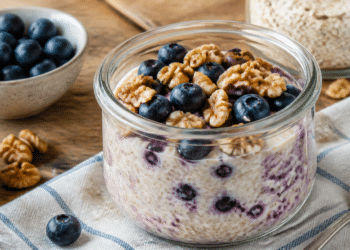
- Make-ahead: Overnight oats with milk or unsweetened fortified soy milk, fruit, and chia seeds.
- More savory: Whole-grain toast with avocado, sliced tomato, and a side of beans or an egg.
For packaged foods, check the ingredient list and nutrition facts rather than relying only on words such as “natural” or “whole grain” on the front. Choose products that suit your needs, especially if you’re watching sodium or added sugars.
A Small, Repeatable Morning Shift
A Mediterranean-style breakfast is built from familiar foods: whole grains, produce, beans, nuts, seeds, and olive oil, with protein added in a way that works for you. No single ingredient guarantees an anti-inflammatory effect, but a steady pattern of varied, minimally processed foods is a more useful goal than chasing a miracle breakfast.
Start with one change you’ll actually enjoy—berries on plain yogurt, beans on toast, or vegetables beside your eggs—and let breakfast become a little more plant-forward over time.