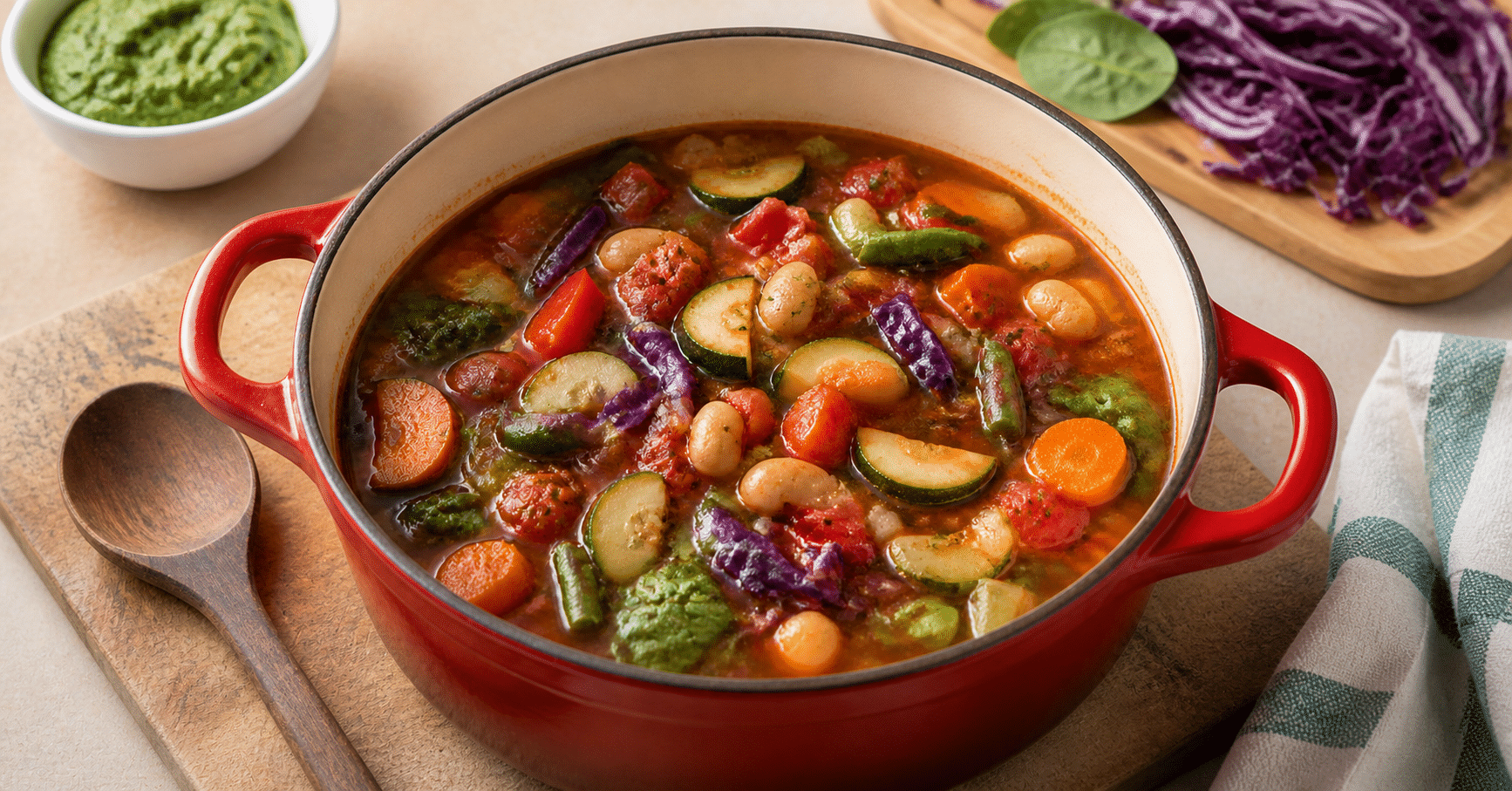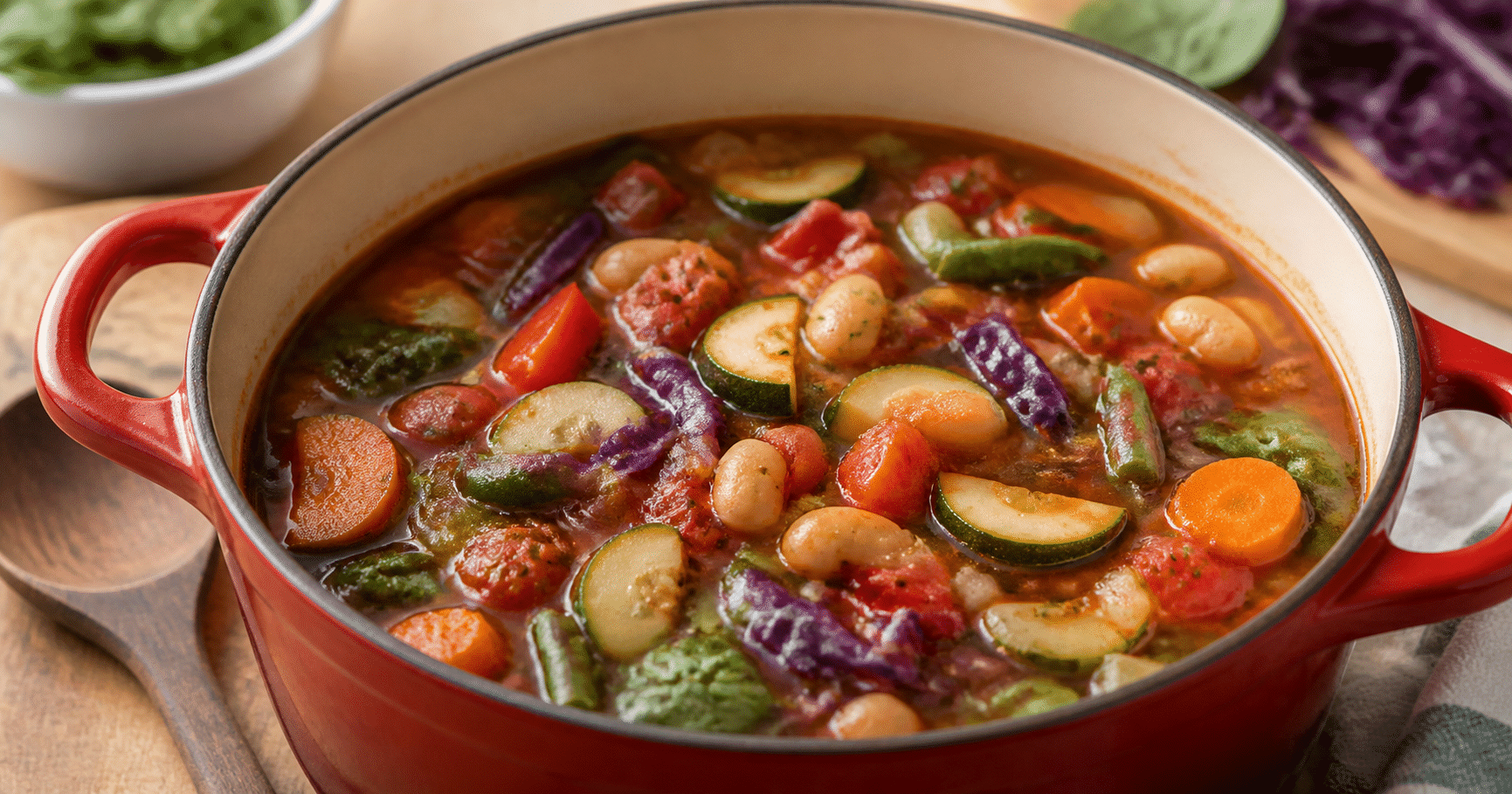
A pot of vegetable soup can turn the usual suspects in your crisper drawer into a colorful, satisfying meal. Carrots, tomatoes, cabbage, squash and leafy greens each bring a different flavor and texture—and using several kinds makes it easier to enjoy a broader mix of nutrients across the week.
But “rainbow” is a useful cooking cue, not a nutritional guarantee. Colorful vegetables are not automatically better than pale ones, and no single bowl can supply everything your body needs. The real advantage is variety, paired with a recipe that tastes good enough to make again.
This version uses everyday produce, canned beans and broth for a practical one-pot dinner. You’ll also find ways to adjust the texture, sodium and ingredients without losing the cheerful mix of colors.
Why a Rainbow of Vegetables Makes a Good Everyday Soup
Vegetables contain different combinations of fiber, vitamins, minerals and naturally occurring plant compounds. Orange carrots, for example, provide beta-carotene, which the body can convert to vitamin A; tomatoes contain lycopene; and leafy greens contribute nutrients such as folate and vitamin K. These are examples, not a checklist that every meal must meet.
Cooking softens vegetables and makes them easier to chew, while the broth keeps much of what leaches out of the produce in the meal. A little olive oil adds richness and helps the body absorb fat-soluble compounds, including beta-carotene. Cooking tomatoes can also make lycopene more available for absorption, though that does not mean tomato soup is a treatment or a guarantee of a particular health result.
Beans make this soup more filling by adding plant protein and fiber. The recipe is flexible, too: frozen vegetables work well, and the exact colors can change with the season or what needs using up.
Three Smart Reasons to Build the Pot Around Variety
1. Different colors bring different plant compounds
Red, orange, green and purple produce can contain different naturally occurring pigments and plant compounds. Eating a range is a straightforward way to vary what goes into your meals; there is no need to chase a perfect spectrum at every sitting.
2. Beans add staying power
White beans contribute fiber and plant protein, giving the soup more substance than vegetables and broth alone. If you prefer a lighter bowl, use half a can; for a heartier meal, add the full amount or serve with whole-grain bread.
3. A soup pot can help reduce food waste
Soup is forgiving. A slightly soft bell pepper, leftover cabbage or a handful of frozen green beans can all find a place in the pot. Add firm vegetables early and delicate greens near the end so they do not cook down more than you like.
How to Make Rainbow Vegetable Soup
This recipe makes about six servings, with tender vegetables, a tomato-rich broth and beans for extra substance. Allow about 15 minutes for preparation and 35 minutes for cooking.
Ingredients
- 1 tablespoon olive oil
- 1 medium yellow onion, chopped
- 2 medium carrots, sliced
- 1 red bell pepper, chopped
- 2 cloves garlic, minced
- 1 teaspoon dried Italian seasoning
- 1 medium zucchini, chopped
- 1 cup chopped purple cabbage
- 1 cup chopped green beans, fresh or frozen
- 1 can (14.5 ounces) no-salt-added diced tomatoes, with their juices
- 6 cups low-sodium vegetable broth
- 1 can (15 ounces) white beans, rinsed and drained
- 2 cups baby spinach, roughly chopped
- Black pepper, to taste
- 1 tablespoon lemon juice, plus more to taste
Step-by-Step Instructions
- Warm the olive oil in a large soup pot over medium heat. Add the onion and carrots and cook for 5 minutes, stirring now and then, until the onion begins to soften.
- Stir in the bell pepper, garlic and Italian seasoning. Cook for about 1 minute, just until fragrant.
- Add the zucchini, cabbage, green beans, tomatoes and broth. Bring the mixture to a gentle boil, then lower the heat, cover partly and simmer for 20 to 25 minutes, until the vegetables are tender but not falling apart.
- Stir in the rinsed beans and simmer for 5 minutes. Add the spinach and cook for another 1 to 2 minutes, until wilted.
- Turn off the heat. Stir in the lemon juice and black pepper, then taste. Add more lemon if the soup needs brightness. If desired, season with a small amount of salt, keeping in mind that broth and canned ingredients can vary in sodium.
Serve as is, or top each bowl with a spoonful of plain yogurt, grated Parmesan or chopped herbs. Refrigerate leftovers promptly in a covered container and use within 3 to 4 days; freeze portions for longer storage, allowing room in the container for expansion.
Easy Ways to Make It Your Own
Use what you have rather than shopping for every listed vegetable. Sweet potato can replace carrots, chopped kale can stand in for spinach, and frozen corn adds a yellow note. If you use a vegetable that cooks quickly, such as peas, stir it in during the last few minutes.
For a thicker soup, mash some of the beans against the side of the pot or blend one or two cups and return them. For more protein, add cooked chicken or another can of beans. If you are watching sodium, choose low-sodium broth, rinse canned beans and taste before adding salt.
Small flavor fix: If the soup tastes flat, try a squeeze of lemon before reaching for more salt. Acidity can make the flavors seem brighter without changing the recipe’s basic character.
A Colorful Pot, Not a Complicated Plan
Rainbow vegetable soup is a practical way to bring several familiar vegetables into one meal, with beans making it more satisfying and broth keeping preparation simple. The colors are a reminder to vary your produce—not a promise of a cure or a substitute for an overall balanced diet.
Keep the recipe flexible: start with what is in the kitchen, add sturdy vegetables first and finish with greens and a little lemon. A useful everyday soup is less about a perfect rainbow than making good food easy to enjoy.