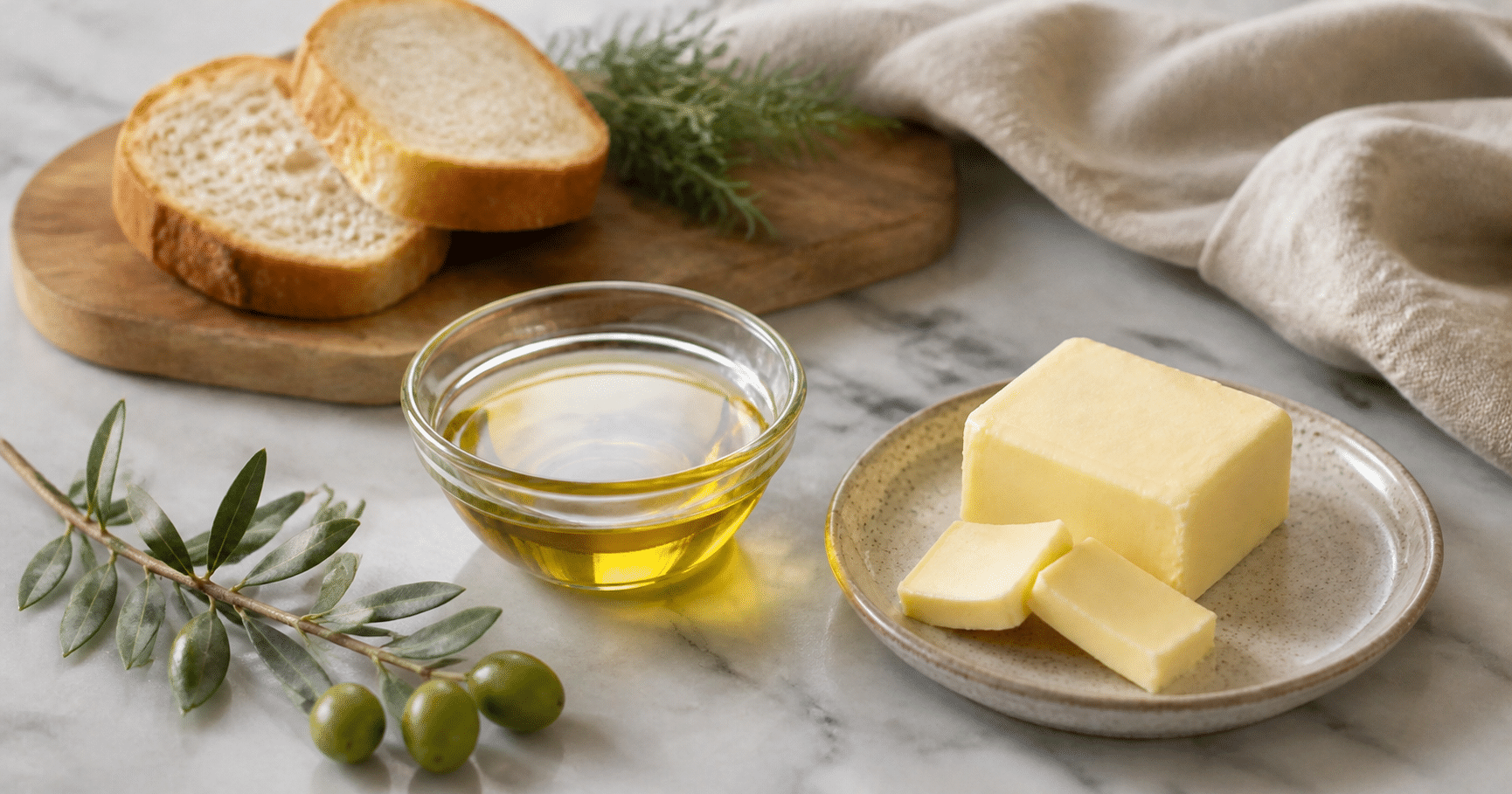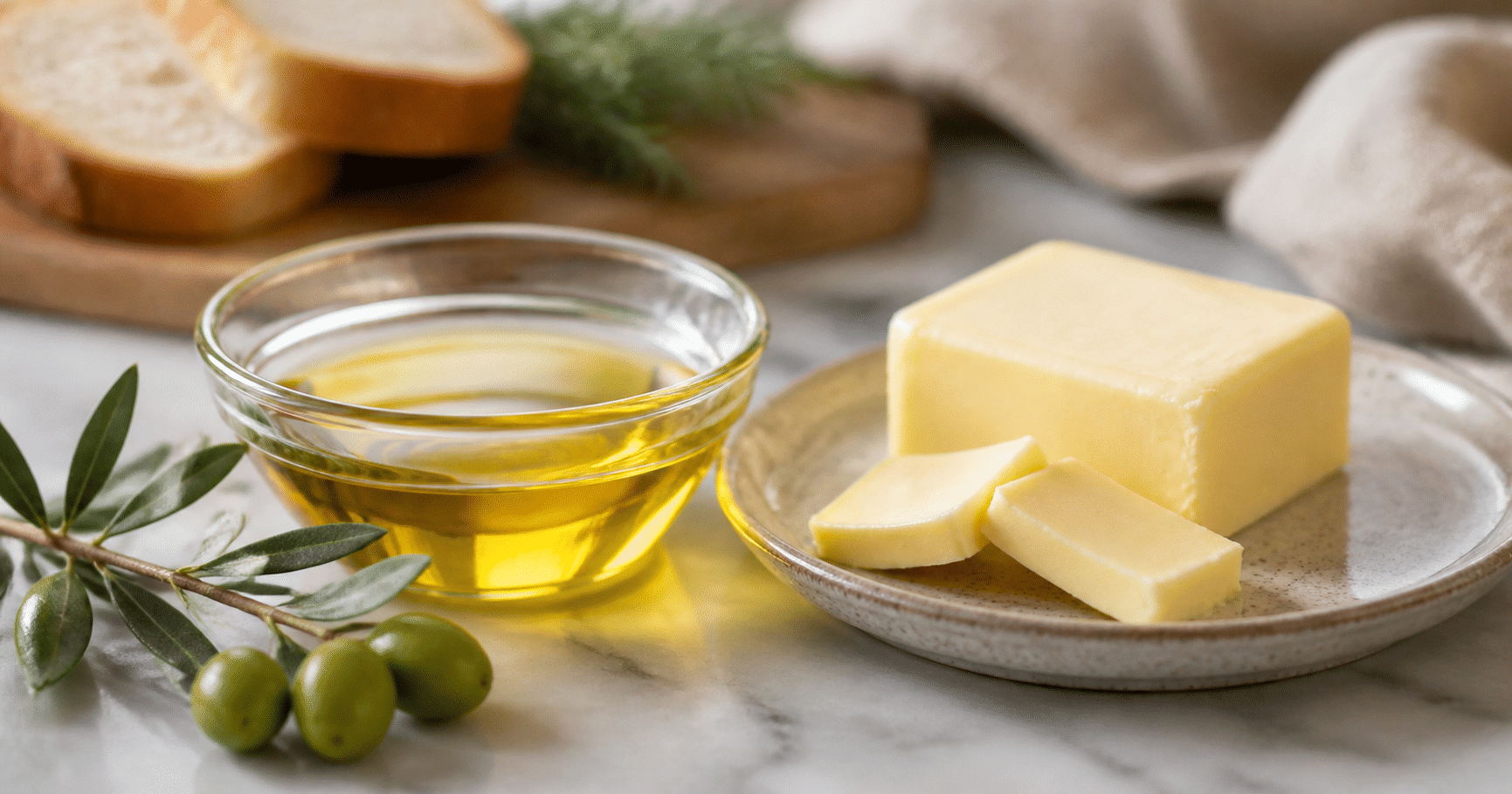
Butter makes toast taste like breakfast; extra-virgin olive oil brings peppery fruitiness to vegetables, beans and bread. If you are choosing between them for everyday cooking, the decision is about more than flavor: their fats differ, and those differences can affect blood cholesterol.
But the comparison is easy to oversimplify. Olive oil is not a medicine, butter is not automatically off-limits, and adding oil to a meal is not the same as using it in place of butter. The swap matters.
Research generally favors replacing some saturated fat with unsaturated fat, including the kind found in extra-virgin olive oil. Here is what that evidence does—and does not—say, along with practical ways to use the oil without letting portions creep up.
Why olive oil and butter affect the diet differently
Extra-virgin olive oil is made from olives and is rich in monounsaturated fat, particularly oleic acid. It also contains smaller amounts of other fats and naturally occurring plant compounds, including polyphenols. Butter is a dairy fat with a much higher proportion of saturated fat; salted butter also contributes sodium.
Replacing saturated fat with unsaturated fat can help lower LDL cholesterol, often called “bad” cholesterol. That is one reason major dietary guidance encourages choosing liquid plant oils over fats high in saturated fat. The benefit depends on what the oil replaces: swapping olive oil for butter is different from simply adding extra calories to a meal.
Research on olive oil and heart health includes studies of whole dietary patterns, not just head-to-head tests of oil versus butter. In the Spanish PREDIMED trial, a Mediterranean-style diet supplemented with extra-virgin olive oil was linked with fewer major cardiovascular events among adults at high risk. The trial supports the value of that eating pattern; it does not prove that olive oil alone was responsible or that a spoonful of oil offsets an otherwise unbalanced diet.
What the research suggests in everyday terms
1. A replacement is more meaningful than an addition
If you cook eggs in olive oil instead of butter, or dress vegetables with oil instead of a butter-based sauce, you are making a direct substitution. Pouring olive oil over food while continuing to use the same amount of butter may increase total calories without delivering the same dietary trade-off.
2. The type of fat matters more than a “natural” label
Both butter and olive oil are familiar, minimally processed foods, but “natural” does not mean nutritionally interchangeable. Butter’s saturated fat can raise LDL cholesterol in many people, while replacing some of it with unsaturated fat tends to improve the cholesterol profile. Individual responses vary, so people monitoring cholesterol can use their test results and clinician’s advice to guide choices.
3. Extra-virgin olive oil is useful for cooking, not just drizzling
It is a common mistake to save extra-virgin olive oil only for cold dishes. It can be used for sautéing, roasting and many everyday recipes. Its aroma and flavor may become milder with heat, and it can smoke if overheated, but ordinary home cooking does not automatically make it unsuitable.
4. Neither choice is calorie-free
Olive oil and butter are both concentrated fats, with roughly 100 to 120 calories per tablespoon. A generous pour can add up quickly, even when the oil is the more favorable choice for replacing saturated fat. Measuring once or twice can help you learn what a tablespoon looks like in your pan.
A simple way to use more olive oil
A quick lemon-and-olive-oil dressing is an easy place to make the switch. It works on greens, cooked vegetables, white beans or grain bowls, and lets the oil’s flavor come through without requiring a complicated recipe.
Ingredients
-
- 3 tablespoons extra-virgin olive oil
-
- 1 tablespoon fresh lemon juice
-
- 1 teaspoon Dijon mustard
-
- A pinch of salt and a few grinds of black pepper
Step-by-Step Instructions
-
- Whisk the lemon juice and mustard together in a small bowl.
-
- Slowly whisk in the olive oil until the dressing looks lightly thickened.
-
- Season with salt and pepper, then taste and adjust the lemon or seasoning.
-
- Toss with vegetables or greens just before serving. Refrigerate leftovers in a sealed container and use within a few days; the oil may firm up when cold, so let it sit briefly at room temperature and shake or whisk before using.
For warm dishes, try using a measured amount of olive oil to sauté vegetables, roast potatoes or finish soup. For baking, the swap is less predictable: butter contributes water and milk solids as well as fat, so replacing it cup-for-cup can change a recipe’s texture. Follow a tested olive-oil version when the result matters.
How to choose and store extra-virgin olive oil
Extra-virgin oil is valued for its flavor and for being less refined than many other oils. Look for a bottle that protects it from light, and store it closed in a cool, dark cupboard rather than beside a hot stove. Heat, air and light gradually dull its freshness.
Choose a flavor you enjoy. A peppery or bitter note can be normal, while a stale, waxy or crayon-like smell may signal that the oil has aged poorly. There is no need to buy the most expensive bottle for every recipe; a flavorful oil is especially noticeable in dressings and as a finishing drizzle.
The practical takeaway
For most people, the research-backed choice is not “olive oil at every meal” or “never eat butter.” It is to use extra-virgin olive oil more often in place of butter, especially in everyday cooking and dressings, while keeping portions sensible.
Butter can still have a place for flavor or in a favorite recipe. The lasting habit is simple: make unsaturated fats your usual cooking choice, and let butter be an occasional accent rather than the default.