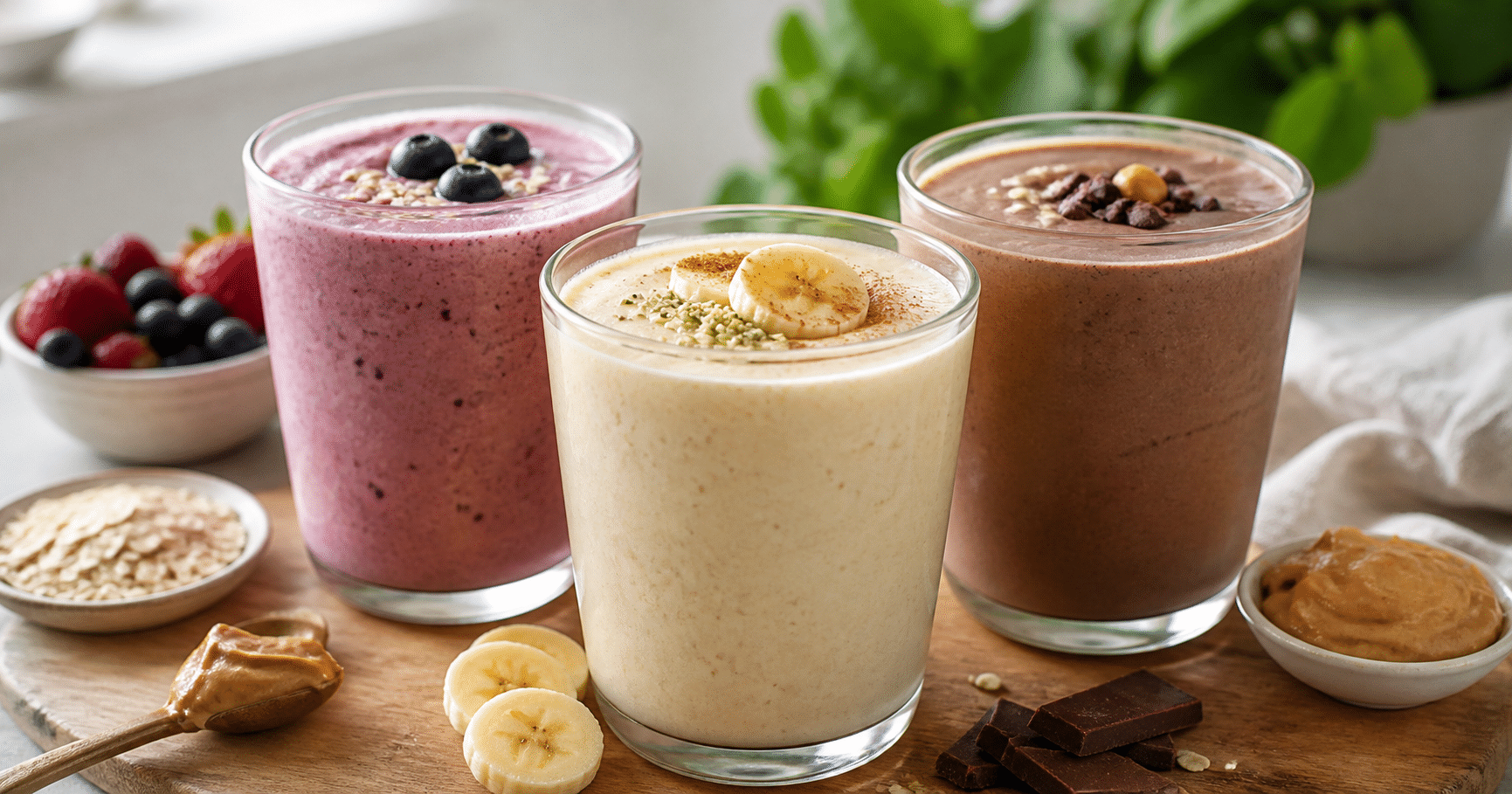
A smoothie can look wholesome and still contain very little protein. Fruit, juice and a handful of greens make a refreshing blend, but they may not keep you satisfied for long—especially if the drink is meant to stand in for breakfast.
The fix doesn’t have to come from a tub of protein powder. Greek yogurt, cottage cheese, milk, soy foods, nuts and seeds can all add protein, along with flavor and useful texture.
These three recipes use familiar ingredients and provide roughly 20 to 30 grams of protein per serving, depending on the brands and amounts you use. You’ll also find out why a smoothie’s protein estimate is only part of the picture—and how to make a blend that tastes like food, not a supplement.
What Makes a Smoothie High in Protein?
Protein comes from amino acids, which the body uses to build and maintain tissues and to make substances such as enzymes. In a smoothie, the main contributors are usually dairy, soy, nuts, seeds or legumes—not fruit. A banana or cup of berries adds valuable flavor and nutrients, but only a small amount of protein.
There is no single official cutoff that makes a smoothie “high-protein.” For these recipes, the goal is a substantial serving—about 20 grams or more—without protein powder. That amount is not a prescription or a daily target; individual needs vary with body size, health, activity and overall diet.
Protein-rich ingredients also affect texture and fullness. Greek yogurt makes a thick, tangy blend; cottage cheese turns creamy when blended; and silken tofu gives a dairy-free smoothie a soft texture. Oats, fruit and seeds contribute fiber, but blending does not remove their fiber. It does, however, make a drink quick to consume, so some people may feel more satisfied eating a similar meal with a spoon.
Three Real-Food Ingredients That Do the Heavy Lifting
1. Greek yogurt brings a lot in a small scoop
Plain Greek yogurt is a convenient base, and its protein content is typically higher than that of regular yogurt. Check the label: amounts vary by brand and serving size. Choose plain if you want to control sweetness, then add fruit, cinnamon or a little honey to taste.
2. Soy foods make dairy-free blends more substantial
Unsweetened soy milk and tofu both contribute protein. Soy milk is generally a more protein-rich plant beverage than almond or rice milk, though labels differ. Silken tofu blends smoothly, while soft or firm tofu can work if your blender is powerful enough.
3. Nuts and seeds add more than protein
Peanut butter, chia seeds and hemp hearts bring protein along with fat, flavor and, in some cases, fiber. They are useful additions, but a spoonful usually isn’t enough to make fruit and juice into a high-protein drink by itself. Use them to complement a stronger base such as yogurt, milk, soy milk or tofu.
Three High-Protein Smoothies Without Protein Powder
Each recipe makes one generous smoothie. Protein figures are estimates based on typical products; check your own labels for a more accurate count. Use frozen fruit for a thicker drink, or add a little more milk if the blender needs help.
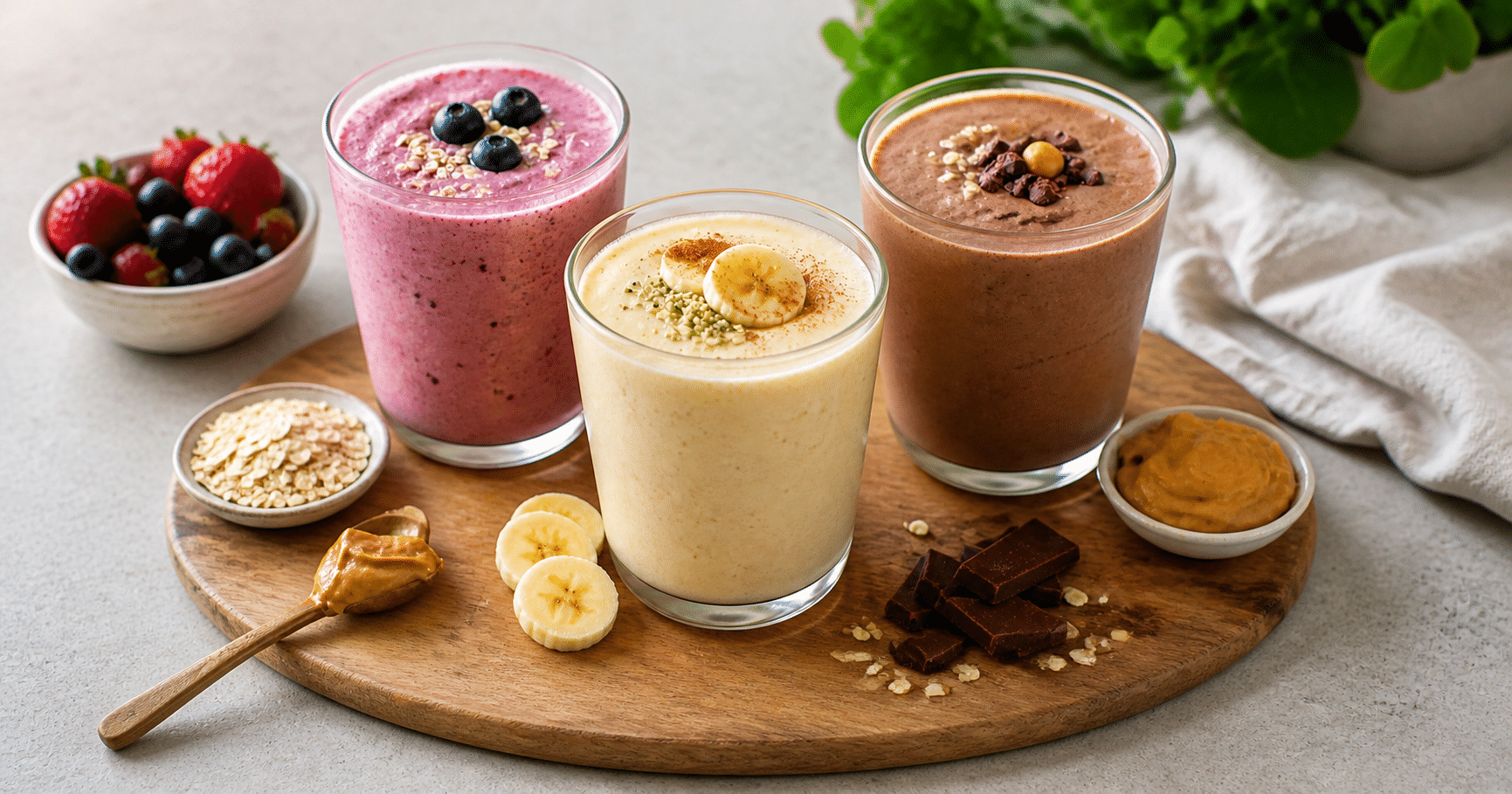
Berry-Oat Greek Yogurt Smoothie
-
- 3/4 cup plain Greek yogurt
-
- 1 cup milk (dairy or unsweetened soy)
-
- 1 cup frozen mixed berries
-
- 1/4 cup rolled oats
-
- 1 tablespoon peanut butter
-
- Optional: a pinch of cinnamon
Approximate protein: 30 grams with dairy milk; the total may differ with your yogurt and milk.
Banana-Cinnamon Cottage Cheese Smoothie
-
- 1/2 cup cottage cheese
-
- 1 cup unsweetened soy milk
-
- 1 small ripe banana
-
- 1 tablespoon hemp hearts
-
- 1/4 teaspoon cinnamon
-
- Optional: a few ice cubes
Approximate protein: 22 to 25 grams, depending mainly on the cottage cheese and soy milk.
Chocolate-Peanut Butter Tofu Smoothie
-
- 1/2 cup silken tofu
-
- 1 cup unsweetened soy milk
-
- 1 tablespoon peanut butter
-
- 1 tablespoon unsweetened cocoa powder
-
- 1 small frozen banana
-
- Optional: 1 teaspoon maple syrup, or to taste
Approximate protein: 18 to 22 grams, depending on the tofu and soy milk. For a little more, add another tablespoon of hemp hearts.
Step-by-Step Instructions
-
- For any recipe, pour the milk into the blender first. Add the yogurt, cottage cheese or tofu, followed by the fruit, oats, seeds and flavorings.
-
- Blend until smooth, usually 30 to 60 seconds. Stop and scrape down the sides if ingredients stick; add milk a tablespoon at a time if the mixture is too thick.
-
- Taste before sweetening. Ripe banana and berries may provide enough sweetness on their own. Pour into a glass and serve promptly.
For the best texture, blend oats thoroughly and use unsweetened milk if you’d rather manage added sugar yourself. If dairy causes discomfort, try lactose-free milk and yogurt; for a dairy-free version, use soy milk and tofu. Almond milk can work in a recipe, but it generally contributes less protein than soy milk.
Make the Protein Count Work for Your Day
A smoothie can be breakfast, a snack or part of a meal, but it doesn’t automatically replace a balanced plate. If you’re hungry soon after drinking one, try eating it more slowly, making it thicker, or pairing it with something to chew. Fruit, oats and seeds add fiber, while the protein source makes the drink more substantial.
Protein estimates can shift considerably between brands. Greek yogurt and cottage cheese labels are especially worth checking, and sweetened flavored products may add sugar without much extra protein. People who have been advised to limit protein—for example, because of certain kidney conditions—should ask their clinician or dietitian how these ingredients fit their plan.
A Better Smoothie Starts With Its Base
To make a filling smoothie from real foods, start with a protein-rich base such as Greek yogurt, cottage cheese, milk, soy milk or tofu. Add fruit for flavor, then use oats, nuts or seeds for texture and staying power.
The simplest upgrade is often the one that changes the whole drink: choose the base before you reach for the fruit.