Choosing between egg whites and whole eggs can look like a simple calorie decision. One gives you lean protein; the other includes the yolk, where much of an egg’s flavor and nutrition live. For many people, the better breakfast depends less on a strict rule and more on what they want from the meal.
The yolk adds calories and fat, but it also supplies nutrients that egg whites contain in little or none. Meanwhile, using only whites can be a practical way to make a larger scramble with fewer calories—though it is not automatically more filling or more nutritious overall.
Here’s what actually changes when you leave the yolk out, how cholesterol fits into the picture, and a simple way to combine whole eggs and whites for a balanced breakfast.
What Changes When You Remove the Yolk?
A large whole egg has roughly 70 to 80 calories and about 6 grams of protein, though size and brands vary. Most of its protein is in the white, but the yolk contributes some too. A large white has about 17 calories and 3½ to 4 grams of protein, with almost no fat.
The yolk is where you’ll find nearly all the egg’s fat and cholesterol, along with nutrients such as choline, vitamin B12, vitamin D, and vitamin A. Whites provide protein and some other nutrients, including riboflavin and selenium, but they do not replace the full nutrient package of a whole egg.
In short, swapping a whole egg for whites lowers calories, fat, and cholesterol—but also removes nutrients and some flavor. It does not make the protein more “complete”: both the white and yolk contain high-quality protein, and a whole egg provides both parts together.
Four Practical Differences to Keep in Mind
1. Egg whites offer more protein for the calories
If your main aim is to increase protein without adding much energy, whites are useful. You can add them to a whole egg, fold them into a vegetable scramble, or use them to make an omelet larger without adding another yolk.
But a whole egg still provides protein, and the yolk adds fat that can make a meal more satisfying for some people. Hunger also depends on what else is on the plate—such as vegetables, whole-grain toast, or fruit—not just the egg choice.
2. The yolk carries much of the nutrition
Choline, which supports normal cell and nervous-system function, is concentrated in the yolk. The yolk also supplies fat-soluble vitamins and other nutrients. If you routinely discard every yolk, you give up those contributions along with the calories.
That doesn’t mean every breakfast needs a whole egg. It means the trade-off is worth recognizing, especially if eggs are a regular part of your diet and you rely on them for more than protein.
3. Dietary cholesterol is not the whole heart-health story
Egg yolks contain dietary cholesterol, but the amount of cholesterol in a food does not translate directly into the same change in blood cholesterol for everyone. The overall eating pattern matters, including saturated fat, fiber-rich foods, and what the eggs are served with.
People with high LDL cholesterol, diabetes, or specific advice from a clinician may need individualized guidance about egg intake. If you have been given a dietary limit, follow that advice rather than assuming that whole eggs or whites are right for everyone.
4. Preparation can change the breakfast more than the egg choice
Scrambling eggs in a large amount of butter or serving them with processed meat can add more saturated fat and sodium than choosing one whole egg instead of whites. Vegetables, beans, whole-grain toast, and modest amounts of cooking oil can make either version part of a more balanced meal.
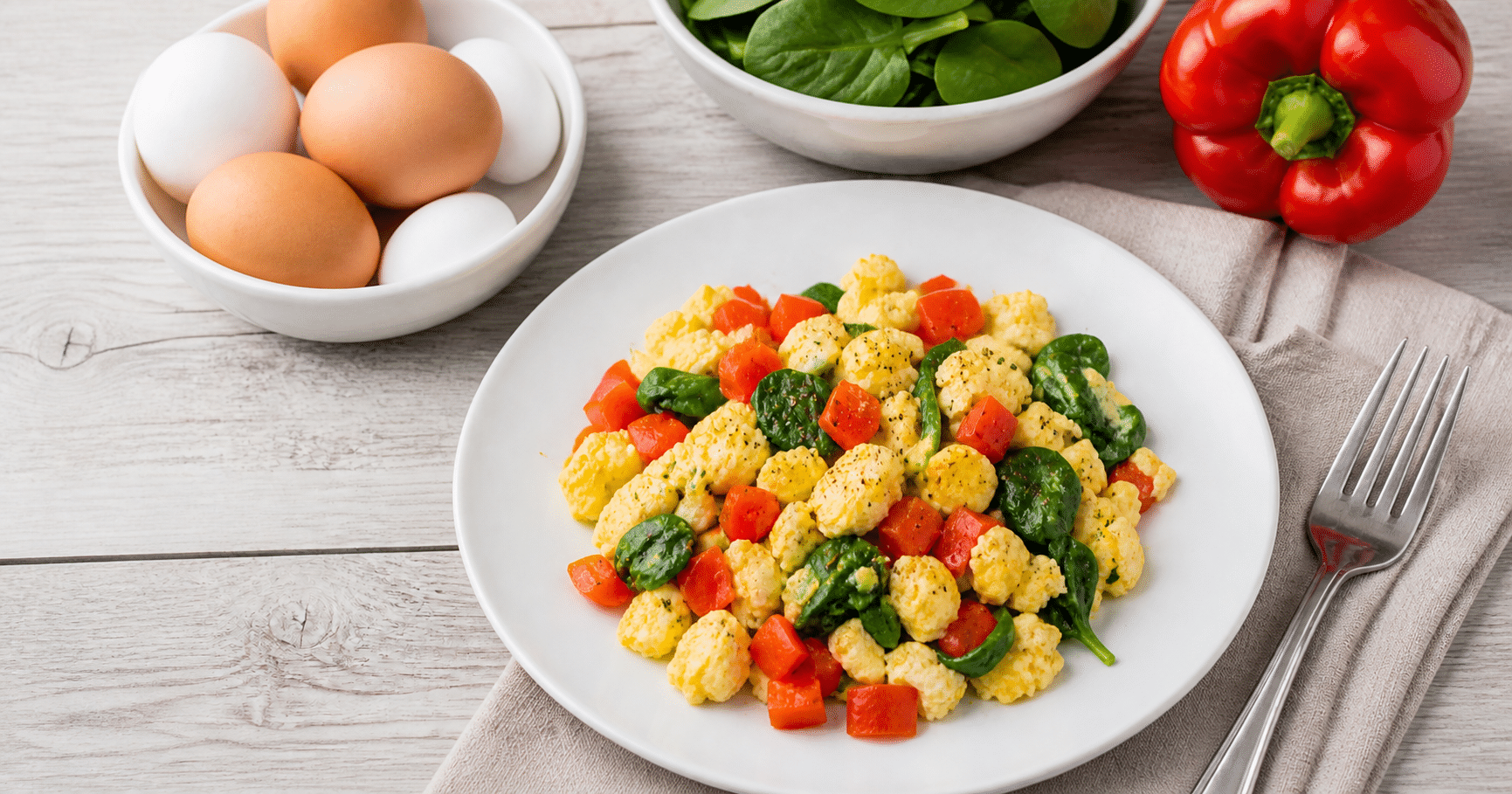
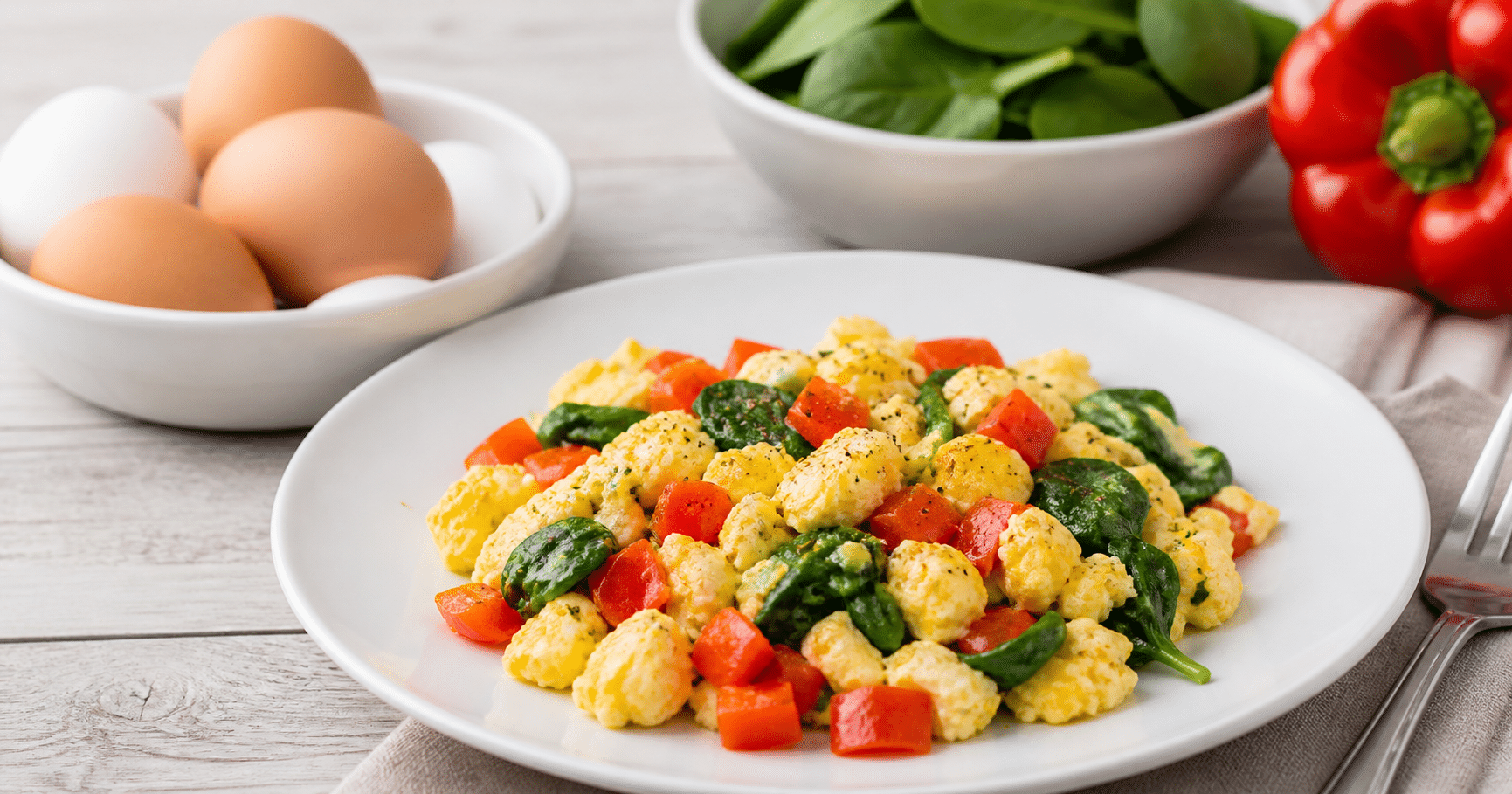
A Balanced Spinach and Pepper Egg Scramble
This quick breakfast uses one whole egg for yolk nutrients and flavor, with extra whites for lean protein. It makes one generous serving and takes about 10 minutes.
Ingredients
-
- 1 large whole egg
-
- 2 large egg whites, or about ¼ cup liquid egg whites
-
- ½ cup chopped bell pepper
-
- 1 cup baby spinach
-
- 1 teaspoon olive oil
-
- Pinch of black pepper
-
- Small pinch of salt, if desired
Step-by-Step Instructions
-
- Whisk the whole egg and egg whites in a small bowl until blended. Add black pepper and, if you like, a little salt.
-
- Warm the olive oil in a nonstick skillet over medium heat. Add the bell pepper and cook for 2 to 3 minutes, stirring, until it begins to soften.
-
- Add the spinach and stir until wilted, about 30 seconds.
-
- Pour in the egg mixture. Gently stir and fold until the eggs are fully set, about 2 to 4 minutes. Serve right away, on its own or with whole-grain toast.
For food safety, cook eggs until the whites and yolks are firm; dishes made with eggs should reach 160°F. If using liquid egg whites, follow the package instructions after opening.
When Each Choice Makes Sense
Choose mostly whites when you want to keep calories and fat lower while adding protein to a meal. Choose whole eggs when you want the yolk’s nutrients and richer taste, and they fit your personal eating plan. A mix of one whole egg and additional whites is an easy middle ground, not a nutritional requirement.
One detail can trip people up: packaged egg whites are convenient, but whole eggs are not hard to separate at home. If you save the yolks, refrigerate them promptly in a covered container and use them soon in another dish; don’t leave raw egg portions at room temperature.
The Takeaway: You Don’t Have to Pick a Side
Egg whites reduce calories, fat, and cholesterol; whole eggs bring the yolk’s nutrients, flavor, and some additional protein. Neither option is automatically the healthier breakfast—the rest of the meal and your individual health needs matter, too.
For a practical everyday approach, try one whole egg with extra whites, then build the plate around vegetables or whole grains. The best choice is the one that fits your appetite, nutrition goals, and clinician’s advice.