A plant-based dinner can be hearty without relying on a meat substitute—or leaving you hungry an hour later. The trick is to build the meal around filling ingredients, then add the textures and bold flavors that make dinner feel complete.
For beginners, the biggest surprise is often how much the cooking method matters. Beans and vegetables can taste flat when they’re simply warmed together, but browning mushrooms, seasoning in layers, and adding something bright at the end can turn familiar pantry staples into a meal worth repeating.
This guide explains a simple formula for satisfying plant-based dinners, common ways to make them more flavorful, and an easy lentil-and-mushroom skillet to try. You don’t need specialty ingredients or a complicated meal plan to get started.
What Makes a Plant-Based Dinner Feel Satisfying?
A useful starting point is to combine a source of plant protein, a filling grain or starchy vegetable, and plenty of vegetables. Lentils, beans, tofu, tempeh, and edamame can anchor a meal; brown rice, potatoes, whole-wheat pasta, or corn tortillas make it more substantial.
These ingredients bring different qualities to the plate. Legumes provide protein and fiber, while grains and potatoes contribute energy and texture. Vegetables add color, flavor, and variety. A little fat—from olive oil, nuts, seeds, or avocado—can add richness, though it doesn’t need to dominate the meal.
Flavor matters just as much as the ingredient list. A satisfying dinner often has contrast: creamy beans with crisp cabbage, chewy grains with tender greens, or a rich stew finished with lemon. Seasoning as you cook, rather than only at the table, helps bring those elements together.
Four Ways to Build a Better Plant-Based Meal
1. Give the protein a clear place on the plate
Instead of treating beans or tofu as a garnish, make them a central part of dinner. A can of chickpeas can become the base of a curry; black beans can fill tacos; lentils can bulk up tomato sauce or soup. For a quick meal, canned beans and lentils are convenient—drain and rinse them if you want to remove some of the canning liquid and sodium.
2. Add a grain or other hearty base
Rice, barley, farro, quinoa, whole-wheat pasta, and potatoes all pair easily with plant proteins. Cook a little extra when you have time, then refrigerate it promptly and use it in another meal. Leftover grains can go into a skillet, soup, or grain bowl rather than becoming a separate cooking project.
3. Build flavor in layers
Start with aromatics such as onion and garlic, then add spices, herbs, or tomato paste before the liquid. Ingredients like mushrooms, roasted peppers, miso, soy sauce, or smoked paprika can bring savory depth. Finish with lemon juice, vinegar, fresh herbs, or a spoonful of salsa to brighten a dish that tastes heavy or dull.
4. Mix soft and crisp textures
A pot of tender lentils may be nourishing, but it can feel one-note. Try serving it with toasted nuts, crunchy cabbage, crisp vegetables, or a piece of crusty bread. A handful of pumpkin seeds or sliced scallions can make a simple bowl feel more composed.
How to Make a Lentil and Mushroom Skillet
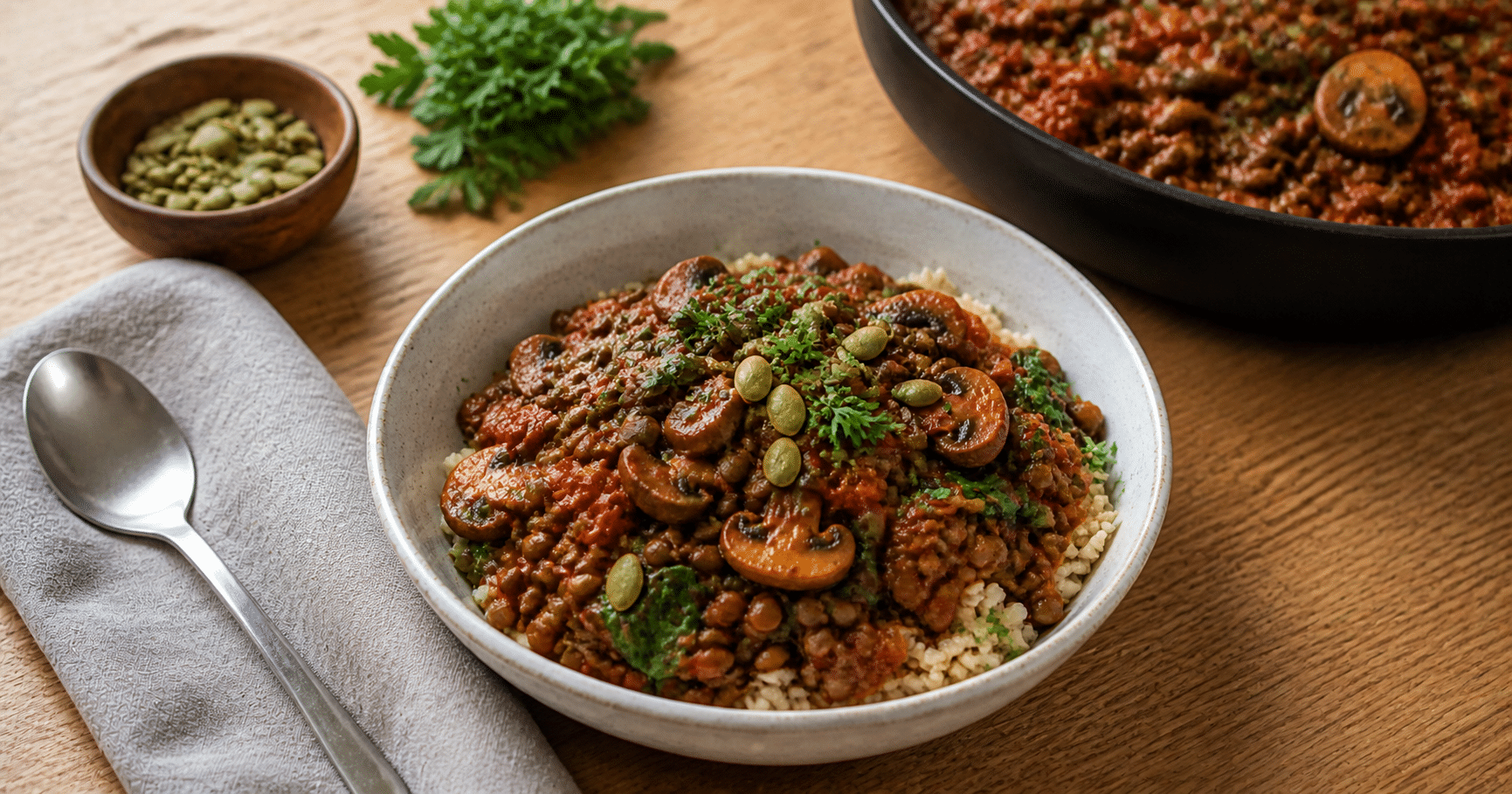
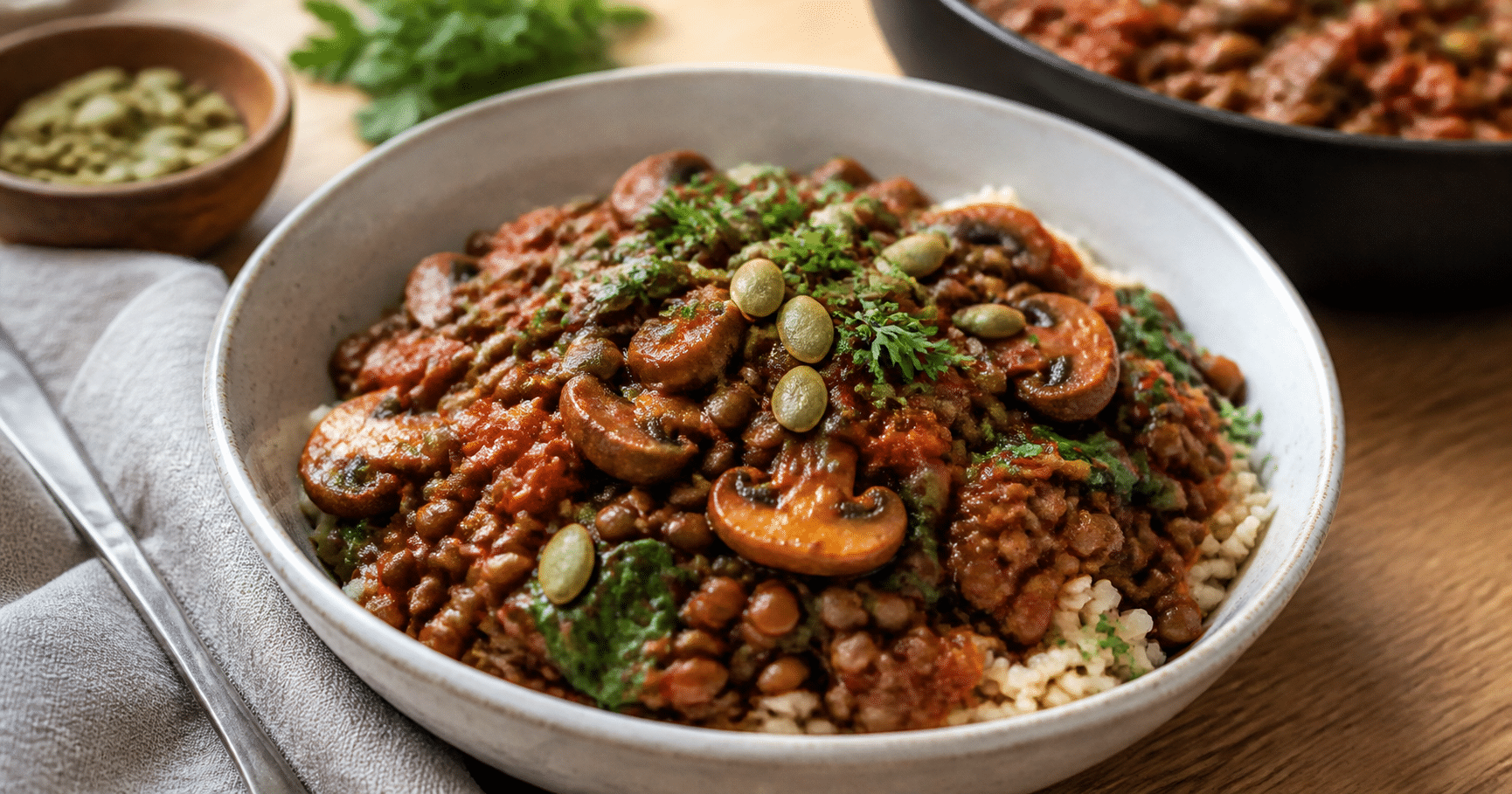
This tomato-rich skillet is built from everyday ingredients and goes well over brown rice. Using canned lentils keeps the cooking time manageable; cooking the rice alongside the skillet makes the most of the time at the stove. Makes about four servings.
Ingredients
-
- 1 cup uncooked brown rice
-
- 1 tablespoon olive oil
-
- 1 medium yellow onion, diced
-
- 8 ounces cremini or white mushrooms, sliced
-
- 2 cloves garlic, minced
-
- 1 teaspoon smoked paprika
-
- 1 tablespoon tomato paste
-
- 1 can (14.5 ounces) crushed tomatoes
-
- 2 cans (15 ounces each) lentils, drained and rinsed
-
- 1/2 cup low-sodium vegetable broth or water, plus more if needed
-
- 3 cups baby spinach
-
- 1 tablespoon lemon juice, plus more to taste
-
- Black pepper and salt, to taste
-
- Optional: chopped parsley or pumpkin seeds for serving
Step-by-Step Instructions
-
- Cook the brown rice according to the package directions. It typically takes longer than the skillet, so start it first.
-
- Warm the olive oil in a large skillet over medium heat. Add the onion and mushrooms. Cook for 8 to 10 minutes, stirring occasionally, until the onion softens and the mushrooms release their liquid and begin to brown.
-
- Stir in the garlic, smoked paprika, and tomato paste. Cook for about 1 minute, until fragrant.
-
- Add the crushed tomatoes, lentils, and broth. Bring the mixture to a gentle simmer, then cook uncovered for 10 to 12 minutes, stirring occasionally. Add a splash of broth or water if it becomes thicker than you like.
-
- Stir in the spinach and cook until wilted, about 1 to 2 minutes. Turn off the heat, add the lemon juice, and season with black pepper and salt to taste.
-
- Spoon the skillet over rice. Finish with parsley or pumpkin seeds, if using.
Refrigerate leftovers in a covered container and use within three to four days. Reheat until steaming hot, adding a little water or broth if the lentils have thickened. The skillet can also be served with baked potatoes, toast, or pasta instead of rice.
Make the Formula Work for Your Kitchen
Think of the recipe as a pattern, not a rule. Swap spinach for kale, use white beans instead of lentils, or add diced carrots with the onion. If you’re short on time, frozen vegetables and precooked grains can help dinner come together faster.
When eating fully plant-based, it’s worth looking beyond dinner as well. Vitamin B12 is not reliably present in unfortified plant foods, so people following a vegan diet need a dependable source, such as fortified foods or a supplement. Individual nutrition needs vary, and a registered dietitian can help with questions about a specific diet or health condition.
Start with a Reliable Dinner, Then Make It Yours
A satisfying plant-based dinner doesn’t require a complicated recipe: pair a substantial protein source with a hearty base, vegetables, and a few well-chosen flavor accents. The lentil skillet offers one practical starting point, but the same approach works with beans, tofu, grains, and whatever produce is already in the kitchen.
When a meal tastes good and fits your routine, it’s much easier to make it again.