Some breakfasts look wholesome but leave you hungry an hour later. A warm bowl of oats topped with blueberries and walnuts offers a more satisfying mix: whole grains, fruit, healthy fats, and a little protein if you add yogurt or milk.
The combination also fits naturally with the MIND diet, an eating pattern built around foods such as whole grains, berries, nuts, vegetables, beans, and fish. It has attracted interest for its potential connection to brain health, but one breakfast cannot deliver a promised result—and the research on the diet does not make this bowl a treatment or a guarantee.
One useful detail: blueberries and walnuts bring different qualities to the bowl, while the oats provide its filling base. Below, you’ll find a practical recipe, easy ways to adapt it, and a clear look at what the MIND-inspired label does—and doesn’t—mean.
What Makes This Bowl MIND-Inspired?
The MIND diet combines features of the Mediterranean and DASH eating patterns. It emphasizes a range of plant foods, including berries and nuts, along with whole grains and leafy greens. The idea is to make these foods regular parts of an overall eating pattern, rather than relying on one “superfood.”
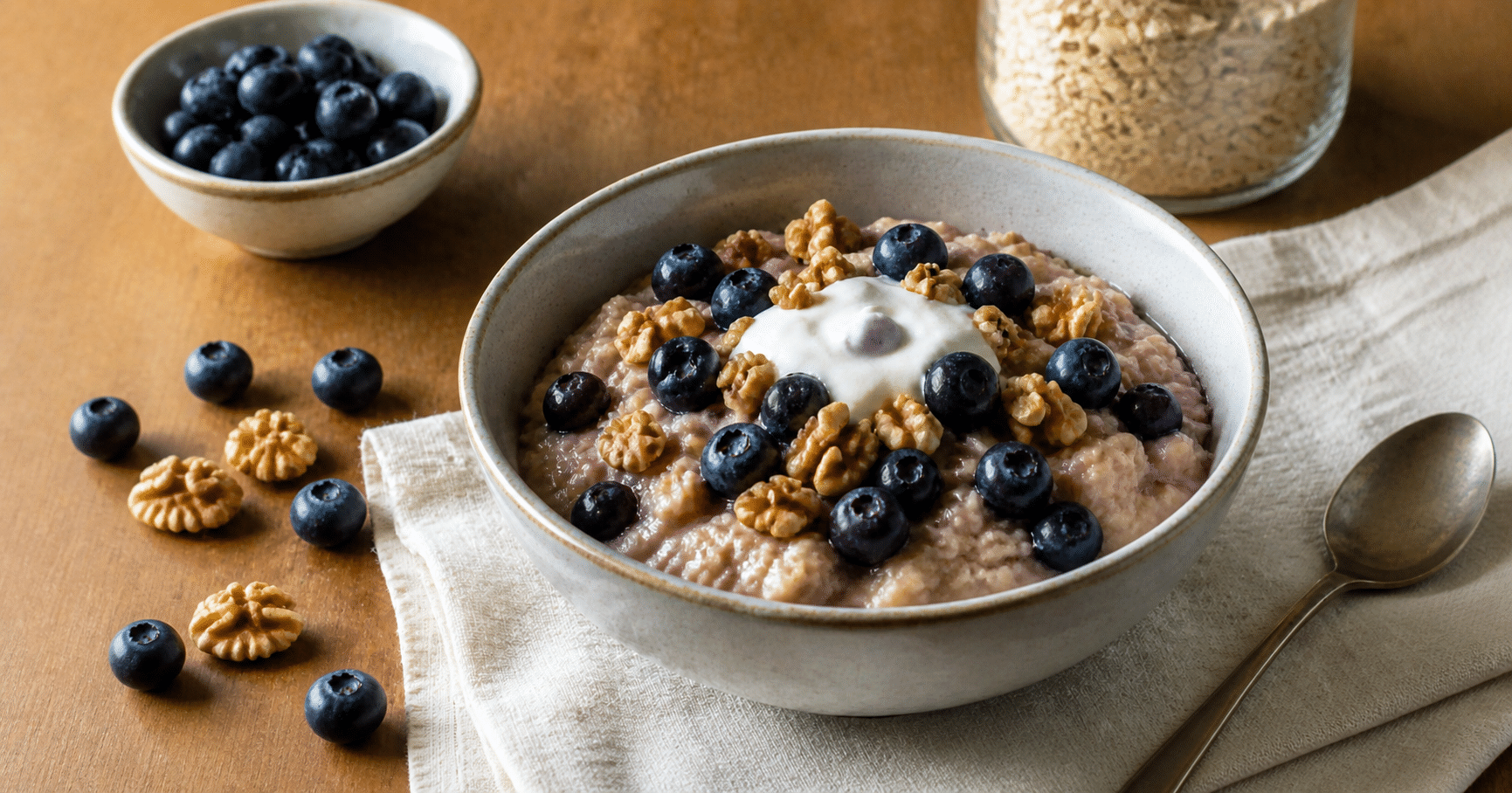
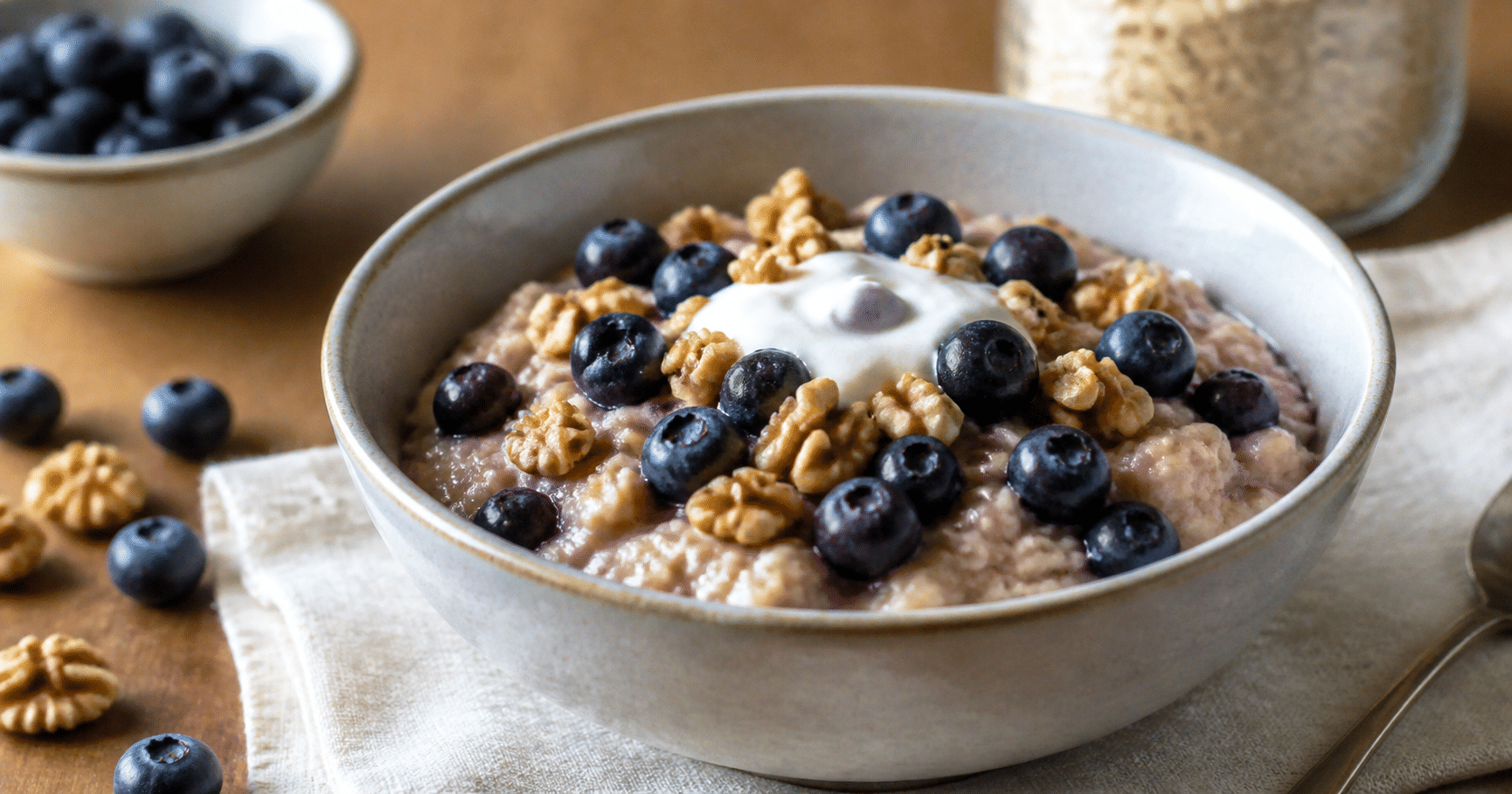
In this bowl, rolled oats supply whole-grain carbohydrates and fiber. Blueberries contribute fiber and naturally occurring plant compounds called anthocyanins, which give many berries their deep color. Walnuts provide unsaturated fats, including the plant omega-3 fat ALA, as well as fiber and protein.
Research on the MIND diet has found associations between closer adherence and cognitive outcomes, but an association does not prove that the diet itself caused a particular result. The evidence does not show that eating this breakfast prevents or treats dementia. Think of the recipe as one practical way to include foods encouraged by the pattern—not as a medical intervention.
Why Blueberries, Walnuts, and Oats Work Well Together
1. Blueberries add fruit without extra fuss
Fresh blueberries are convenient when they’re in season, but frozen berries work just as well in hot oatmeal. They soften as they warm and release their juices, adding flavor without needing much sweetener. Berries are specifically highlighted in MIND-style eating, though no single variety is required for every bowl.
2. Walnuts bring texture and satisfying fats
Chopped walnuts add a crisp contrast to creamy oats. Their unsaturated fats can make breakfast more filling, while ALA is an essential fat the body needs from food. Walnuts are energy-dense, so a small handful is a practical topping rather than an ingredient to pile on without measure.
3. Oats make the bowl a real breakfast
Oats contribute whole grains and soluble fiber, including beta-glucan. For a more substantial meal, cook them with milk or serve the bowl with plain yogurt; both add protein. The fruit and nuts provide flavor and texture, while the oats give the recipe its warm, satisfying base.
How to Make a Blueberry and Walnut Breakfast Bowl
This recipe makes two servings of creamy stovetop oats. It takes about 10 minutes with rolled oats; steel-cut oats need a longer cooking time, so follow the package directions if substituting.
Ingredients
-
- 1 cup old-fashioned rolled oats
-
- 2 cups milk or water, or a mix of both
-
- 1 cup blueberries, fresh or frozen
-
- 1/4 cup chopped walnuts
-
- 1/2 teaspoon ground cinnamon
-
- Pinch of salt
-
- 1/2 cup plain yogurt, for serving (optional)
-
- 1 to 2 teaspoons honey or maple syrup, optional
Step-by-Step Instructions
-
- Combine the oats, milk or water, cinnamon, and salt in a small saucepan.
-
- Bring to a gentle simmer over medium heat, stirring occasionally. Lower the heat and cook for about 5 minutes, or until the oats are tender and the mixture is as thick as you like.
-
- Stir in the blueberries during the final 1 to 2 minutes. If using frozen berries, cook until they are hot and softened.
-
- Spoon the oatmeal into two bowls. Top with chopped walnuts and a spoonful of plain yogurt, if desired. Taste before adding honey or maple syrup; ripe berries may provide enough sweetness.
For a thinner bowl, stir in a splash of milk. If making extra, refrigerate cooled oatmeal in a covered container and use within 3 to 4 days; reheat with a little water or milk, stirring until hot. Add the walnuts after reheating so they stay crunchy.
Small Choices That Make the Bowl Better
Toast the walnuts for more flavor. Warm them in a dry skillet over low heat for a few minutes, stirring often, until fragrant. Watch closely because nuts can burn quickly, then let them cool before adding them to the bowl.
If you prefer a cold breakfast, combine oats and milk in a covered container and refrigerate overnight. In the morning, add blueberries and walnuts. The texture will be different from cooked oatmeal, but the same basic ingredients still work.
You can also rotate toppings without changing the spirit of the meal: try raspberries instead of blueberries, or add a spoonful of ground flaxseed. Choose unsweetened yogurt and modest amounts of syrup if you’re watching added sugar. If you have a walnut allergy, leave them out and use another topping that is safe for you.
A Simple Breakfast, Not a Shortcut
A blueberry and walnut oatmeal bowl brings together several foods encouraged by the MIND diet: berries, nuts, and whole grains. It is easy to adapt to what you have on hand, and frozen blueberries make it practical year-round.
Enjoy it as one part of a varied eating pattern. The most useful breakfast is not the one with the boldest health promise—it’s the one you can make, enjoy, and return to regularly.