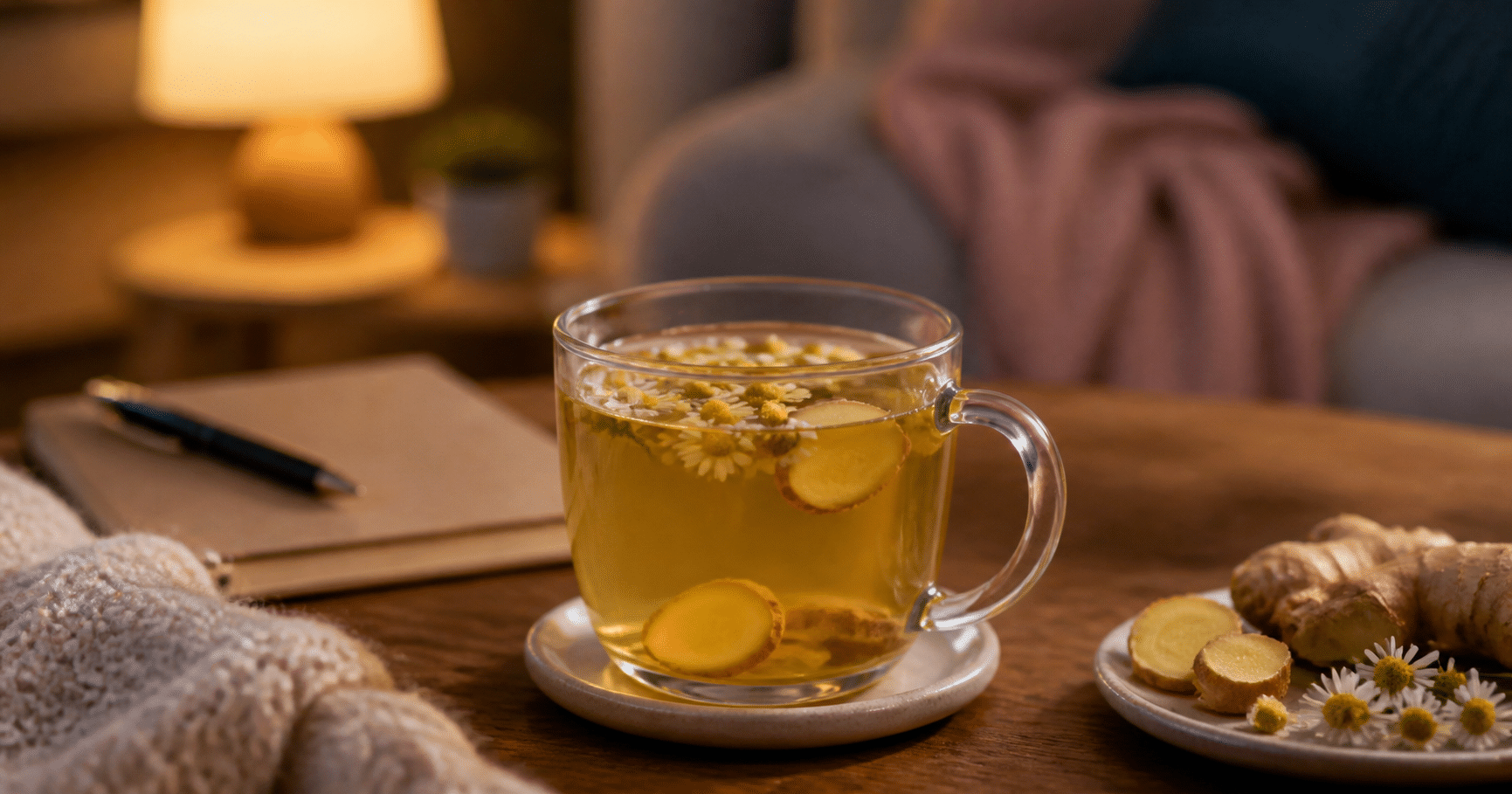
By the time dinner is cleared and tomorrow’s to-do list starts taking shape, a strong cup of coffee is probably the last thing many people need. A warm herbal drink offers a gentler pause: something fragrant to sip while the kitchen settles and the evening slows down.
This chamomile-ginger cup is naturally caffeine-free when made with pure chamomile, not a tea blend that also contains black or green tea. It takes about 10 minutes, uses ordinary ingredients, and can be adjusted to suit your taste.
One useful detail: a caffeine-free drink may fit an evening routine, but it is not a sleep remedy. Chamomile is traditionally enjoyed for its calming character, yet research does not establish that a cup reliably treats insomnia. Here’s how to make a flavorful version—and how to keep it simple on a busy night.
Why Chamomile and Ginger Make a Good Evening Pair
Chamomile brings a soft, floral flavor, while fresh ginger adds a bright, lightly peppery warmth. Together, they make a satisfying drink without needing much sweetener. Lemon and a small spoonful of honey are optional ways to round out the taste.
Chamomile tea is an herbal infusion, not tea made from the Camellia sinensis plant that produces black, green, and oolong tea. Pure chamomile contains no caffeine. However, packaged “sleep” or “herbal” blends sometimes include caffeinated tea leaves, so check the ingredient list if you are avoiding caffeine.
Chamomile contains plant compounds, including apigenin, that have been studied for their biological activity. That does not mean a cup has a proven medicinal effect: evidence for chamomile as a treatment for sleep problems remains limited. It is best thought of as a pleasant, caffeine-free drink—not a substitute for care if sleep trouble is persistent.
What Makes This Cup Worth Keeping in Your Evening Routine
1. It is quick to prepare
Once the water is hot, the infusion needs only a few minutes. Keep chamomile tea bags and a piece of ginger in the kitchen, and the recipe can fit into the time it takes to tidy up after dinner.
2. Ginger adds flavor without relying on sugar
Fresh ginger gives the drink a little lift, so it can taste complete with just a squeeze of lemon. If you like honey, start with a small amount; it adds sweetness, but it also adds sugar.
3. A covered mug helps preserve the aroma
Some of the pleasant smell of herbs and spices comes from volatile aromatic compounds. Covering the cup as it steeps helps keep the aroma close to the drink. It is a small kitchen detail, but it makes the first sip more inviting.
How to Make Chamomile-Ginger Evening Tea
This recipe makes one generous mug. The result is a floral, gently spicy infusion that you can enjoy plain or brighten with lemon.
Ingredients
-
- 1 chamomile tea bag, or about 1 tablespoon loose dried chamomile
-
- 3 thin slices fresh ginger
-
- 8 ounces freshly boiled water
-
- 1 teaspoon honey, optional
-
- 1 lemon wedge, optional
Step-by-Step Instructions
-
- Place the chamomile and ginger in a mug. If using loose chamomile, put it in a tea infuser or small strainer.
-
- Pour 8 ounces of freshly boiled water over the ingredients.
-
- Cover the mug with a small plate and steep for 5 to 7 minutes. Steep closer to 5 minutes for a lighter flavor, or longer if you prefer a stronger infusion.
-
- Remove the tea bag or strain out the loose flowers and ginger. Stir in honey, if desired, and finish with a squeeze of lemon.
For an even faster version, use a chamomile tea bag and skip the ginger. For a stronger ginger note, lightly press the slices with the back of a spoon before adding hot water. Avoid leaving the bag in the mug indefinitely; extra-steeped chamomile can become more bitter rather than more soothing.
Make It Easy to Enjoy, and Know When to Check the Label
Keep the ingredients visible: a tea bag beside the kettle and fresh ginger in the refrigerator can make this a realistic weeknight habit. If you buy loose chamomile, store it in a tightly closed container away from heat and moisture, and follow the package’s freshness guidance.
Chamomile is not right for everyone. People with allergies to plants in the daisy family, including ragweed, may react to it. Chamomile may also interact with some medicines, including warfarin; if you take prescription medication or have a known plant allergy, ask a pharmacist or clinician whether regular use is appropriate.
For a caffeine-free cup, read the blend’s ingredients rather than relying on words such as “bedtime” or “herbal” on the front of the box. And if you are limiting added sugar, enjoy the infusion plain or use only a small amount of honey.
A Small Pause, Not a Promise
Chamomile-ginger tea is a quick way to make an ordinary evening feel a little less rushed. Its main strengths are straightforward: no caffeine when made with pure chamomile, a comforting aroma, and a recipe that is easy to adapt.
Let the cup be a pleasant part of winding down—not a guaranteed fix for sleep. Sometimes the most useful evening ritual is simply one that is warm, uncomplicated, and easy to repeat.