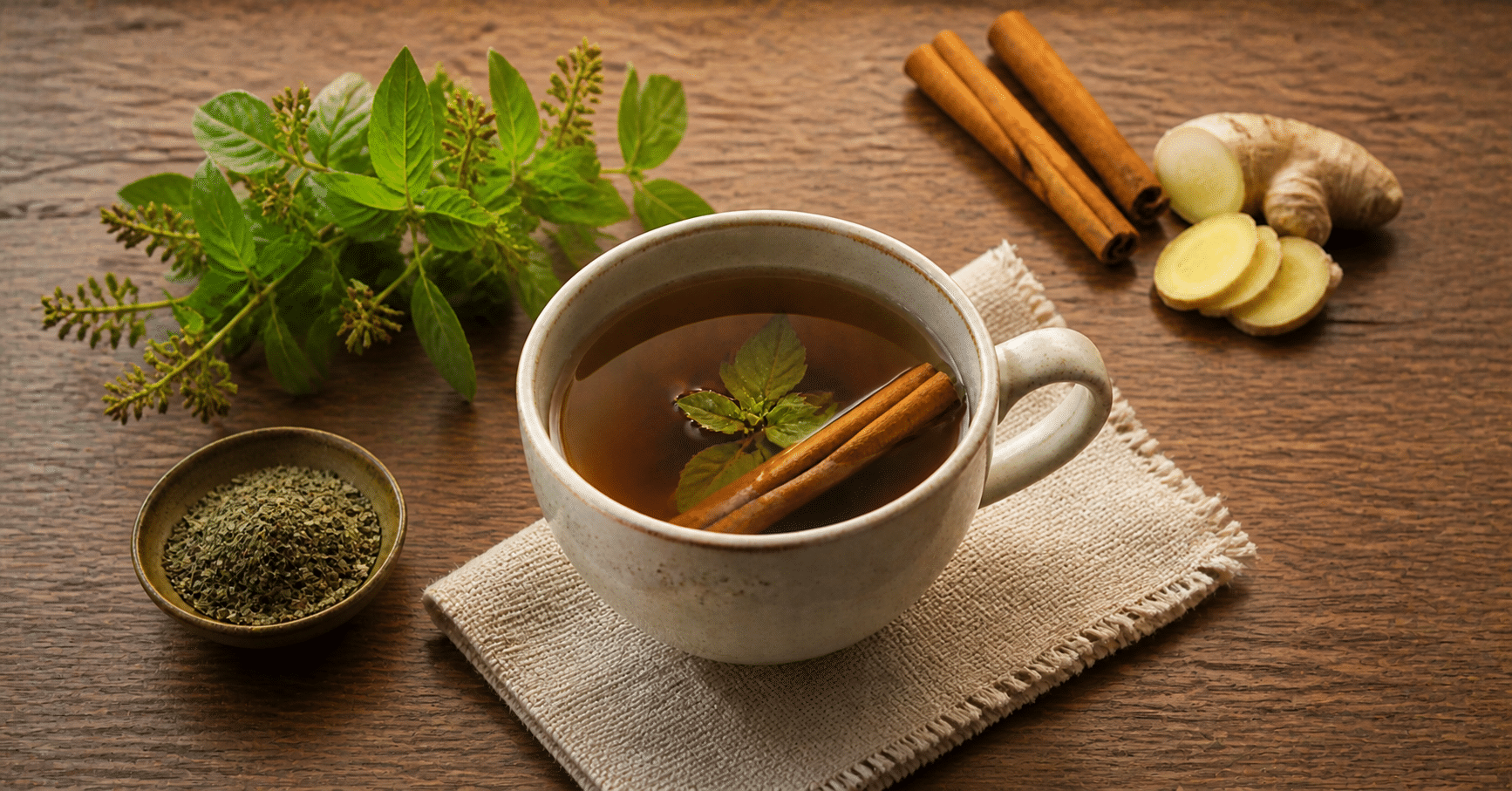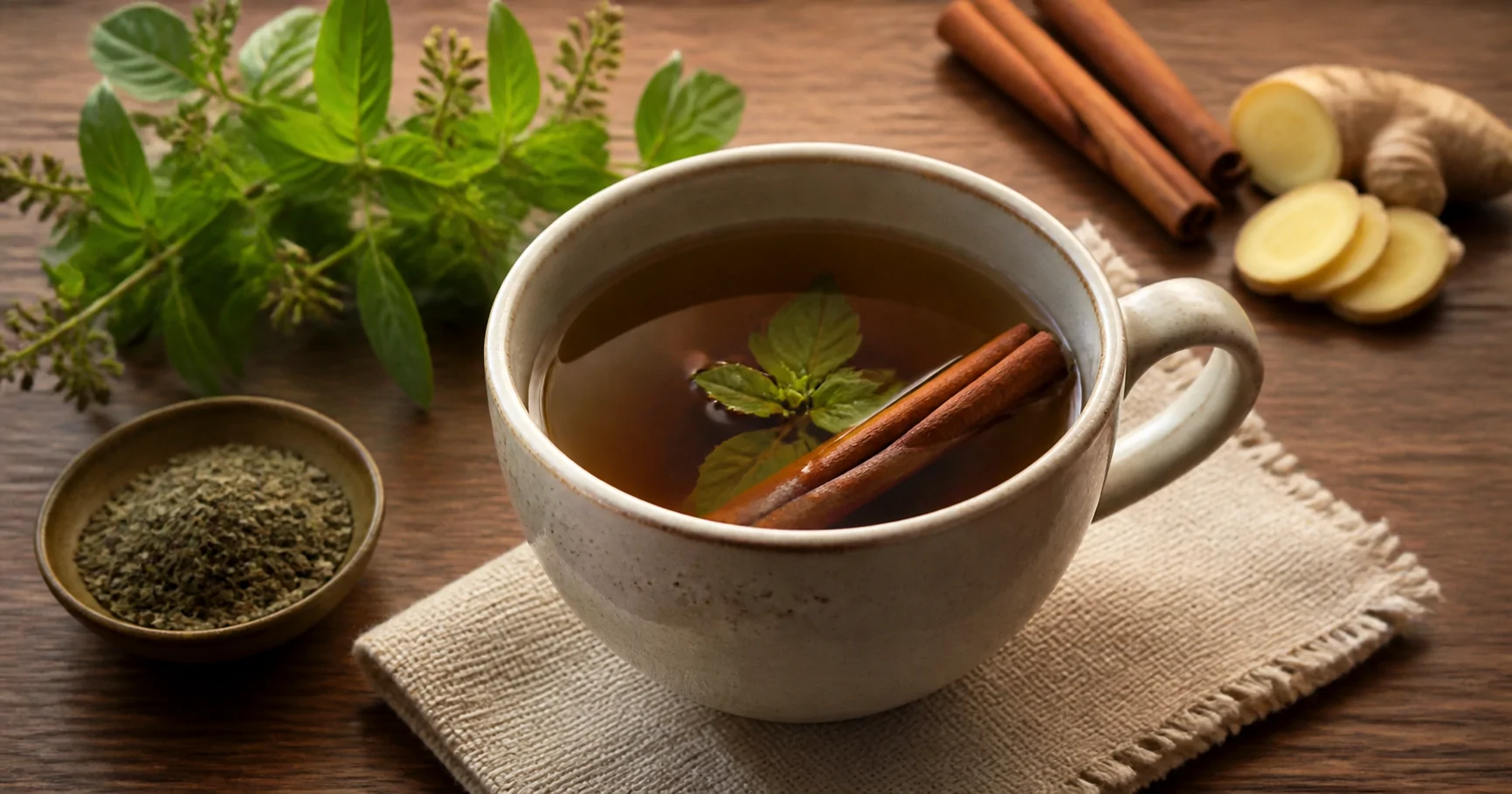
A good evening drink does not need to promise better sleep or a dramatic health boost. Sometimes the appeal is simpler: a fragrant mug, a little warmth, and a few quiet minutes before the day ends. Cinnamon and tulsi make a pleasantly spiced herbal tea that fits that kind of routine.
Tulsi, also called holy basil, has a fresh, gently peppery flavor that keeps cinnamon from tasting too sweet or heavy. Both ingredients are naturally caffeine-free when brewed on their own, making the blend an alternative to black or green tea in the evening.
One small preparation detail makes a noticeable difference: cinnamon takes longer to release its flavor than delicate tulsi leaves. Simmering the spice first, then steeping the leaves off the heat, makes a more balanced cup. Here’s how to do it, what the ingredients contribute, and what the tea can—and cannot—be expected to do.
What Cinnamon and Tulsi Bring to an Evening Cup
Cinnamon bark contains aromatic compounds, including cinnamaldehyde, that give it its familiar warm scent and flavor. Tulsi is a type of basil with its own distinctive herbal aroma; it is not the same as sweet basil commonly used in pasta dishes. Together, they create a layered drink without added sugar, although a little honey can soften the flavor.
Tulsi has a long history in traditional wellness practices, and researchers have studied it for a range of possible effects. However, traditional use and early research do not establish that a cup of tulsi tea treats anxiety, improves sleep, or prevents illness. It is best approached as a flavorful beverage, not a substitute for medical care or prescribed treatment.
Likewise, cinnamon can make a drink taste naturally sweet and warming, but it is not a proven treatment for blood sugar concerns or other health conditions. The most dependable benefits here are practical ones: the tea is simple to prepare, contains no caffeine if made only with herbs and spices, and offers a satisfying option when you want something warm without a late-night coffee.
Three Details That Make the Tea Better
1. Give the cinnamon a head start
A cinnamon stick needs more time in hot water than tulsi leaves do. A brief simmer helps draw out its aroma, while adding tulsi later protects the tea from becoming overly strong or bitter. Ground cinnamon works in a pinch, but it can leave sediment and make the drink cloudy.
2. Choose the cinnamon you use regularly with care
Most cinnamon sold in U.S. grocery stores is cassia cinnamon. It contains more coumarin than Ceylon cinnamon, and frequent, high intake of coumarin may be a concern for the liver. For an occasional cup, a small amount of cinnamon is a culinary use; if you drink cinnamon tea often, consider Ceylon cinnamon, which is naturally lower in coumarin.
3. Keep expectations realistic
A warm, caffeine-free drink can be a pleasant part of winding down, but that does not mean the herbs have been shown to cause sleep. If the ritual helps, it may be because it gives you a comforting pause and replaces a caffeinated drink—not because it acts as a sleep medicine.
How to Make Cinnamon and Tulsi Tea
This recipe makes two lightly spiced cups. Adjust the steeping time or add a little more tulsi next time if you prefer a stronger herbal flavor.
Ingredients
- 2 cups water
- 1 cinnamon stick, about 3 inches long
- 2 teaspoons dried tulsi leaves, or about 2 tablespoons loosely packed fresh tulsi leaves
- Optional: 1 thin slice of fresh ginger
- Optional: honey or lemon, to taste
Step-by-Step Instructions
- Pour the water into a small saucepan. Add the cinnamon stick and, if using, the ginger.
- Bring the water to a gentle simmer. Cook for 8 to 10 minutes; avoid a hard boil, which can reduce the liquid too quickly.
- Remove the pan from the heat. Add the tulsi, cover, and steep for 5 minutes. For a more pronounced herbal taste, steep for up to 7 minutes.
- Strain into two mugs. Add a small amount of honey or a squeeze of lemon if desired, then taste before adding more.
For a single mug, use 1 cup of water, half a cinnamon stick, and 1 teaspoon of dried tulsi; scale the other ingredients to taste. The tea is best freshly brewed. If you make extra, cool it promptly, refrigerate it in a covered container, and use it within a day or two. Reheat gently rather than boiling it again.
Simple Ways to Adjust the Flavor
If cinnamon dominates, shorten its simmer or use a smaller stick. If the cup tastes too mild, increase the tulsi slightly or steep it for another minute. A slice of ginger gives the tea a sharper, more warming edge, while lemon makes the herbal notes brighter.
People who take medication for blood sugar or blood clotting should ask a pharmacist or clinician before making tulsi a frequent, concentrated part of their routine. Evidence about interactions is limited, but possible effects are not well established. If you have a medical condition, are preparing for surgery, or are considering tulsi supplements, get individualized advice; a supplement is not equivalent to a lightly brewed cup of tea.
For the cleanest flavor, strain the tea before adding honey or lemon. That way, you can taste the cinnamon and tulsi on their own and sweeten only as much as you like.
A Gentle Evening Ritual, Not a Remedy
Cinnamon and tulsi tea is easy to make, naturally caffeine-free when brewed without tea leaves, and flexible enough to suit different tastes. Simmer the cinnamon first, steep the tulsi off the heat, and treat the finished drink as a comforting beverage rather than a treatment for sleep or other health concerns.
Sometimes the best feature of an evening cup is simply that it gives you a reason to slow down.