A pot of beans can turn into several quick dinners—but only if the leftovers are easy to use. Freeze them in one large container and you may end up thawing more than you need; freeze them dry and they can emerge a little tough or crumbly.
The fix is simple: portion cooked beans with some of their cooking liquid, then freeze them in amounts that suit the meals you actually make. A cup can enrich soup or a grain bowl; a larger portion can become tacos, chili, or a fast side dish.
Here’s how to cool, portion, freeze, and reheat beans so they’re ready when dinner is short on time. The same approach works for most home-cooked beans, including black beans, chickpeas, pinto beans, and cannellini beans.
Why Cooked Beans Freeze Well—With a Little Liquid
Cooked beans are convenient to freeze because they’re already tender and ready to add to a meal. Their texture can soften somewhat after freezing and thawing, but that’s rarely a problem in soups, stews, casseroles, and saucy dishes. Beans served as a simple side may show the change more.
Some cooking liquid helps protect the beans from drying out and makes it easier to tip a portion into a pot. If you’ve drained them, water or unsalted broth works, too. You don’t need to cover every bean completely; just add enough liquid to keep the portion moist.
Food safety matters as much as texture. Divide a large batch into shallow containers and refrigerate it promptly rather than leaving a pot on the counter to cool. Perishable food should not sit at room temperature for more than two hours—or one hour when the temperature is above 90°F.
Three Small Choices That Make Bean Portions More Useful
1. Choose portions by the meals you make
Think about how you’ll use the beans before you fill the containers. One-cup portions are handy for a quick lunch or a small recipe; two-cup portions suit many family dinners. If you often cook for one or two, smaller portions can save you from thawing extra.
2. Keep the seasoning flexible
Beans cooked with a little salt are versatile. Strongly seasoned beans can still be frozen, but their flavor may limit how you use them later. If you want one batch to work in both tomato-based chili and a lemony salad, freeze most of it with simple seasoning and add herbs, spices, or sauce when you make dinner.
3. Leave room for expansion
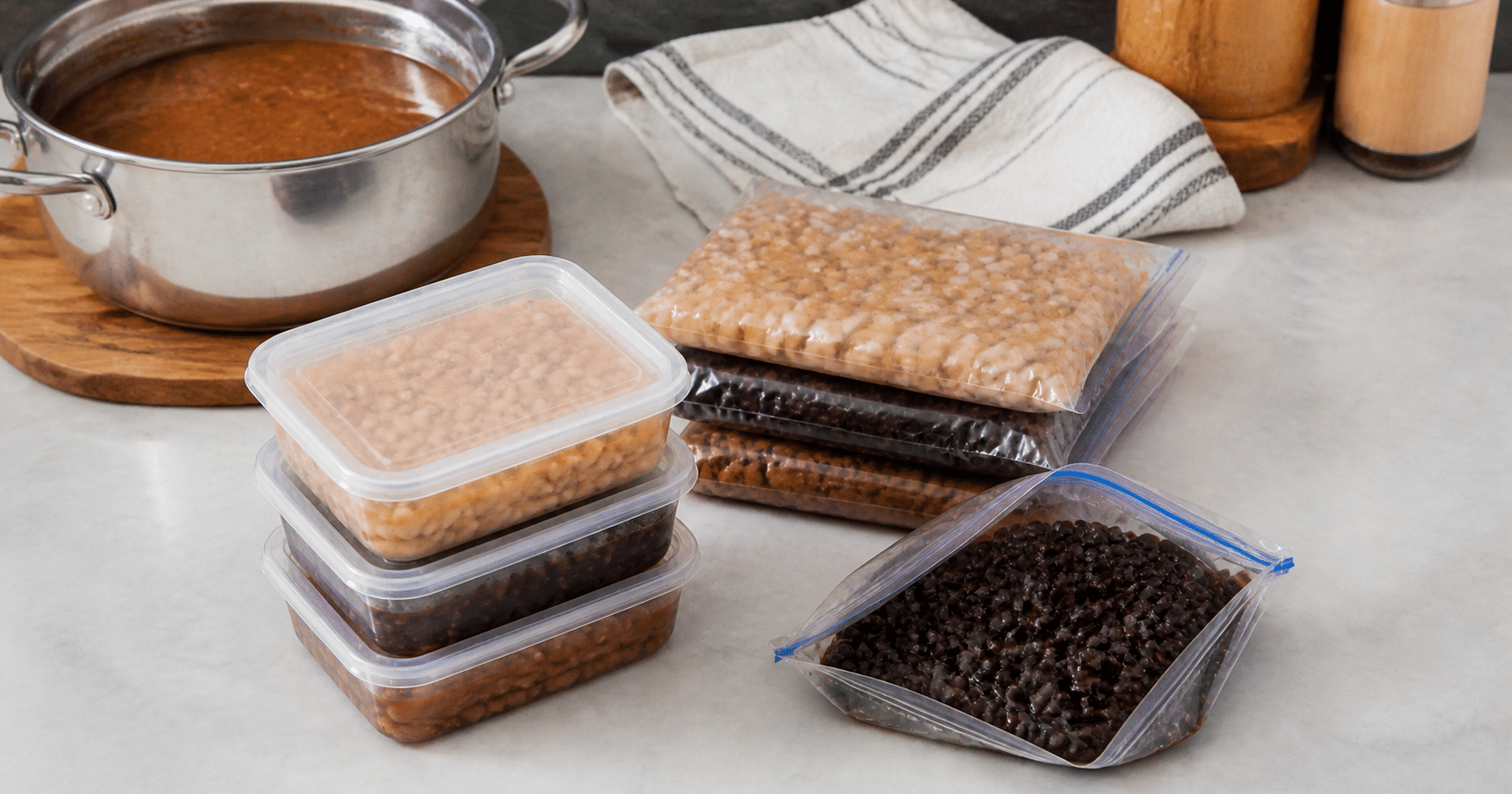
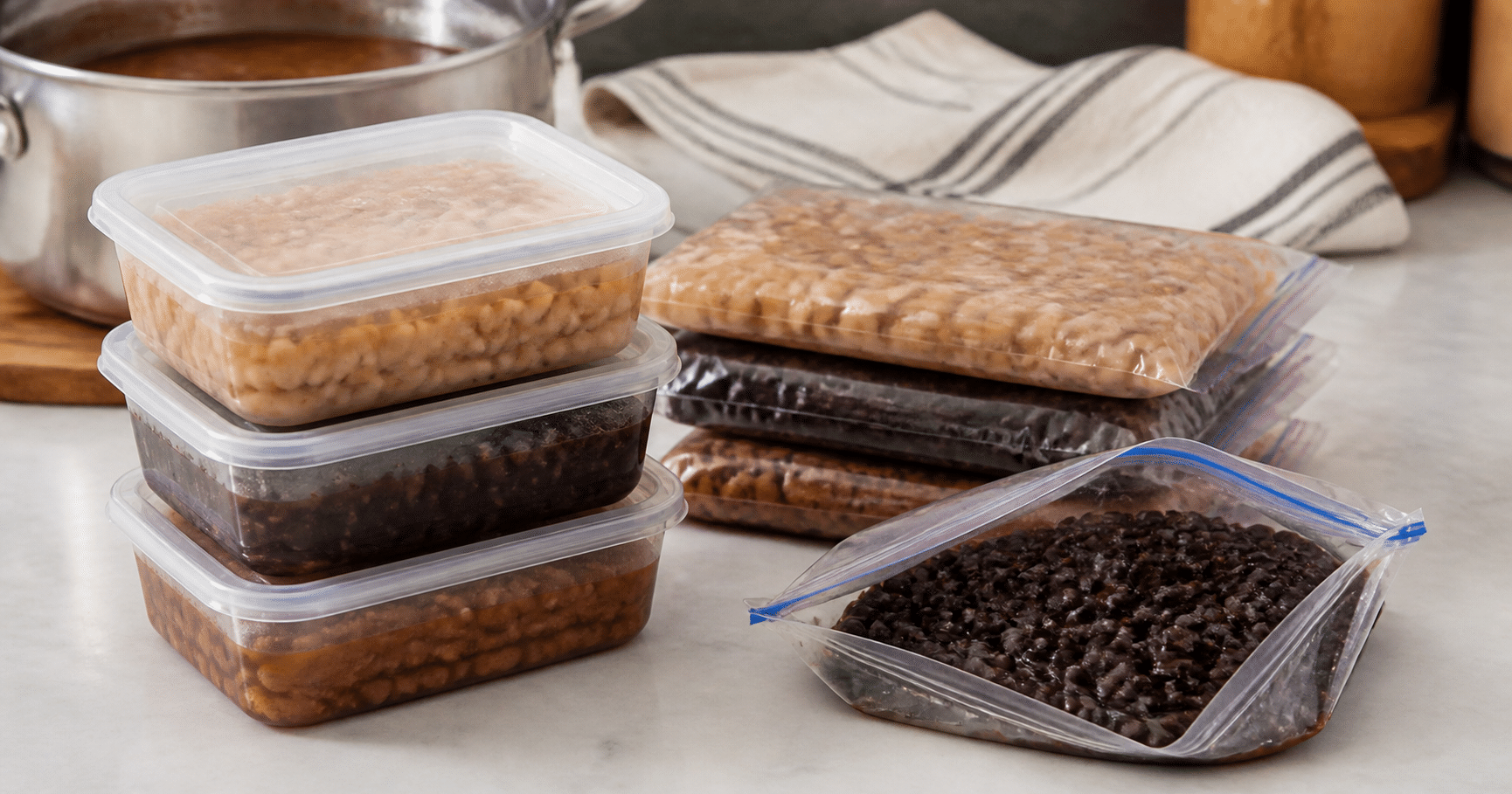
Beans and liquid can expand as they freeze. Leave about ½ inch of space at the top of a rigid freezer-safe container. For freezer bags, remove excess air, seal securely, and lay them flat on a tray until solid; flat bags stack neatly and thaw more quickly than bulky blocks.
How to Portion and Freeze Cooked Beans
This method is for beans that are fully cooked and tender. It makes about three 2-cup portions, though you can scale it up or down to match your batch.
What You’ll Need
-
- 6 cups cooked beans
-
- About 1½ to 2 cups bean-cooking liquid, water, or unsalted broth
-
- Three freezer-safe containers or bags, each sized for roughly 2 cups
-
- Labels and a marker
Step-by-Step Instructions
-
- Divide the beans promptly. Spoon them into shallow containers or bags soon after cooking. If the batch is still in a large pot, don’t leave it out to cool; transfer it into smaller portions so it can cool more quickly.
-
- Add a little liquid. Add enough cooking liquid, water, or broth to keep the beans moist. If you’re using bags, leave a little headspace and make sure the seal area stays clean.
-
- Chill in the refrigerator. Set the portions in the refrigerator to cool. Once chilled, move them to the freezer. Don’t wait for a pot of beans to reach room temperature on the counter.
-
- Label and freeze. Write the bean type and date on each container. Keep bags flat until frozen, then stack them. For best quality, aim to use frozen cooked beans within about two to three months; freezing keeps food safe longer when it remains frozen, but texture and flavor can decline over time.
Thawing and Turning a Portion Into Dinner
For a planned meal, thaw a portion in the refrigerator overnight. In a hurry, add frozen beans directly to a simmering soup, stew, or sauce and cook until heated through. You can also microwave them in a microwave-safe dish, stirring partway through so the center heats evenly.
Reheat leftovers to 165°F, measured with a food thermometer. Avoid thawing beans on the counter. Once thawed, use them within three to four days if kept refrigerated, and reheat only the portion you plan to eat.
Keep a few portions plain for maximum flexibility. Stir them into vegetable soup, season with cumin and salsa for tacos, or warm them with garlic and olive oil to serve over toast or grains. A small portion can also add body to a quick pasta sauce or a skillet of sautéed vegetables.
Useful habit: Freeze a mix of one-cup and two-cup portions. The smaller ones are easy to add to lunch, while the larger ones can anchor dinner without extra measuring.
A Pot of Beans, Ready When You Are
For quick dinners, freeze cooked beans in meal-sized portions with a little liquid, label them clearly, and chill them promptly before freezing. Smaller portions are easier to thaw, easier to use, and less likely to leave you with leftovers you didn’t need.
That simple bit of planning turns a batch of beans into an ingredient you can reach for—not another container waiting at the back of the freezer.