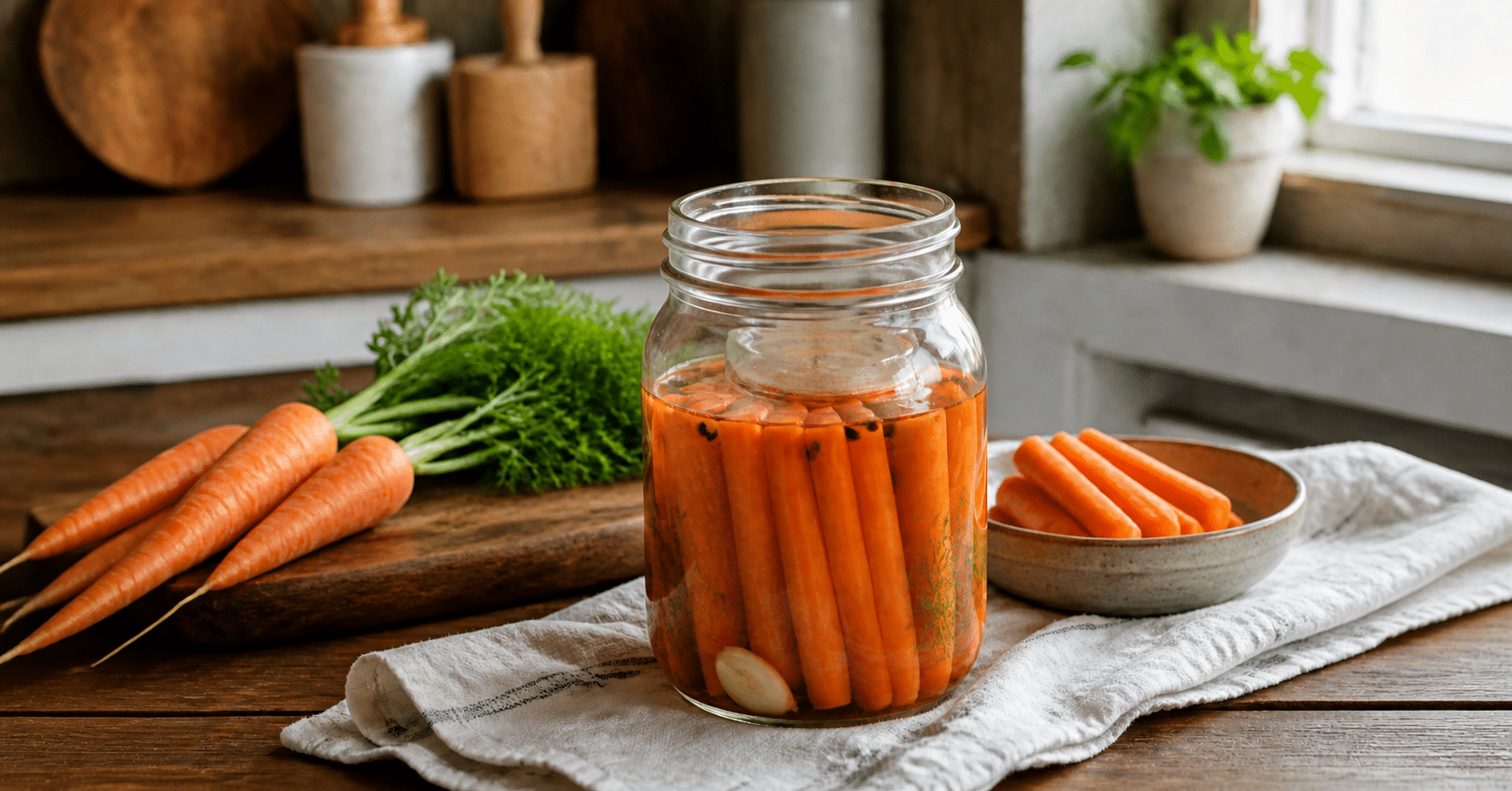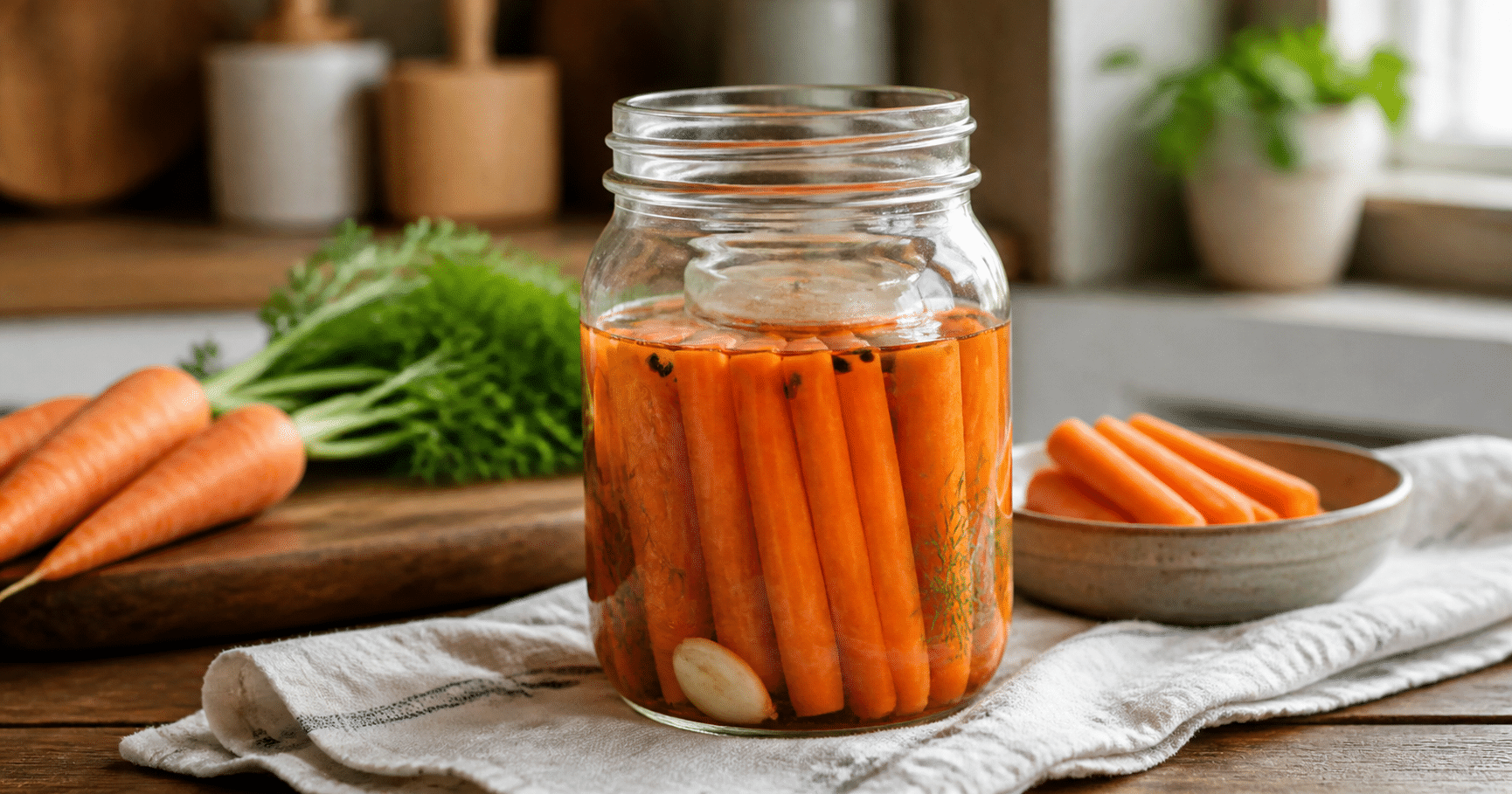
Fermented carrots bring a bright, tangy crunch to a meal, and they need only carrots, salt, water, and time. The process is simple, but “simple” does not mean you can skip the details: the right salt ratio and keeping the vegetables below the brine matter more than fancy equipment.
Fermentation is also different from pickling with vinegar. In a vinegar pickle, the acid is added; in a fermented carrot, beneficial lactic-acid bacteria produce acid as they use the carrots’ natural sugars. That change takes time, so a jar that merely tastes salty on day one is not ready to store as a finished ferment.
This guide walks through a cautious, small-batch method, including what normal fermentation looks and smells like, when to refrigerate the carrots, and which warning signs mean it is safer to discard the batch.
What Happens When Carrots Ferment?
Carrots naturally carry microorganisms, including lactic-acid bacteria. In a salty, low-oxygen environment, those bacteria can grow while many unwanted microbes are held back. As fermentation progresses, they produce lactic acid, making the carrots pleasantly sour and helping preserve them.
Fermented carrots may contain live microorganisms when served, but the types and amounts vary from batch to batch. They are not a guaranteed source of a particular probiotic, and fermented foods are not a proven treatment for illness. They can, however, add flavor and variety to everyday meals.
Salt does more than season the vegetables: it helps create conditions that favor fermentation and supports a crisp texture. Because salt levels and fermentation conditions affect the result, use a measured recipe rather than guessing. Fermented carrots are also salty, so consider that if you are watching your sodium intake.
Three Details That Make a Difference
1. Measure salt by weight
Salt crystals vary in size, so a tablespoon can contain different amounts depending on the kind you use. A kitchen scale gives a more reliable result. For this method, use 2.5% salt by weight of the carrots and water combined: multiply their combined weight in grams by 0.025 to find the grams of salt needed.
2. Keep every carrot under the brine
Carrots exposed to air are more likely to develop mold or other unwanted growth. Use a fermentation weight or another food-safe method to hold the pieces beneath the liquid. Leave some space at the top of the jar because bubbles and brine movement are normal.
3. Let taste and conditions guide timing
Fermentation speed depends on room temperature and the size of the carrot pieces. A warm room can speed things up; a cool one can slow them down. Begin tasting after several days, using a clean utensil, and refrigerate the carrots when they are as tangy as you like.
How to Make a Small Jar of Fermented Carrots
This recipe makes a roughly quart-size batch. A scale is especially useful for getting the salt right; the example below uses about 450 grams of carrots and 450 grams of water.
Ingredients
-
- About 1 pound carrots, scrubbed, peeled if desired, and cut into sticks
-
- About 2 cups nonchlorinated water, or enough to cover the carrots
-
- Salt equal to 2.5% of the combined weight of the carrots and water; for the amounts above, about 23 grams
-
- Optional: a clean piece of garlic, dill, or a few peppercorns for flavor
Step-by-Step Instructions
-
- Wash your hands and equipment. Clean the jar, lid, weight, and utensils with hot, soapy water, then rinse well. Use a food-grade jar and weight.
-
- Weigh the ingredients. Put the carrots and water in a bowl on a scale and note their combined weight. Remove them, then weigh out salt equal to 2.5% of that total. Dissolve the salt in the water.
-
- Pack the jar. Stand or lay the carrot sticks snugly in the jar, adding any optional seasonings. Pour in the salt water until the carrots are covered.
-
- Hold the carrots beneath the liquid. Add a fermentation weight. If you do not have one, use a clean, food-safe alternative that fits inside the jar and keeps the vegetables submerged. Leave about an inch of headspace.
-
- Cover and ferment. Use an airlock lid, or a lid that is not tightly sealed. If using a regular tight lid, pressure can build; release it carefully each day. Set the jar on a plate, out of direct sunlight, at about 65–75°F.
-
- Check the jar daily. Bubbles, a cloudy brine, and a clean sour smell are common. Make sure the carrots remain under the liquid. Start tasting after about five days with a clean utensil; fermentation may take longer in a cool room.
-
- Refrigerate when tangy. Once the flavor suits you, close the jar and store it in the refrigerator at 40°F or below. Keep the carrots submerged and use a clean utensil when serving.
What Looks Normal—and When to Throw It Out
Active fermentation can produce bubbles, cloudy liquid, and a sharp, pleasantly sour aroma. The brine may rise or spill slightly, which is why setting the jar on a plate is helpful. Do not taste a batch that has developed fuzzy mold, unusual colored growth, a rotten or putrid odor, or a slimy texture. Discard it rather than trying to scrape off the surface or rescue the carrots.
Refrigeration slows fermentation but does not make a homemade batch shelf-stable. Store the finished carrots in the refrigerator, not in a pantry, and do not use ordinary fermentation as a substitute for a tested canning process. If you are pregnant, significantly immunocompromised, or otherwise at increased risk from foodborne illness, ask a healthcare professional whether unpasteurized fermented foods are appropriate for you.
Easy Ways to Serve Them
Add a few carrot sticks to a sandwich, grain bowl, or salad, or serve them alongside eggs, beans, or roasted meat. Their tartness can brighten a rich meal, but the brine is salty, so taste before adding extra salt to the rest of the dish.
For a first batch, keep the seasoning simple. It is easier to notice how fermentation changes the carrots when garlic, herbs, and spices are not competing for attention.
A Crunchy Finish, Made Carefully
Good fermented carrots depend on a measured salt ratio, clean equipment, a moderate room temperature, and vegetables kept below the brine. Expect a changing flavor rather than an exact finish time, then refrigerate the batch once it tastes pleasantly sour.
The best jar is not the one with the most elaborate ingredients. It is the one you can make consistently, check confidently, and enjoy a little at a time.