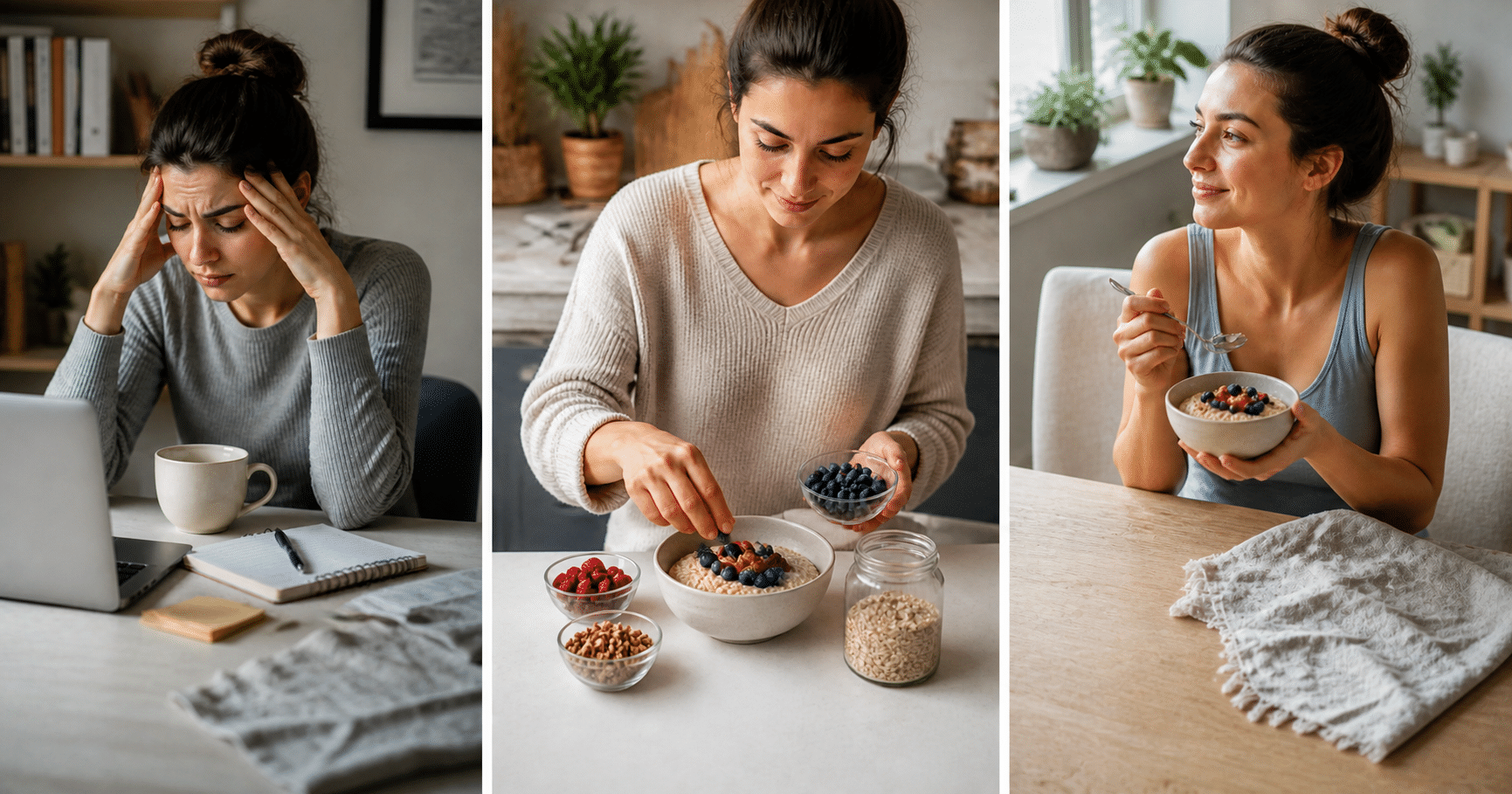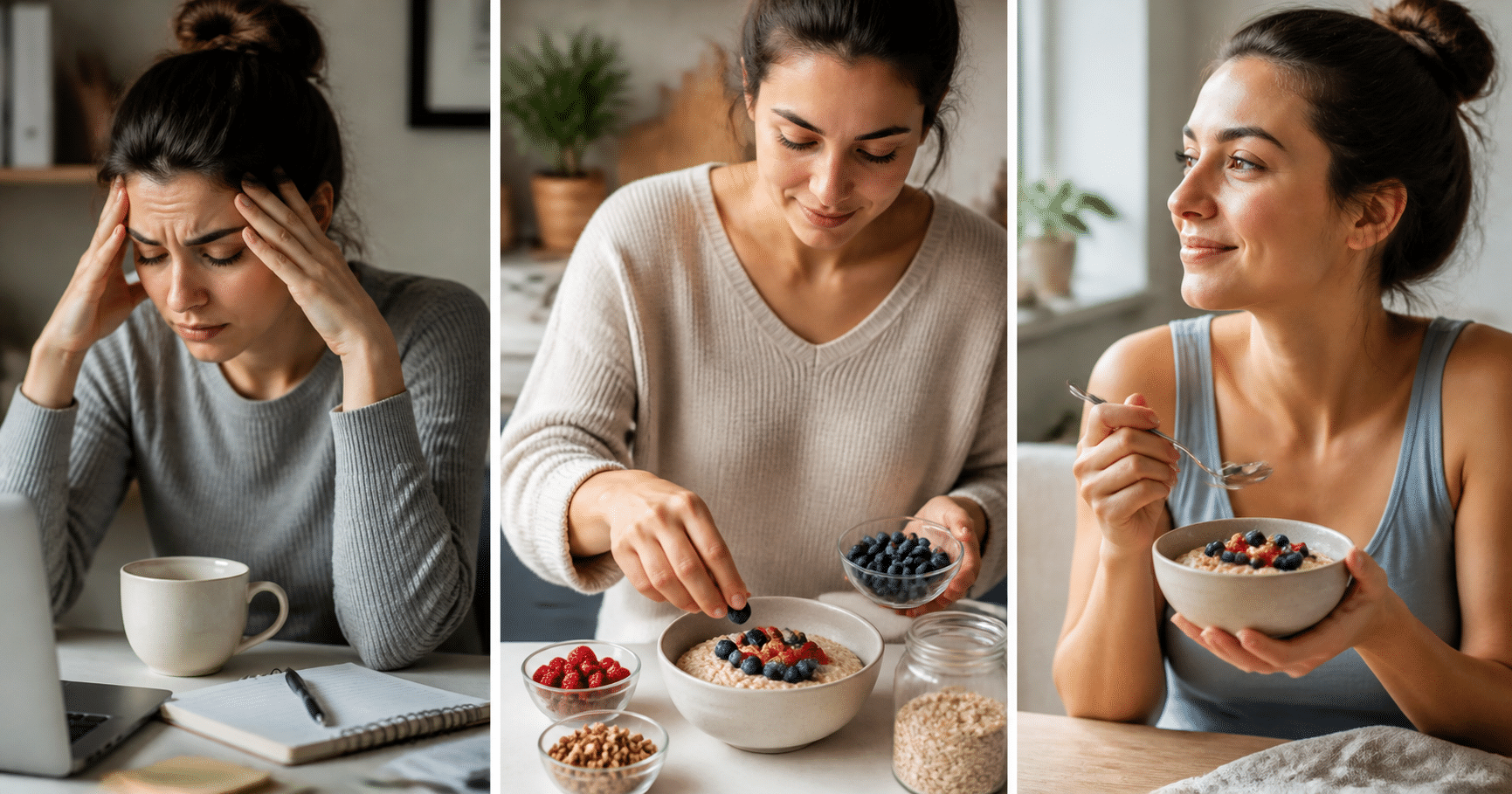
A stressful day can make a second cup of coffee seem essential, while a missed lunch leaves you irritable and ready to snack on whatever is nearby. Food can influence how you feel—but it is not a simple on-off switch for stress.
That distinction matters. A balanced meal may help you feel nourished and avoid hunger-related discomfort, while caffeine or alcohol can affect alertness and sleep. But no particular food has been shown to reliably shut down the body’s stress response.
Nutrition research offers useful clues, along with some important limits. Here’s what diet may—and may not—do for stress, plus a simple snack that makes a practical starting point.
How Food and Stress Influence Each Other
Stress activates the body’s systems for responding to a perceived challenge. Food does not turn those systems off, but eating patterns can affect sensations that sometimes pile onto stress, such as hunger, low energy, or feeling keyed up after too much caffeine.
A meal with protein, fiber-rich carbohydrates, and unsaturated fat can be more filling than a meal made mostly of refined carbohydrates. That may make it easier to go longer between meals without feeling distracted by hunger. It does not mean every mood change is caused by blood sugar, or that a snack can prevent anxiety.
The relationship also runs in the other direction: stress can change appetite, food choices, digestion, and sleep. Research links overall diet quality with mental well-being, but much of the evidence is observational, and studies often examine depression or general mood rather than stress itself. A healthful eating pattern can support overall well-being; it is not a stand-alone stress treatment.
Four Food Habits That May Make Stress Easier to Manage
1. Avoid letting a busy day turn into an accidental fast
Long gaps without food do not affect everyone the same way. For some people, though, hunger can bring on shakiness, headaches, irritability, or trouble concentrating—unpleasant sensations when the day is already demanding.
If you often feel depleted before dinner, plan a meal or snack rather than relying on willpower. Pairing fruit with yogurt, or whole-grain toast with an egg, provides more staying power than a sugary drink alone.
2. Build meals around foods that satisfy
Vegetables, beans, fruit, whole grains, nuts, seeds, fish, and other protein foods contribute fiber and a range of nutrients. There is no single “anti-stress” nutrient, and eating one food cannot compensate for a consistently limited diet. A varied pattern is a more dependable goal than chasing a superfood.
Try a simple plate: vegetables or fruit, a protein source such as beans, fish, eggs, or poultry, and a high-fiber grain or starchy vegetable. Add a modest amount of olive oil, avocado, nuts, or seeds if they suit your needs.
3. Notice what caffeine does to you
Caffeine can increase alertness, but it may also cause jitters, a racing feeling, or difficulty sleeping—especially in people who are sensitive to it or have it later in the day. Sensitivity varies, and some medications and health conditions can affect how caffeine feels.
If coffee seems to amplify tension, try a smaller serving, switch part of it to decaf, or move it earlier. Changing one habit at a time can help you tell whether it makes a difference.
4. Don’t count on alcohol for relaxation
A drink may feel calming at first, but alcohol can disrupt sleep later in the night. Poor sleep can make the next day harder to manage, creating a cycle that feels like stress relief in the moment but does not necessarily help overall well-being.
A Simple Oatmeal Bowl for a More Satisfying Snack
This quick bowl combines oats with protein from yogurt and fiber from fruit. It is an everyday food—not a remedy—and can work as breakfast or a snack when you need something more substantial than a handful of crackers.
Ingredients
-
- 1/2 cup old-fashioned rolled oats
-
- 1 cup water or milk
-
- 1/2 cup plain Greek yogurt, or another plain yogurt
-
- 1/2 cup fresh or thawed berries
-
- 1 tablespoon chopped walnuts or chia seeds
-
- Cinnamon, optional
Step-by-Step Instructions
-
- Combine the oats and water or milk in a small saucepan. Bring to a gentle simmer.
-
- Cook, stirring occasionally, for about 5 minutes, or until the oats are soft and the mixture reaches the thickness you like. Follow the package directions if they differ.
-
- Let the oats cool for a minute or two, then spoon them into a bowl.
-
- Top with yogurt, berries, walnuts or chia seeds, and cinnamon if desired.
For a quicker version, use plain instant oats and prepare them according to the package directions. If you prefer a dairy-free option, choose a fortified plant-based yogurt with protein. Refrigerate leftovers promptly and use within a few days; add the toppings just before eating for the best texture.
What Nutrition Research Can—and Can’t—Tell You
Studies of diet and mental health are challenging to interpret. People eat in patterns, not isolated ingredients, and stress can influence those patterns. Other factors—sleep, physical activity, social support, health conditions, and access to food—also shape how someone feels.
That is why claims that a specific food “lowers cortisol” or eliminates stress deserve skepticism. If you have diabetes or another condition that affects meal timing, follow the advice of your clinician or dietitian rather than making major changes based on a general eating tip. Persistent anxiety, low mood, or sleep problems also deserve care beyond dietary adjustments.
A Practical Way to Put It Together
Food can support a steadier foundation by helping you eat regularly and choose satisfying, varied meals. It cannot erase a difficult situation or replace mental health care, but small habits—such as keeping a nourishing snack nearby and noticing your response to caffeine—can make everyday routines more manageable.
Think less about finding a stress-busting ingredient and more about making the next meal one that leaves you comfortably nourished.