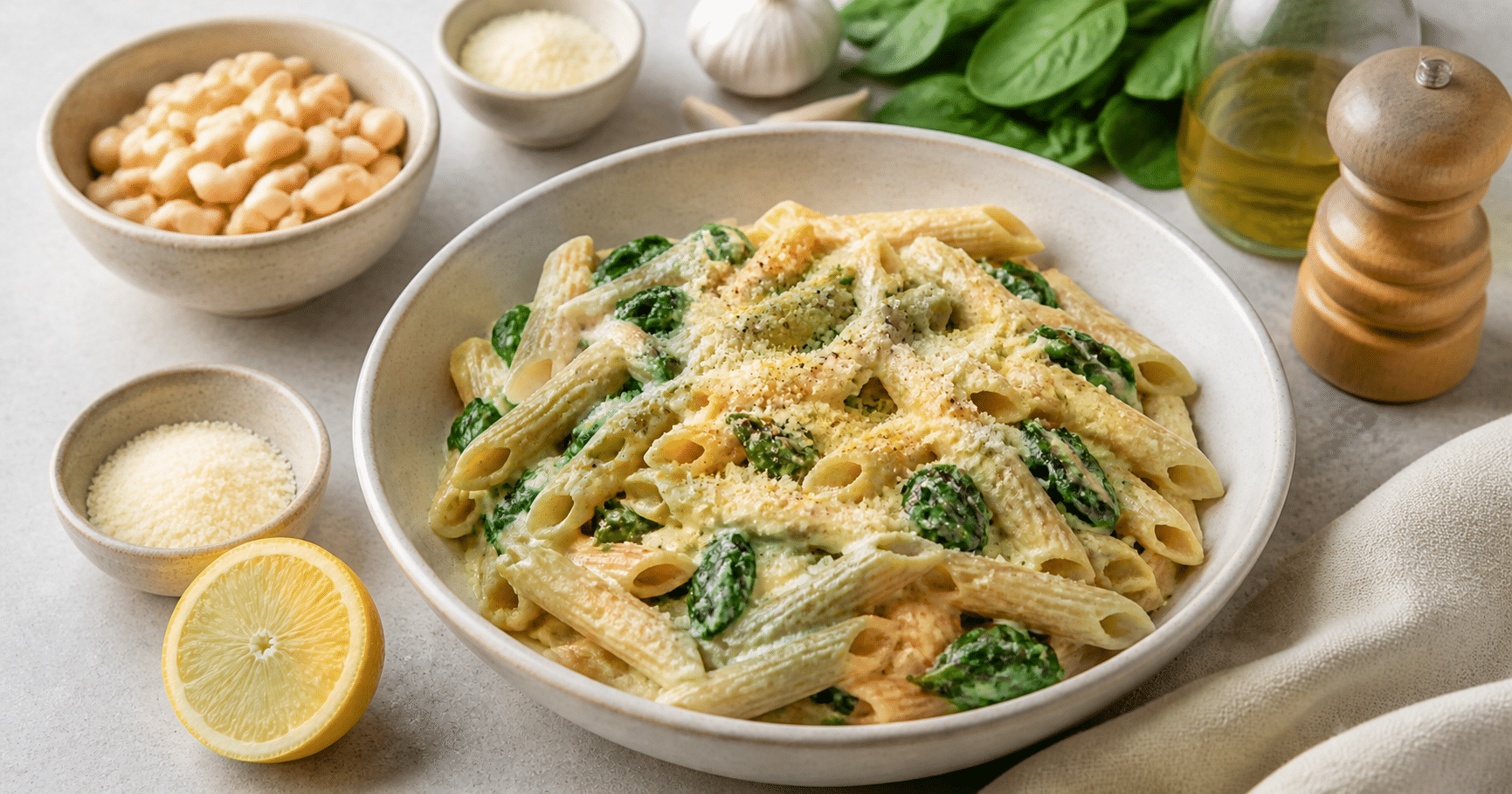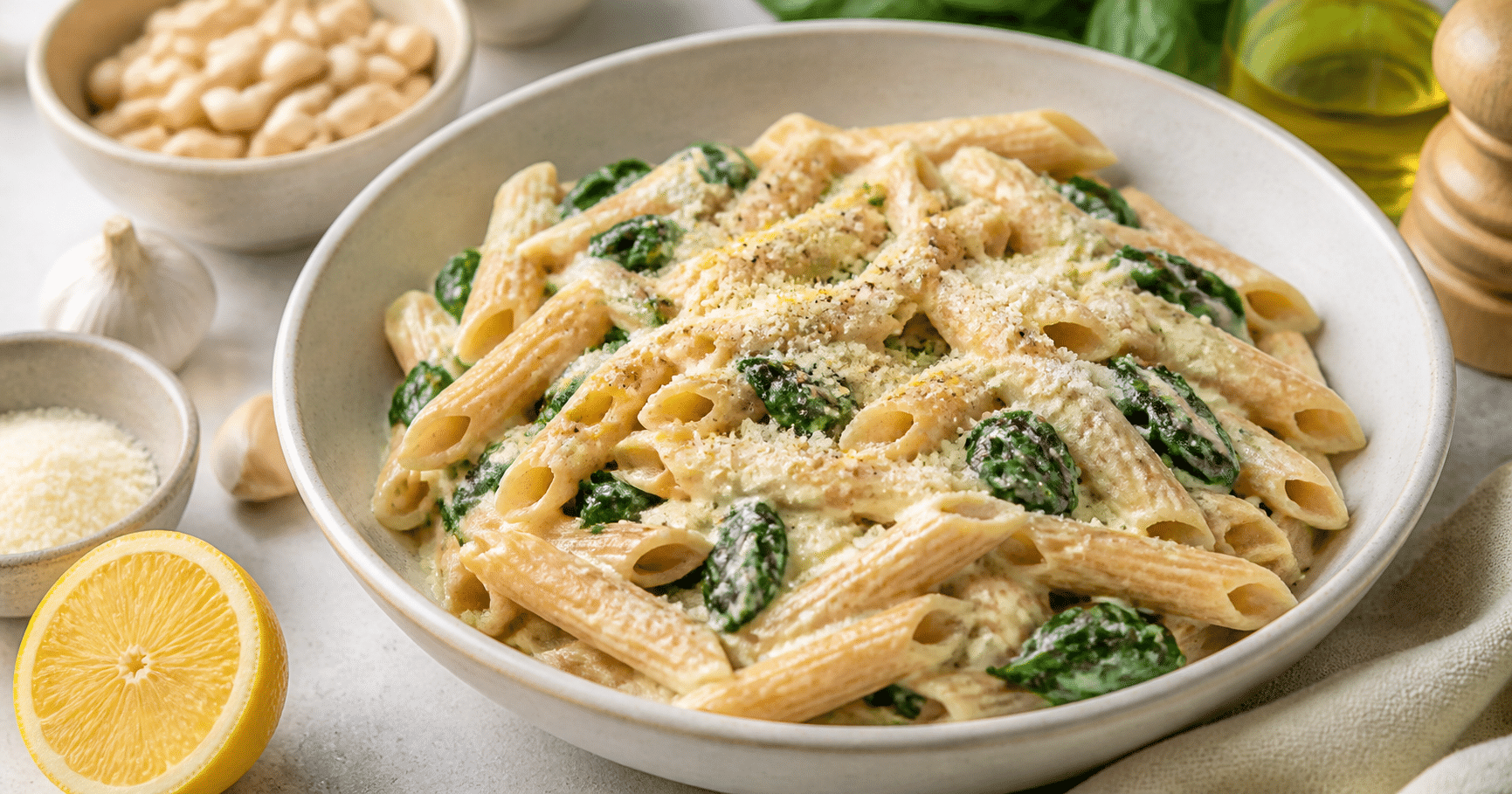
A creamy pasta sauce does not need heavy cream, a long simmer, or a complicated list of ingredients. White beans can make a silky, savory sauce while adding something many pasta dinners lack: a meaningful amount of fiber.
The trick is to blend the beans until smooth, then loosen the sauce with pasta water. The result clings to noodles rather than sitting in a thick layer at the bottom of the bowl—and it still tastes like dinner, not a nutrition project.
One detail worth knowing: blending beans changes their texture, but it does not remove their dietary fiber. This recipe pairs them with whole-wheat pasta for an especially fiber-rich meal, with lemon, garlic, and Parmesan to keep the flavor bright.
Here’s how to make it, adjust the consistency, and ease into a higher-fiber meal if beans are not already a regular part of your diet.
Why White Beans Make a Naturally Creamy Pasta Sauce
Cannellini or great northern beans become smooth and velvety when blended with olive oil and a little liquid. Their mild flavor lets familiar pasta-sauce ingredients—garlic, lemon, black pepper, and Parmesan—come through, while the beans give the sauce body without cream.
Beans contain both soluble and insoluble fiber. Fiber is not digested in the same way as starch or sugar; it helps add bulk to the diet, and some types can contribute to feeling satisfied after a meal. A varied eating pattern that includes beans, vegetables, and whole grains is a practical way to get more fiber, though no single recipe is a treatment for a health condition.
Blending makes the beans creamy, not fiber-free. This recipe uses whole-wheat pasta as well, but you can make it with regular pasta if that suits your taste or digestion better. Fiber amounts vary by brand and portion size, so treat any estimate as a guide rather than a label claim.
Three Details That Make This Sauce Work
1. The beans add body as well as fiber
Unlike a thin broth-based sauce, pureed beans help the sauce cling to pasta. Rinsing canned beans can remove some of the salty canning liquid, while low-sodium broth gives you more control over the final seasoning.
2. Pasta water is the key to a silky texture
Starchy water left from cooking pasta helps loosen the bean puree and bring it together with the noodles. Add it a splash at a time: the sauce thickens as it sits, so it is easier to thin it gradually than to correct a watery pan.
3. More fiber is best added at a comfortable pace
A meal with beans and whole-wheat pasta can be a substantial jump in fiber if you usually eat little of either. If that causes gas or bloating, try a smaller serving of the sauce, choose regular pasta at first, and increase bean portions gradually. Drinking enough fluids also matters when increasing fiber.
How to Make Creamy White Bean Pasta Sauce
This recipe makes four servings and takes about 25 minutes. It produces a thick, garlicky sauce with a fresh finish from lemon; spinach adds color and an easy serving of vegetables.
Ingredients
-
- 8 ounces whole-wheat pasta, such as penne or rigatoni
-
- 2 tablespoons olive oil
-
- 3 garlic cloves, minced
-
- 2 cans (15 ounces each) cannellini or great northern beans, drained and rinsed
-
- 1 cup low-sodium vegetable or chicken broth, plus more as needed
-
- 1/3 cup finely grated Parmesan, plus extra for serving
-
- 1 tablespoon lemon juice, plus 1 teaspoon finely grated zest
-
- 1/4 teaspoon black pepper, or to taste
-
- 2 cups baby spinach
-
- Salt, as needed
-
- Red pepper flakes, optional
Step-by-Step Instructions
-
- Bring a large pot of water to a boil. Salt it lightly, add the pasta, and cook according to the package directions until just tender. Before draining, scoop out about 1 cup of pasta water.
-
- While the pasta cooks, warm the olive oil in a skillet over medium-low heat. Add the garlic and cook for about 30 seconds, stirring, until fragrant. Avoid browning it, which can make the flavor bitter.
-
- Add the rinsed beans and broth to the skillet. Simmer gently for 3 to 4 minutes, then take the pan off the heat. Let the mixture cool briefly before blending.
-
- Transfer the bean mixture to a blender and add the Parmesan, lemon juice, zest, and black pepper. Blend until smooth. Use care with warm ingredients: do not fill a standard blender to the top, and follow its instructions for blending warm liquids. Alternatively, use an immersion blender in the skillet.
-
- Return the sauce to the skillet over low heat. Stir in the spinach until wilted, then add the drained pasta. Toss well, adding reserved pasta water a few tablespoons at a time until the sauce coats the noodles.
-
- Taste and adjust with salt, extra lemon, Parmesan, or red pepper flakes. Serve warm.
Refrigerate leftovers in a covered container and use within three to four days. The sauce may thicken in the refrigerator; stir in a little water or broth while reheating over low heat. You can also blend the sauce ahead and cook fresh pasta when you are ready to eat.
Easy Ways to Adjust the Recipe
For a milder first try, use regular pasta or serve a smaller portion of the bean sauce alongside a familiar meal. To add more vegetables, stir in cooked mushrooms, peas, or chopped roasted broccoli. A spoonful of pesto can add herbal flavor, while extra lemon makes the sauce taste lighter without thinning it.
For a rough fiber estimate, the beans and whole-wheat pasta together may provide around 12 to 15 grams per serving, depending on the brands, exact portions, and how much sauce is used. Check package labels for a more precise figure. If you want a smoother sauce, blend longer; if it becomes too thick, pasta water is usually the simplest fix.
A Comforting Pasta With a Practical Extra
White bean pasta sauce offers a simple way to make a creamy meal with pantry staples and add fiber at the same time. The beans provide the body; pasta water, lemon, and Parmesan bring the texture and flavor into balance.
Start with the portion that feels right for you, then adjust the pasta, seasoning, and vegetables to suit your table. A useful everyday recipe is one you’ll want to make again.