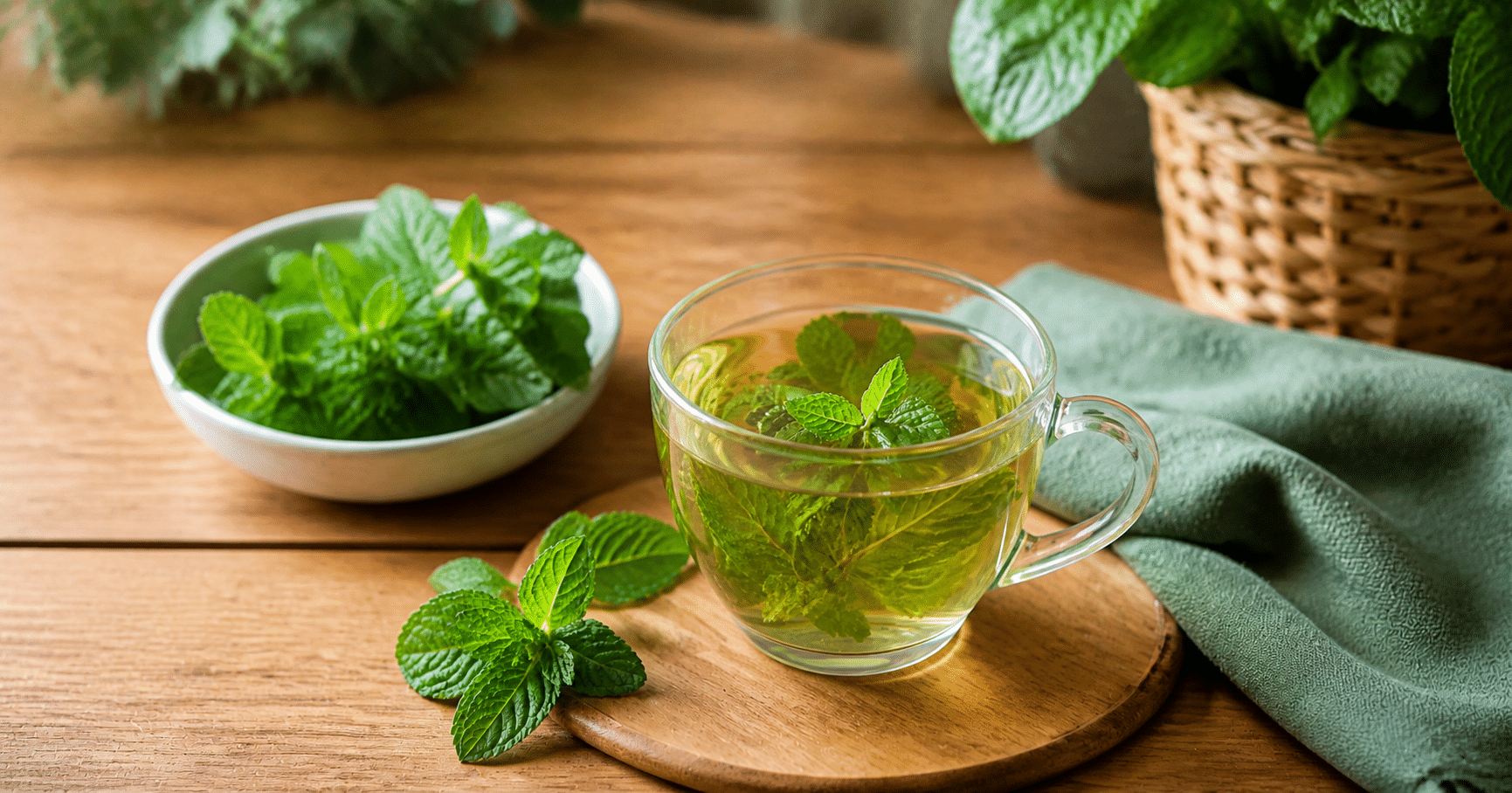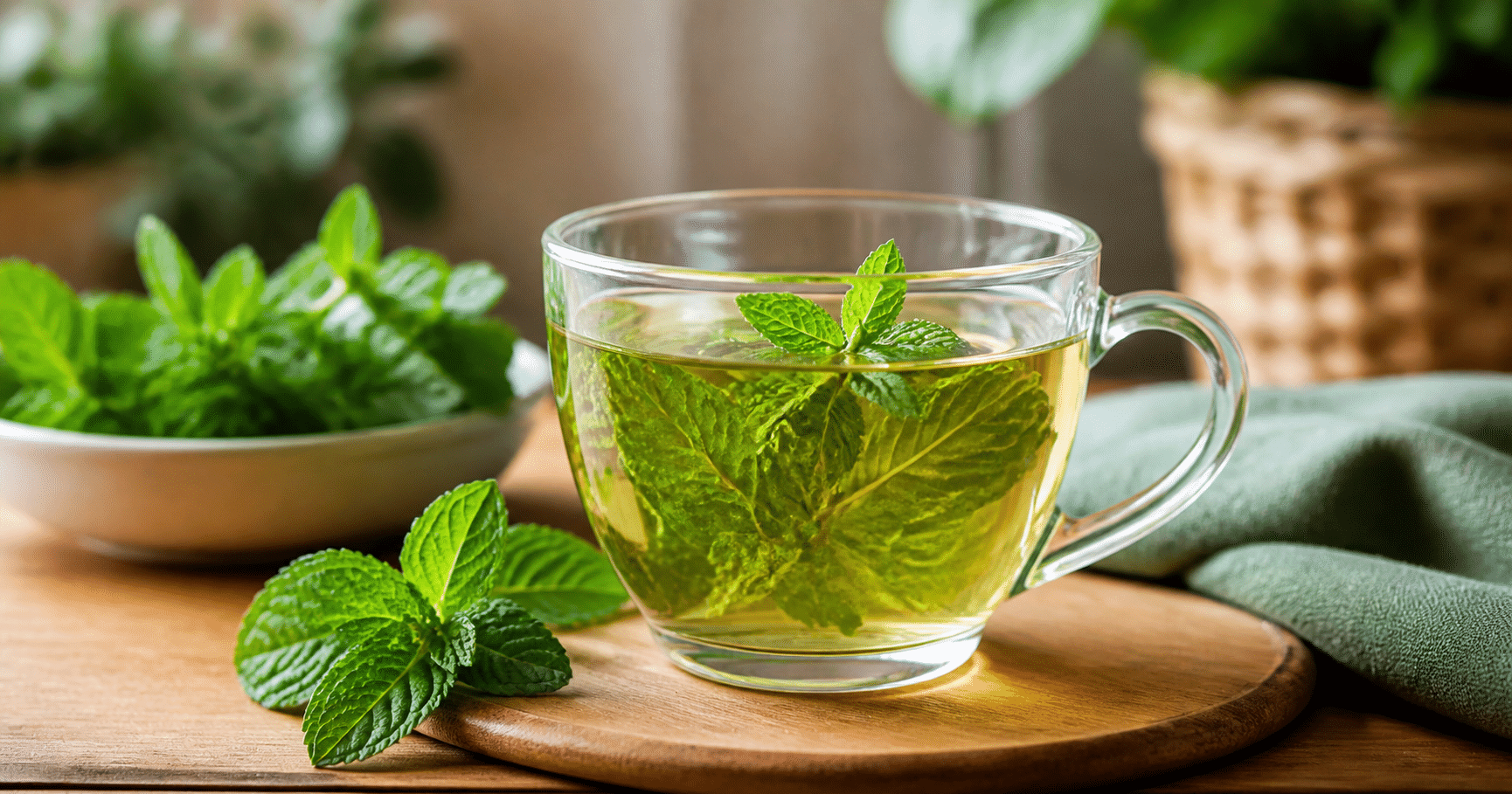
A cup of peppermint tea after dinner may feel like a simple answer to a tight, gassy belly. The drink is soothing for many people, and peppermint contains compounds that can relax smooth muscle. But the research behind peppermint for digestive symptoms is mostly about capsules of peppermint oil—not a mug of tea.
That distinction matters. Tea may be a comforting drink, but its strength varies with the leaves, amount, and brewing time, so it cannot be assumed to work like a studied, measured product.
Here’s what the evidence suggests about peppermint tea and bloating, how to brew it, and when a swollen or uncomfortable belly deserves more than a home remedy.
What peppermint tea may do—and what research has actually tested
Peppermint contains menthol and other natural compounds that can affect smooth muscle, including muscle in the digestive tract. In theory, easing intestinal muscle spasms may lessen cramping or discomfort that some people describe as bloating.
Clinical research has found that peppermint oil capsules may help some people with irritable bowel syndrome (IBS), particularly with overall symptoms and abdominal pain. Those capsules are formulated to deliver a measured amount of oil, often past the stomach. This evidence does not establish that peppermint tea has the same effect, or that it reduces gas itself.
Bloating can have many causes, including constipation, food intolerances, IBS, and swallowing air while eating. A warm drink may feel soothing and contribute fluid, but it may not address the underlying cause. If tea helps, it is best viewed as a low-effort comfort measure—not a proven treatment.
Three useful things to know before pouring a cup
1. Tea and peppermint-oil capsules are not interchangeable
A tea infusion contains water-soluble substances extracted from peppermint leaves, while capsules provide peppermint oil in a concentrated, measured form. The amount of active compounds in a cup is not standardized. Results from capsule studies therefore cannot be used to promise the same benefit from tea.
2. It may suit cramping more than every kind of bloating
If your discomfort comes with intestinal cramping, peppermint’s muscle-relaxing properties offer a plausible reason it might feel helpful. But a belly that feels distended because of constipation, a particular food, or another digestive issue may not respond. Notice whether the tea changes your symptoms rather than assuming it should.
3. Peppermint can aggravate heartburn
Peppermint may relax the valve between the esophagus and stomach. For some people, that can make reflux or heartburn worse. If you already get reflux—especially after meals or when lying down—peppermint tea may not be a good choice. Stop drinking it if it reliably triggers burning or sour-tasting fluid in your throat.
How to brew a simple cup of peppermint tea
This preparation makes one mild cup for sipping after a meal. It is a beverage, not a therapeutic dose, and a stronger brew is not necessarily more effective.
Ingredients
-
- 1 peppermint tea bag, or about 1 tablespoon dried peppermint leaves
-
- 8 ounces hot water
-
- Optional: a little honey, if desired
Step-by-step instructions
-
- Place the tea bag or leaves in a mug and pour over 8 ounces of hot water.
-
- Cover and steep for 5 to 10 minutes. A longer steep generally makes a stronger-tasting cup.
-
- Remove the tea bag or strain out the leaves. Let the tea cool to a comfortable temperature before sipping.
For loose leaves, store the dried herb in a sealed container in a cool, dry place and follow the package’s freshness guidance. Brew only what you plan to drink; there is no need to prepare a concentrated batch or add peppermint essential oil. Essential oil is not the same as tea and should not be swallowed as a home remedy.
How to tell whether it is helping
Try the tea as an ordinary drink and pay attention to the pattern: Does discomfort ease, stay the same, or turn into heartburn? Keeping a brief note of meals, bowel habits, and symptoms can reveal whether bloating is linked to constipation, specific foods, or another recurring trigger.
Also consider simple habits that may reduce swallowed air, such as eating more slowly and limiting fizzy drinks if they bother you. If constipation seems to be part of the problem, addressing fluid intake, movement, and fiber gradually may be more relevant than relying on peppermint alone. A clinician or dietitian can help identify a safe approach, particularly if you have ongoing symptoms or several health conditions.
Occasional bloating is common, but persistent or new symptoms should not automatically be blamed on age or diet. Seek medical advice for bloating that keeps returning or does not improve, and contact a clinician promptly if it comes with severe pain, vomiting, blood in the stool, unexplained weight loss, or a major change in bowel habits.
The bottom line on peppermint tea for bloating
Peppermint tea may be a pleasant, soothing drink, and its compounds offer a reasonable explanation for why some people find it comforting. But evidence for peppermint-oil capsules in IBS is not proof that tea treats bloating.
Enjoy a cup if it agrees with you, skip it if it worsens reflux, and pay attention to symptoms that persist. A helpful cup can be part of your routine; it should not stand in for finding the cause of a lasting change.