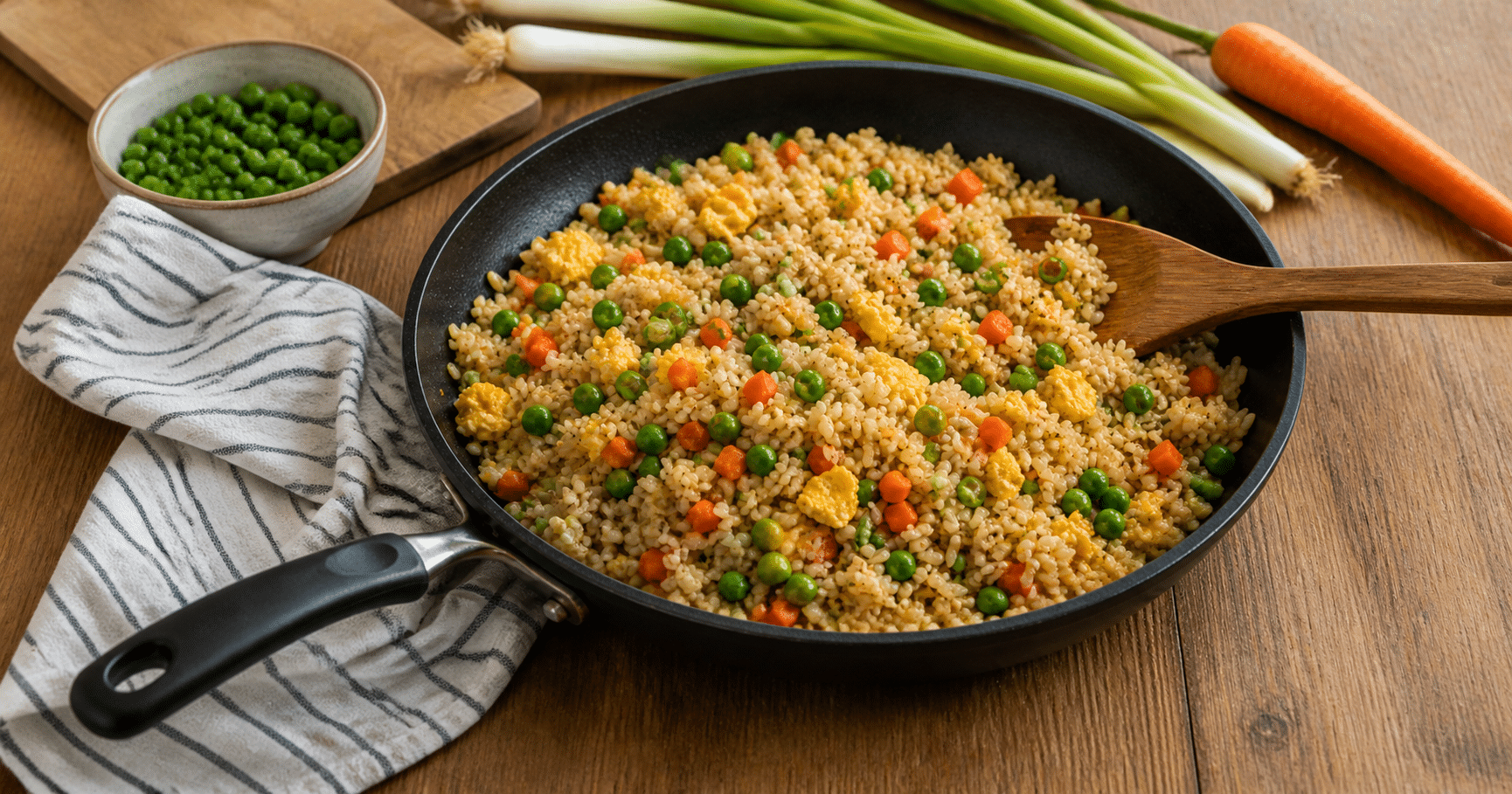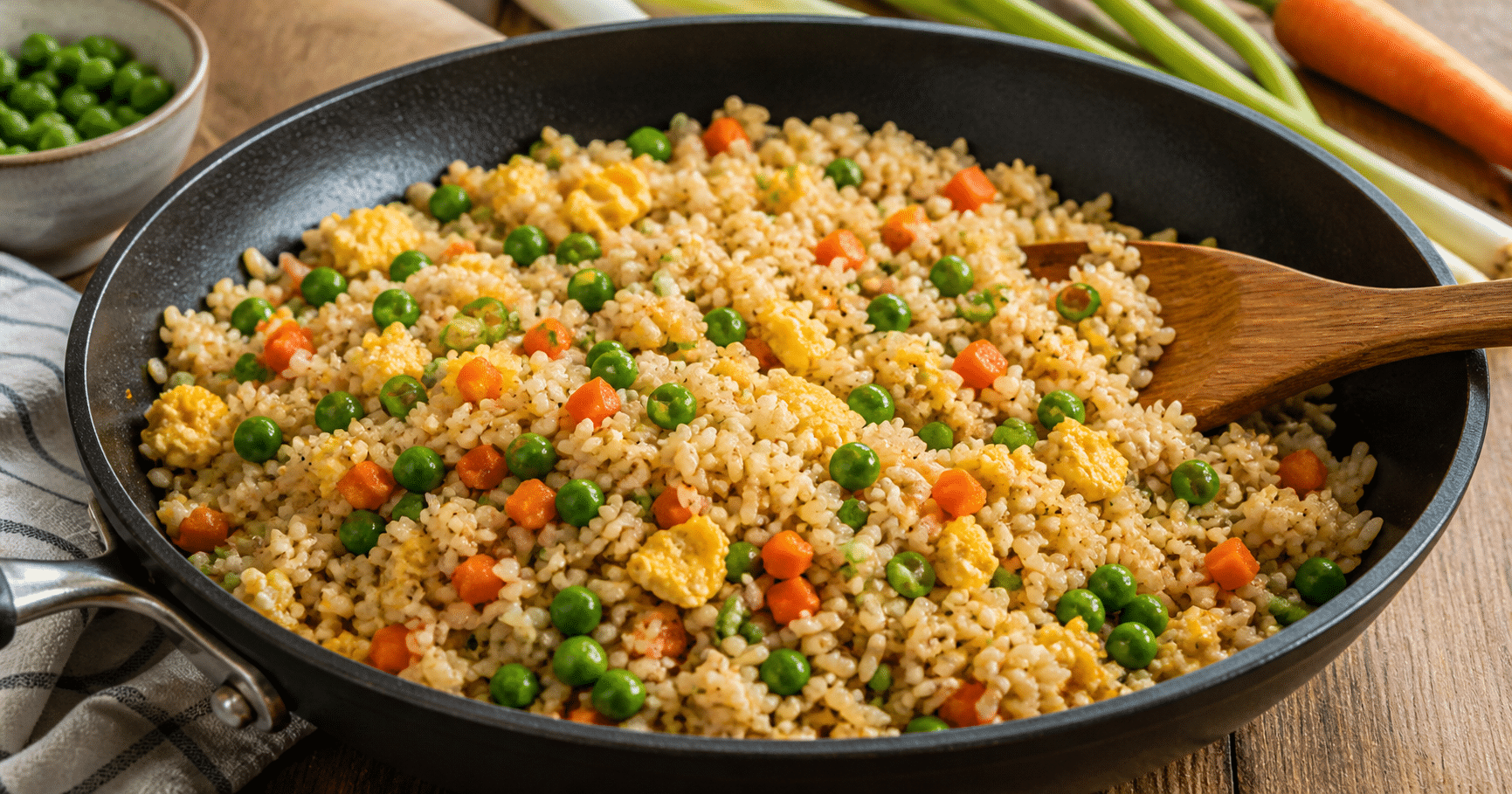
Frozen peas are one of the easiest ways to make fried rice feel like a complete meal. They go straight from the freezer into the skillet, add bright color and a little sweetness, and need only a few minutes to heat through.
The bigger secret to good egg and vegetable fried rice isn’t a special sauce. It’s the rice: chilled, separate grains brown more readily than a steaming fresh batch, which can turn soft and sticky in the pan.
This quick recipe uses eggs, frozen peas, carrots and simple pantry seasonings. You’ll also find practical advice for keeping the rice fluffy, adjusting the salt and handling leftovers safely.
Why Cold Rice and Frozen Peas Work So Well
Fried rice is a useful way to turn cooked rice and a few refrigerator or freezer staples into dinner. Chilled rice tends to be drier and easier to separate, so it can pick up a little color in a hot pan instead of clumping. Long-grain white rice is a reliable choice, though brown rice also works and has a chewier texture.
Frozen peas are already blanched before freezing, so they don’t need a long cooking time. Adding them near the end helps them heat through without becoming mushy. Eggs bring satisfying protein, while peas and carrots contribute vegetables, fiber and natural sweetness. The finished dish is flexible, but soy sauce can make it salty quickly; start with less and add more only after tasting.
Three Small Choices That Improve the Results
1. Start with rice that has cooled properly
Use rice cooked ahead and refrigerated, not rice that has sat on the counter for hours. Spread freshly cooked rice in a shallow container to help it cool, then refrigerate it promptly. For food safety, refrigerate cooked rice within two hours of cooking, and don’t leave it at room temperature while you prepare the rest of dinner.
2. Give the pan enough heat and space
A crowded pan traps steam, which works against browning. A large skillet is fine for this four-serving recipe; if yours is small, stir-fry the rice in two batches. Let the pan and oil heat before adding the rice, then spread the grains out briefly before stirring.
3. Add delicate ingredients at the right time
Cook the eggs first and take them out of the pan so they stay tender. Add the frozen peas after the rice has been stir-fried, then return the eggs at the end. This keeps the peas bright and gives the eggs less time to dry out.
Fast Egg and Vegetable Fried Rice With Frozen Peas
This recipe makes four modest main-dish servings, or more if served alongside soup or another entrée. Plan on about 10 minutes of preparation and 10 minutes of cooking, not including the time needed to cook and chill the rice.
Ingredients
-
- 3 cups cold, cooked rice, preferably long-grain
-
- 3 large eggs
-
- 1 cup frozen peas
-
- 1 medium carrot, peeled and finely diced
-
- 3 scallions, thinly sliced, with white and green parts separated
-
- 2 tablespoons neutral cooking oil, divided
-
- 1 tablespoon low-sodium soy sauce, plus more to taste
-
- 1 teaspoon toasted sesame oil, optional
-
- Black pepper, to taste
Step-by-Step Instructions
-
- Break up the rice. Use clean hands or a fork to separate clumps of chilled rice. If it is very firm, break it into smaller pieces before it goes into the pan.
-
- Cook the eggs. Beat the eggs in a small bowl. Heat 1 teaspoon of the neutral oil in a large skillet over medium heat. Add the eggs and gently scramble until just set, about 1 to 2 minutes. Transfer them to a plate.
-
- Soften the carrot and scallion whites. Add the remaining oil to the skillet. Stir in the diced carrot and scallion whites and cook for 2 to 3 minutes, stirring often.
-
- Stir-fry the rice. Add the rice and spread it across the skillet. Cook for 3 to 4 minutes, stirring and tossing to heat it evenly. If the grains are sticking, lower the heat slightly rather than pouring in extra oil right away.
-
- Add peas and seasonings. Stir in the frozen peas and soy sauce. Cook for another 2 to 3 minutes, until the peas are hot and the rice is steaming.
-
- Finish and serve. Fold the scrambled eggs back in. Add the scallion greens, black pepper and sesame oil, if using. Taste before adding more soy sauce, then serve hot.
Easy Changes Without Losing the Quick-Cooking Rhythm
Use what you have, but keep additions small enough to cook quickly. Finely chopped bell pepper, corn or leftover cooked broccoli can join the carrots; add softer vegetables later so they don’t overcook. For a little heat, add chili flakes or a small spoonful of chili crisp at the table.
Brown rice makes a hearty version, but its firmer grains may need an extra minute in the skillet. If using freshly cooked rice, spread it on a tray to release steam and cool before stir-frying; it may still be softer than refrigerated rice. Avoid adding water to loosen the grains, since that can make the dish steamy and sticky.
For the best texture, prepare the rice the day before and keep it covered in the refrigerator. The shortcut is having it ready—not leaving it out to dry on the counter.
Refrigerate leftovers promptly in a shallow, covered container and use them within three to four days. Reheat until steaming hot throughout; a food thermometer should read 165°F. Discard rice or fried rice that has been left at room temperature for more than two hours.
A Practical Dinner From Freezer and Fridge Staples
Cold rice, a hot roomy skillet and a late addition of frozen peas are the simple details that make this fried rice work. Keep the soy sauce modest, taste before adding more, and adapt the vegetables to what’s already on hand.
With the rice cooked ahead, dinner can be on the table in about 20 minutes—and a bag of peas becomes more than just a side dish.