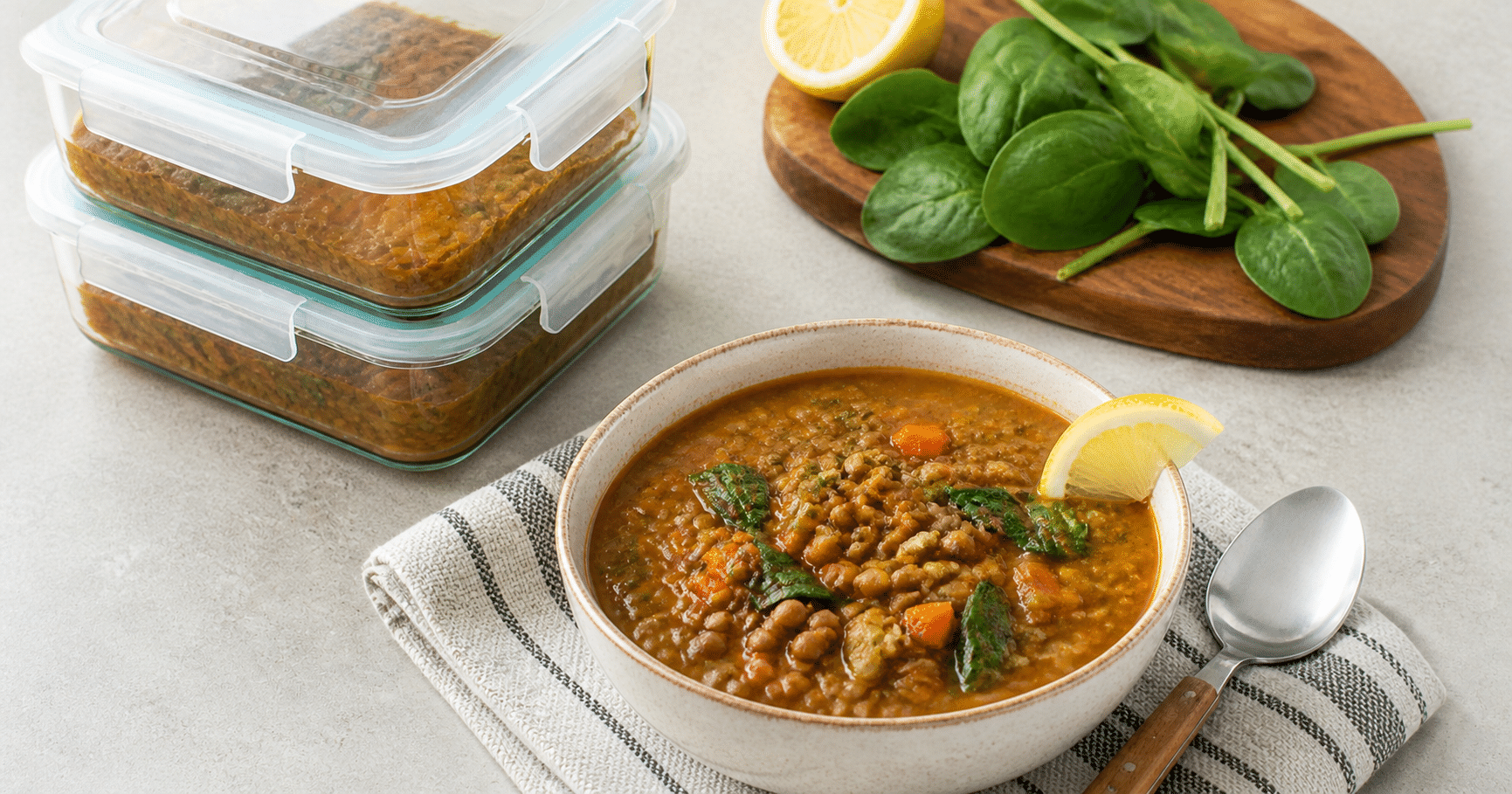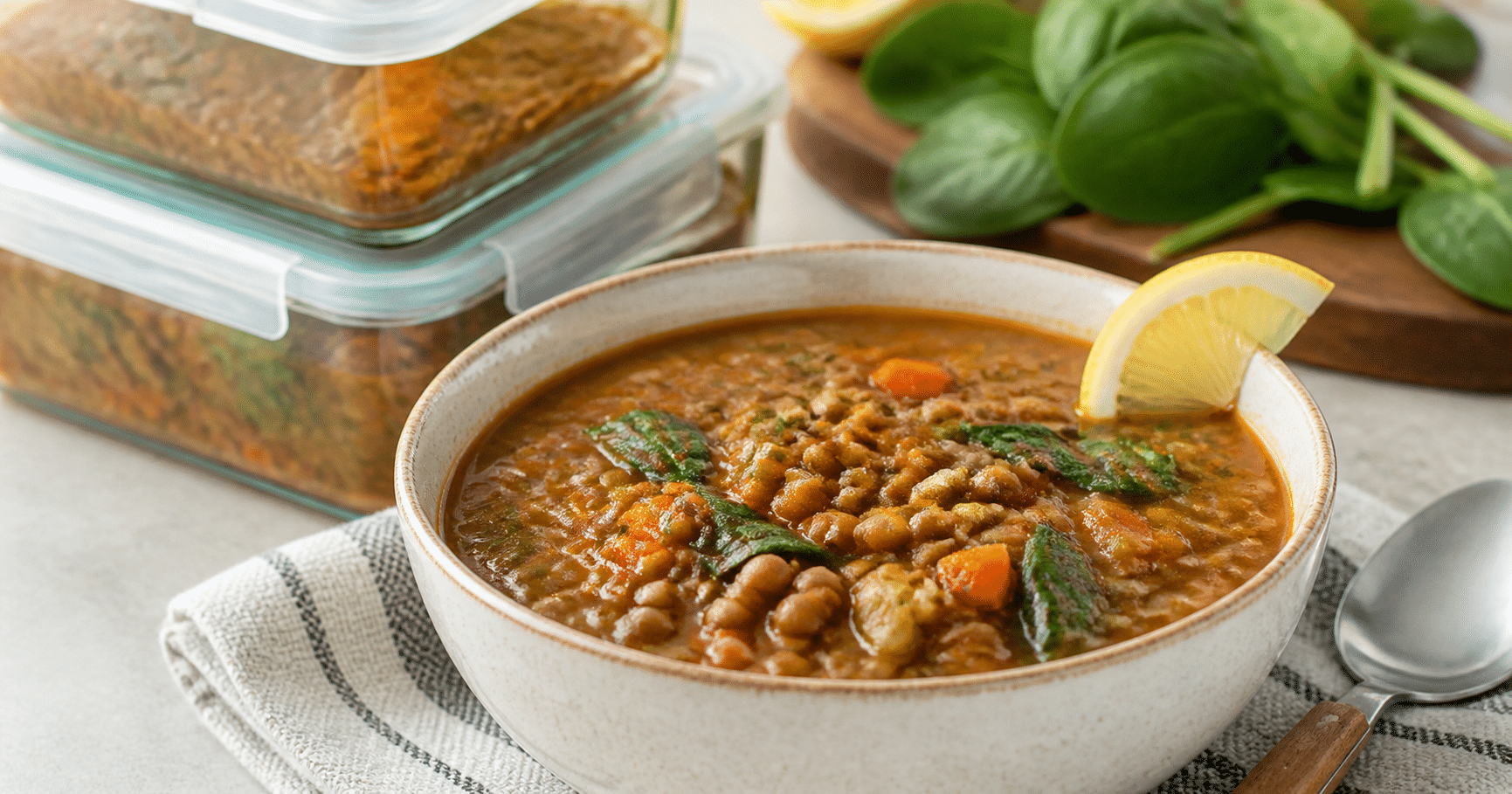
A pot of lentil soup can turn a hectic evening into a nearly effortless dinner—if you freeze it in a way that preserves its texture. Lentils make a hearty, budget-friendly base, and the soup can be portioned for lunches or nights when cooking from scratch is not in the cards.
One detail is easy to overlook: lentils continue to absorb liquid as they sit. Soup that looks brothy on the stove may thaw much thicker, especially if it is cooked until the lentils are very soft.
This recipe uses brown or green lentils, which generally hold their shape better than red lentils. You’ll also find practical directions for cooling, freezing, and reheating the soup so a make-ahead meal tastes inviting—not like a dense block of leftovers.
Why Lentil Soup Works So Well for the Freezer
Lentils bring plant-based protein and fiber to a simple meal, along with nutrients such as folate and iron. Their mild, earthy flavor pairs easily with familiar soup vegetables, herbs, and spices. They also cook without soaking, making them convenient for a weeknight pot.
For a freezer-friendly texture, brown or green lentils are a good choice because they tend to stay more intact during cooking and reheating. Red lentils break down more readily; they can make a delicious soup, but the result is usually thicker and softer.
Freezing does not make soup last indefinitely at its best. Keep it frozen at 0°F, and aim to use it within two to three months for good quality. The soup may be safe beyond that if it has stayed continuously frozen, but its flavor and texture can decline.
Three Small Choices That Improve the Results
1. Stop cooking while the lentils still have some shape
Simmer until the lentils are tender but not falling apart. They’ll soften a little more as the hot soup cools and again when it is reheated. Check them near the end of the cooking time rather than relying only on the clock.
2. Leave room for the soup to thicken
Lentils soak up broth in the refrigerator and freezer. Make the soup slightly looser than you want it in the bowl, and keep a little extra broth or water on hand for reheating. A squeeze of lemon added just before serving can also lift the flavor after storage.
3. Freeze in portions you’ll actually use
Single-serving containers are convenient for lunches, while larger portions suit a family dinner. Use freezer-safe containers or bags, leave about an inch of space at the top for expansion, and label each portion with the name and date.
Freezer-Friendly Lentil Soup Recipe
This vegetable-packed soup makes about six servings. Preparation takes roughly 15 minutes, followed by about 35 to 40 minutes of cooking, depending on the lentils.
Ingredients
-
- 2 tablespoons olive oil
-
- 1 medium yellow onion, diced
-
- 2 medium carrots, diced
-
- 2 celery stalks, diced
-
- 3 garlic cloves, minced
-
- 1 teaspoon ground cumin
-
- 1 teaspoon smoked paprika
-
- 1 1/2 cups brown or green lentils, picked over and rinsed
-
- 1 can (14.5 ounces) diced tomatoes, with their juice
-
- 6 cups low-sodium vegetable broth, plus more as needed
-
- 1 bay leaf
-
- 1/2 teaspoon dried thyme
-
- 1/2 teaspoon salt, plus more to taste
-
- 1/4 teaspoon black pepper
-
- 2 cups baby spinach or chopped kale, optional
-
- Lemon wedges, for serving
Step-by-Step Instructions
-
- Soften the vegetables. Heat the olive oil in a large pot over medium heat. Add the onion, carrots, and celery, and cook for 6 to 8 minutes, stirring now and then, until beginning to soften.
-
- Add the seasonings. Stir in the garlic, cumin, and smoked paprika. Cook for about 30 seconds, just until fragrant.
-
- Simmer the soup. Add the lentils, tomatoes, broth, bay leaf, thyme, salt, and pepper. Bring to a boil, then reduce the heat and simmer uncovered for 30 to 40 minutes. Stir occasionally and begin checking the lentils for tenderness after 25 minutes.
-
- Finish and adjust. Remove the bay leaf. Stir in spinach or kale, if using, and cook until wilted or tender. If the soup is already very thick, add broth or water before cooling. Taste and adjust the seasoning.
-
- Cool and portion. Divide the soup into shallow containers so it cools more quickly. Refrigerate or freeze it within two hours of cooking; don’t leave a large pot sitting out to cool for hours.
How to Freeze, Thaw, and Reheat It
Once cooled, seal the soup in freezer-safe portions, leaving a little room at the top. For the best flavor and texture, use within two to three months. You can refrigerate portions for three to four days if you plan to eat them soon.
Thaw a frozen portion overnight in the refrigerator, or reheat it from frozen in a saucepan over low heat with a splash of water or broth. Stir often so it heats evenly. Reheat leftovers to 165°F, adding liquid as needed to loosen the lentils. Finish with lemon juice and taste for salt just before serving.
For the brightest flavor, freeze the soup without the lemon. A fresh squeeze after reheating does more than lemon added before storage.
A Make-Ahead Dinner That Stays Flexible
This soup is easy to adapt: use kale instead of spinach, swap vegetable broth for chicken broth, or add a pinch of chili flakes for warmth. If you prefer a milder flavor, start with less cumin and adjust after cooking. Keep additions simple if you want a soup that works for several different meals.
Pair a bowl with toast, a sandwich, or a simple salad. The real advantage is having a nourishing, adaptable meal ready when the week gets busy—and enough broth nearby to bring it back to the texture you like.