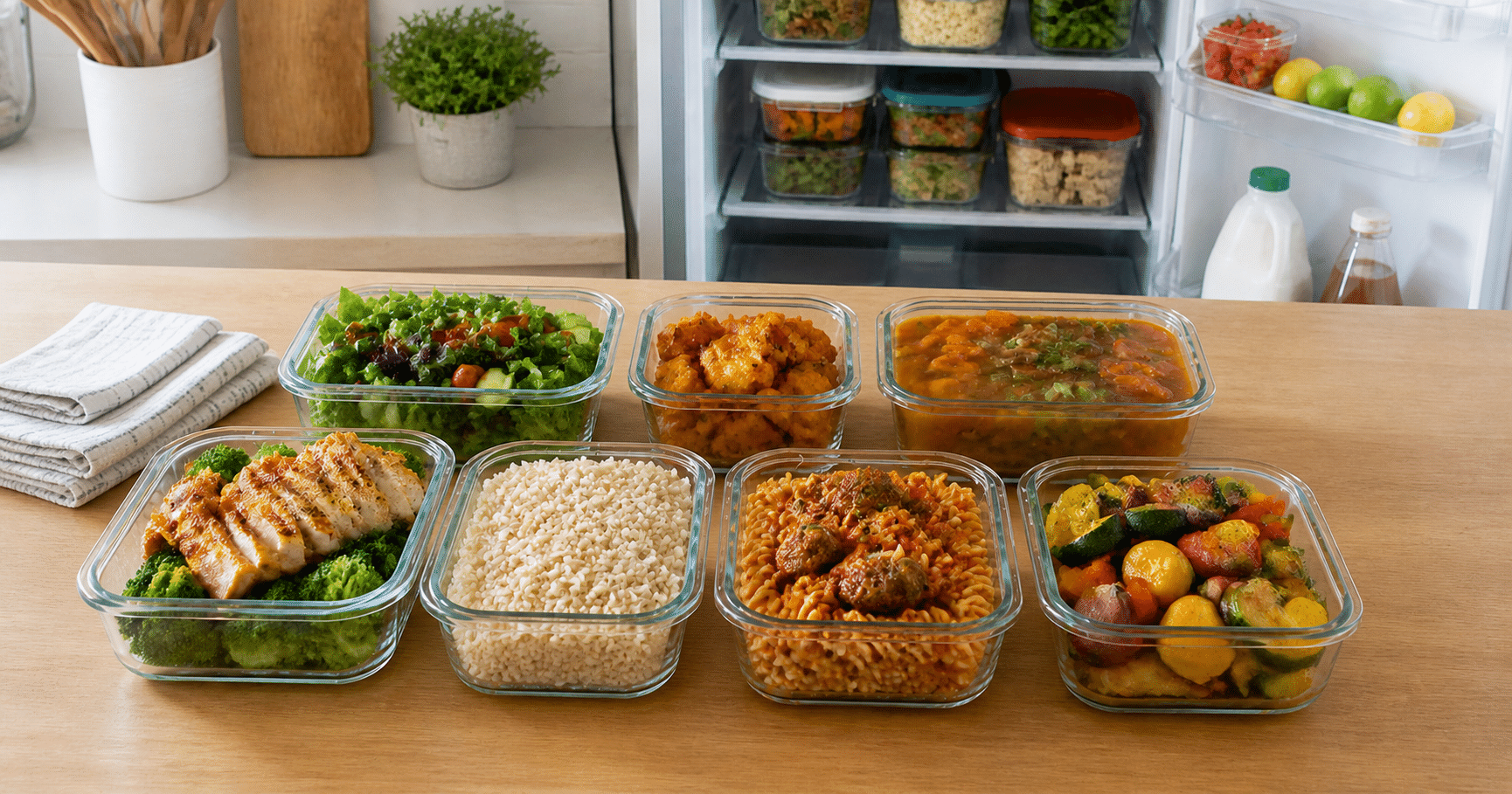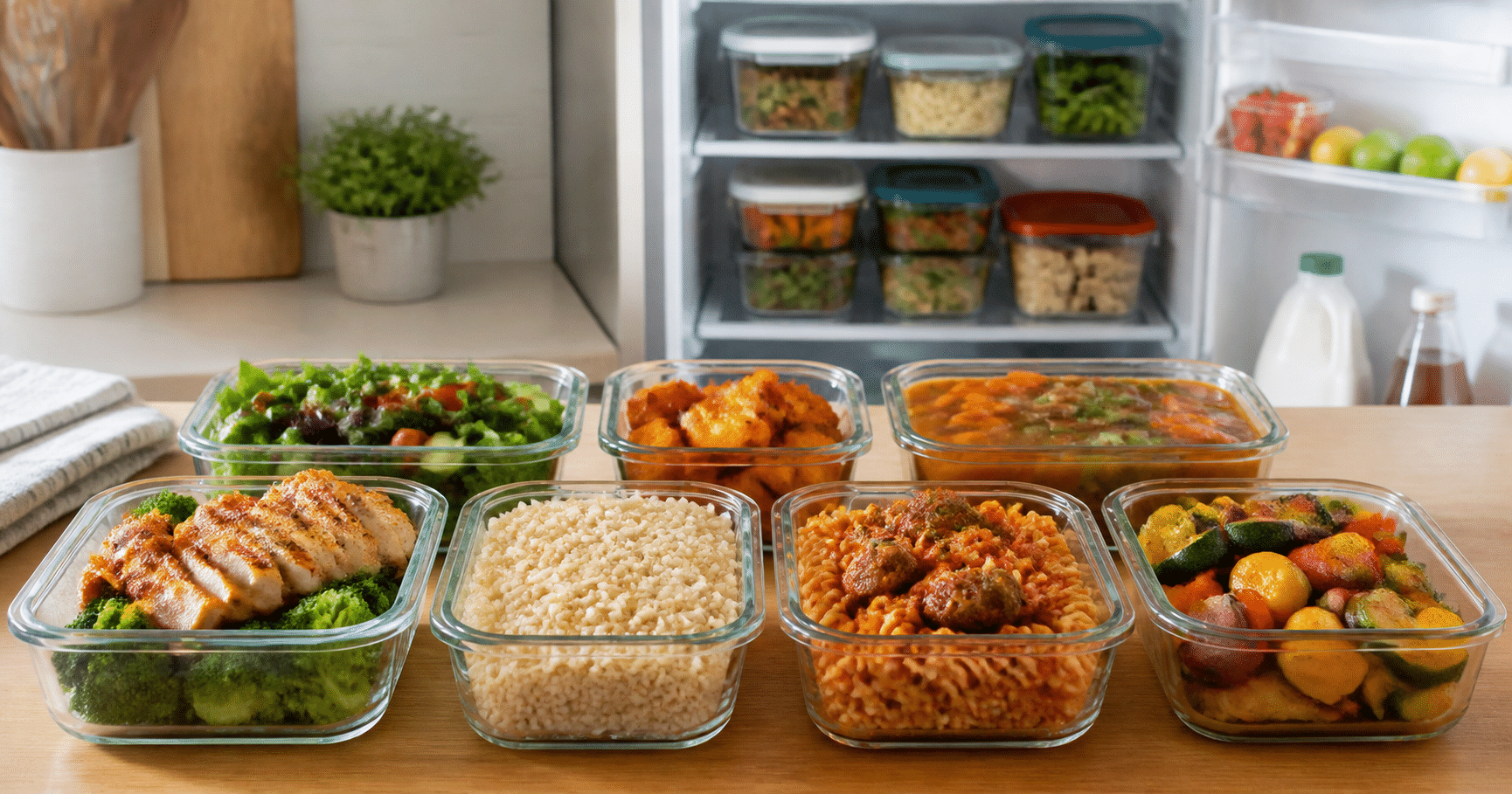
A refrigerator can make Sunday’s cooking last through the workweek—but not indefinitely. Most cooked meal-prep foods are best used within three to four days, even when they still look and smell fine.
That window applies to more than leftovers in a takeout box. Cooked chicken, roasted vegetables, rice, pasta, soups and mixed meals all need prompt cooling and cold storage. A container that sits on the counter too long can become unsafe before it ever reaches the fridge.
Here’s how long common meal-prep foods keep, how to store them so they stay safe and appealing, and when freezing is the smarter choice.
The Short Answer: Most Cooked Meal Prep Lasts 3 to 4 Days
For most cooked leftovers, U.S. food-safety guidance recommends eating them within three to four days in a refrigerator set at 40°F (4°C) or colder. The clock starts when the food is cooked or prepared—not when you eventually open the container.
That’s a useful rule for a meal of chicken, rice and vegetables, as well as for soup or a casserole. It is not a guarantee that food will stay safe for four full days under every condition: how quickly it was cooled, how cold the fridge runs and how often it is handled all matter.
Some foods have different recommended timelines. Hard-cooked eggs can keep for up to one week in the refrigerator, while opened lunch meat generally keeps three to five days. When a prepared food does not have a clear storage guideline, use the shorter window for cooked leftovers.
How Long Common Meal-Prep Foods Keep
1. Cooked meat, poultry, fish and egg dishes
Plan to eat cooked meat, poultry, fish and egg-based dishes within three to four days. That includes cooked chicken breasts, meatballs, baked fish, omelets and egg casseroles. Divide large batches into meal-size portions so you can take out what you need without repeatedly handling the whole batch.
2. Rice, pasta, grains and cooked vegetables
Cooked rice, pasta, beans, quinoa and vegetables are generally treated as leftovers: refrigerate them promptly and use within three to four days. Rice deserves particular care because bacteria can grow if cooked rice is left at room temperature. Cool and refrigerate it promptly rather than letting it sit out while you finish other kitchen tasks.
3. Soups, stews and casseroles
Use refrigerated soups, stews and casseroles within three to four days. A large pot can take a long time to cool, so transfer it to several shallow containers rather than putting the whole pot in the refrigerator. This helps the food cool more quickly and evenly.
4. Prepared salads and cut produce
Prepared salads vary by ingredients. Chicken salad and similar deli-style salads are commonly kept for three to five days when properly refrigerated, but salads made with delicate greens may lose their quality sooner. For the best texture, store dressing, nuts and crunchy toppings separately and add them just before eating.
Three Habits That Make Meal Prep Safer
1. Get food into the fridge on time
Refrigerate perishable food within two hours of cooking or serving—or within one hour if the temperature is above 90°F, such as at an outdoor gathering. Don’t wait for a large pot or pan to reach room temperature. Divide food into shallow containers and refrigerate it promptly; warm food can go into the fridge in smaller portions.
2. Keep the refrigerator cold and containers covered
Use a refrigerator thermometer to check that the fridge stays at 40°F or colder; the temperature dial alone may not tell you the actual temperature. Store food in clean, covered containers, and avoid packing hot portions into one deep container where the center cools slowly.
3. Label the date, not just the dish
A container marked “lentil soup” may be easy to identify, but it won’t tell you when it was made. Add the preparation date, then place older meals toward the front so they’re used first. When in doubt about how long a dish has been stored, it’s safer to discard it than to guess.
Smell and appearance can’t reliably tell you whether food is safe. Harmful bacteria may not change a food’s taste, smell or look.
A Simple Sunday Meal-Prep Storage Routine
What You’ll Need
- Clean, shallow, covered containers
- A refrigerator thermometer
- Labels or removable tape and a marker
- A freezer-safe container or bag for portions you won’t eat within four days
Step-by-Step Instructions
- Portion the food. Divide cooked meals into individual or family-size servings. Separate components that you want to keep crisp, such as salad greens or toasted nuts.
- Cool and refrigerate promptly. Put perishable food away within two hours of cooking. Use shallow containers, especially for thick dishes like stew or rice.
- Label each container. Write the date it was cooked or prepared. Keep the oldest portions easiest to reach.
- Plan the first meals. Eat refrigerated portions within three to four days. Freeze extra servings as soon as you know they won’t be eaten in that window; freezing is a better plan than relying on a longer refrigerator stay.
- Reheat only what you’ll eat. Heat leftovers to 165°F, checking the center with a food thermometer. Stir foods such as soup partway through heating so they warm evenly.
When Freezing Is the Better Plan
If you cook a full batch on Sunday but won’t eat all of it by Thursday, freeze some portions soon after cooking and cooling. Freezing keeps food safe for much longer when it remains frozen, though flavor and texture can decline over time. Thaw portions in the refrigerator, in cold water or in the microwave—not on the counter.
For convenience, freeze meals in single-serving portions and label them with both the dish and the date. That small step helps prevent a freezer full of mystery containers and makes it easier to choose a meal before it needs to be thawed.
The Practical Rule to Remember
Most cooked meal-prep foods belong in the fridge for no more than three to four days, at 40°F or colder. Cool them promptly, store them in shallow covered containers and freeze what you won’t eat in time.
Good meal prep isn’t only about cooking ahead. It’s also about giving every portion a date—and making a plan for the ones that won’t make it to the end of the week.