
A few teaspoons of salt can be the difference between crisp, tangy fermented vegetables and a batch that turns soft or develops an unpleasant smell. But there isn’t one salt measurement that works for every vegetable or every fermentation method.
For sauerkraut, salt is usually calculated from the weight of the cabbage. For vegetables fermented under a separate brine, a recipe may calculate salt from the water—or specify another proportion altogether. Mixing up those methods is a common source of confusion.
The practical rule: weigh your ingredients, follow a recipe designed for the vegetable you’re fermenting, and keep the vegetables submerged. Here’s how to measure salt accurately, what it does, and a straightforward method for making sauerkraut at home.
Why Salt Matters in Vegetable Fermentation
Salt draws water from vegetables and helps create conditions in which lactic acid bacteria can thrive. These bacteria produce lactic acid, which gives fermented vegetables their tart flavor and lowers the mixture’s pH. Salt also slows the growth of some unwanted microbes and helps vegetables stay firm.
It is not a substitute for clean equipment, a suitable recipe, or proper fermentation conditions. The amount matters: too little can encourage soft or spoiled vegetables, while too much can slow fermentation and make the result unpleasantly salty.
Recipes use different salt calculations. A 2% salt level by vegetable weight means 20 grams of salt for every 1,000 grams of vegetables. A “2% brine,” however, may mean 20 grams of salt per 1,000 grams of water. Those are not interchangeable measurements, so check what the recipe is weighing before you calculate.
Three Salt Rules That Make Fermenting Easier
1. Weigh salt instead of measuring it by volume
A tablespoon of fine salt can weigh substantially more than a tablespoon of coarse or flaky salt. For repeatable results, use a kitchen scale and salt measured in grams. Pickling or canning salt is a convenient choice because it dissolves readily and has no added anti-caking ingredients. Follow your recipe if it specifies a particular type.
2. Use the percentage for the specific method
For shredded cabbage fermented in its own juices, a common sauerkraut proportion is 2% salt by weight of the cabbage. For whole or cut vegetables packed in brine, use the salt-to-water ratio in a tested recipe. Do not add the cabbage percentage to the water, or apply a brine percentage to the weight of the vegetables, unless the recipe specifically instructs you to.
3. Don’t cut salt just to make a batch less salty
Salt helps control the fermentation environment, so reducing it can change the result and may compromise quality. If you need to limit sodium, look for a reliable lower-sodium fermentation recipe rather than improvising. Fermented vegetables can still contribute sodium to your diet, and rinsing them may reduce some salt but won’t reliably remove all of it.
A Simple, Measured Method for Sauerkraut
This method uses cabbage’s own juices rather than a separate brine. The key proportion is 2% salt by weight of the prepared cabbage: 20 grams of salt per kilogram of cabbage. A kitchen scale makes this much easier than converting to spoons.
Ingredients
-
- 2 pounds (about 900 grams) green cabbage, with damaged outer leaves removed
-
- 18 grams pickling or canning salt
Step-by-Step Instructions
-
- Clean your equipment. Wash your hands, knife, cutting board, bowl, jar, and fermentation weight with hot, soapy water, then rinse well. Use a food-safe glass jar or fermentation crock.
-
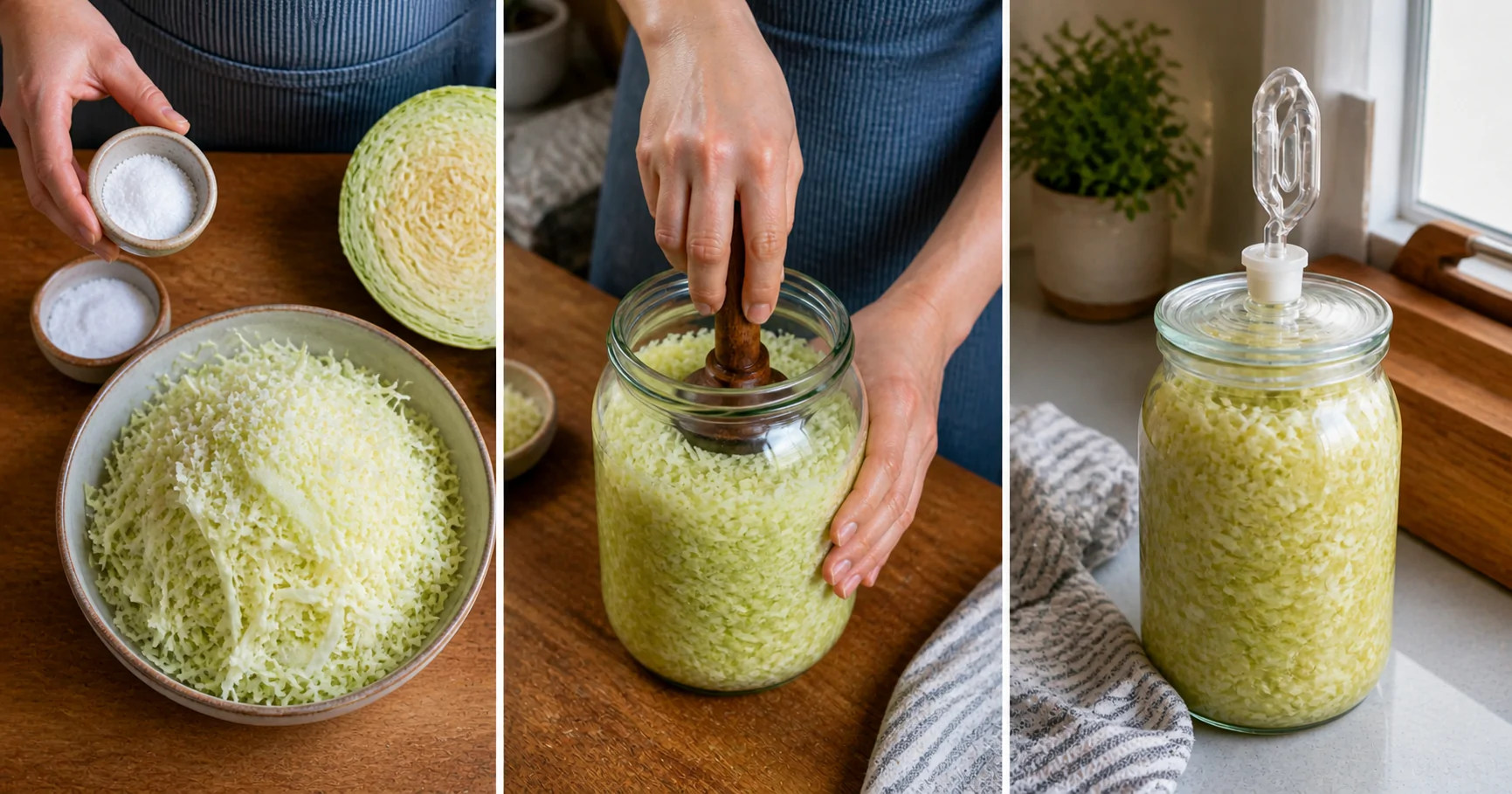
- Weigh the cabbage. Remove the core and any damaged leaves, then weigh the cabbage you plan to ferment. Calculate salt at 2% of that weight. For 900 grams of cabbage, use 18 grams of salt.
-
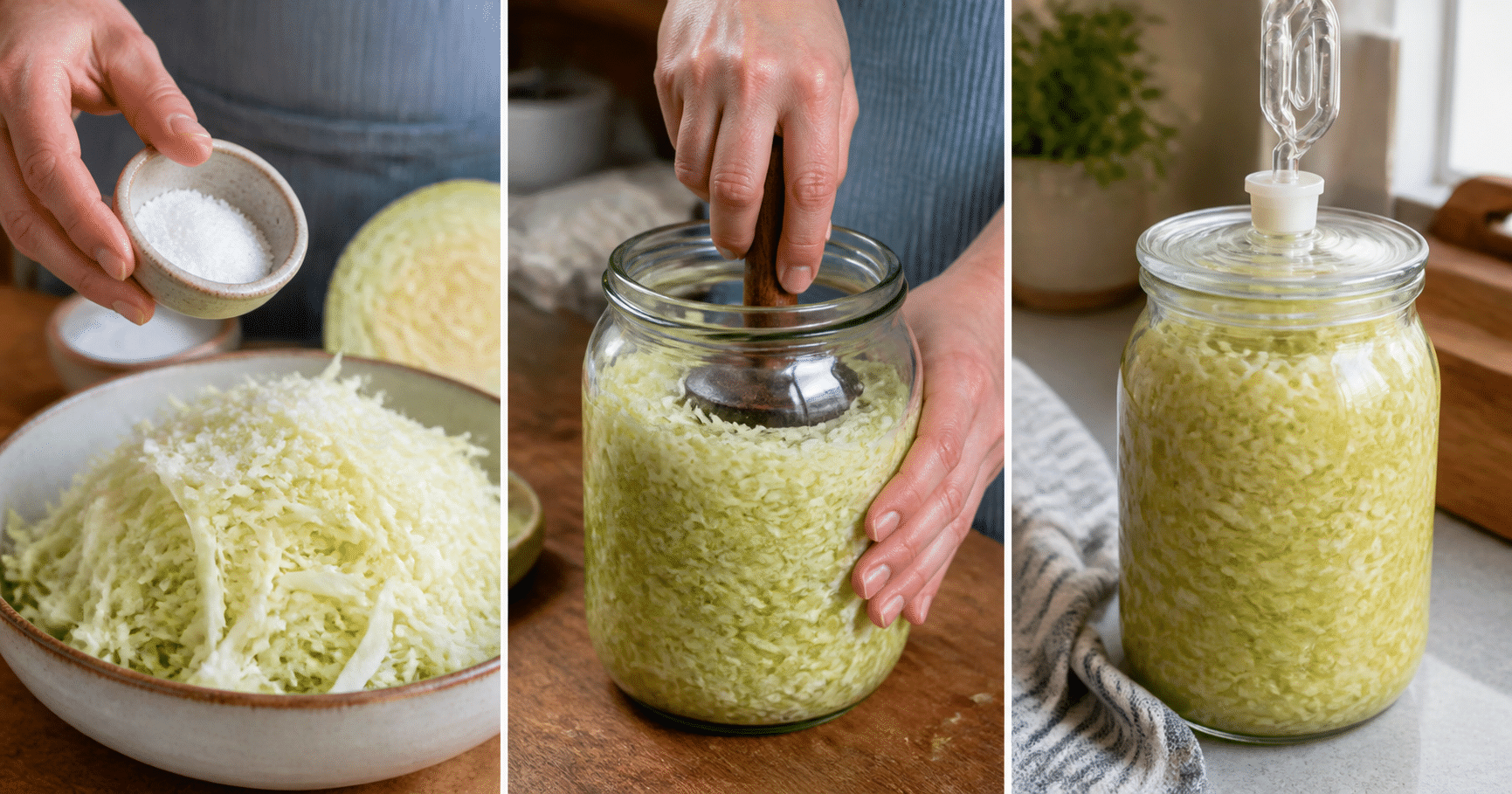
- Slice and salt. Shred the cabbage into a large bowl. Sprinkle the measured salt over it and massage or squeeze for several minutes, until the cabbage begins to release liquid.
-
- Pack it firmly. Transfer the cabbage and its liquid to the jar, pressing it down to remove air pockets. The liquid should cover the cabbage. Use a clean fermentation weight to keep the shreds submerged; if there is not enough liquid, let it stand a little longer and press again. Don’t top it up with plain water.
-
- Ferment at room temperature. Cover with an airlock lid or another fermentation cover that allows gas to escape. Set the jar on a tray in a spot away from direct sunlight, ideally around 70–75°F. Fermentation often takes about three to four weeks at this temperature, though taste and room conditions affect timing.
-
- Check and store. Some bubbling and a tangy smell are normal. When the sauerkraut tastes pleasantly sour, transfer it to the refrigerator, where fermentation slows. Keep the cabbage covered by its liquid and use clean utensils when serving.
Keep the Vegetables Under the Brine
Exposure to air is one of the easiest ways to invite surface growth and spoilage. A fermentation weight helps hold vegetables below the liquid, while an airlock can let carbon dioxide escape without requiring you to open the jar repeatedly. If you use a lid that must be loosened to release pressure, follow its instructions and handle the jar carefully.
Discard a batch if you see fuzzy mold or notice a rotten, putrid odor or a distinctly slimy texture. Don’t taste vegetables that appear spoiled to decide whether they are safe. When in doubt, throw them out; normal bubbles and a sour, fermented aroma are different from signs of spoilage.
Useful shortcut: For cabbage, calculate salt from the weight of the cabbage after trimming. For brined vegetables, follow a recipe that tells you exactly how to calculate its brine. That one distinction prevents many measuring mistakes.
The Salt Amount to Remember
For sauerkraut, a dependable starting point is 20 grams of salt per kilogram of prepared cabbage. For other vegetables, don’t assume the same number applies: use a tested recipe and follow its stated method for measuring salt and water.
Accurate weighing, clean equipment, and keeping vegetables submerged matter as much as the number on the scale. Fermentation works best when the recipe is measured—not guessed.