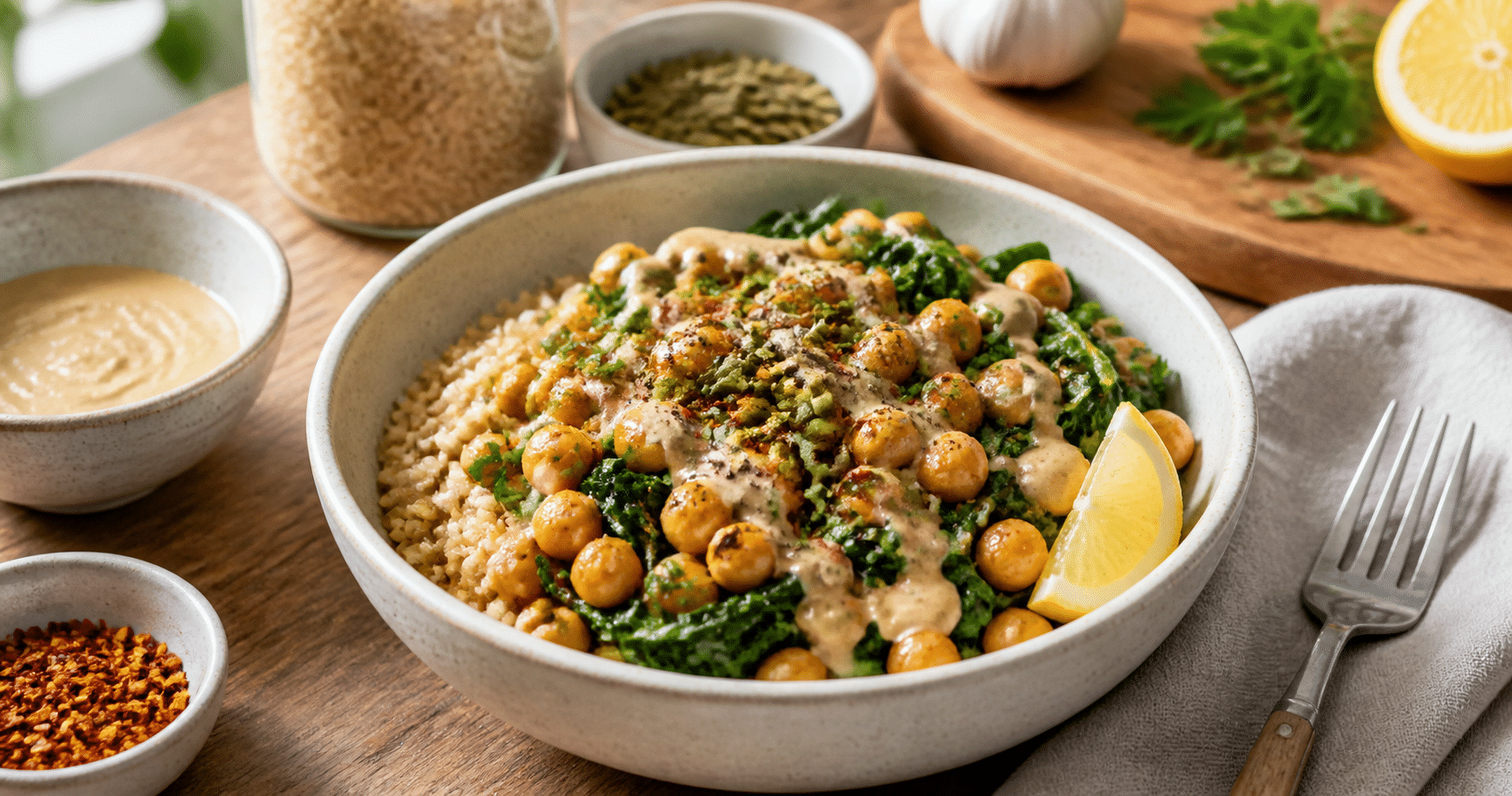
A good weeknight meal does not need a special trip to the store. A can of beans, a bag of rice, frozen vegetables and a bright, flavorful sauce can become a satisfying bowl with plenty of fiber and a useful mix of nutrients.
The trick is not to pile every “healthy” ingredient into one dish. A bowl works best when it has a few complementary parts: a grain or other base, a protein-rich food, vegetables, and a little fat or sauce for flavor and staying power.
There is one easy-to-miss detail: pantry meals can become salty quickly. Canned beans, broth, seasoning blends and bottled sauces may each contribute sodium, so a quick rinse or a squeeze of lemon can make a real difference.
Here’s a simple way to build a balanced bowl from shelf-stable and frozen foods, plus a flexible recipe you can adapt to what is already in your kitchen.
The Simple Formula for a More Satisfying Bowl
Think of a bowl as a mix-and-match meal rather than a strict recipe. Start with a base such as brown rice, oats, quinoa, barley or whole-wheat couscous. Add beans, lentils, canned fish, tofu or another protein source, then include vegetables and a flavorful finish.
Each part brings something different. Whole grains and beans provide carbohydrates for energy, while beans and lentils also contribute protein and fiber. Vegetables add a range of vitamins and minerals; olive oil, tahini, nuts or seeds contribute unsaturated fats. The exact nutrition depends on the ingredients and portions, but combining these foods can make a meal more varied and filling than relying on a grain alone.
“Nutrient-dense” does not mean that every ingredient must be fresh, expensive or exotic. Frozen spinach, canned tomatoes and dried lentils can all be useful choices. The goal is to include several nourishing components and make the meal enjoyable enough to prepare again.
Four Ways to Make Pantry Ingredients Work Together
1. Choose a base that fits your time
Cooked grains make a hearty foundation, but they are not the only option. Quick-cooking oats can form a savory base, and whole-wheat couscous can be ready with hot water. If you keep cooked rice or grains in the refrigerator, they can turn a longer-cooking meal into a quick assembly job.
For more fiber, choose whole grains when they suit your preferences. If you use white rice or another refined grain, the rest of the bowl can still bring vegetables, beans and other nutrients.
2. Add a substantial protein source
Beans, chickpeas and lentils are inexpensive, shelf-stable sources of plant protein and fiber. Canned salmon, sardines or tuna can also be convenient options. Choose based on taste, dietary needs and what you have available; there is no single “best” bowl protein for everyone.
For canned beans, draining and rinsing can remove some of the liquid and reduce some of the sodium. If you have kidney disease or have been given specific protein or mineral limits, follow your clinician’s or dietitian’s guidance when choosing ingredients.
3. Use vegetables in more than one form
Frozen vegetables are often as practical as fresh ones: they are ready to cook, keep well in the freezer and make it easier to add vegetables without worrying about spoilage. Canned tomatoes, pumpkin or no-salt-added vegetables can also contribute color and flavor.
Try warming vegetables with spices rather than serving every component plain. A little cumin, smoked paprika, garlic powder or black pepper can bring a bowl together without requiring a complicated sauce.
4. Finish with flavor, not just more ingredients
A small spoonful of olive oil, tahini, chopped nuts or seeds can add richness. A splash of vinegar or lemon juice brings brightness, which may help a bowl taste complete even when it uses simple staples.
Use salty condiments thoughtfully. Soy sauce, bottled dressings and seasoning packets can add plenty of sodium, so start with a small amount and taste before adding more.
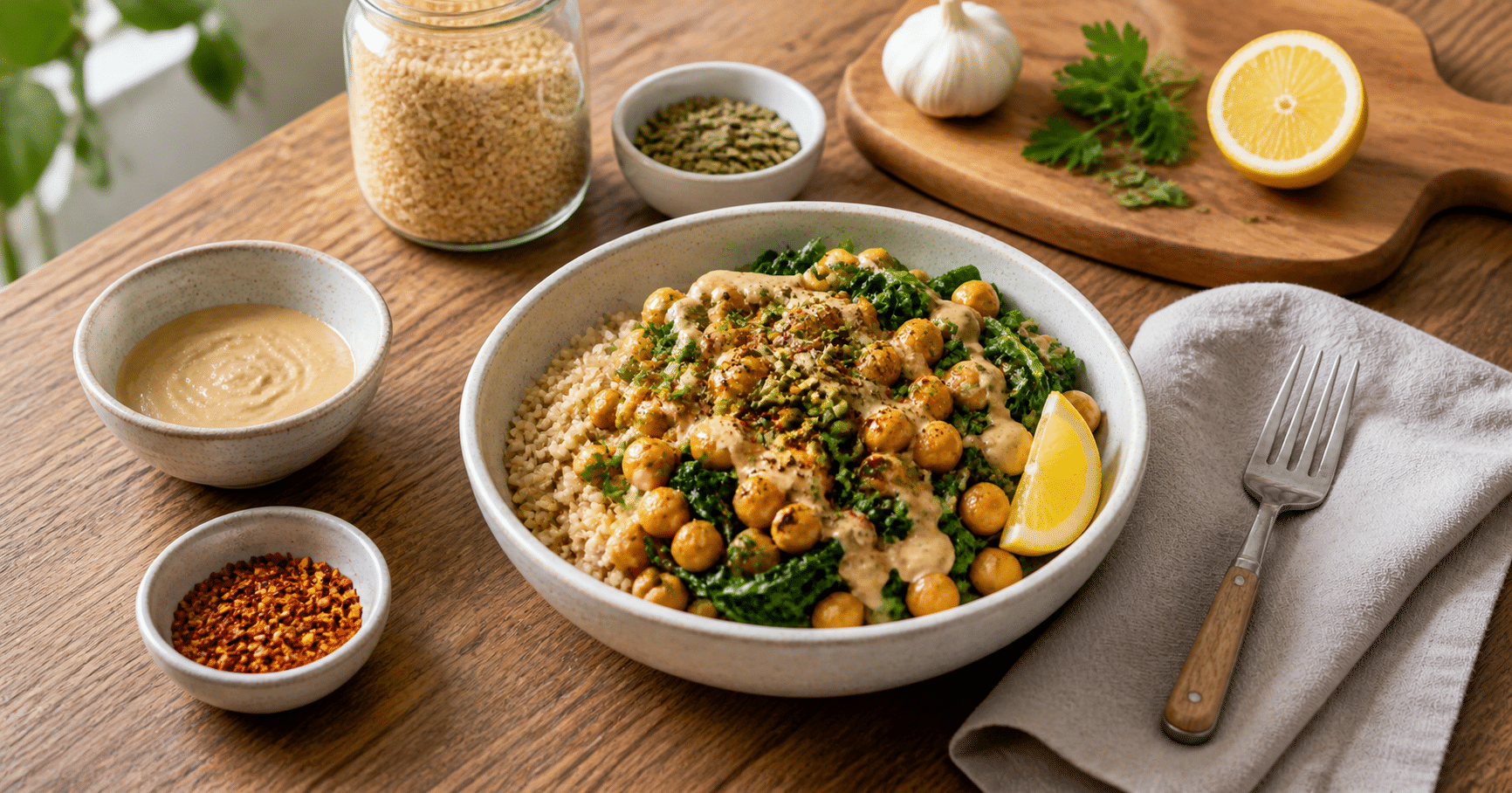
Easy Chickpea, Brown Rice and Spinach Bowl
This warm, meatless bowl makes two servings and takes about 15 minutes if the rice is already cooked. The lemon-tahini dressing is creamy and tangy; thin it with water until it drizzles easily.
Ingredients
-
- 1½ cups cooked brown rice
-
- 1 can (15 ounces) chickpeas, drained and rinsed
-
- 2 cups frozen chopped spinach
-
- 1 tablespoon olive oil
-
- ½ teaspoon ground cumin
-
- ¼ teaspoon smoked paprika, optional
-
- 2 tablespoons tahini
-
- 1 tablespoon lemon juice, plus more to taste
-
- 1 to 2 tablespoons water, as needed
-
- Black pepper to taste
-
- Optional: pumpkin seeds, chopped parsley or red pepper flakes
Step-by-Step Instructions
-
- Warm the rice. Heat the cooked rice according to its storage container’s instructions, or place it in a saucepan with a splash of water and cover until hot.
-
- Cook the chickpeas and spinach. Warm the olive oil in a skillet over medium heat. Add the chickpeas, cumin and smoked paprika, if using. Stir for 2 minutes, then add the frozen spinach and cook until hot, breaking up any clumps.
-
- Make the dressing. Stir the tahini and lemon juice together in a small bowl. Add water a little at a time until the mixture is smooth and pourable. Season with black pepper.
-
- Assemble the bowls. Divide the rice between two bowls. Top with the chickpea-spinach mixture and drizzle with dressing. Add pumpkin seeds, parsley or red pepper flakes if you like.
Refrigerate leftovers promptly in a covered container and use within three to four days. Keep the dressing separate if you prefer the rice and greens less saucy. For an easy variation, swap the spinach for frozen broccoli or peas, or use lentils instead of chickpeas.
Small Adjustments That Improve the Bowl
If your bowl tastes flat, try acid before adding more salt: lemon juice or vinegar can sharpen the other flavors. If it feels dry, add a spoonful of dressing or a splash of water while reheating. If you want more crunch, use seeds or chopped nuts rather than relying on packaged toppings that may be salty.
Portions and needs vary. A person with a larger appetite may want more rice or chickpeas; someone who prefers a lighter meal might use extra vegetables. The bowl is a template, not a prescription. Rotate beans, grains and vegetables over time to bring variety to your meals.
A Practical Bowl to Keep in Your Back Pocket
Start with a grain, add a protein-rich staple, work in a vegetable, then finish with a little fat and a bright, flavorful sauce. That simple pattern turns ordinary pantry ingredients into a flexible meal without requiring a perfect recipe or a full refrigerator.
The most useful pantry bowl is the one you can make with what you already have—and enjoy enough to make again.