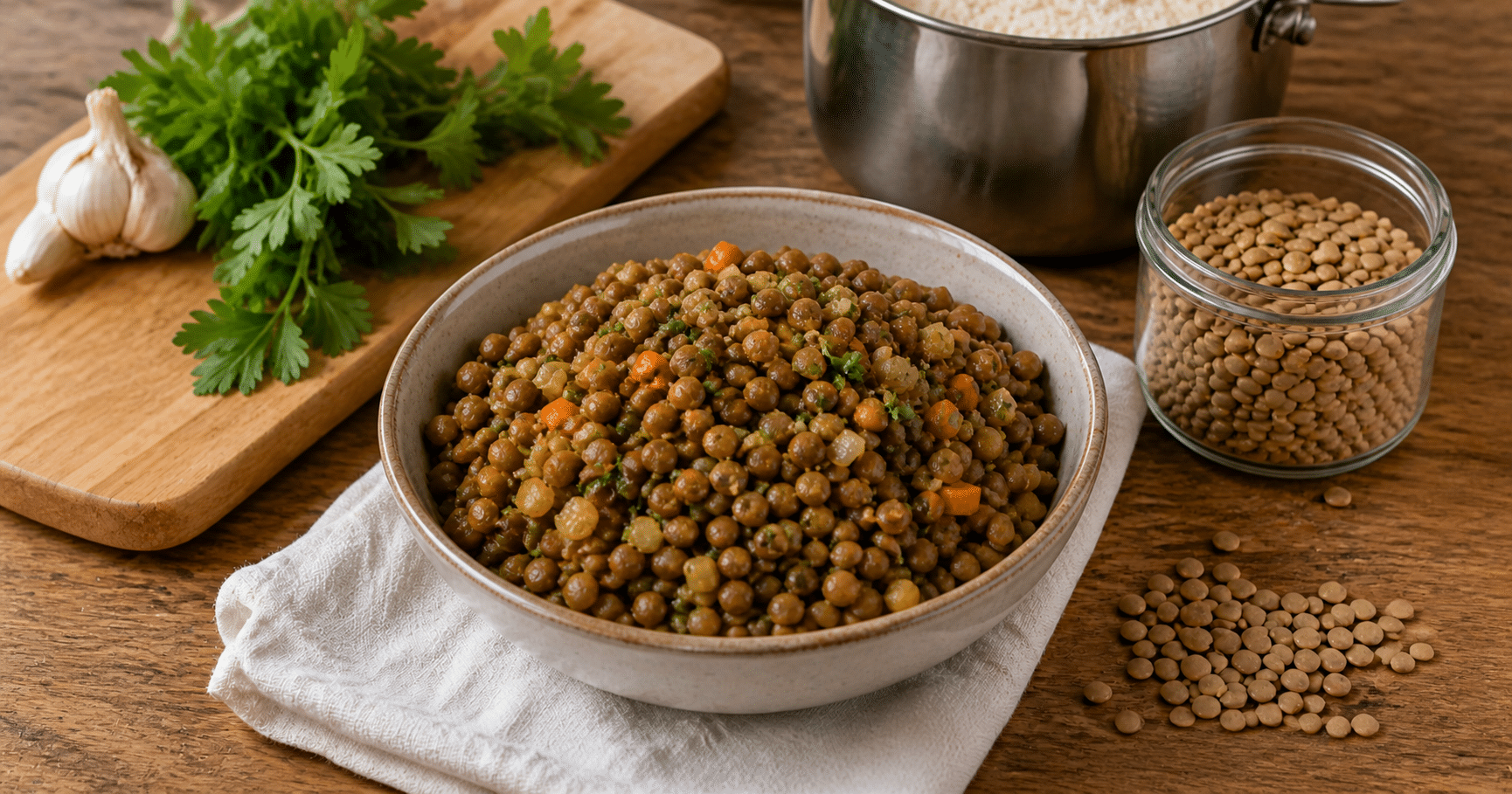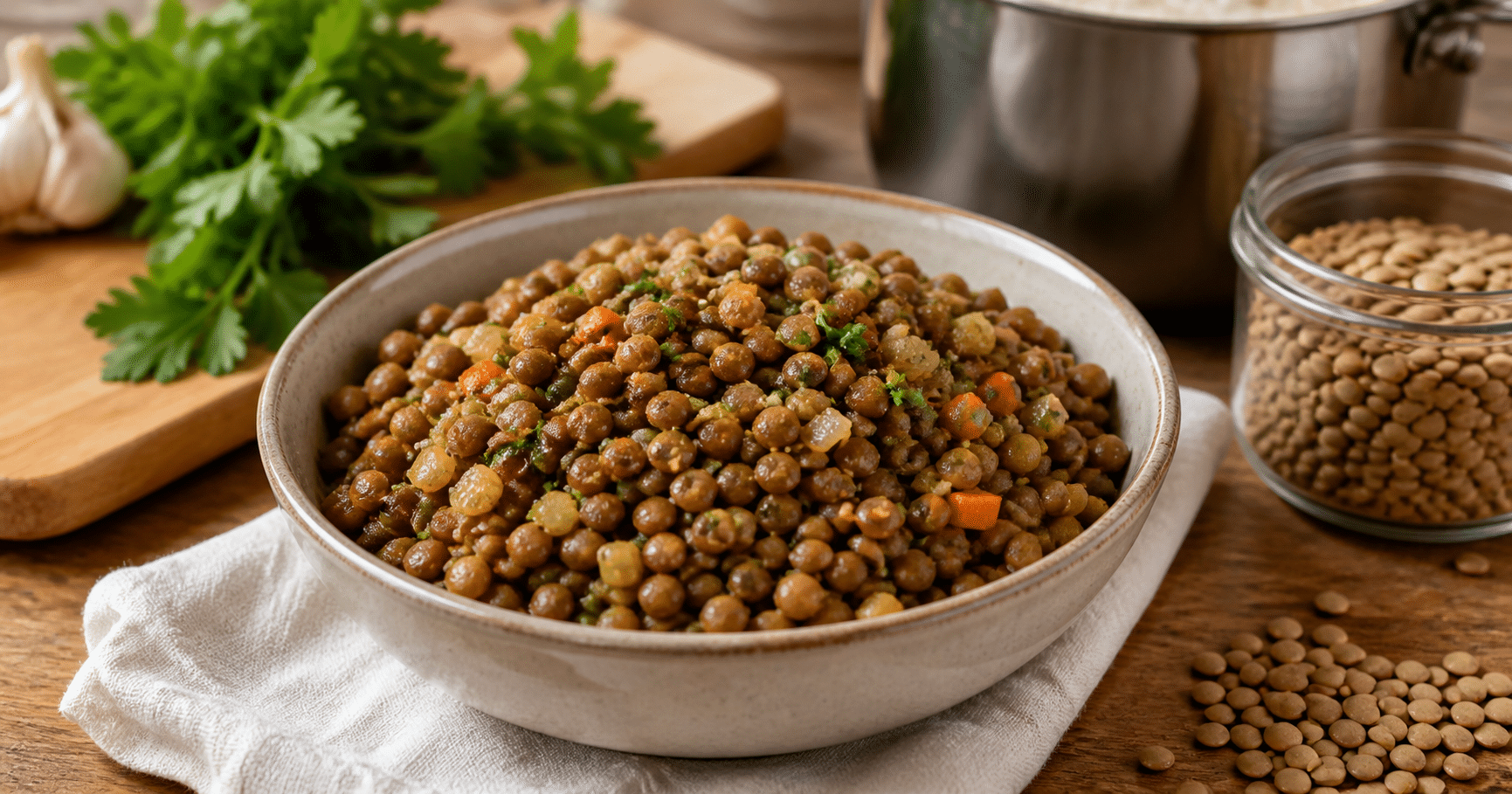
Lentils are inexpensive, filling, and easy to keep on hand—but they can also leave some people feeling bloated or gassy. That discomfort doesn’t mean lentils are unhealthy or that you have to give them up. Often, the variety, portion size, and preparation method make a noticeable difference.
Lentils contain fiber and naturally occurring carbohydrates that gut bacteria ferment. That process can produce gas, especially if you’re not used to eating much fiber. Cooking lentils until tender helps make them pleasant to eat, but it doesn’t remove every fermentable carbohydrate.
Here’s how to prepare lentils for a gentler start, what soaking can and can’t do, and how to work them into meals without making a big leap in fiber all at once.
Why Lentils Can Cause Gas—and What Cooking Changes
Lentils provide fiber, plant-based protein, folate, and other nutrients. Their fiber can support regular bowel movements, while some of their carbohydrates pass into the large intestine and are fermented by gut bacteria. Gas is a normal byproduct of fermentation, though the amount of discomfort varies from person to person.
Rinsing and cooking lentils make them easier to prepare and eat, but neither step guarantees a gas-free meal. Soaking may allow some water-soluble carbohydrates to move into the soaking water; draining and rinsing afterward may help, though the effect varies. Red lentils often cook faster and break down more than green or brown lentils, but choosing a particular color won’t suit everyone’s digestion.
For many people, the most practical strategy is to start with a modest serving, cook lentils until fully tender, and increase the amount gradually. If lentils reliably trigger significant symptoms, a healthcare professional or registered dietitian can help you explore possible causes and alternatives.
Four Ways to Make Lentils More Comfortable to Eat
1. Begin with a smaller portion
A large bowl of lentils can be a lot of fiber if you usually eat little of it. Try adding a few spoonfuls to soup, salad, or rice, then see how you feel before serving a larger portion next time. Increasing fiber gradually gives your digestive system time to adjust.
2. Rinse well, and soak if you like
Sort dry lentils to remove any small stones or debris, then rinse under cool water. Lentils don’t require soaking, but you can soak them for a few hours or overnight in the refrigerator, drain the water, and rinse again before cooking. This may reduce some water-soluble carbohydrates, but results aren’t guaranteed.
Canned lentils are another convenient option. Drain and rinse them under running water; this removes some of the canning liquid and can reduce added sodium. They’re already cooked, so warm them gently rather than simmering them for a long time.
3. Cook until tender—not merely warm
Firm, undercooked lentils can be unpleasant to eat. Simmer dry lentils in fresh water until they’re soft all the way through, checking the package for timing because age and variety affect how quickly they cook. Red lentils may be ready in about 15 to 20 minutes; brown or green lentils commonly take around 20 to 30 minutes.
4. Keep the first meal simple
If you’re figuring out your tolerance, avoid pairing a large lentil serving with several other foods that commonly cause gas, such as a big portion of onions or cabbage. This won’t make lentils inherently easier to digest, but it may make it easier to notice what affects you. A small serving alongside rice and cooked vegetables is an uncomplicated place to start.
A Gentle Basic Method for Cooking Brown or Green Lentils
This method makes about 2½ to 3 cups of cooked lentils. They’ll hold their shape when tender, making them useful for soups, grain bowls, and salads.
Ingredients
-
- 1 cup dry brown or green lentils
-
- 3 cups water, plus more if needed
-
- ¼ teaspoon salt, or to taste
-
- Optional: a bay leaf or a small piece of peeled ginger for flavor
Step-by-Step Instructions
-
- Sort and rinse. Spread the lentils on a plate and pick out any debris. Rinse them in a fine-mesh strainer under cool water. If you soaked them, discard the soaking water and rinse once more.
-
- Start the simmer. Combine the lentils and fresh water in a saucepan. Add the optional bay leaf or ginger if using. Bring to a boil, then lower the heat so the water gently simmers.
-
- Cook until tender. Partially cover the pan and simmer for about 20 minutes, then check a few lentils. Continue cooking and checking every few minutes until they’re soft, adding a little hot water if the pan starts to look dry. Total cooking time is often 20 to 30 minutes.
-
- Season and drain if needed. Stir in the salt near the end of cooking. If there’s excess water, drain it. Remove the bay leaf or ginger before serving.
Refrigerate cooked lentils in a covered container within two hours, and use them within three to four days. For longer storage, freeze them in meal-size portions. Add a small amount to soup, serve them over rice, or toss them with cooked vegetables and a simple dressing.
Small Cooking Choices That Make a Difference
Acidic ingredients such as lemon juice, vinegar, and tomatoes can slow softening when added early. For tender lentils, cook them in water first and stir in acidic ingredients after they’re soft. Salt can be added during cooking; it does not need to be withheld until the end.
Keep expectations realistic: cooking makes lentils tender, and soaking may help some people, but neither method removes all the carbohydrates that gut bacteria can ferment. A smaller serving may be more useful than trying to find a preparation trick that works perfectly for everyone.
Make Lentils a Gradual Addition
For better digestive comfort, rinse lentils, cook them until fully tender, and begin with a portion that feels manageable. Soaking is optional, and canned lentils offer a quick alternative when drained and rinsed.
The simplest test is also the most useful: serve a little, notice how you feel, and adjust the next meal accordingly.