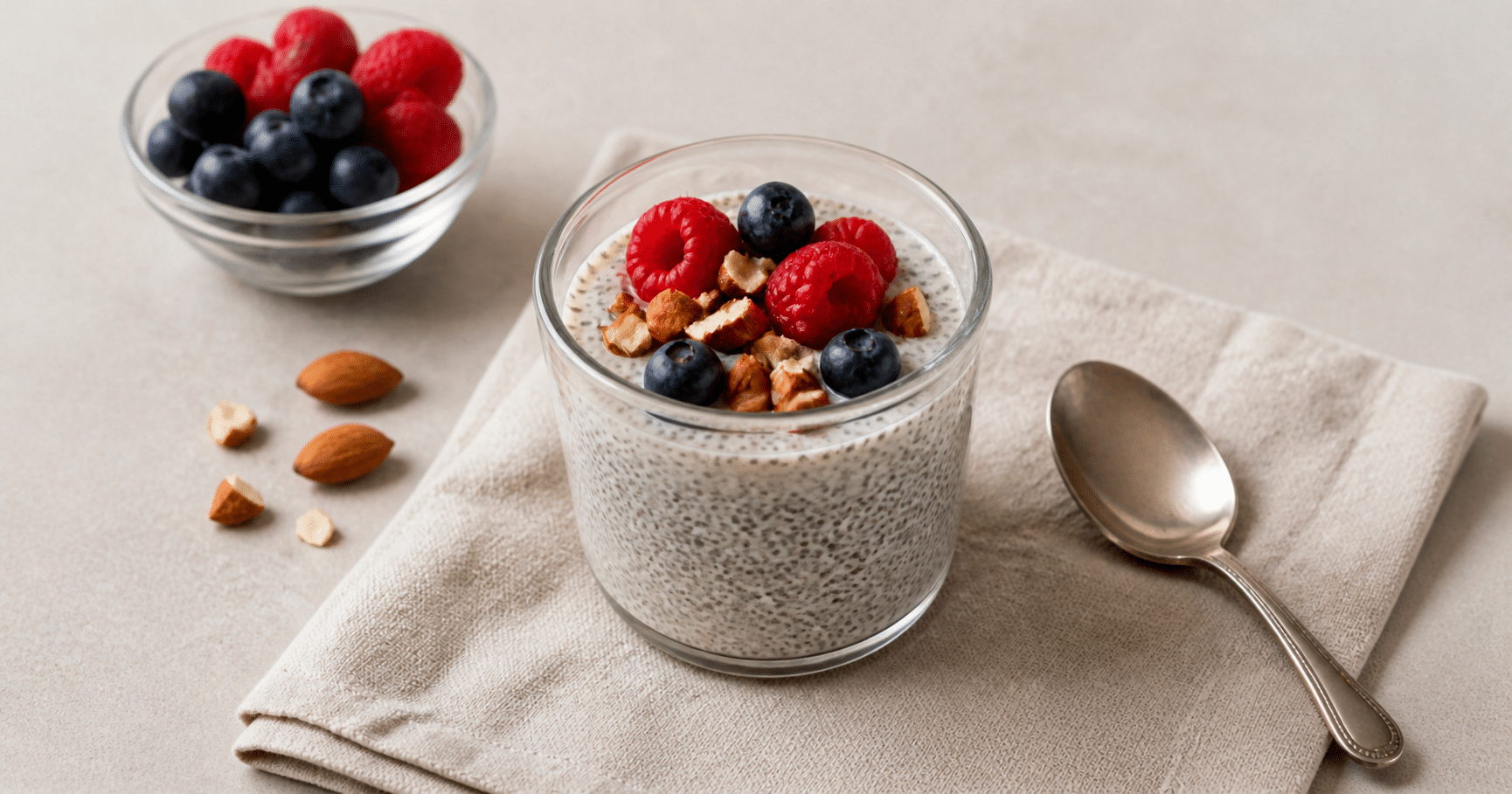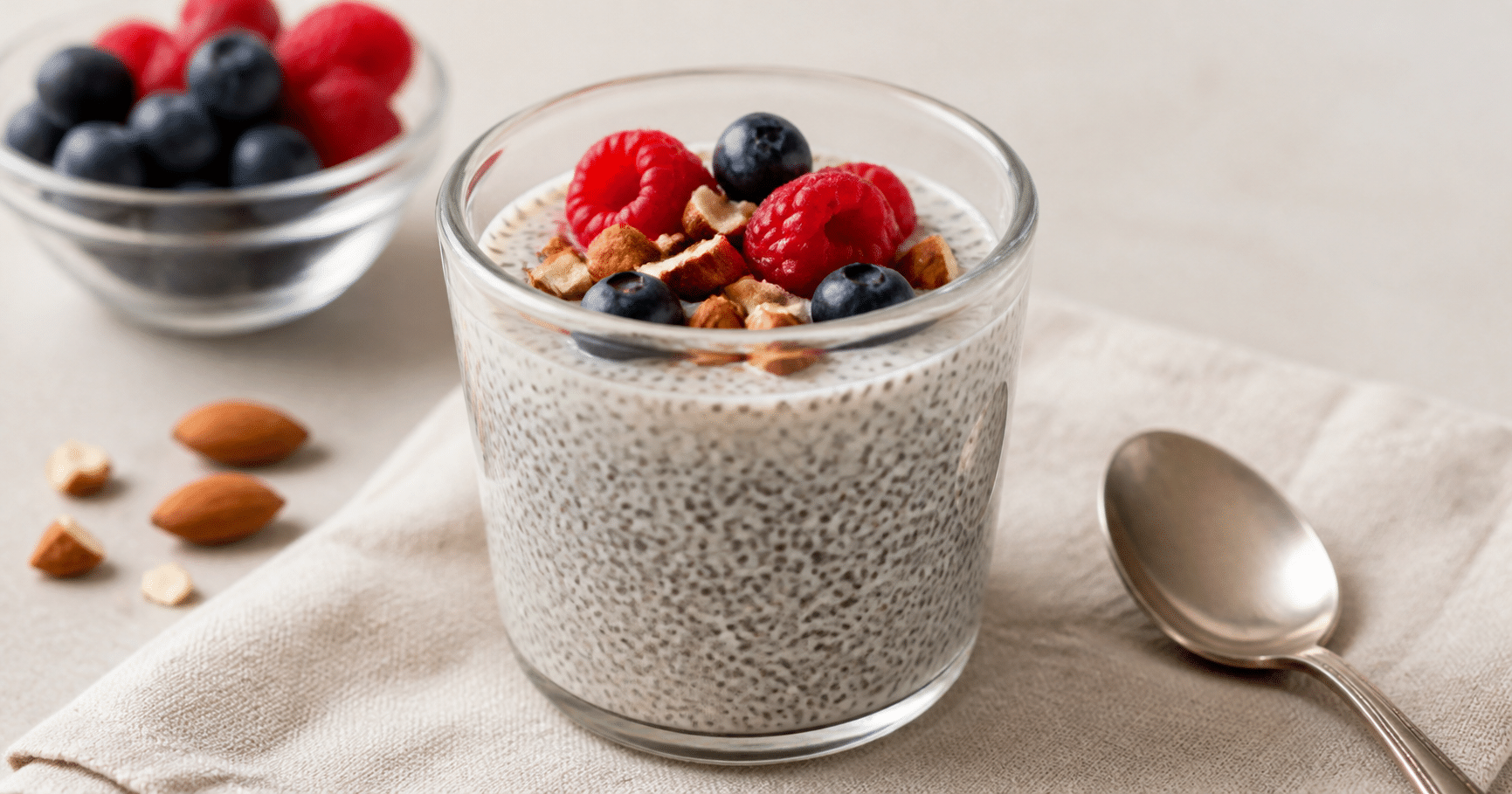
Chia pudding can be creamy, spoonable, and pleasantly soft. It can also turn into a dense, slippery mass that feels more like gel than breakfast. The difference usually comes down to a few small details—not an unusual ingredient or a complicated technique.
Chia seeds thicken liquid as they soak, thanks to a gel-forming fiber on their outer surface. That makes them useful for an easy make-ahead breakfast, but it also means a little too much seed, too little liquid, or a missed stir can change the texture dramatically.
The good news: you can adjust the ratio and mixing method to suit your taste. Here’s how to make chia pudding without the gummy texture, plus simple ways to loosen a batch that has set too firmly.
Why Chia Pudding Turns Gummy
When chia seeds meet liquid, their outer coating absorbs water and forms a soft gel. As the mixture rests, that gel thickens the whole pudding. The seeds themselves stay intact, giving the finished dish its familiar speckled look.
Gumminess often starts with a ratio that’s too seed-heavy for the desired texture. It can also happen when seeds clump together: the outside of a clump gels quickly while the inside stays dry, leaving uneven pockets in the pudding. Blending the mixture can make it very smooth, but it may also create a uniformly thick, gel-like texture that some people find less appealing.
For a softer result, use enough liquid, stir twice at the beginning, and let the mixture chill fully. If it still seems too thick, a splash of milk is often all it needs.
Three Small Choices That Make a Big Difference
1. Start with a gentler ratio
A common starting point is about 3 tablespoons of chia seeds per 1 cup of milk. This makes a thick pudding. For a softer, looser texture, try 2 tablespoons per cup; for a firmer one, add a little more next time rather than starting with a large amount.
Chia seeds vary, and so do personal preferences. Treat the first batch as a baseline, then adjust in small increments.
2. Stir twice before chilling
Pouring liquid over seeds and giving the mixture one quick stir may leave clumps behind. Stir thoroughly when you combine the ingredients, wait 5 to 10 minutes, then stir again. The second mix breaks up seeds that have begun sticking together before the gel has fully set.
Texture tip: A small jar with a tight lid makes it easy to shake the mixture, but open it and stir once more before chilling if seeds are stuck around the sides.
3. Give it time—and avoid overprocessing
Chia pudding needs time in the refrigerator to thicken evenly. Allow at least 4 hours, though overnight is convenient. There’s no need to blend it for a smooth pudding: blending can produce a dense consistency, while stirring leaves the seeds whole and the texture more varied.
How to Make Chia Pudding Without a Gummy Texture
This basic recipe makes two servings with a thick but spoonable consistency. For an especially soft pudding, use 5 tablespoons of chia seeds instead of 6, then add more after chilling only if needed.
Ingredients
- 2 cups milk or unsweetened plant milk
- 6 tablespoons chia seeds
- 1 to 2 teaspoons maple syrup or honey, optional
- ½ teaspoon vanilla extract, optional
- A small pinch of salt, optional
Step-by-Step Instructions
- Mix the liquid first. In a bowl or large jar, combine the milk, sweetener, vanilla, and salt, if using.
- Add the chia seeds. Sprinkle them in while stirring so they spread through the liquid rather than landing in one heap.
- Stir again after a short rest. Wait 5 to 10 minutes, then stir thoroughly, scraping the bottom and sides of the bowl or jar.
- Cover and chill. Refrigerate for at least 4 hours or overnight, until thickened.
- Check the texture before serving. Stir the pudding. If it’s too firm, mix in milk 1 tablespoon at a time until it loosens to your liking.
Serve with berries, sliced banana, chopped nuts, or a spoonful of yogurt. Add crunchy toppings just before eating so they don’t soften in the pudding. Keep the covered pudding refrigerated and aim to eat it within 3 to 4 days.
How to Fix a Batch That’s Too Thick
If your pudding has already set into a dense gel, you don’t have to start over. Stir in a little milk, wait a minute, and check the texture again. Repeat gradually; adding too much at once can leave the pudding watery around the edges while the center remains thick.
If you prefer a smoother result, mash or whisk the pudding gently after it sets. For extra creaminess, stir in a spoonful of yogurt, keeping in mind that it will make the pudding thicker, not thinner. If you use yogurt, add a little milk as needed to balance the consistency.
Sweetness is easiest to adjust after the pudding has chilled. Chia thickens the mixture, and cold foods can taste less sweet than they do at room temperature, so taste before adding more sweetener.
A Better Texture Comes Down to Balance
For chia pudding that isn’t gummy, begin with a modest amount of seeds, stir twice, and let the mixture chill before deciding whether it needs adjustment. A softer ratio and a splash of milk can rescue an overly thick batch.
Think of the recipe as a starting point, not a rule: a spoonful more or less of chia can make all the difference between a pudding you tolerate and one you look forward to eating.