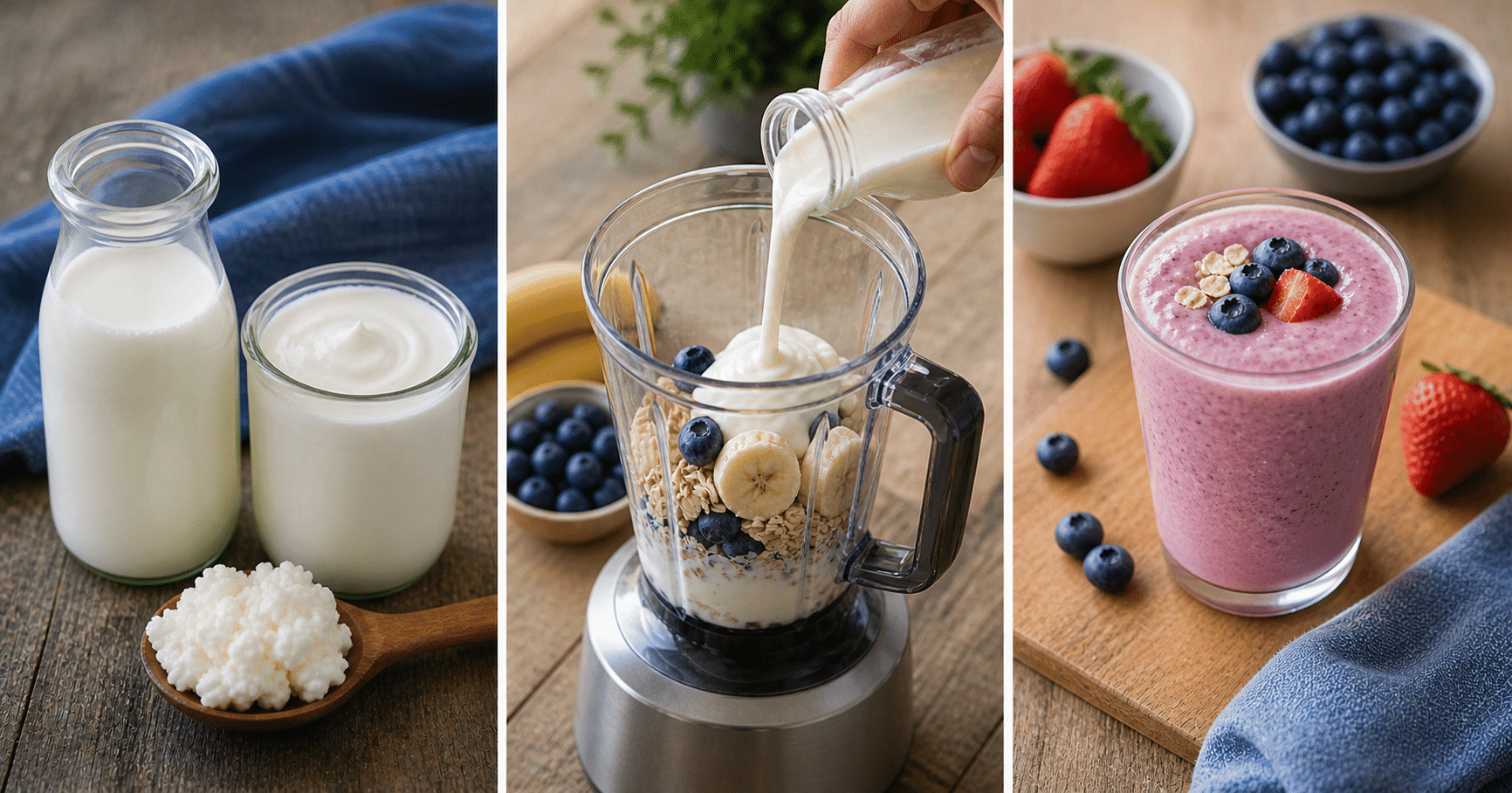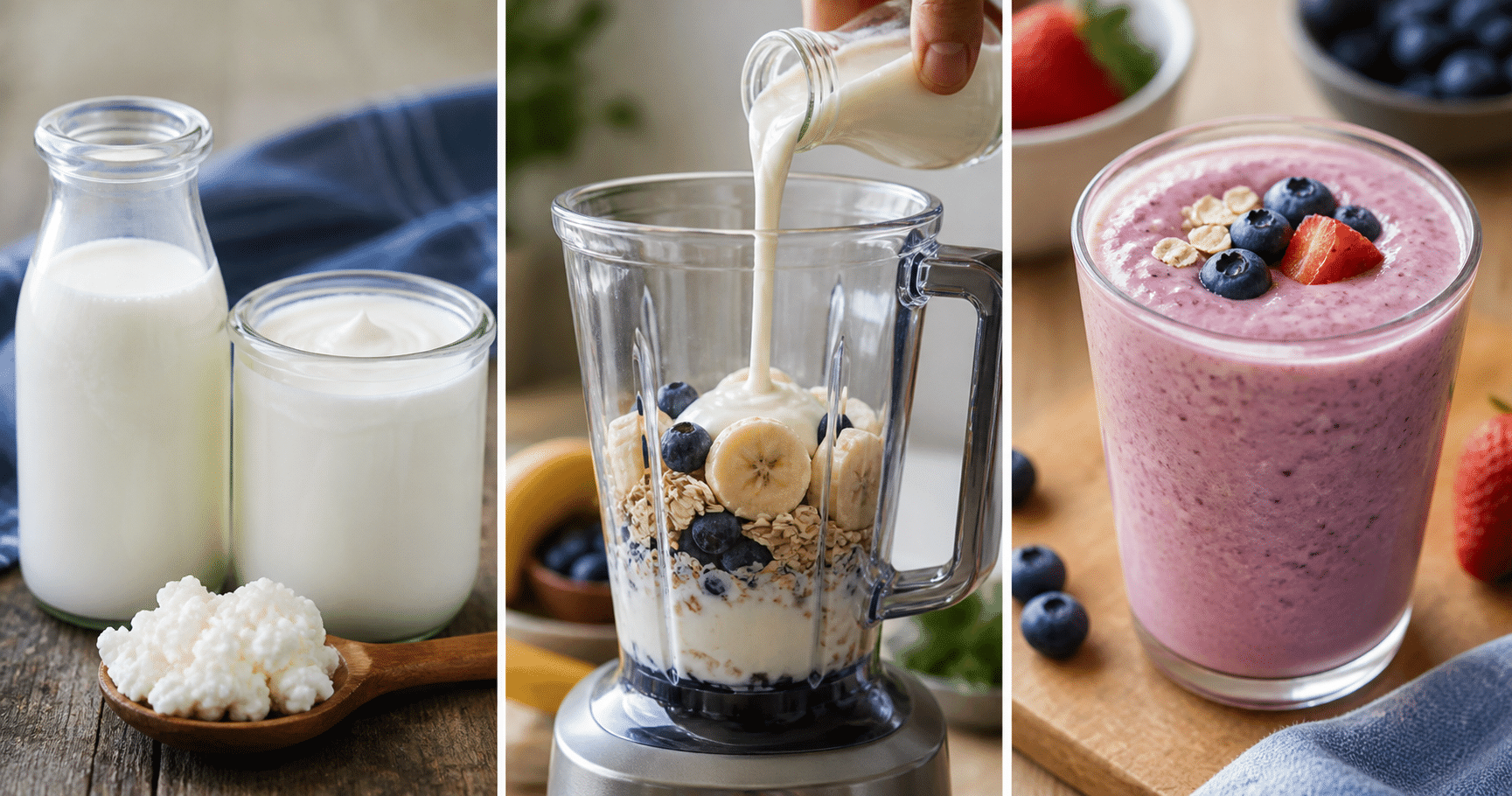
Kefir and yogurt share a place in the dairy aisle, a tangy flavor and a history of fermentation. Both can provide protein, calcium and live microorganisms, yet they are made differently—and that difference shows up in the texture, taste and ways you might use them.
Kefir is usually thin enough to drink, while yogurt is typically spoonable. But it’s a mistake to assume that one is always “better for your gut” or easier to digest. The details depend on the cultures used, the product’s ingredients and your own tolerance for dairy.
Here’s how kefir and yogurt compare, what to look for on the label and a simple way to put either one to use at breakfast.
Kefir and yogurt: two foods, two kinds of fermentation
Yogurt is made by fermenting milk with characteristic starter bacteria, commonly Streptococcus thermophilus and Lactobacillus delbrueckii subsp. bulgaricus. Some yogurts also contain additional cultures. The bacteria turn some milk sugar, or lactose, into lactic acid, which gives yogurt its tart taste and thick texture.
Kefir is fermented with kefir cultures, traditionally held in small, soft clusters called kefir grains. These cultures include bacteria and yeasts, though the exact mix can vary. The result is generally a tangy, pourable drink; some kefir may have a slight natural fizz. Commercial products can differ from traditional versions, so the name alone doesn’t tell you precisely which microbes are present.
Both foods can contain live cultures, but a culture’s presence doesn’t guarantee a specific health effect. Benefits associated with probiotics are strain-specific, and research on one product or strain doesn’t automatically apply to every kefir or yogurt. Fermentation also doesn’t make dairy completely lactose-free: both products may contain some lactose.
What matters when choosing between kefir and yogurt
1. Texture and taste shape how you’ll use them
Choose kefir when you want something drinkable for a smoothie or a quick snack. Yogurt works well by the spoonful, as a topping, or as a base for dips and sauces. Greek yogurt is strained to make it thicker, so it often has more protein per serving than regular yogurt—but the exact amount depends on the product.
Kefir is often tangier and thinner than yogurt. If you’re new to it, try a small serving plain or blend it with fruit rather than assuming you’ll enjoy it as a glass of milk.
2. Nutrition depends more on the product than the name
Plain kefir and plain yogurt can both supply protein and calcium, but the amounts vary by brand, milk type and serving size. Whole-milk versions have more fat and calories than low-fat or nonfat options. Added sugar is another key difference: flavored products can contain considerably more than plain ones.
Compare the Nutrition Facts panel and ingredient list. Look at protein, added sugars, serving size and the milk used. If you want to sweeten a plain product, fruit or a small drizzle of honey lets you control how much you add.
3. Live cultures and lactose tolerance are not the same thing
Fermentation reduces some lactose, and live yogurt cultures can help digest lactose in the food. Some people who have difficulty with milk find cultured dairy easier to tolerate, but responses vary. Kefir may also be more comfortable for some people, but it isn’t reliably lactose-free or a guaranteed solution.
If lactose bothers you, check for products labeled lactose-free and start with a small portion. These products may still contain live cultures, but labels and manufacturing methods differ.
4. “More cultures” doesn’t automatically mean “more benefit”
Some kefirs contain a broader mix of bacteria and yeasts than standard yogurt starters, but culture counts and types differ among products. A longer list of cultures isn’t proof that a food will improve digestion or prevent illness. If live cultures are important to you, look for a label that says the product contains live and active cultures, and follow its storage instructions.
A quick kefir-or-yogurt breakfast smoothie
This smoothie works with either drinkable kefir or plain yogurt. Yogurt makes a thicker smoothie; kefir usually pours and blends more easily.
Ingredients
-
- 1 cup plain kefir or plain yogurt
-
- 1 small banana
-
- 1/2 cup berries, fresh or frozen
-
- 1 tablespoon rolled oats, optional
-
- Ice or a splash of water, as needed
Step-by-Step Instructions
-
- Add the kefir or yogurt, banana and berries to a blender. Add the oats if you want a more filling texture.
-
- Blend until smooth. Add ice for a colder, thicker drink, or a little water if it’s too thick.
-
- Taste before adding sweetener; ripe fruit may be enough.
Blend just before serving for the freshest texture. If you make extra, refrigerate it promptly in a covered container and use it within a day, following the storage guidance on the dairy product.
Small label clues that make shopping easier
Start with plain, refrigerated products if you want to avoid unnecessary added sugar. Check whether the product is made from whole, reduced-fat or nonfat milk, and compare protein if that matters to you. A drink labeled kefir may be sweetened or flavored, just as yogurt may be; fermentation doesn’t mean a product is automatically low in sugar.
Also check whether the label says “live and active cultures.” Some fermented foods are heat-treated after fermentation, which can reduce or eliminate live cultures. If you’re avoiding lactose, don’t assume that “cultured” means “lactose-free”—look for that claim on the package.
The best choice is the one you’ll enjoy
Kefir and yogurt are both useful fermented dairy foods, but they aren’t interchangeable in every recipe or identical in nutrition. Kefir is a convenient pourable option; yogurt offers a spoonable range of textures, especially when strained. Neither is a cure-all, and the product’s ingredients and cultures matter.
Try plain versions of each, compare labels and choose the one that suits your taste and tolerance. The most practical choice is the one you’ll actually want to eat.