Lemon balm tea has a gentle citrus scent, a soft herbal flavor and no caffeine when it’s made from the herb alone. That makes it an appealing evening drink for people who want something soothing without the bite of strong mint or the sweetness of a bedtime beverage.
But “calming” can mean two different things: a pleasant, relaxing tea ritual, or a proven effect on anxiety or sleep. Lemon balm has a long history of traditional use, and early research is interesting—but much of it examines concentrated extracts rather than an ordinary cup of tea.
Here’s what lemon balm tastes like, what the evidence can and can’t tell us, and how to brew a fragrant cup without making it bitter.
What Lemon Balm Tea Is—and Why It Smells Like Citrus
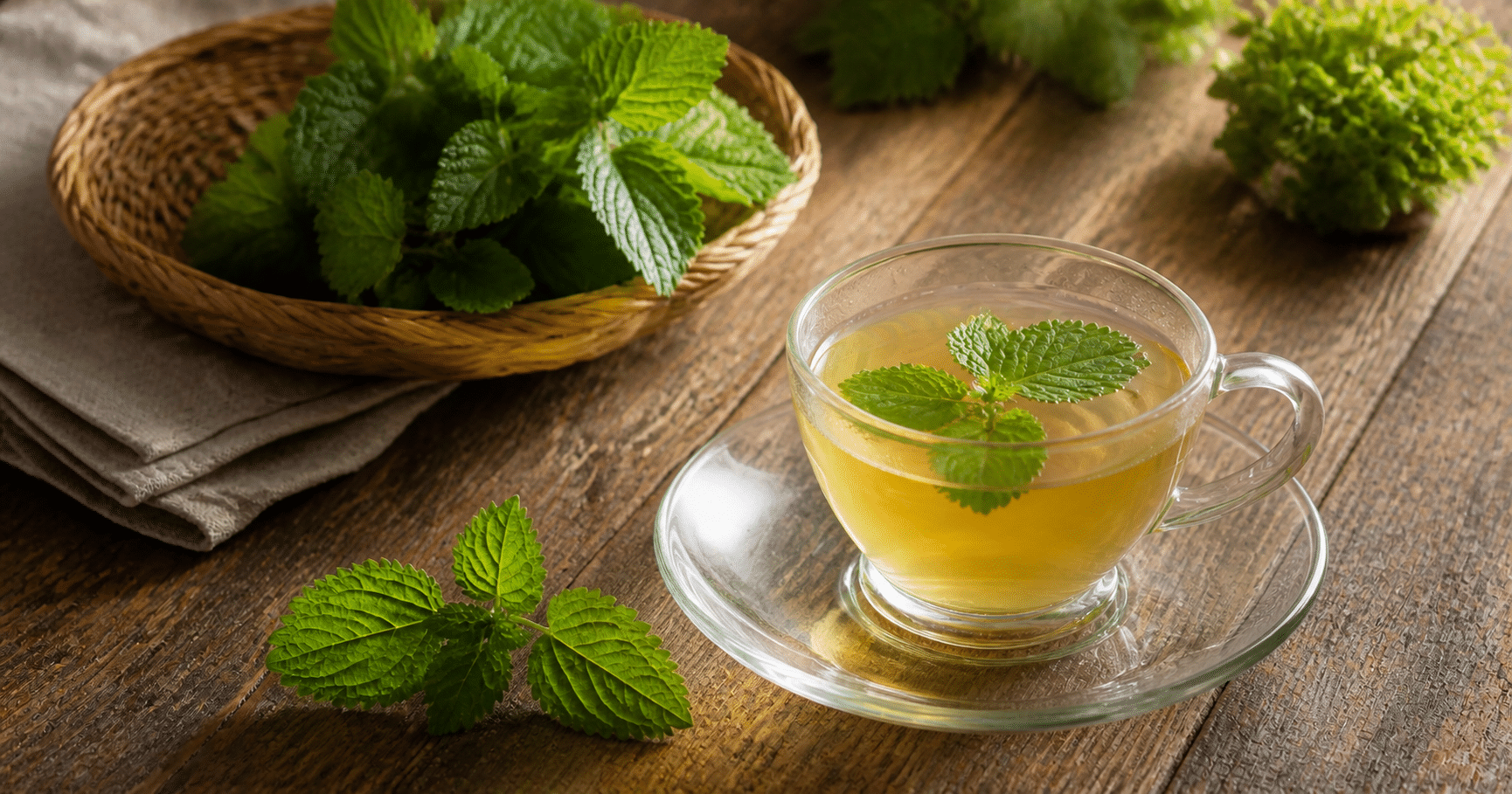
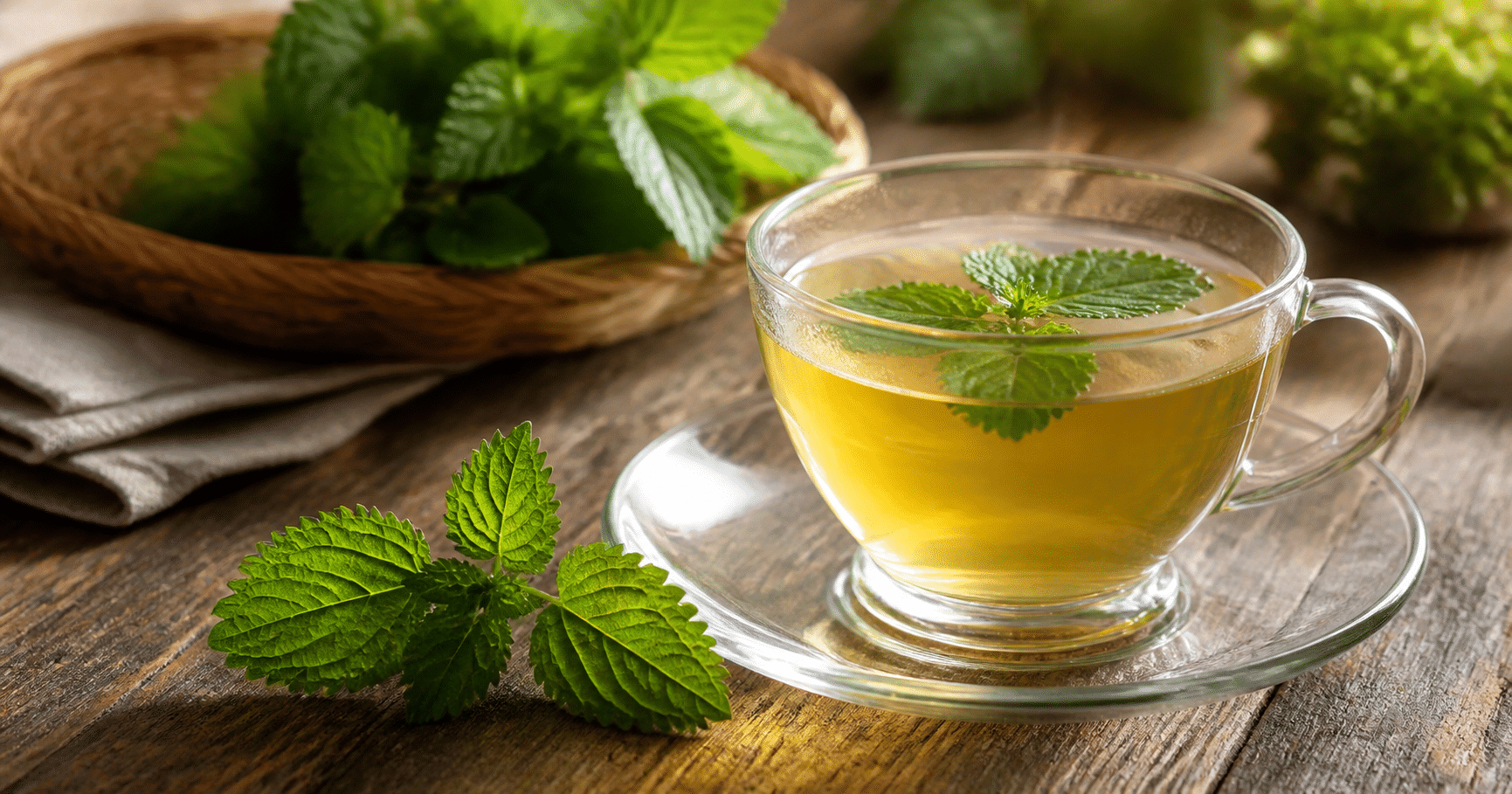
Lemon balm (Melissa officinalis) is a leafy member of the mint family. Its fresh leaves give off a light lemon aroma, though the flavor is more rounded and herbal than lemon juice. Depending on how it’s grown and prepared, a cup may have hints of mint, grass or a mild floral note.
The plant contains a variety of compounds, including rosmarinic acid and aromatic oils. Researchers have studied lemon balm extracts for possible effects on mood, stress and sleep. However, an extract can be much more concentrated than a home-brewed infusion, and products can vary in strength. Findings from extract studies therefore don’t establish that a cup of tea has the same effects.
Some small human studies suggest lemon balm preparations may help with feelings of stress or support sleep, but the evidence remains limited. Results from one product or combination of ingredients can’t automatically be applied to plain lemon balm tea. It’s best to think of the drink as a calming, caffeine-free ritual—not a treatment for anxiety or insomnia.
What a Cup May Offer—and Where the Evidence Stops
1. A relaxing pause, without caffeine
Pure lemon balm tea is naturally caffeine-free, so it can fit into an evening routine without adding caffeine. The warm drink, pleasant aroma and few quiet minutes spent making it may be part of what feels calming. That’s a practical comfort, but it’s different from proving that the herb itself treats a health problem.
2. Research is promising, but not a verdict on tea
Studies have explored lemon balm in forms such as capsules, extracts and blends, sometimes alongside other ingredients. These formats and formulas differ from a simple leaf infusion, and small studies can’t establish a reliable effect for everyone. There isn’t strong evidence to promise that lemon balm tea will resolve persistent worry, improve chronic insomnia or replace medical care.
3. Flavor changes with the leaves and the brew
Fresh leaves tend to taste brighter and greener; dried leaves are often softer and more mellow. Older or poorly stored herb may have lost much of its citrus aroma. If the tea tastes flat, the herb may be stale; if it tastes harsh, try using less or steeping it for less time.
How to Make a Fragrant Cup of Lemon Balm Tea
This simple infusion makes one cup with a mild, lemony-herbal flavor. Covering the mug as the tea steeps helps keep its aroma from escaping.
Ingredients
- 1 teaspoon dried lemon balm, or 1 tablespoon loosely chopped fresh leaves
- 8 ounces hot water
- Optional: a slice of lemon or a small amount of honey
Step-by-Step Instructions
- Put the dried or fresh leaves in a mug or tea infuser.
- Pour in hot water just off the boil, then cover the mug.
- Steep for 5 to 10 minutes. Start at the shorter end for a lighter cup; steep longer for a fuller herbal flavor.
- Strain out the leaves. Add lemon or honey if you like, and drink while warm.
For iced tea, brew a slightly stronger cup, let it cool, and pour it over ice. Refrigerate leftover tea promptly in a covered container and use it within a couple of days for best flavor. You can also blend lemon balm with peppermint or a little ginger, keeping in mind that the added herbs change the taste and may have their own considerations.
Small Brewing Choices Make a Noticeable Difference
Use water that’s hot but not at a rolling boil, and keep the mug covered while steeping. Lemon balm’s delicate aroma is a big part of its appeal, so there’s little benefit to leaving the leaves in indefinitely. If you want a stronger cup, add a little more herb before extending the steep by a long stretch.
For the clearest flavor, smell the dried leaves before brewing. A fresh lemony aroma is a better sign of quality than a bright green color alone.
Buy culinary or tea-grade lemon balm from a source that lists the botanical name, Melissa officinalis. This helps distinguish it from other plants marketed with “lemon” in their names, such as lemon verbena, which is a different herb. Store dried leaves in a tightly closed container away from heat, light and moisture.
A Gentle Tea, Not a Substitute for Care
Lemon balm tea can be an enjoyable caffeine-free drink, and early research into lemon balm preparations is worth following. But evidence for concentrated extracts does not prove that tea reliably treats stress or sleep problems. Enjoy the flavor and the ritual while keeping expectations realistic.
If you take medicines that cause drowsiness, have a thyroid condition or use thyroid medication, check with a clinician or pharmacist before making lemon balm a regular supplement or using concentrated products. Evidence about possible interactions is limited, but a quick medication review is especially sensible when several prescriptions are involved. A soothing cup can be part of an evening routine; persistent sleep or mood concerns deserve a closer look.