October and November are when the produce aisle shifts from summer’s tomatoes and berries to crisp apples, sturdy greens and vegetables made for roasting. But “in season” doesn’t mean the same thing everywhere: a shopper in Maine may see a different local harvest than someone in California or Florida.
Fall is also a season of surprises. Some crops taste sweeter after cool weather, while others—such as citrus—are just beginning to arrive in warmer-growing regions. And a fruit or vegetable can be available at the supermarket year-round without being locally harvested that month.
This guide covers the produce commonly harvested in the U.S. in October and November, explains what may vary by region and offers a simple way to put the harvest to work at dinner.
What “in season” means in October and November
Seasonal produce is food being harvested in a particular place around a particular time. The U.S. has a wide range of climates, so harvest dates shift with geography, weather and the variety being grown. Local farmers markets and state or regional harvest calendars can give a more accurate picture than a national list.
Fall brings a mix of freshly harvested crops and vegetables that keep well in storage. Apples, pears and winter squash may stay available after harvest because they can be stored; that does not necessarily mean they were picked that week. Meanwhile, cool-weather crops such as kale and Brussels sprouts may continue growing as temperatures drop.
Choosing seasonal food can make it easier to enjoy variety and support nearby farms, but “seasonal” is not a nutrition guarantee. Freshness, storage and preparation all matter. The best starting point is produce that looks appealing, fits your budget and can be used before it spoils.
The fall produce worth looking for
1. Apples, pears and other fall fruit
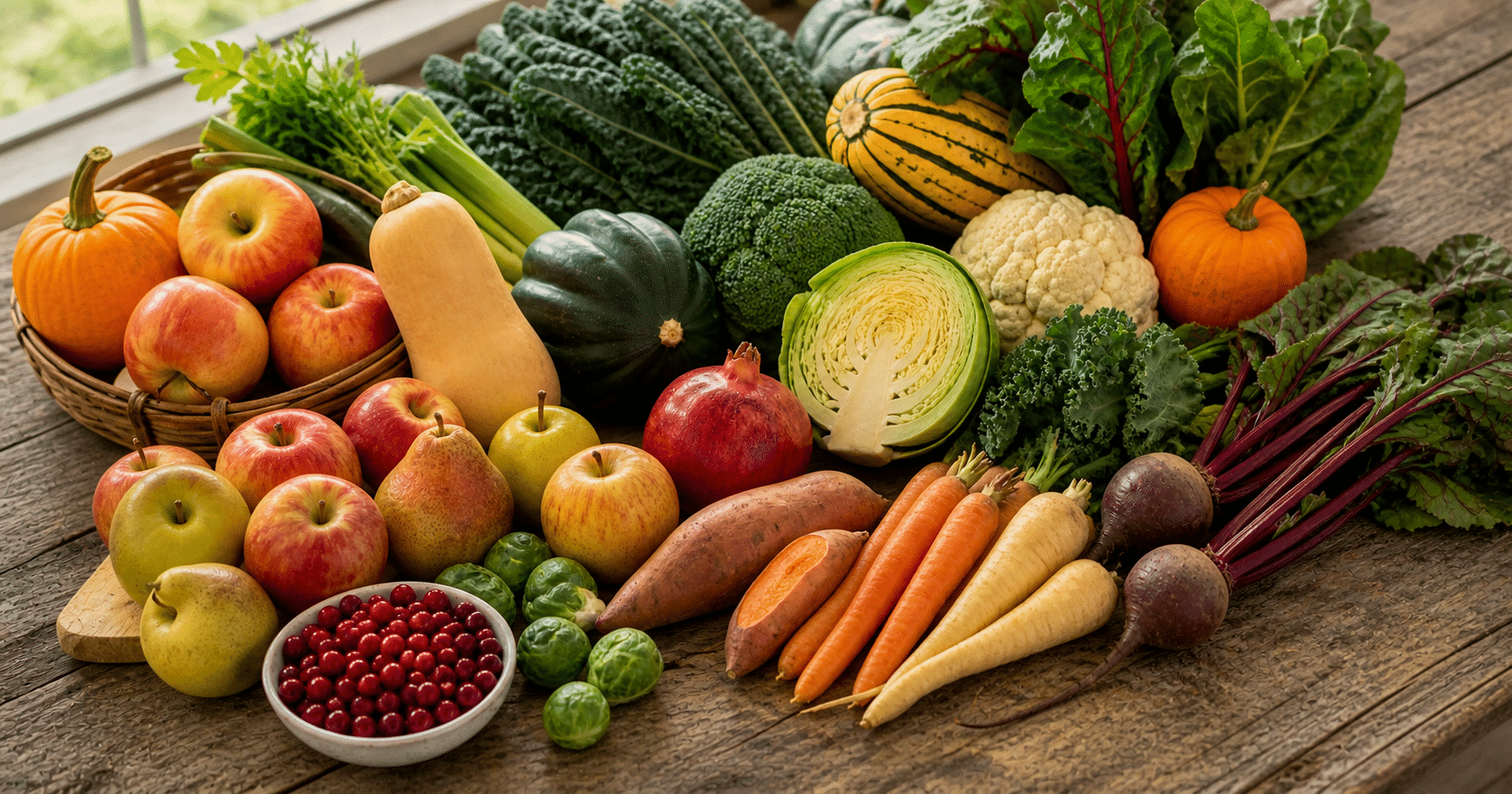
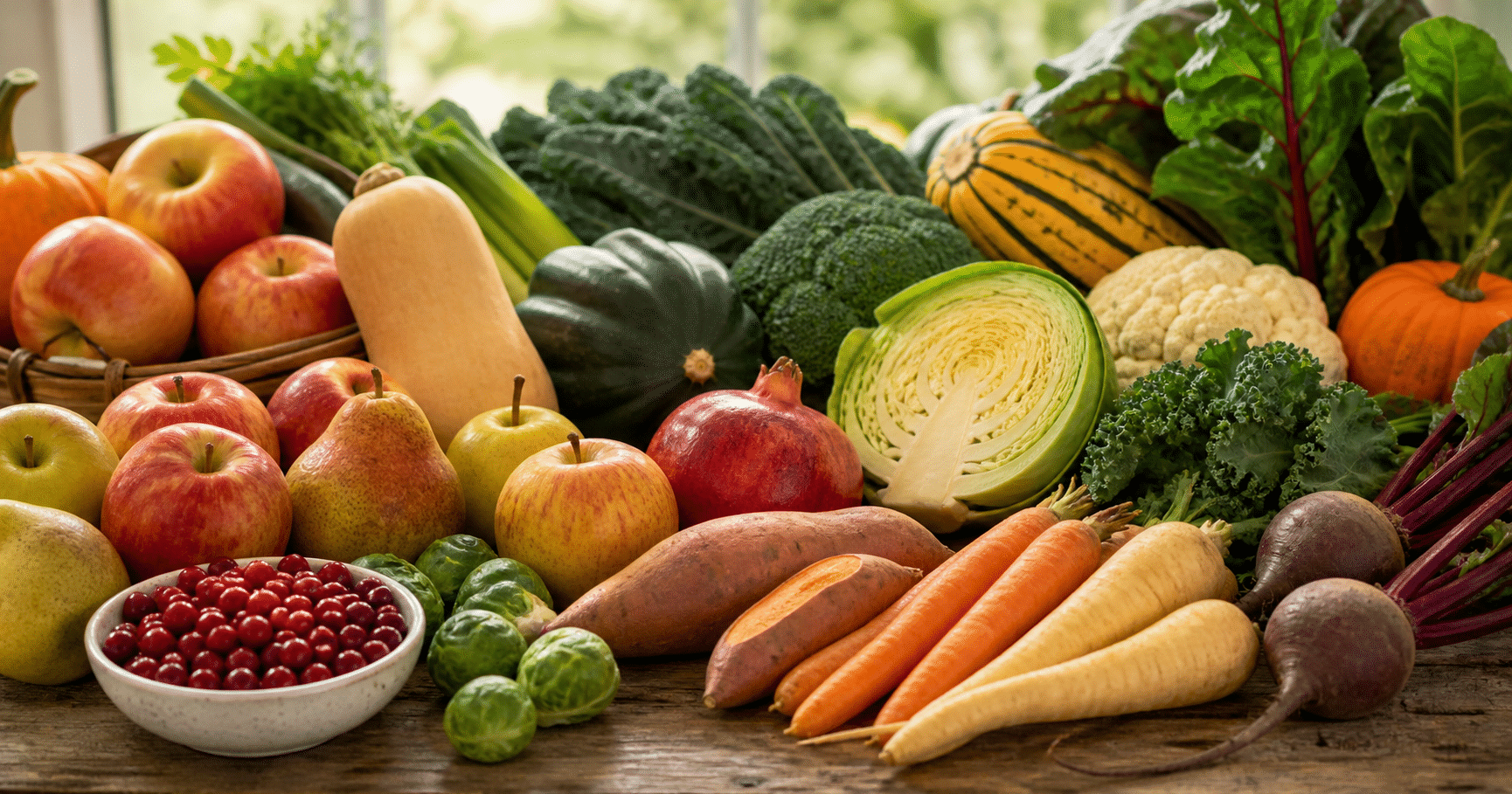
Apples and pears are classic October and November finds in many parts of the country, though varieties and harvest timing differ. Cranberries are harvested in fall, and pomegranates and persimmons may also appear as the season progresses. In some warmer regions, the first local citrus starts coming in during late fall.
For a snack, choose apples or pears that feel firm for their variety and have no soft, leaking spots. Persimmons need a little extra attention: some types are pleasant while still firm, while astringent varieties can taste puckering until very soft and fully ripe.
2. Squash, sweet potatoes and root vegetables
Look for pumpkins and winter squash such as butternut, acorn, delicata and spaghetti squash, along with sweet potatoes. Beets, carrots, turnips, parsnips, rutabagas and potatoes are also common fall choices. These vegetables are naturally suited to soups, mashes and sheet-pan dinners.
Cool weather can make some root crops taste sweeter, but flavor varies by crop and growing conditions. For cooking, choose squash with firm skin and no damp, sunken patches. A carving pumpkin is not always the tastiest option for dinner; smaller pumpkins sold as pie or sugar pumpkins are generally better suited to cooking.
3. Greens and brassicas
Brussels sprouts, cabbage, broccoli, cauliflower and leafy greens such as kale, collards, chard and spinach are common cool-season choices. Depending on the region, you may also find leeks, celery, fennel or late-season green beans.
These vegetables are flexible: shred cabbage into a slaw, stir greens into soup near the end of cooking or roast Brussels sprouts until their edges brown. Choose greens with crisp leaves and vegetables that feel firm and heavy for their size.
4. The harvest changes by region
In northern states, hard freezes can end the outdoor season for tender crops, while storage apples, squash and root vegetables remain available. The Pacific Northwest and Northeast are known for fall apples and pears; Midwestern farms often offer squash and root crops. California, Arizona and other warmer areas may still have a broader mix of greens and vegetables, with citrus beginning in some locations.
These are broad patterns, not guarantees. A warm fall, an early frost or a local growing method can shift what is ready. Ask a market vendor what was harvested nearby and when; it’s often the quickest way to understand what’s truly in season.
A simple sheet-pan dinner with fall produce
This flexible roast combines sweet potatoes, Brussels sprouts and apple for a colorful side dish or an easy base for a meal. Serve it with beans, eggs, chicken or another protein if you want to make it more substantial.
Ingredients
- 1 medium sweet potato, scrubbed and cut into ¾-inch cubes
- 12 ounces Brussels sprouts, trimmed and halved
- 1 firm apple, cored and cut into wedges
- 2 tablespoons olive oil
- ½ teaspoon dried thyme or rosemary
- ¼ teaspoon salt, plus more to taste
- Black pepper
Step-by-Step Instructions
- Heat the oven to 425°F. Line a rimmed baking sheet with parchment paper if desired.
- Toss the sweet potato and Brussels sprouts with the olive oil, thyme, salt and a few grinds of pepper. Spread them out in a single layer, leaving room between pieces.
- Roast for 15 minutes, then stir or turn the vegetables. Add the apple wedges and roast for another 12 to 18 minutes, until the vegetables are tender and browned at the edges.
- Taste and adjust the seasoning. Serve warm, or let the vegetables cool before refrigerating leftovers in a covered container.
How to shop and store fall produce
Buy delicate greens and ripe pears for use first; sturdier squash, onions and potatoes can generally wait longer if stored in a cool, dry place. Keep apples separate from produce that is sensitive to ethylene, a natural ripening gas that apples release. Refrigerate cut produce, and wash fruits and vegetables under running water before eating or preparing them.
At the market, don’t overlook imperfect-looking produce. A crooked carrot or unusually shaped squash can be just as useful in a soup or roast as a picture-perfect one. If a vegetable is new to you, buy one rather than a large quantity and try a familiar preparation, such as roasting or adding it to a soup.
Make the most of the fall harvest
October and November offer a practical mix of crisp fruit, hearty roots, winter squash and cool-weather greens. What’s local will depend on where you live, so use the produce list as a guide rather than a strict calendar.
Pick one unfamiliar ingredient alongside your usual favorites, and let the season shape a meal. A tray of roasted vegetables or a pot of soup is often all it takes to turn fall produce into something worth looking forward to.