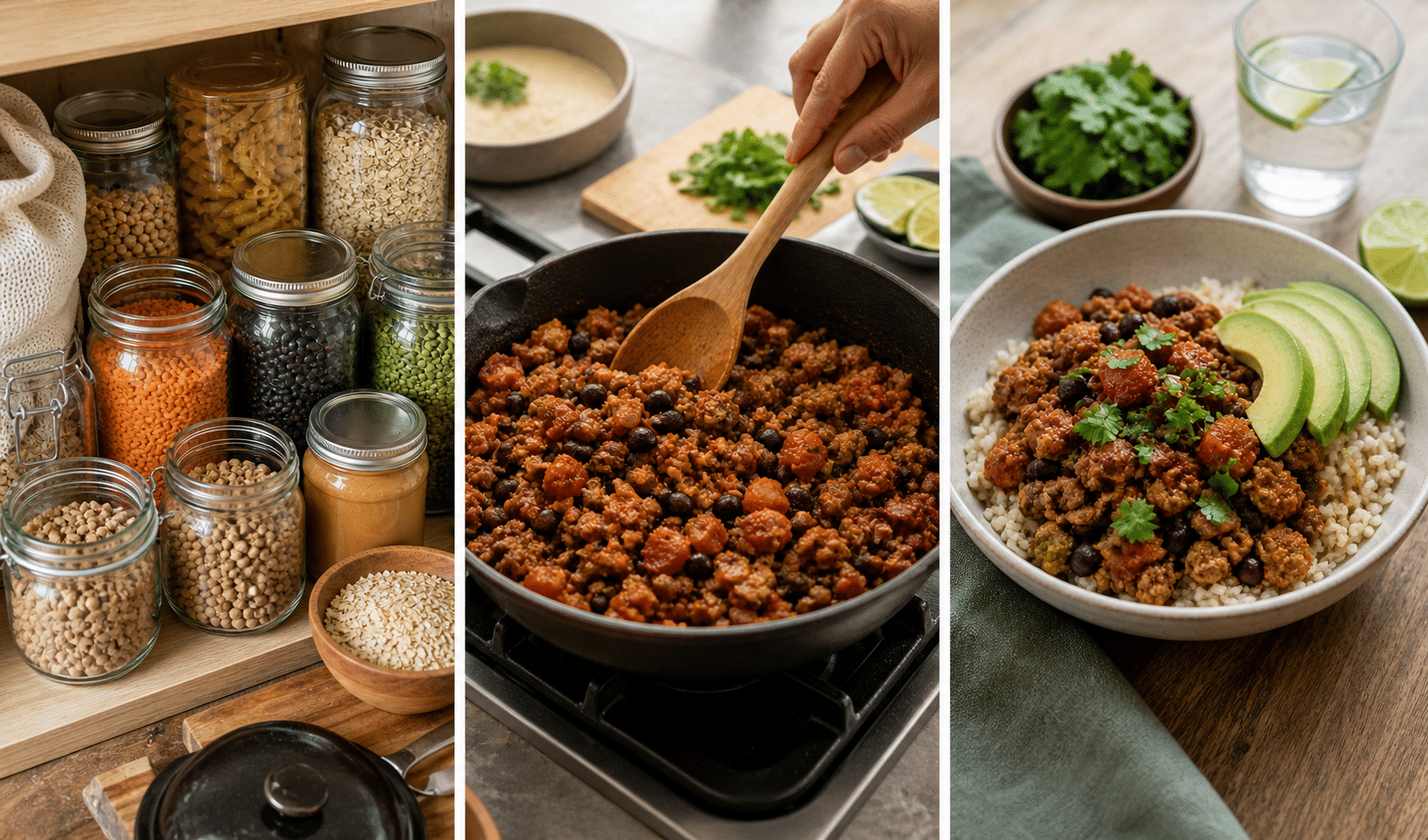
Plant-based protein does not have to mean specialty powders, expensive meat substitutes, or a cart full of unfamiliar ingredients. Some of the best-value options are ordinary pantry foods: lentils, beans, oats, peanut butter, and soy milk.
One useful detail gets overlooked: the cheapest choice is not always the one with the lowest shelf price. Dry beans cost less per serving than canned beans, for example, but canned beans can be a better value if convenience means you will actually use them.
Below are 12 affordable plant-based staples, with approximate protein amounts and practical ways to put them to work. Values vary by brand and serving size, so check labels when comparing products.
What Makes a Plant-Based Protein a Good Buy?
Protein helps the body maintain and repair tissues, including muscle. Plant foods can contribute plenty, but their protein content ranges widely: a cup of cooked lentils offers much more than a slice of bread, even though both count.
Beans, peas, lentils, soy foods, nuts, seeds, and grains all provide protein, along with different amounts of fiber and other nutrients. Most plant proteins are lower in one or more essential amino acids than animal proteins, but eating a varied mix of foods across the day generally supplies the amino acids the body needs. You do not have to combine specific foods at every meal.
For budget shopping, compare the price per serving—not just the package price—and consider how much preparation a food requires. Dry legumes are often economical; canned and frozen options trade a little extra cost for speed.
12 Affordable Plant-Based Protein Staples
1. Lentils
About 18 grams of protein per cooked cup. Lentils cook faster than most dry beans and usually do not need soaking. Add them to soups, tomato sauce, or a simple rice bowl.
2. Dry beans
About 15 grams per cooked cup for many varieties, including black, pinto, and navy beans. Buying dry can lower the cost per serving; cook a larger batch and freeze portions for later.
3. Chickpeas
About 15 grams per cooked cup. Use them in salads, curries, or mashed with lemon and seasonings for a sandwich filling. Canned chickpeas are ready after draining and rinsing.
4. Split peas
About 16 grams per cooked cup. Green or yellow split peas break down into a thick, filling soup and do not require soaking. They are a handy choice for a low-effort pot of soup.
5. Tofu
Roughly 10–20 grams per 3.5-ounce serving, depending on firmness and brand. Firm tofu tends to contain more protein than silken tofu. Crumble it into a skillet, bake cubes, or add it to a stir-fry.
6. Frozen edamame
About 17 grams per cooked cup of shelled edamame. Keep a bag in the freezer for quick additions to salads, grain bowls, or soups. Check whether the package is shelled when comparing serving sizes.
7. Textured vegetable protein (TVP)
Often around 12 grams per quarter-cup dry, though brands differ. Made from soy, TVP is shelf-stable and usually rehydrates quickly. Try it in chili, taco filling, or pasta sauce.
8. Peanut butter
About 7 grams per 2 tablespoons. Stir it into oatmeal or spread it on whole-grain toast. It is calorie-dense, so a measured serving can help keep portions in line with your needs.
9. Oats
About 5 grams per half-cup dry. Oats are not as protein-rich as legumes, but they are inexpensive and easy to build into breakfast. Add milk or peanut butter for a more substantial bowl.
10. Whole-wheat pasta
Usually about 7–8 grams per 2 ounces dry. Pair it with lentils or beans in a tomato sauce to make a more filling meal without relying on costly add-ins.
11. Unsweetened soy milk
Typically about 7–8 grams per cup. It is often closer in protein to dairy milk than many other plant beverages. Compare labels: almond and rice drinks, for instance, may contain much less protein.
12. Whole-wheat bread
Often about 4–5 grams per slice. Protein varies, so read the label. A peanut butter sandwich or toast alongside a bowl of bean soup turns a basic pantry item into part of a more protein-rich meal.
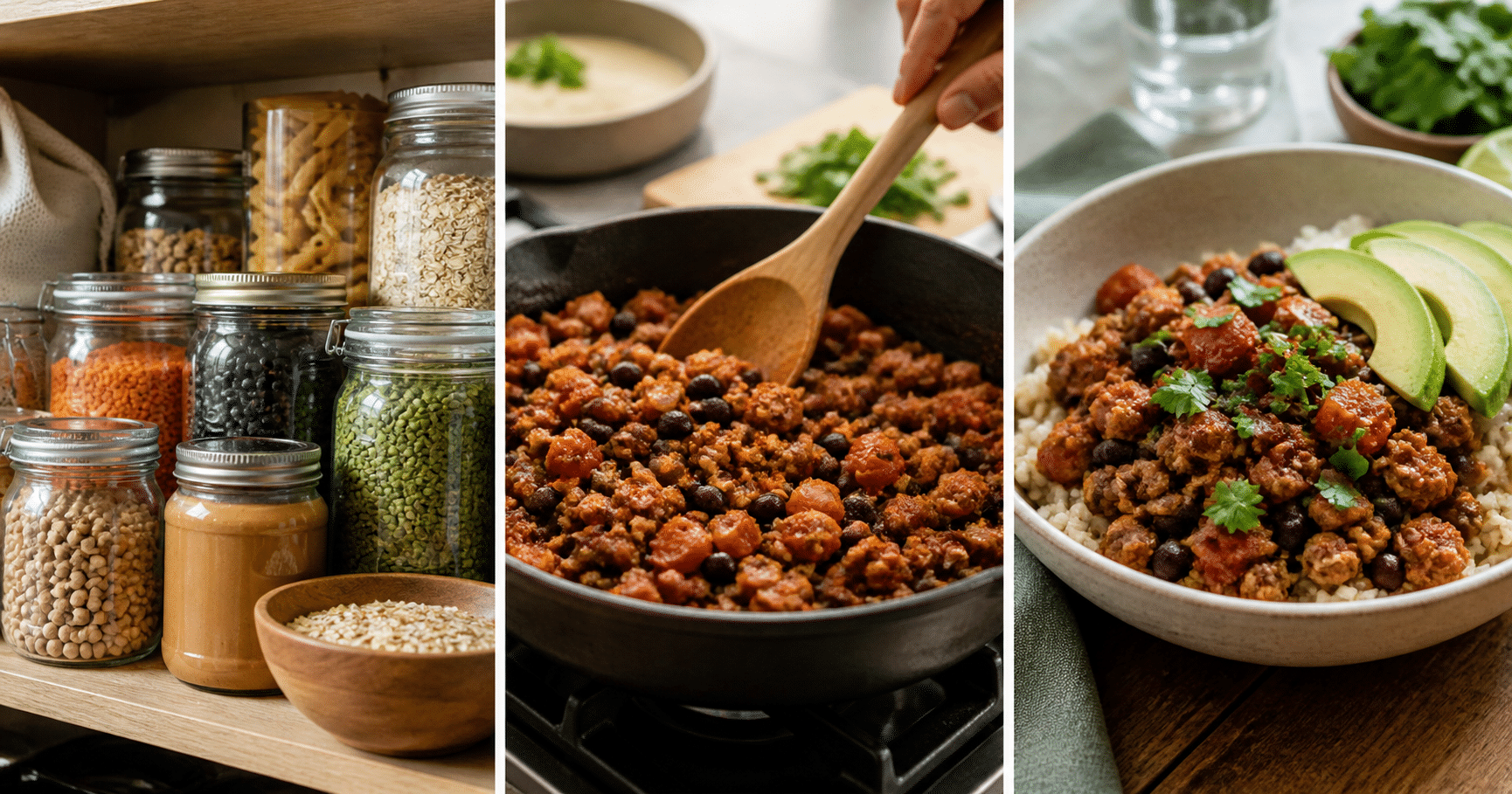
An Easy TVP and Bean Skillet
This flexible skillet makes about four servings and combines two shelf-stable protein sources. Use the spices you have, and serve it over rice, with tortillas, or alongside whole-wheat toast.
Ingredients
- 1 cup dry TVP
- 1 cup hot water or low-sodium vegetable broth
- 1 tablespoon olive or canola oil
- 1 small onion, chopped
- 1 teaspoon ground cumin
- 1 teaspoon chili powder
- 1 can (15 ounces) black or pinto beans, drained and rinsed
- 1 can (14.5 ounces) diced tomatoes
- Salt and pepper, to taste
Step-by-Step Instructions
- Put the TVP in a bowl, pour over the hot water or broth, and let it stand for about 5–10 minutes, or follow the package directions.
- Warm the oil in a skillet over medium heat. Add the onion and cook for 4–5 minutes, stirring, until softened.
- Stir in the cumin and chili powder, then add the rehydrated TVP, beans, and tomatoes.
- Simmer for 10–15 minutes, stirring occasionally. Season to taste and serve warm.
Refrigerate leftovers promptly in a covered container and use within 3–4 days, or freeze portions for longer storage.
Make the Budget Work for Your Kitchen
Dry legumes are a strong value if you have time to cook them; canned versions can be worth the convenience. Rinsing canned beans can reduce some of the sodium, and choosing no-salt-added products gives you more control over seasoning.
Build meals from a few reliable combinations rather than buying a different protein for every recipe: lentils with pasta, beans with rice, oats with soy milk, or tofu with frozen vegetables. If you have a medical condition that affects your diet, or have been advised to follow a specific protein plan, ask your health professional what choices fit your needs.
Small Staples, More Flexible Meals
A practical plant-based pantry can start with just a few items: one legume, one soy food, and a familiar grain or nut butter. Add variety as you find affordable options you enjoy.
The best budget protein is the one that fits your meals, your time, and your appetite—whether it comes from a pot of lentils or a can you can open tonight.