Prebiotics and probiotics sound like two versions of the same thing. They are related, but they play different roles: one is food for certain gut microbes, while the other refers to live microorganisms that may provide a health benefit when consumed in adequate amounts.
That distinction matters when you’re shopping. Yogurt with live cultures may provide probiotics; oats, beans, onions, and other plant foods supply fibers that gut microbes can use. And although many foods are fermented, fermentation alone does not guarantee that a finished product contains live probiotic microorganisms.
Both prebiotic foods and probiotic foods can fit into a varied diet, but neither is a cure-all. Here’s how to tell them apart, what to look for on labels, and an easy way to bring both into one meal.
Prebiotics Feed Some Gut Microbes; Probiotics Are Live Microorganisms
Prebiotics are substances—often particular types of fiber—that beneficial microorganisms in the body can use. They pass through digestion in a form that allows some gut microbes to break them down. That process produces compounds such as short-chain fatty acids, which are part of the normal activity of the gut. Not every kind of fiber meets the scientific definition of a prebiotic, though fiber-rich foods can still support a healthy eating pattern.
Probiotics are live microorganisms that provide a health benefit when consumed in adequate amounts. Some are found in foods; others are sold as supplements. Effects can depend on the particular microorganism and the person consuming it, so the word “probiotic” does not mean every product will have the same effect.
The simple comparison: prebiotics are a resource for certain microbes; probiotics are the microbes themselves. They can appear in the same meal, but eating them together does not guarantee a special result. The broader goal is to include a range of nourishing foods rather than expect one ingredient to transform gut health.
How to Spot Prebiotic and Probiotic Foods
1. Look to plants for prebiotic fibers
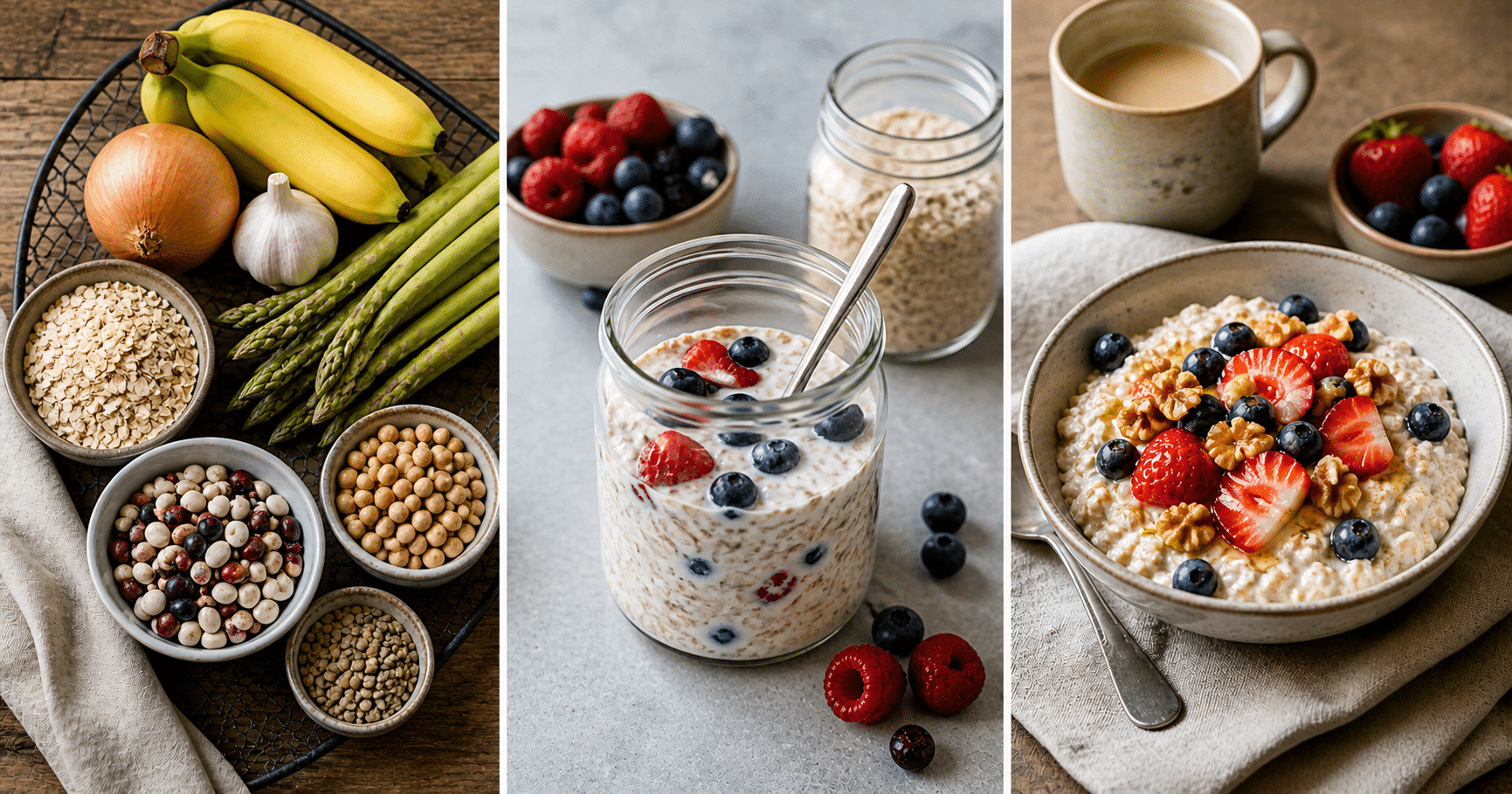
Beans, lentils, chickpeas, onions, garlic, asparagus, and oats are useful sources of fiber, including fibers that gut microbes can ferment. Slightly green bananas and cooked-and-cooled potatoes or rice also contain resistant starch, a type of carbohydrate that can resist digestion and be used by gut microbes in the large intestine.
These foods contain different fibers, and their effects are not identical. If you currently eat little fiber, increase portions gradually and drink enough fluids; a sudden jump can cause gas or bloating. People with digestive conditions or specific dietary instructions may need to choose their fiber sources carefully.
2. Choose fermented foods thoughtfully
Yogurt and kefir can contain live cultures. For yogurt, look for a “live and active cultures” statement or check the ingredient and product information. Some fermented vegetables, such as sauerkraut and kimchi, may also contain live microorganisms if they have not been heat-treated after fermentation.
But fermented does not automatically mean probiotic. Baking, pasteurization, or other processing can kill live cultures, and some fermented foods are not intended to provide microorganisms with a demonstrated health benefit. Miso and tempeh, for example, are fermented foods, but how they are processed and eaten affects whether live cultures remain in the finished dish.
3. Read the label—and keep expectations realistic
Product labels can help you identify live cultures, but a food’s probiotic status depends on more than the word “fermented.” For supplements, specific strains and amounts matter, and evidence for one product cannot automatically be applied to another. If you are considering a probiotic supplement because of a health concern, ask a health professional rather than assuming a food or capsule will address it.
A Simple Prebiotic-and-Probiotic Breakfast Bowl
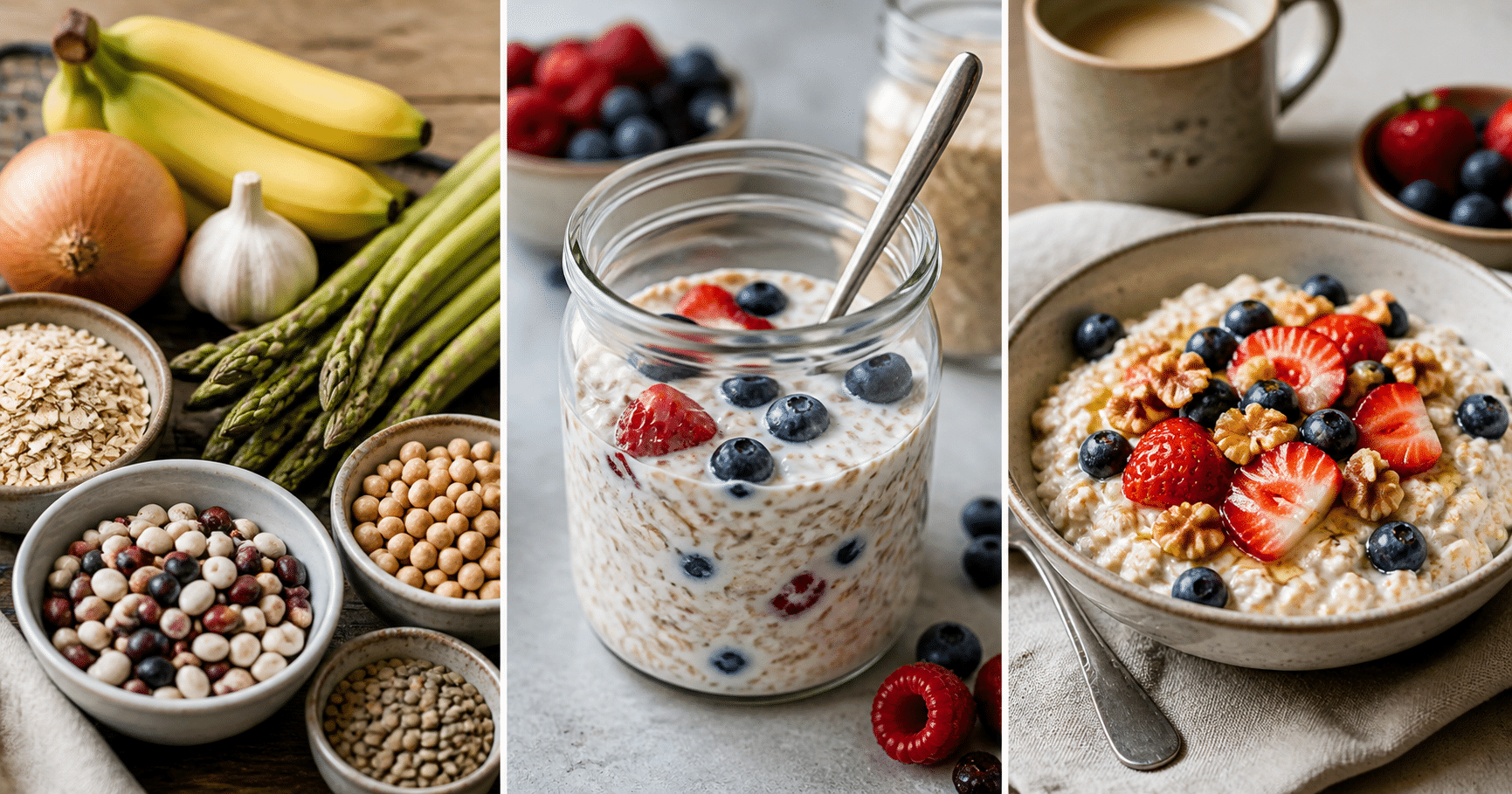
This overnight oat bowl pairs plain yogurt containing live cultures with oats and berries for a convenient breakfast. The ingredients provide a mix of cultures and fiber; the combination is a practical meal, not a prescribed treatment.
Ingredients
-
- 1/2 cup old-fashioned rolled oats
-
- 1/2 cup plain yogurt labeled with live and active cultures
-
- 1/4 cup milk or an unsweetened alternative
-
- 1/2 cup berries, fresh or thawed from frozen
-
- 1 tablespoon chopped walnuts, optional
-
- 1 teaspoon honey or maple syrup, optional
Step-by-Step Instructions
-
- Stir the oats, yogurt, and milk together in a covered container.
-
- Fold in the berries, or save them to add just before eating.
-
- Refrigerate for at least 6 hours, or overnight, until the oats soften.
-
- Top with walnuts and a little honey or maple syrup if desired. Eat chilled; heating the bowl may reduce the live cultures in the yogurt.
Keep the bowl refrigerated and use it within two days for best quality. If you prefer a warm breakfast, cook the oats separately and let them cool before stirring in the yogurt. That keeps the yogurt from being heated along with the oats.
Small Choices Make These Foods Easier to Enjoy
There is no need to overhaul your diet or seek out an expensive product. Add beans to soup, stir oats into breakfast, or use onion and garlic in a meal. If those foods cause discomfort, try smaller portions or a different fiber source.
For probiotic foods, check whether live cultures are present and follow the product’s storage directions. Refrigerated, unpasteurized sauerkraut may contain live organisms, while shelf-stable or heat-treated versions may not. A food can still be tasty and nutritious even if it does not qualify as a source of live probiotics.
People who are severely immunocompromised or seriously ill should check with a clinician before using probiotic supplements. This is a particular consideration for concentrated products; ordinary foods are not interchangeable with supplements.
The Bottom Line: Feed the Microbes and Choose Cultures Wisely
Prebiotics are certain fibers and other substances that some gut microbes can use; probiotics are live microorganisms that may offer a benefit in adequate amounts. Plant foods such as beans and oats can contribute fermentable fiber, while yogurt with live cultures is a familiar probiotic food.
Look beyond the word “fermented,” build variety into meals, and make changes at a pace your digestion can handle. A steady mix of foods is more useful than expecting one yogurt or one serving of oats to do all the work.