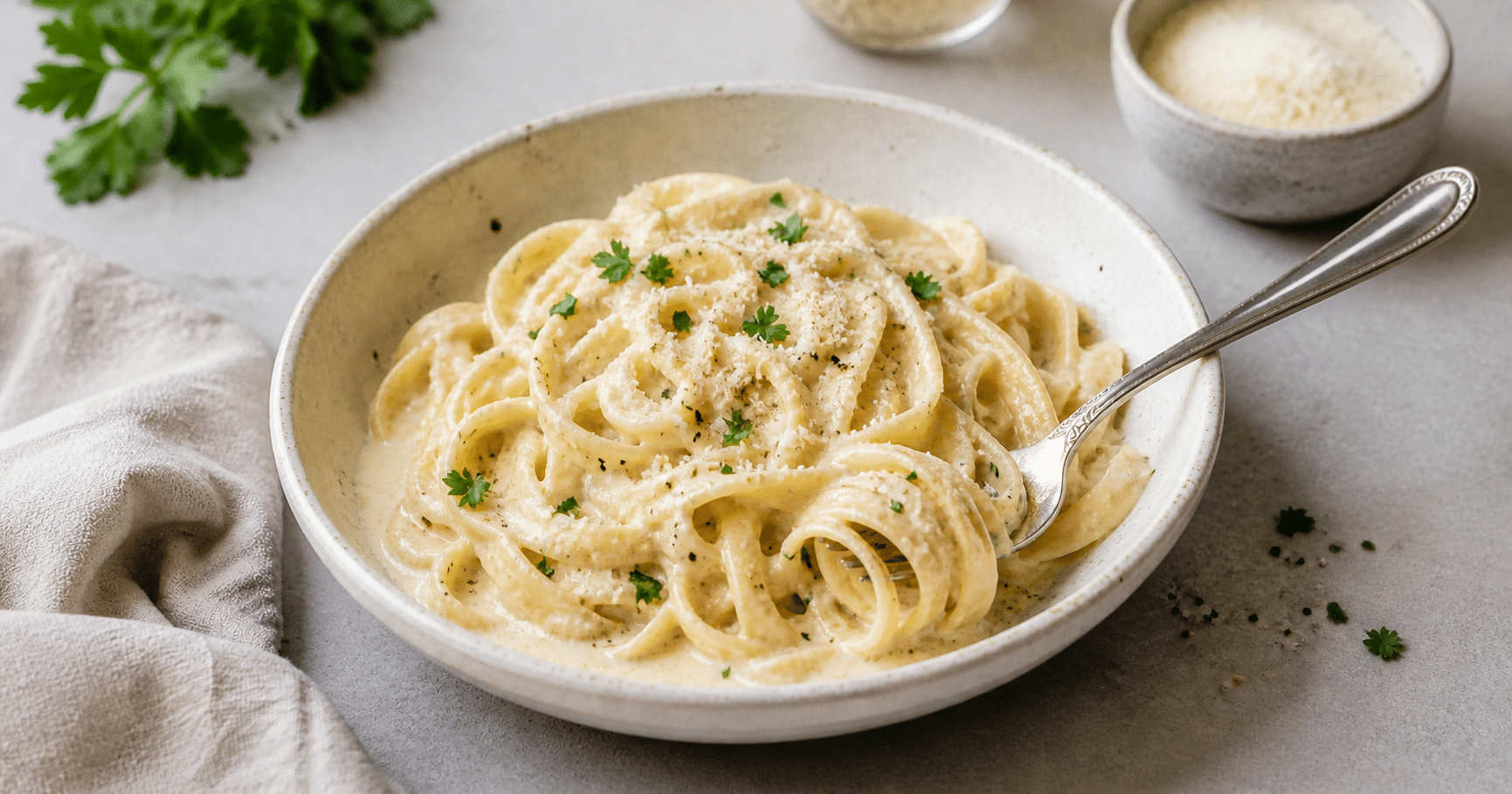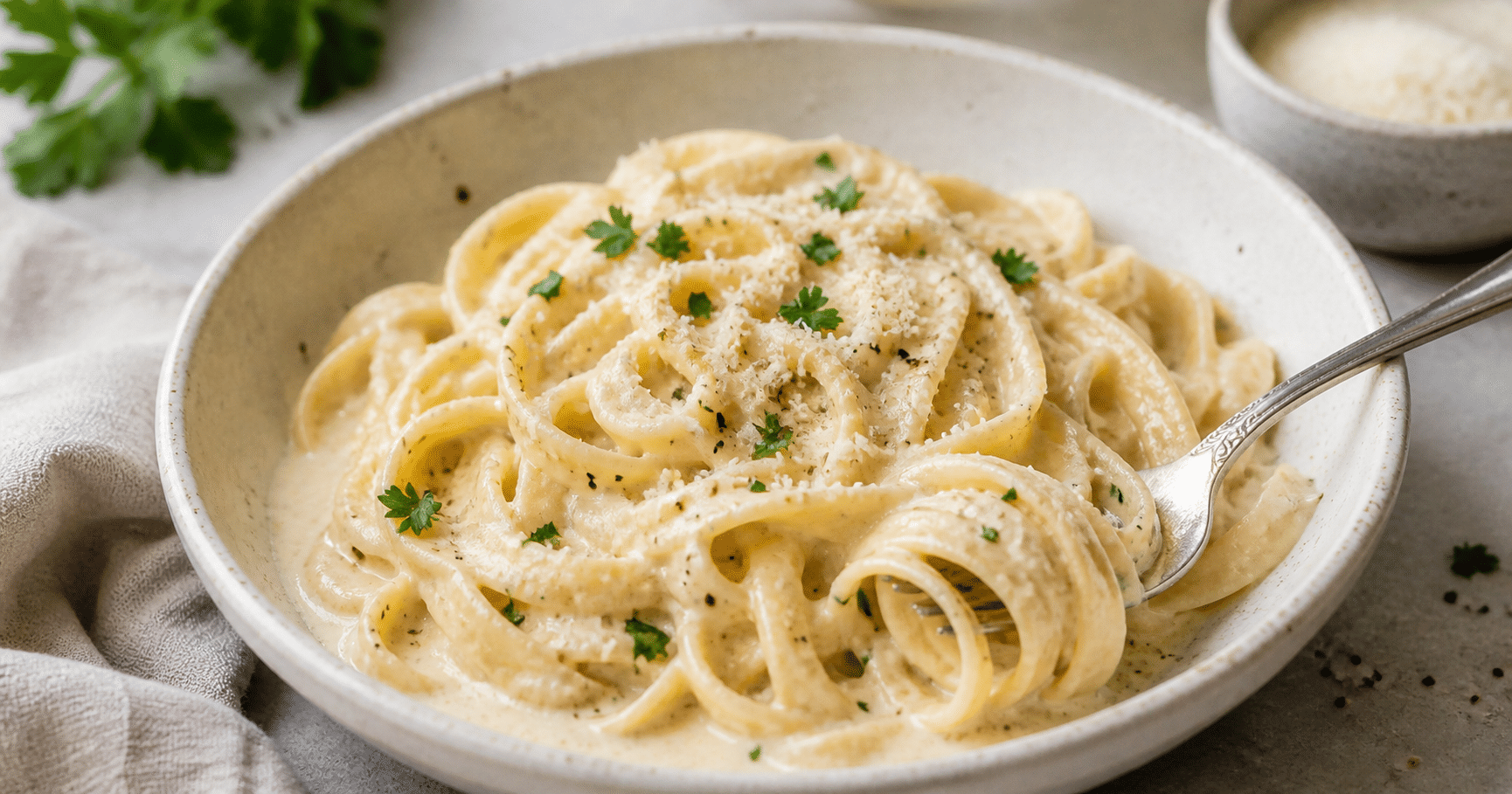
A creamy pasta sauce does not need cashews, heavy cream, or a long list of specialty ingredients. A can of cannellini beans can provide the body for a smooth, savory sauce that comes together with pantry staples and a blender.
The useful trick is not simply puréeing beans and pouring them over noodles. Beans are naturally thick, so the sauce needs enough liquid, a little fat, and careful seasoning to keep it from tasting pasty. A splash of starchy pasta water helps it cling to the noodles.
Cannellini beans also bring fiber and plant-based protein to the meal. That does not make this sauce a treatment for any health condition, but it does make it a filling alternative to a cream-based sauce. Here’s how to make it, adjust the texture, and use it beyond one bowl of pasta.
Why Cannellini Beans Make a Creamy Pasta Sauce
When cooked beans are blended with broth or water, their soft interior breaks down into a thick purée. A modest amount of olive oil adds richness and helps the sauce feel smoother, while garlic, lemon, and cheese bring the savory and bright flavors that keep the beans from taking over.
Cannellini beans are a type of white kidney bean. Like other beans, they contain fiber and plant protein, along with carbohydrates that help give the purée its body. The exact nutrition varies by brand and serving size, so check the label if you’re tracking sodium, fiber, or protein.
The result is creamy, but it is not identical to a sauce made with cream: it is thicker and more substantial, with a mild bean flavor. Lemon juice and enough salt are especially helpful for balancing that flavor. If you want a completely smooth sauce, use a high-speed blender; an immersion blender can work too, though the texture may be a little less silky.
Three Details That Make the Sauce Work
1. Rinse canned beans, then loosen the purée
Draining and rinsing canned beans removes much of the packing liquid, which can be salty or slightly starchy. Blend the rinsed beans with broth until the mixture looks smooth and pourable. It should be thicker than cream but not so dense that it sits in a mound.
2. Save pasta water before draining
Pasta water contains starch released as the noodles cook. Stirring a little into the sauce helps it coat the pasta rather than gather at the bottom of the bowl. Scoop out at least a cup before draining; you may not need all of it.
3. Keep the sauce at a gentle simmer
A hard boil can make a thick bean sauce sputter and stick. Warm it over medium-low heat, stirring often, and thin it gradually with broth or pasta water. Taste near the end: beans can need more salt and acidity than you might expect.
How to Make Creamy Cannellini Bean Pasta Sauce
This recipe makes about four servings and takes roughly 25 minutes, including the time to cook the pasta. It is easy to adapt with vegetables or herbs you already have.
Ingredients
- 12 ounces pasta, such as fettuccine, penne, or shells
- 1 (15-ounce) can cannellini beans, drained and rinsed
- 2 tablespoons olive oil
- 2 garlic cloves, peeled and roughly chopped
- 3/4 cup low-sodium vegetable or chicken broth, plus more as needed
- 1/4 cup finely grated Parmesan, plus more for serving (optional)
- 1 tablespoon lemon juice, plus more to taste
- 1/2 teaspoon salt, or to taste
- Black pepper, to taste
- 1/4 teaspoon red pepper flakes (optional)
Step-by-Step Instructions
- Cook the pasta. Bring a large pot of salted water to a boil and cook the pasta according to the package directions until tender but still slightly firm. Before draining, reserve 1 cup of pasta water.
- Blend the sauce. While the pasta cooks, combine the beans, olive oil, garlic, broth, lemon juice, salt, and several grinds of black pepper in a blender. Blend until smooth, stopping to scrape down the sides if needed. Stir in the Parmesan, if using.
- Warm it gently. Pour the sauce into a skillet or saucepan over medium-low heat. Stir for 3 to 5 minutes, until hot. If it seems too thick, add broth or reserved pasta water a tablespoon or two at a time.
- Coat the pasta. Add the drained pasta to the pan and toss well. Add more pasta water as needed until the sauce lightly coats the noodles. Taste and adjust with extra lemon, pepper, or salt. Serve with Parmesan or chopped parsley, if desired.
Easy Ways to Adjust and Use It
For a brighter sauce, add lemon zest along with the juice. For a more savory version, sauté the garlic briefly in the olive oil before blending; avoid browning it, which can make its flavor sharp. A handful of baby spinach stirred into the hot sauce will wilt, while roasted broccoli or mushrooms make a heartier topping.
If you prefer a vegan sauce, leave out the Parmesan and add a little more salt, lemon, or nutritional yeast if you keep it on hand. For a less bean-forward taste, use more garlic and black pepper, or add a small pinch of red pepper flakes.
Refrigerate leftovers promptly in a covered container and use within 3 to 4 days. The sauce will thicken as it chills, so reheat it gently with a splash of water or broth, stirring until smooth. You can also spoon it over roasted vegetables or use it as a creamy base for a grain bowl.
A Pantry Sauce Worth Keeping in Rotation
Cannellini beans make a practical, cashew-free way to create a creamy pasta sauce from everyday ingredients. Blend until smooth, season generously, and use pasta water to find the texture you like.
The best finishing touch may be the simplest one: taste the sauce just before serving. A little lemon or salt can turn a thick bean purée into a balanced pasta dinner.