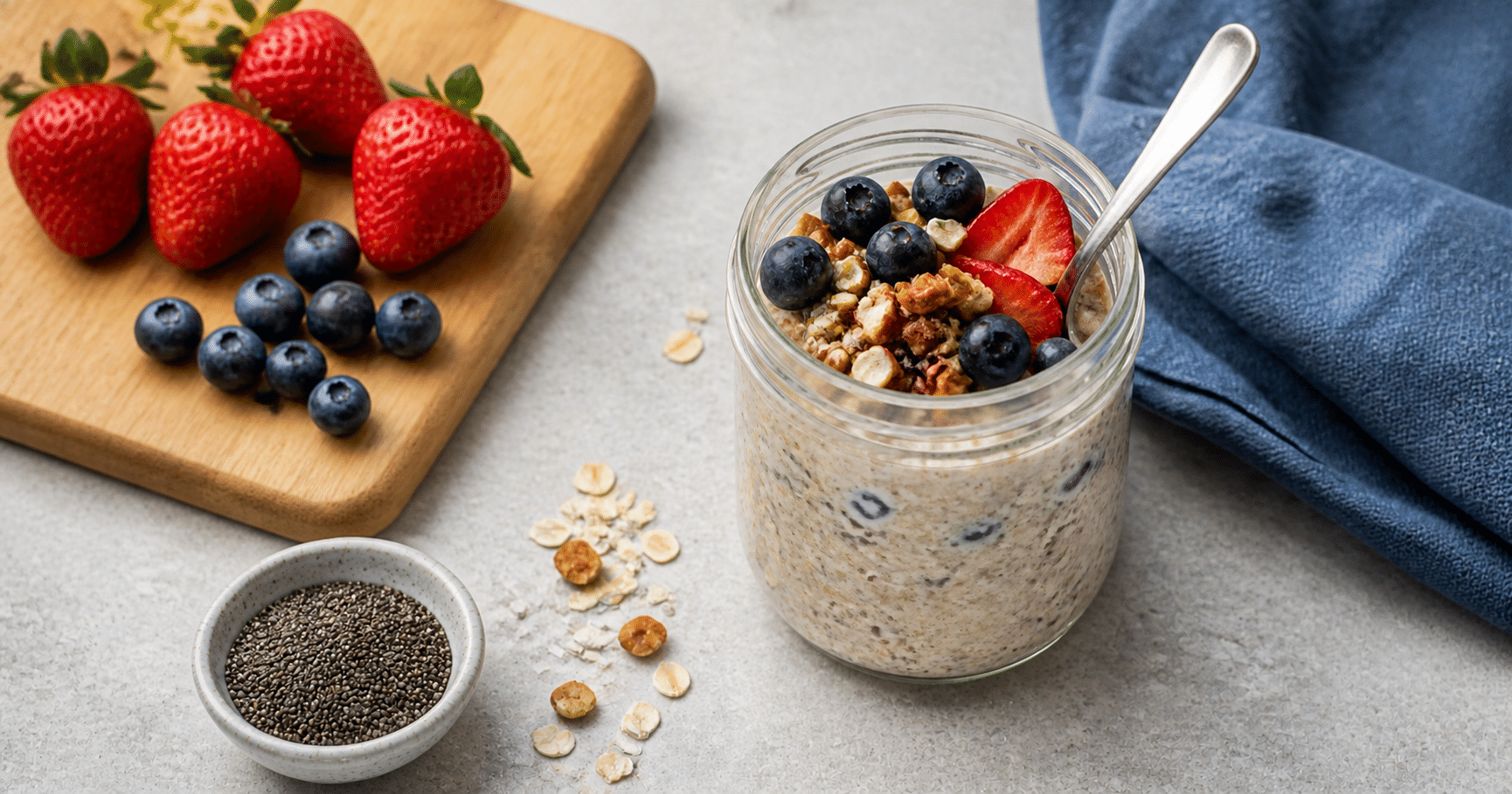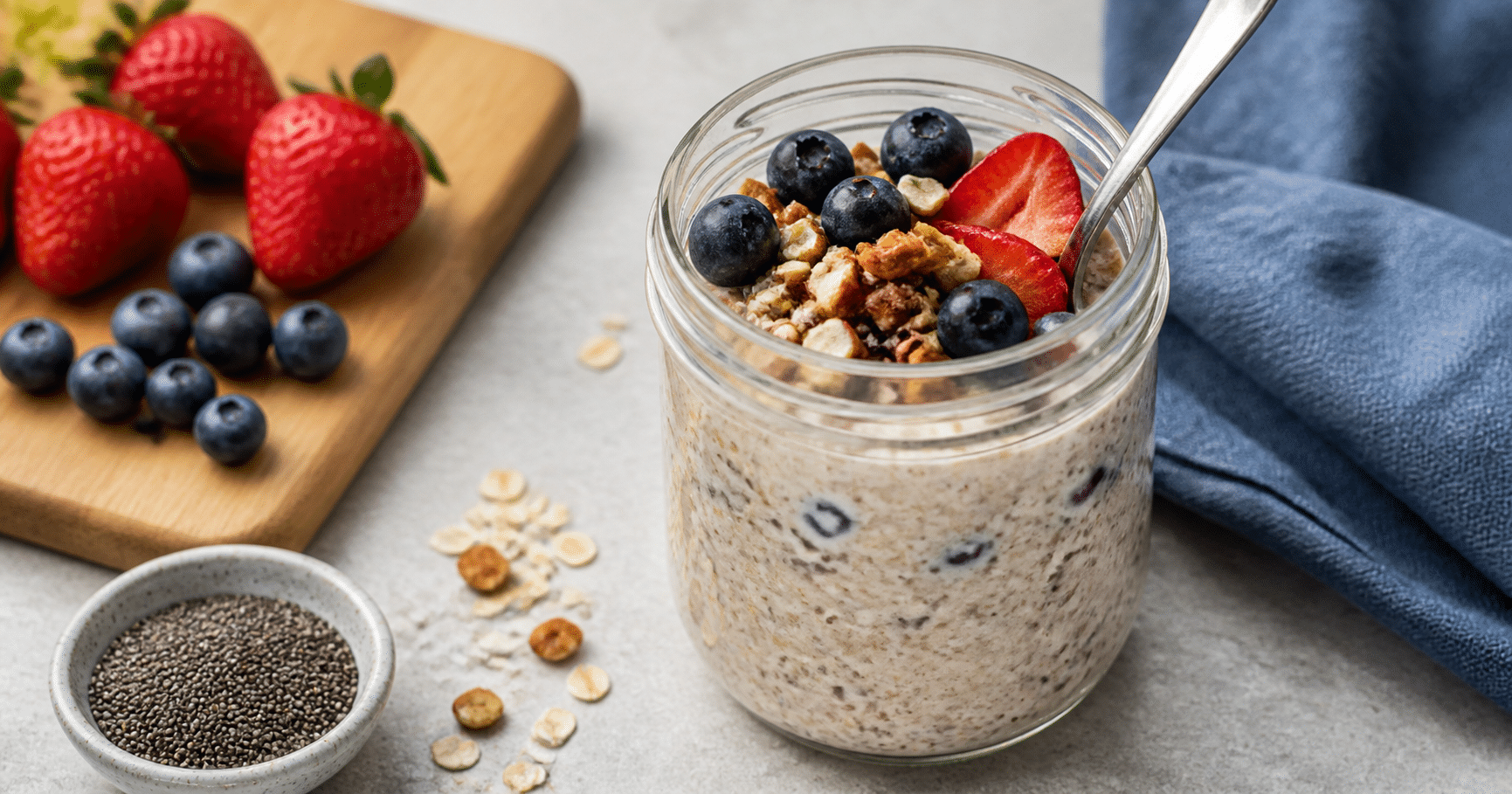
A breakfast routine is easier to keep when the work is already done. Overnight oats take a few minutes to assemble the evening before, then wait in the refrigerator until morning—no pan, timer, or early start required.
The appeal is more than convenience. Oats provide fiber, and the basic recipe is easy to adapt with milk, yogurt, fruit, nuts, or seeds. That flexibility can be especially helpful if your appetite, schedule, or preferences change from day to day.
One small detail makes a big difference: overnight oats are not simply oatmeal that happens to be cold. The type of oats, the amount of liquid, and the toppings all affect the finished texture and how satisfying the bowl feels. Here’s a straightforward version, along with ways to make it work for your own morning routine.
Why Overnight Oats Can Be an Easier Breakfast Habit
Rolled oats soften as they sit in liquid, so they’re ready to eat without cooking. Their soluble fiber includes beta-glucan, which forms a gel-like texture when mixed with liquid. Oats are also a source of carbohydrates and provide some protein, though a plain serving may not offer as much protein as many people want in a full breakfast.
Adding Greek yogurt, milk, soy milk, nuts, or seeds can make the meal more substantial. Fruit adds flavor and natural sweetness, while nuts and seeds contribute texture. These ingredients don’t turn oats into a treatment for a health condition, but they can help create a balanced breakfast that suits your needs.
The routine itself is simple: prepare one serving in a covered container, refrigerate it overnight, and add toppings in the morning. Because the base is ready ahead of time, it can be easier to eat breakfast consistently on busy mornings—or when cooking feels like too much effort.
Three Choices That Make a Better Jar of Oats
1. Start with rolled oats for a soft, familiar texture
Old-fashioned rolled oats soften reliably after several hours in the refrigerator and remain pleasantly chewy. Quick oats also work, but they tend to become softer and less distinct. Steel-cut oats are much chewier and usually need more soaking time; they aren’t the best choice for this basic overnight method unless you enjoy a firm texture.
2. Add something with protein if you want a more filling bowl
Oats alone may not keep everyone satisfied through the morning. Stirring in plain Greek yogurt or choosing dairy or soy milk adds protein. A spoonful of nut butter or a small handful of nuts can contribute protein and unsaturated fat, too. The right combination depends on your appetite and what else you eat during the day.
3. Keep sweetness in your control
Fruit, cinnamon, and vanilla can add plenty of flavor without requiring a large pour of syrup or honey. If you use flavored yogurt or sweetened milk, check the label: those ingredients may already contain added sugar. A practical approach is to start with unsweetened ingredients and add sweetness to taste in the morning.
How to Make Simple Overnight Oats
This single-serving recipe makes soft, spoonable oats with a creamy texture. Use a jar or food-storage container that holds at least 12 ounces and has a lid.
Ingredients
- 1/2 cup old-fashioned rolled oats
- 1/2 cup milk or unsweetened soy milk
- 1/4 cup plain Greek yogurt
- 1 teaspoon chia seeds, optional
- 1/4 teaspoon ground cinnamon, optional
- 1/2 cup berries or chopped fruit, for serving
- Chopped nuts, nut butter, or a little maple syrup, optional
Step-by-Step Instructions
- Add the oats, milk, yogurt, chia seeds, and cinnamon to a jar or container. Stir thoroughly, scraping the bottom so no dry oats are left behind.
- Cover and refrigerate for at least 6 hours, preferably overnight. The oats should be softened by morning.
- Stir before eating. Add a splash of milk if the mixture is thicker than you like, then top with fruit and any other additions.
Keep the oats covered in the refrigerator, not on the counter. For best quality, make a small batch and eat it within about three days. If the mixture smells unusual or has been left at room temperature for an extended period, discard it rather than trying to judge it by taste.
Make the Recipe Fit Your Morning
Overnight oats are a template, not a fixed formula. Use mashed banana for a naturally sweet base, grated apple with cinnamon for a familiar combination, or frozen berries that thaw in the refrigerator. For a richer texture, add a little more yogurt; for a looser one, stir in extra milk just before eating.
If you’re preparing breakfast for several days, mix the base in individual containers so each serving is ready to grab. Keep toppings such as nuts or granola separate until morning if you want them to stay crunchy. If you have celiac disease or need to avoid gluten, choose oats labeled gluten-free; oats can come into contact with wheat, barley, or rye during growing or processing.
Make the first batch plain. Once you know whether you prefer thicker oats, more fruit, or a different milk, adjust the next jar. A breakfast you actually enjoy is easier to repeat.
A Small Prep Step, a More Reliable Morning
Overnight oats offer a low-effort way to put breakfast within reach: combine rolled oats with milk and yogurt, refrigerate, and add toppings when you’re ready to eat. They provide fiber, while additions such as yogurt, fruit, nuts, and seeds let you tailor the meal to your appetite.
The useful habit isn’t a perfect recipe—it’s having a breakfast ready when morning arrives. Start with one jar tonight, and let the next version reflect what you liked.