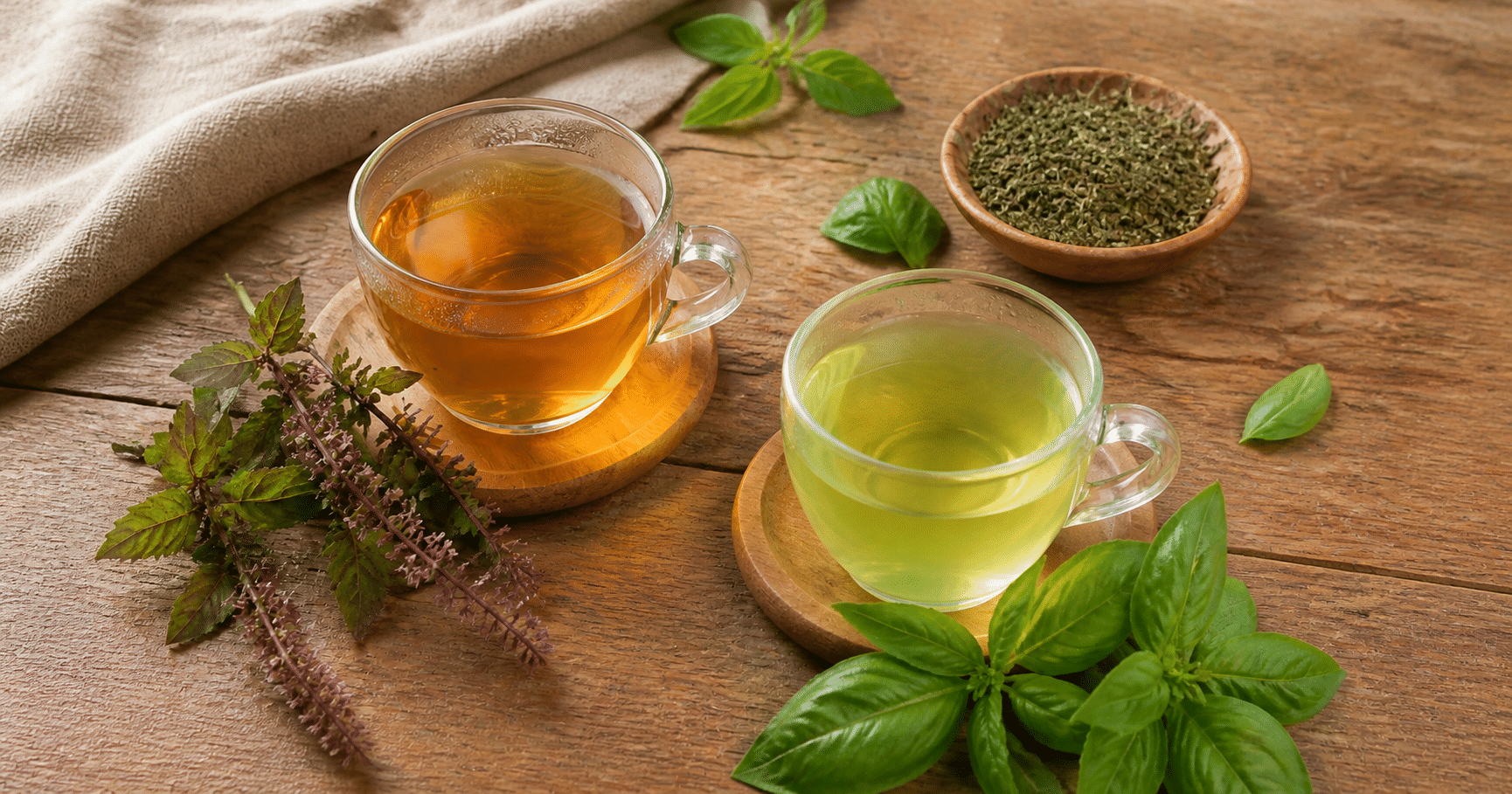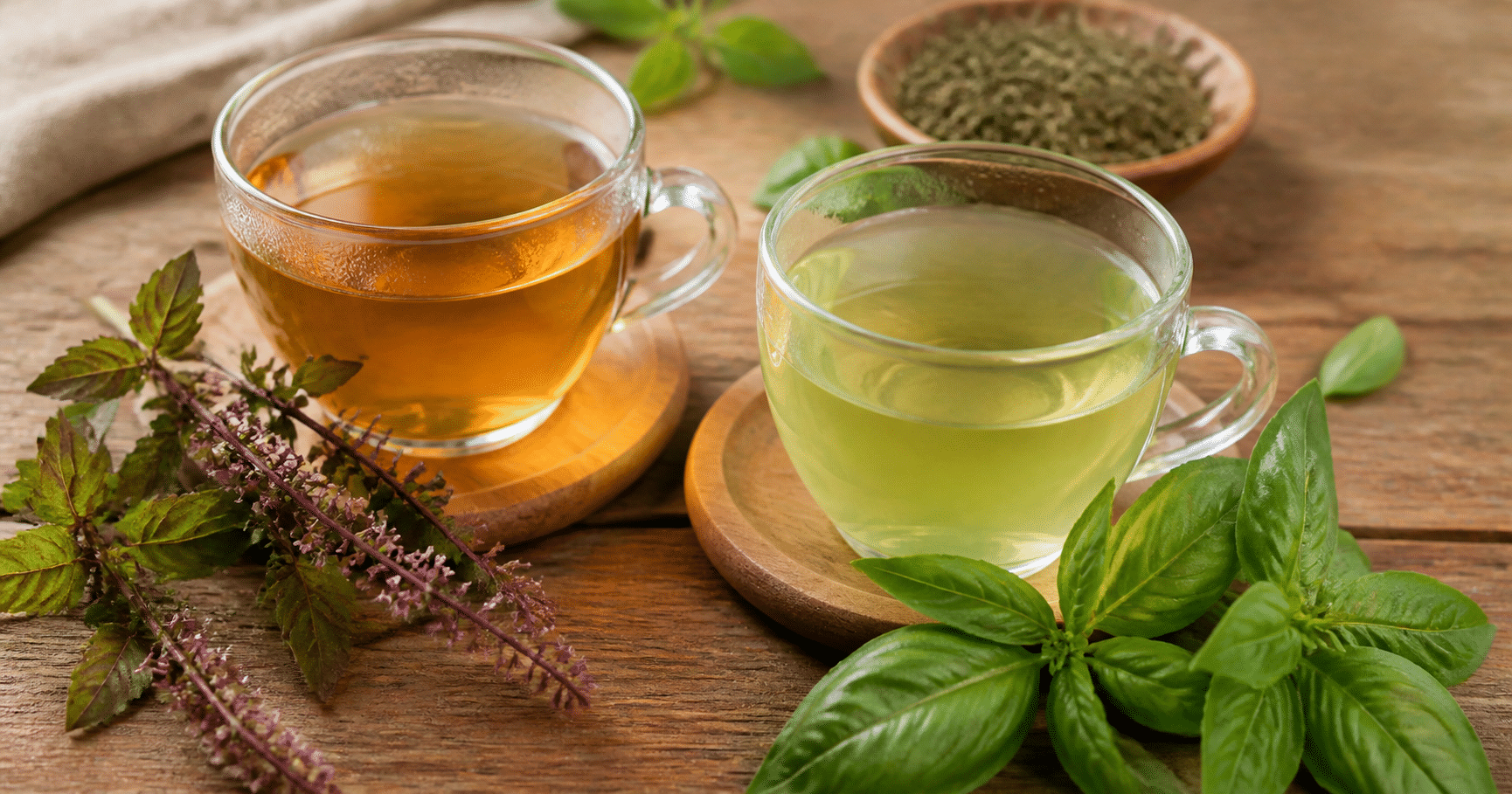
A cup labeled “basil tea” may contain holy basil, sweet basil, or a blend—and those plants are not interchangeable. They share a name and belong to the same botanical family, but they differ in flavor, traditional use, and the amount of research behind their wellness reputations.
The mix-up is easy to make: tulsi is another name for holy basil, while the familiar basil in pesto is usually sweet basil. Both can make fragrant, caffeine-free infusions when brewed on their own, but neither should be mistaken for a proven treatment for a health condition.
So which one belongs in your mug? The answer depends on whether you want a peppery, clove-like herbal tea or a softer, sweeter drink—and on what you mean when you say “basil tea.” Here’s how to tell them apart, brew each one, and understand what their wellness claims can and can’t tell you.
Tulsi and regular basil are different plants
Tulsi, also called holy basil, is Ocimum tenuiflorum (sometimes listed as Ocimum sanctum). Regular culinary basil is most often sweet basil, Ocimum basilicum. Both are members of the mint family, but they have distinct aromas and chemical profiles. Varieties, growing conditions, and processing can also change the scent and taste of the dried leaves.
Tulsi tea is commonly made from holy basil leaves and is associated with Ayurvedic tradition. Sweet basil tea is generally an infusion of the same culinary basil used in cooking. Neither drink naturally contains caffeine, though a packaged tea blend may include caffeinated ingredients such as black or green tea—so check the label.
Holy basil is often described as an “adaptogen,” a traditional wellness term suggesting support during stress. That reputation is not the same as proof that a cup of tulsi tea treats stress, balances hormones, or prevents illness. Research on holy basil is still limited, and findings from concentrated extracts cannot automatically be applied to a home-brewed tea. Evidence for specific health benefits of sweet basil tea is also limited.
What changes when you choose one over the other?
1. The flavor is the easiest clue
Tulsi tends to taste bold, peppery, and slightly clove-like, with a warm, herbal aroma. Sweet basil tea is often gentler and more familiar, with a sweet, green scent that may remind you of fresh basil leaves. The exact flavor varies with the plant variety and whether the tea is made from fresh or dried leaves.
2. Their aromatic compounds differ
Basil plants contain naturally occurring aromatic compounds, but the mix varies by species and cultivar. Sweet basil may contain compounds such as linalool or eugenol; holy basil can have a different balance, sometimes including eugenol. These compounds help create each plant’s characteristic aroma. Their presence in a plant, however, does not establish that drinking its tea produces a particular medical effect.
3. Traditional use is not the same as clinical evidence
Tulsi has a longer and more prominent role in Ayurvedic practice than sweet basil tea has in everyday Western cooking. That history may be meaningful to people who choose it, but it does not make every traditional claim medically established. Studies of herbs often use specific extracts, doses, or preparations that differ from a cup of tea.
4. The label matters more than the word “basil”
Look for “holy basil” or “tulsi” if that is the plant you want. A product that says only “basil” may mean sweet basil, while a tea bag could contain several herbs. If you are avoiding caffeine, check the full ingredient list rather than relying on the product name.
How to brew tulsi or sweet basil tea
This simple method makes one mild-to-medium cup. Start with the suggested steeping time, then adjust to taste; longer steeping usually produces a stronger, more assertive infusion.
Ingredients
-
- 1 cup water
-
- 1 teaspoon dried tulsi or dried sweet basil leaves, or 1 tablespoon loosely packed fresh leaves
-
- Optional: lemon or a small amount of honey
Step-by-step instructions
-
- Bring the water to a boil, then let it sit briefly so it is just off the boil.
-
- Put the leaves in a cup or teapot and pour the hot water over them.
-
- Cover and steep for 5 to 10 minutes. Taste at the shorter end first, especially if using tulsi or a strongly scented variety.
-
- Strain out the leaves. Add lemon or honey if you like.
Fresh leaves usually give a lighter, greener taste; dried leaves are more concentrated by volume, so use less. Brew only what you plan to drink. If you make extra, refrigerate it promptly and use it within a few days, as you would other homemade tea.
A few smart checks before making tulsi a daily habit
For most people, an occasional cup of ordinary basil-leaf tea is a food-like use. Tulsi supplements and extracts are different from tea: they can be more concentrated and may carry different risks. Research on possible medication interactions is not definitive, but people taking medicine that affects blood sugar or blood clotting should ask a health professional before using tulsi regularly or in concentrated forms.
There is not enough reliable safety information to recommend tulsi during pregnancy, and anyone who is pregnant, breastfeeding, preparing for surgery, or managing a chronic condition should check with a clinician before using it medicinally. These cautions are not a reason to assume a single cup is dangerous; they are a reminder that traditional use and concentrated products are not the same thing.
Buying tip: If you want a particular flavor or plant, choose tea with the botanical name or “holy basil/tulsi” clearly listed—not just “basil.”
The bottom line: choose by plant, flavor, and purpose
Tulsi tea is made from holy basil and usually has a bolder, spicier flavor; regular basil tea typically uses sweet basil and tastes softer and greener. Both can be enjoyable caffeine-free drinks, but claims that either one delivers a specific health benefit should be treated cautiously.
For a simple cup, the most useful distinction is also the easiest: check the label, brew a small amount, and let your taste decide which basil belongs in your mug.