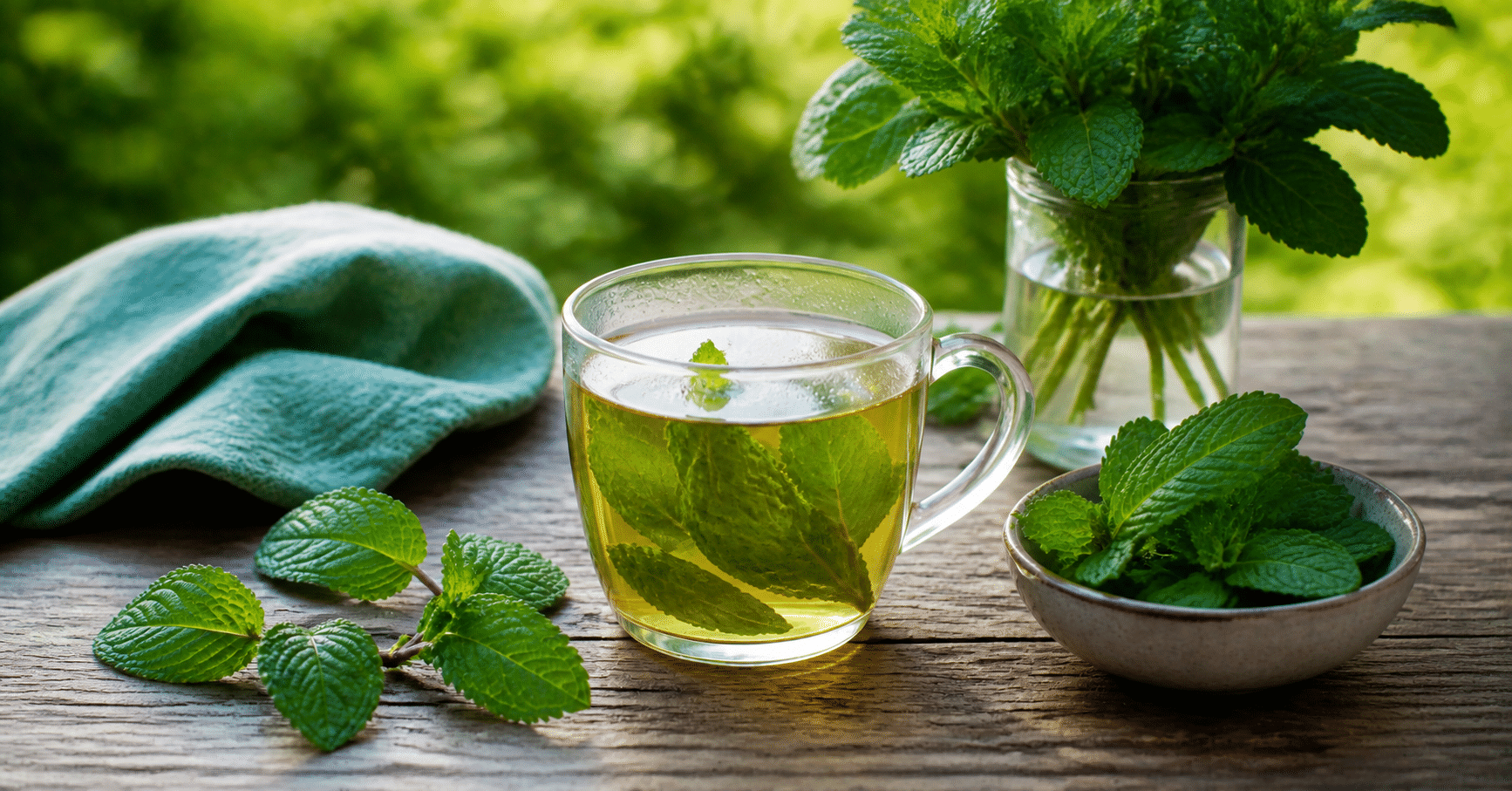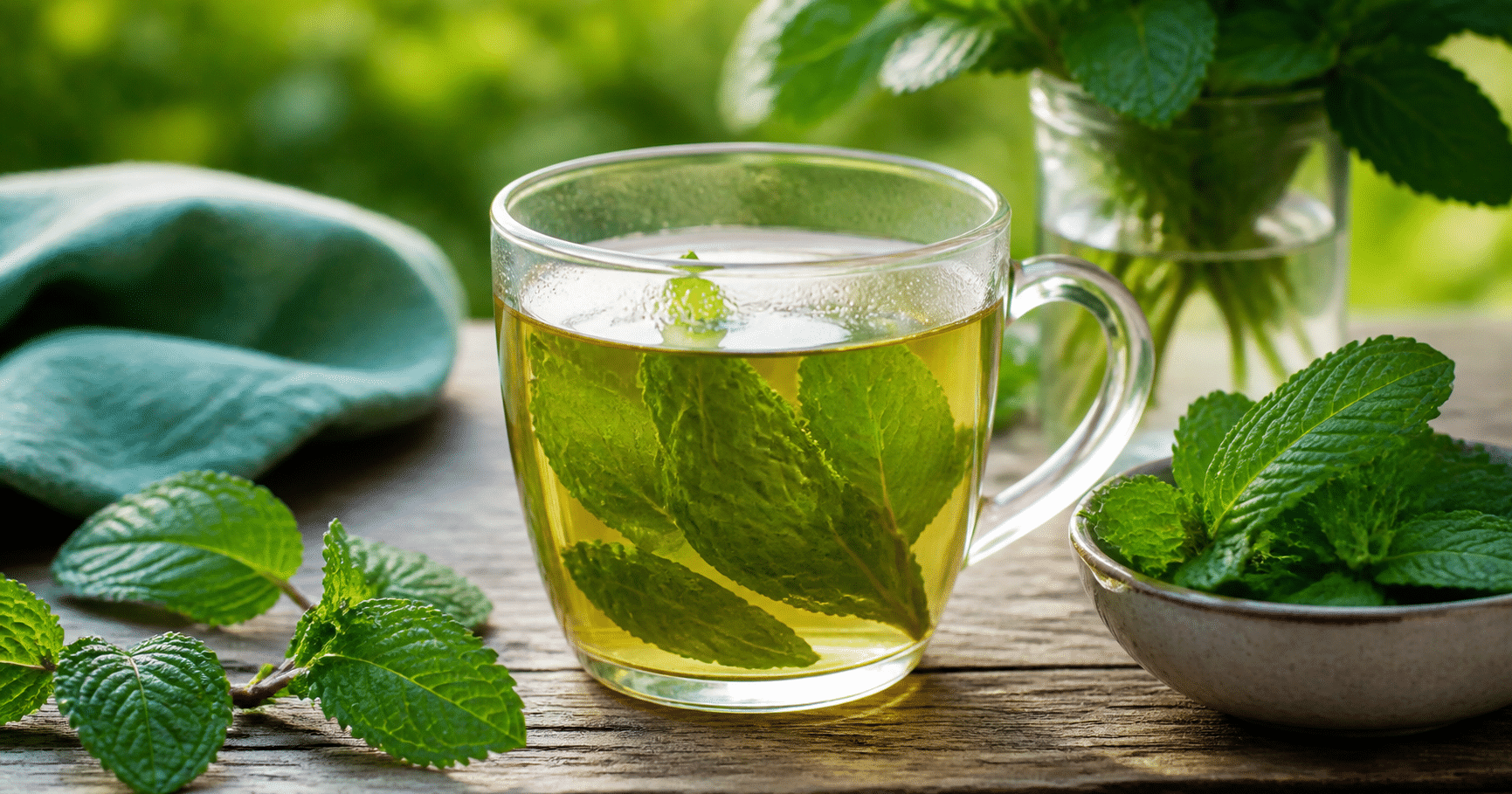
A handful of mint from the garden can turn a mug of hot water into a bright, fragrant tea in minutes. It’s a simple way to use a fast-growing herb, whether you have a sprawling backyard patch or a few stems in a patio pot.
Fresh mint tea is easy to make, but a couple of small choices make a noticeable difference: how much leaf you use, whether you bruise it, and whether you cover the cup while it steeps. Skip those details and the drink may taste faint or lose some of its lively aroma.
Mint tea is naturally caffeine-free and can be enjoyed plain or with a little lemon or honey. It is not a proven treatment for digestive problems or other health conditions, but its fresh flavor makes it a pleasant everyday drink. Here’s how to harvest the leaves and brew a balanced cup.
One important garden note: use mint you can identify with confidence. Culinary spearmint and peppermint are common choices, but don’t brew an unfamiliar wild plant—or pennyroyal, which is not a safe substitute for culinary mint.
What Makes Fresh Mint Tea So Fragrant?
Mint leaves contain aromatic oils that give different varieties their characteristic scents and flavors. Peppermint is notably cool and menthol-like, while spearmint tends to taste softer and sweeter. The exact flavor varies with the variety, growing conditions, and freshness of the leaves.
Hot water draws out the leaves’ aroma and flavor. Lightly crushing or tearing them before steeping helps release more of those fragrant oils, while covering the mug helps keep the aroma from escaping with the steam. The result is a flavorful herbal infusion—not a caffeinated tea made from the tea plant.
Mint leaves contain plant compounds, but the amount that ends up in a cup depends on the type of mint and how it is prepared. Mint tea can be a satisfying drink, but claims that it cures or reliably treats a health condition go beyond what a homemade infusion can establish.
Three Details That Improve a Garden-Mint Brew
1. Pick clean, healthy leaves
Choose fresh, unblemished leaves from a plant you know is culinary mint. Snip a few stems with clean scissors, then rinse the leaves under cool running water and pat them dry. Avoid plants that may have been treated with pesticides or exposed to road spray, pet waste, or other contamination.
2. Bruise the leaves gently
Press the leaves once or twice between your fingers or against the side of a mug with a spoon. This releases aroma without turning the leaves to pulp. If you prefer a mild cup, leave them whole; if you like a stronger mint flavor, tear them lightly.
3. Keep the mug covered while it steeps
Mint’s aroma is part of its appeal. A small saucer or mug lid helps keep the steam—and some of the fragrance—inside as the leaves steep. Start with five minutes, then taste; steeping a little longer will usually make the flavor more pronounced.
How to Brew Fresh Mint Tea From Garden Leaves
This method makes one generous mug of clear, aromatic mint tea. Adjust the quantity of leaves to suit your garden’s variety and your taste.
Ingredients
- 8 to 10 fresh mint leaves, rinsed
- 1 cup water
- Optional: lemon slice or honey, to taste
Step-by-Step Instructions
- Heat the water. Bring 1 cup of fresh water to a boil, then let it sit for about 30 seconds. There’s no need for a thermometer; water just off the boil works well for a simple herbal infusion.
- Prepare the mint. Put the rinsed leaves in a mug. Gently press or tear them to release their aroma.
- Pour and cover. Add the hot water and cover the mug with a saucer or lid.
- Steep for 5 to 7 minutes. Taste after five minutes. Leave the leaves in longer if you want a stronger cup.
- Strain and serve. Remove the leaves with a small strainer, or lift them out with a spoon. Add lemon or a little honey if desired.
Drink it warm, or let it cool and pour it over ice. For a pitcher, multiply the ingredients and steep in a heatproof container; strain out the leaves once the flavor is where you like it. Refrigerate the strained tea and use it within a few days for best flavor.
Make the Tea Your Own Without Hiding the Mint
Mint’s flavor is easy to pair with other simple ingredients. A slice of lemon adds tartness, while a little honey softens the taste. You can also steep a thin slice of fresh ginger alongside the mint or add a few leaves to another caffeine-free herbal infusion.
If the tea tastes weak, first add a few more leaves or extend the steep by a minute or two. If it tastes too grassy or intense, use fewer leaves next time rather than steeping them for much longer. Oversteeping can make the flavor less fresh and more vegetal.
Some people find mint can aggravate heartburn or reflux. If you notice that effect, choose a different herbal drink. The response can vary, and the evidence about peppermint preparations should not be treated as proof that a cup of garden-mint tea will have the same effect for everyone.
A Fresh, Simple Cup Worth Repeating
For a reliable mug, use clean culinary mint, gently bruise the leaves, and steep them covered in hot water for five to seven minutes. Begin with a modest handful, then adjust the strength to your preference.
Fresh mint does not need a complicated recipe. A few leaves, a little patience, and a covered cup are often all it takes to bring the garden’s brightest aroma to the table.