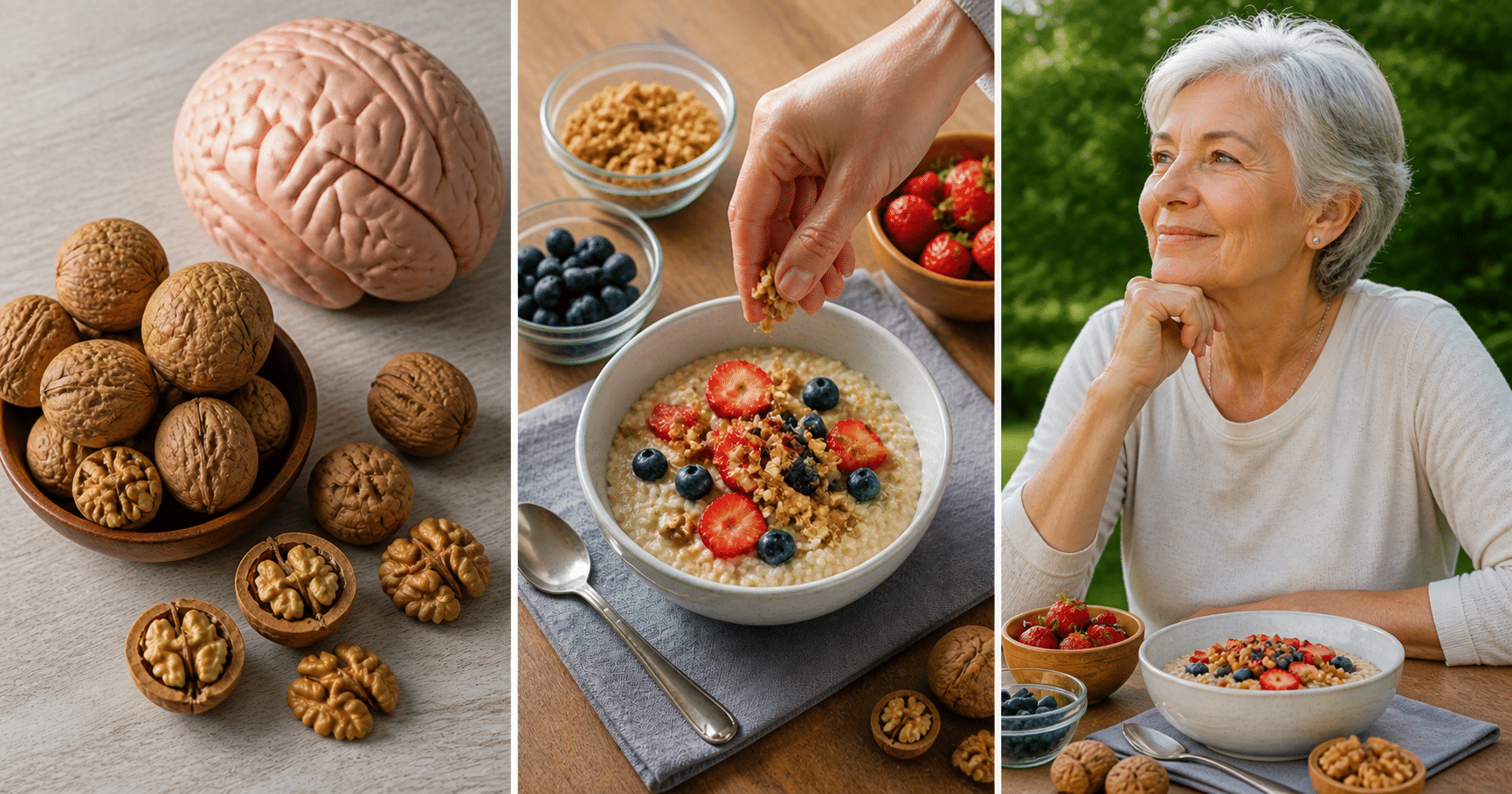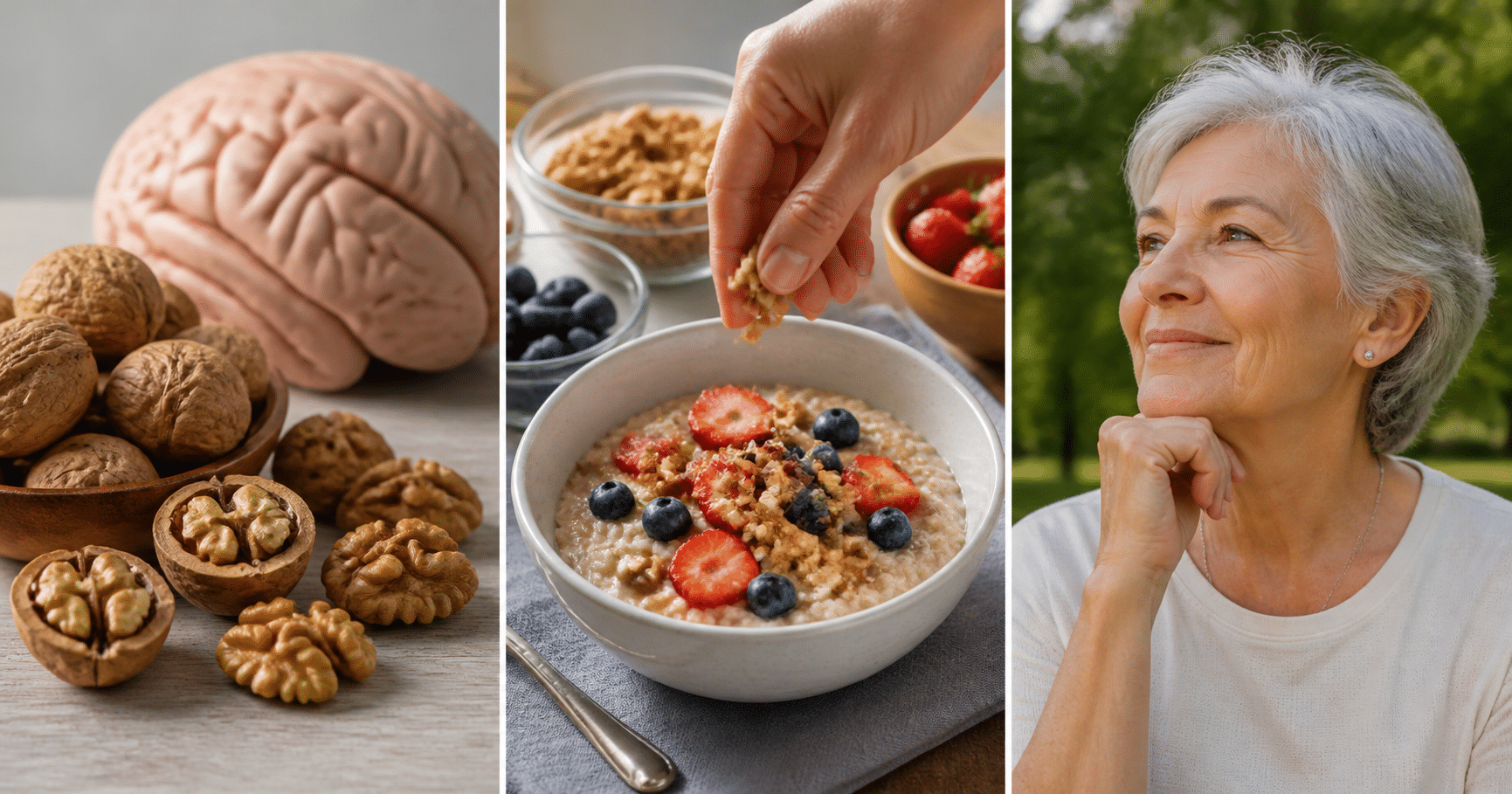
Walnuts have earned their brain-shaped reputation, but the most useful question is not whether they look like a brain. It is whether eating them has been shown to improve thinking or memory in people.
The answer is more nuanced than a simple yes. Walnuts supply plant-based omega-3 fat and other nutrients that make them a reasonable part of a healthy diet. Yet human studies have not established that adding walnuts alone reliably sharpens memory or prevents dementia.
One of the most informative tests followed older adults for two years. Its findings offer a helpful reality check: promising nutrition is not the same thing as a proven brain treatment. Here’s what the research can—and cannot—tell us, plus a practical way to enjoy walnuts.
What walnuts may do for the brain—and what remains unproven
Walnuts contain alpha-linolenic acid, or ALA, an essential omega-3 fat found in plant foods. They also provide unsaturated fats, fiber, protein and naturally occurring polyphenols. These nutrients are part of the reason walnuts fit comfortably into heart-healthy eating patterns.
That matters because blood-vessel health and brain health are connected. But a plausible biological explanation does not prove that one food improves memory. ALA is not the same as the omega-3 fats DHA and EPA found in fish, and the body converts only a limited amount of ALA into those fats.
Researchers have studied walnuts both on their own and as part of broader eating patterns. Those are different questions: a benefit associated with a Mediterranean-style diet that includes several kinds of nuts cannot automatically be credited to walnuts alone.
What human studies actually found
1. The two-year walnut trial did not show an overall cognitive boost
The Walnuts and Healthy Aging study, often called WAHA, tested walnut consumption in more than 700 healthy older adults. Participants were assigned either to add walnuts to their diet—about 15% of their daily energy, roughly 30 to 60 grams—or to avoid walnuts for two years.
On average, the researchers did not find a significant benefit across the measured cognitive outcomes for the walnut group as a whole. Results differed between the study centers, prompting further interest, but that kind of subgroup finding is not enough to establish a dependable effect for everyone. The central takeaway is straightforward: this substantial trial did not show that walnuts reliably improved cognition in healthy older adults.
2. Studies of dietary patterns cannot isolate walnuts
Some research has linked Mediterranean-style eating with better cognitive outcomes. In certain trials, the eating pattern included a mix of nuts, such as walnuts, almonds and hazelnuts. Because participants also changed other parts of their diet—and ate more than one type of nut—the results cannot tell us whether walnuts were responsible for any benefit.
Observational studies have similar limits. People who eat walnuts regularly may also exercise more, smoke less or have other health-supporting habits. Those studies can identify associations, but they cannot show that walnuts caused better memory.
3. Nutritional value is not the same as dementia prevention
Walnuts can contribute useful nutrients to everyday meals, but there is no strong human evidence that eating them by itself prevents Alzheimer’s disease or reverses age-related memory changes. Nor does a nutrient’s role in normal brain biology prove that extra amounts will improve thinking.
That does not make walnuts pointless. It means the sensible case for them is as one nutritious food within an overall eating pattern—not as a stand-alone brain remedy.
A simple way to add walnuts to breakfast
This quick bowl adds crunch and a modest portion of walnuts to a familiar meal. It is a serving suggestion, not a treatment plan.
Ingredients
-
- 1 cup plain oatmeal, cooked
-
- 1 ounce walnuts, about 14 walnut halves, chopped
-
- ½ cup berries, fresh or frozen
-
- ½ cup plain yogurt or milk, optional
-
- Cinnamon, to taste
Step-by-Step Instructions
-
- Cook the oatmeal according to the package directions, using water or milk.
-
- Top with berries and chopped walnuts.
-
- Add yogurt or a splash of milk if you like, then finish with cinnamon.
-
- Serve right away so the walnuts stay pleasantly crisp.
A one-ounce portion is a practical starting point: it provides about 185 calories and roughly 2.5 grams of ALA. Walnuts are energy-dense, so a small handful can add up quickly if you eat them straight from the bag. For a savory option, sprinkle chopped walnuts over roasted vegetables or a salad.
Make the most of walnuts without expecting a miracle
Choose plain, unsalted walnuts most often, especially if you are watching sodium. Store them in an airtight container in the refrigerator or freezer; their high oil content means they can become stale or rancid if kept warm for too long. If they smell sharp or taste bitter, it is time to discard them.
Walnuts are also a tree-nut allergen, so they are not suitable for anyone with a walnut allergy. If you have trouble chewing, finely chopped walnuts may be easier to use. And if you are managing your calorie intake, measure a portion rather than treating a large bowl as a casual snack.
The bottom line on walnuts and brain health
Human studies support a measured conclusion: walnuts are nutritious, but they have not been shown to reliably improve memory or prevent dementia on their own. The largest direct trial in older adults found no overall cognitive benefit after two years.
Enjoy walnuts because they are a useful, flavorful food—not because they promise sharper thinking. A small handful can fit into a varied diet, while the bigger picture of everyday eating matters more than any single ingredient.