
“Anti-inflammatory” has become a popular label for everything from olive oil to expensive powders. But anti-inflammatory eating is not a special cleanse, a strict list of forbidden foods, or a promise that dinner can cure aching joints.
It is better understood as a way of eating that regularly supplies nourishing foods—especially vegetables, fruit, beans, whole grains, nuts, and fish—while leaving less room for heavily refined, highly processed choices. The overall pattern matters more than any single ingredient.
That distinction is useful if you are sorting through bold claims online. A food can contain compounds studied for their effects on inflammation without being proven to treat an inflammatory disease when you eat it.
Here’s what the idea means in practical terms, what research can and cannot tell us, and how to make a satisfying meal that puts the principles to work.
What Anti-Inflammatory Eating Means in Everyday Life
Inflammation is part of the body’s normal defense and repair system. It helps respond to an injury or infection. The concern is not inflammation in general, but persistent inflammation, which can be involved in many chronic conditions. It has multiple causes, and food is only one influence among them.
There is no single “anti-inflammatory diet” prescribed for everyone. The term usually describes a pattern resembling the Mediterranean style of eating: plenty of plant foods, beans and lentils, whole grains, nuts, olive oil, and fish, with fewer sugary drinks, refined grains, and processed meats. This pattern is associated with better health outcomes and, in some studies, lower levels of certain inflammatory markers. Those findings do not prove that a particular meal will reduce symptoms or treat a condition.
Several features may help explain why the pattern is of interest. Fiber from plants supports digestion and feeds gut microbes, which produce compounds involved in gut and immune function. Unsaturated fats in foods such as olive oil, nuts, and fish can replace some saturated fats in the diet. Colorful produce also supplies vitamins and plant compounds—but no single nutrient works like an on-off switch for inflammation.
Four Useful Principles to Focus On
1. Make plants the starting point
Vegetables, fruit, beans, lentils, and whole grains bring fiber and a variety of nutrients. You do not need unusual produce or a perfect rainbow at every meal. Frozen vegetables and fruit count, and canned beans are a convenient option; rinse them if you want to reduce some of the added sodium.
Try adding rather than subtracting at first: stir beans into soup, put greens on a sandwich, or serve an extra vegetable alongside dinner. These small changes are often easier to keep up than an ambitious food overhaul.
2. Choose fats by what they replace
Olive oil, avocado, seeds, and nuts provide mostly unsaturated fats. Fatty fish such as salmon, sardines, and trout provide the omega-3 fats EPA and DHA. Including these foods can be part of a healthful pattern, but eating them is not a substitute for medical care or a guaranteed way to relieve inflammation-related symptoms.
Think in terms of swaps: use olive oil instead of butter in some cooking, or choose a handful of unsalted nuts instead of a highly refined snack. Adding calorie-dense foods without replacing anything else may not suit everyone’s needs.
3. Pay attention to the overall pattern—not food labels
A product marketed as “anti-inflammatory” is not automatically more nourishing than an ordinary food. Turmeric, berries, and green tea contain compounds that have been studied, but evidence about a compound in a laboratory does not establish that a food or supplement treats disease in people.
Likewise, there is no universal rule that everyone must eliminate gluten, dairy, nightshade vegetables, or seed oils. Restricting foods without a clear reason can make meals harder to plan and may leave you short of nutrients. If you suspect a food triggers symptoms, discuss a sensible way to evaluate that with a healthcare professional.
4. Give refined foods a smaller role, without aiming for perfection
Sugary drinks, sweets, and many refined-grain snacks can crowd out more filling, fiber-rich choices when they make up a large share of the diet. Processed meats are also worth limiting as part of a healthful eating pattern. That does not mean one cookie or a convenience meal causes inflammation; frequency and the full diet matter more than a single choice.
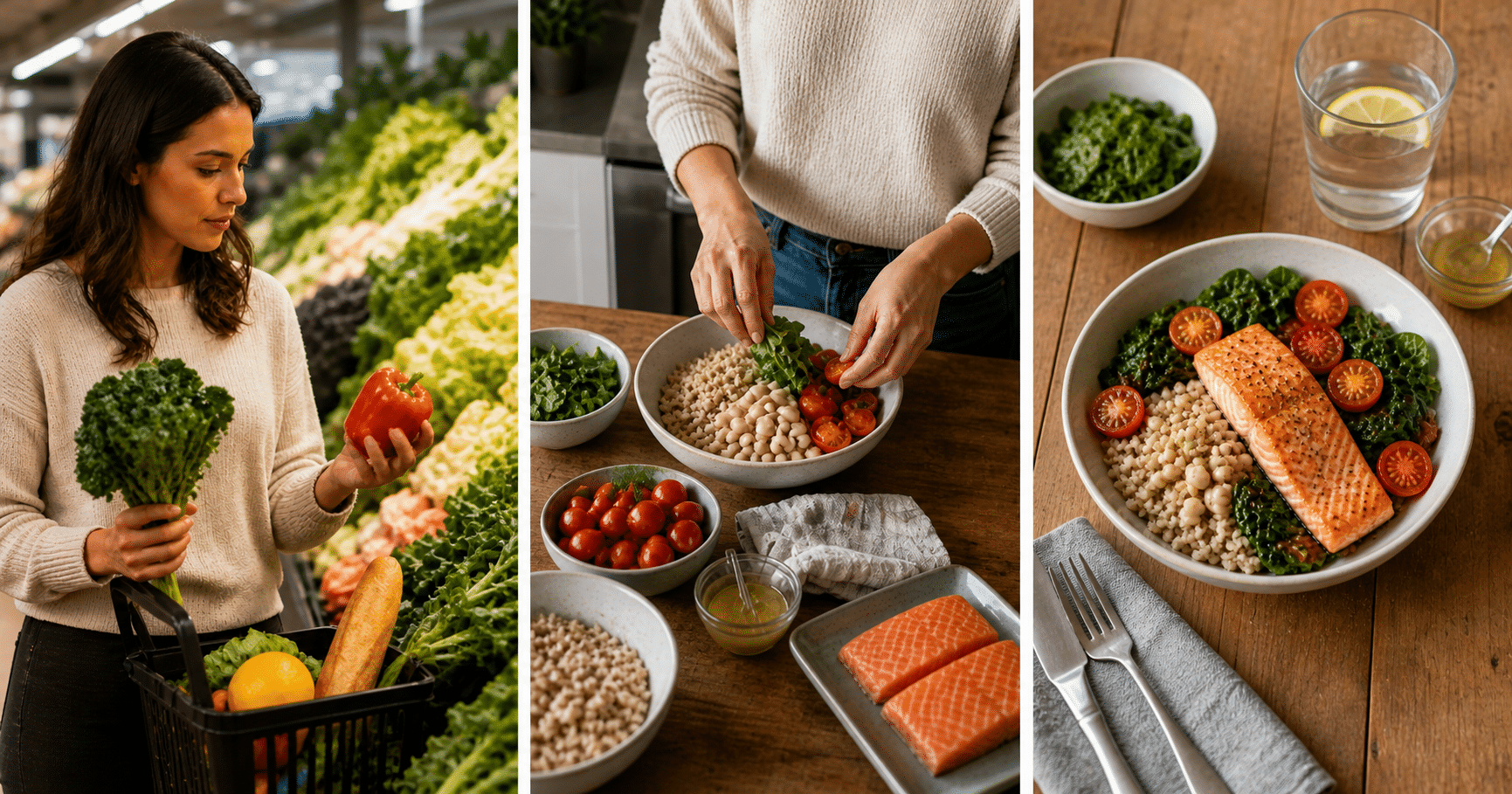
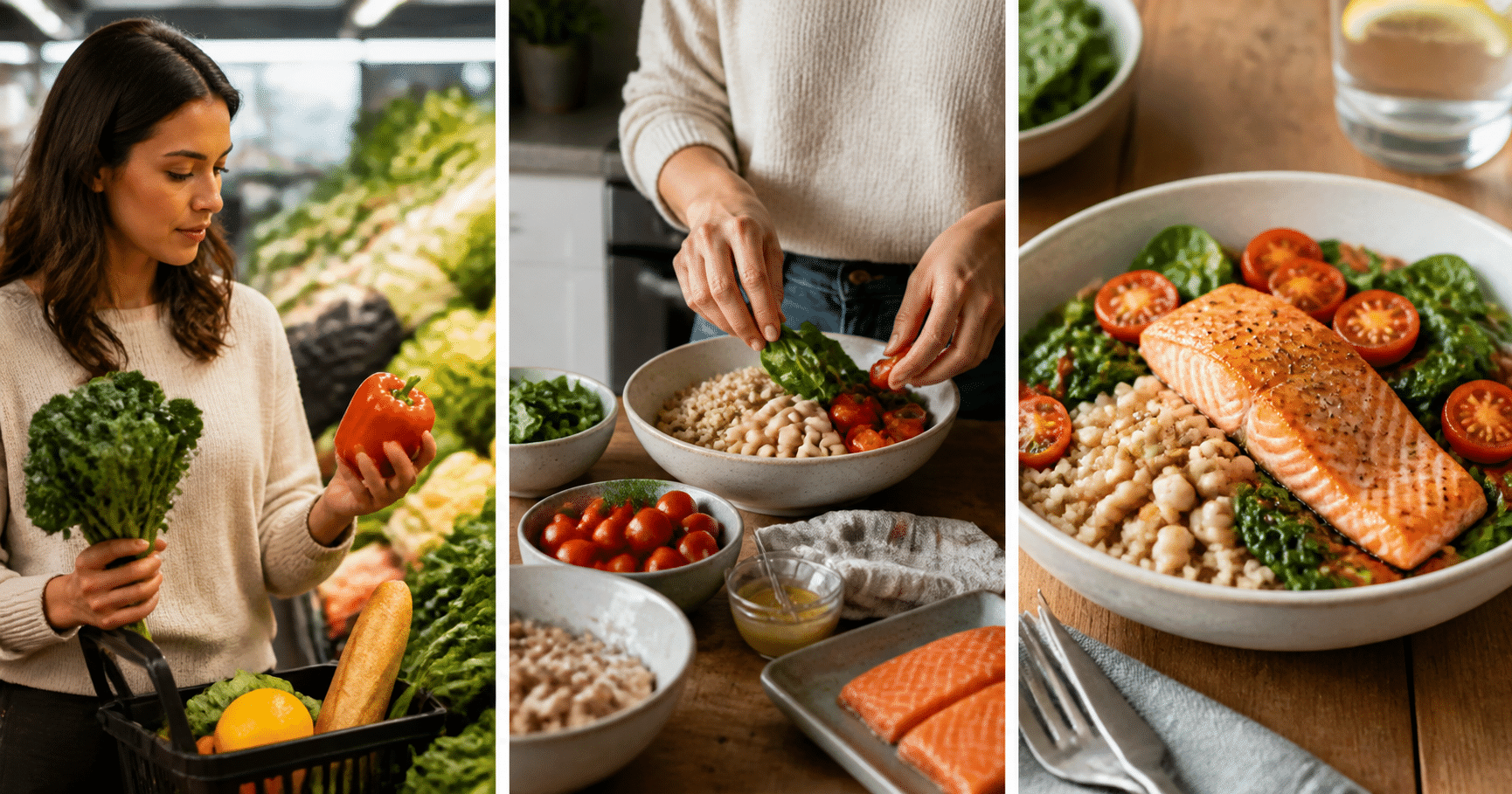
A Simple Salmon, Bean, and Greens Bowl
This balanced meal combines fish, fiber-rich beans, vegetables, and an olive-oil dressing. It takes about 25 minutes and serves two. If salmon is not convenient, use trout or another fish you enjoy; canned beans and frozen vegetables make the meal easier on busy days.
Ingredients
-
- 2 salmon fillets, about 4 to 5 ounces each
-
- 1 cup cooked brown rice or quinoa
-
- 1 cup canned white beans, drained and rinsed
-
- 2 cups baby spinach or chopped greens
-
- 1 cup cherry tomatoes, halved
-
- 1 tablespoon olive oil, plus a little for the fish
-
- 1 tablespoon lemon juice
-
- Black pepper and a small pinch of salt
Step-by-Step Instructions
-
- Cook the rice or quinoa according to package directions, if it is not already prepared. Meanwhile, heat the oven to 400°F.
-
- Place the salmon on a baking sheet, brush lightly with olive oil, and season with pepper and a little salt. Bake for about 12 to 15 minutes, depending on thickness, until it flakes easily and reaches a safe internal temperature of 145°F.
-
- Divide the warm grain between two bowls. Add the beans, greens, and tomatoes.
-
- Stir the tablespoon of olive oil with the lemon juice and drizzle over the bowls. Add the salmon and serve.
Refrigerate leftovers promptly in a covered container and use within three to four days. For an easy variation, replace the salmon with chickpeas or leftover chicken, or swap in another seasonal vegetable.
Make the Shift Practical—and Keep It Safe
The most useful starting point is often one repeatable change: add beans to a meal twice a week, choose whole-grain bread more often, or keep frozen vegetables on hand. Building a pattern gradually is more realistic than trying to follow a rigid menu, especially when appetite, budget, cooking time, or health needs vary.
If you take warfarin, keep your intake of vitamin K-rich greens reasonably consistent rather than suddenly making a major change, and ask your clinician or pharmacist about adjustments. People managing a medical condition or taking medication should also check before starting concentrated supplements; food amounts and supplement doses are not interchangeable.
The Bottom Line: Build a Pattern, Not a Promise
Anti-inflammatory eating means choosing a varied, plant-forward pattern with beans, whole grains, unsaturated fats, and fish when it suits you—not searching for one magic food or banning whole categories without a reason. The everyday meal matters more than a trendy ingredient.
Start with one addition you genuinely enjoy. A bowl of beans, greens, grains, and a simple dressing is a more useful first step than a cabinet full of promises.