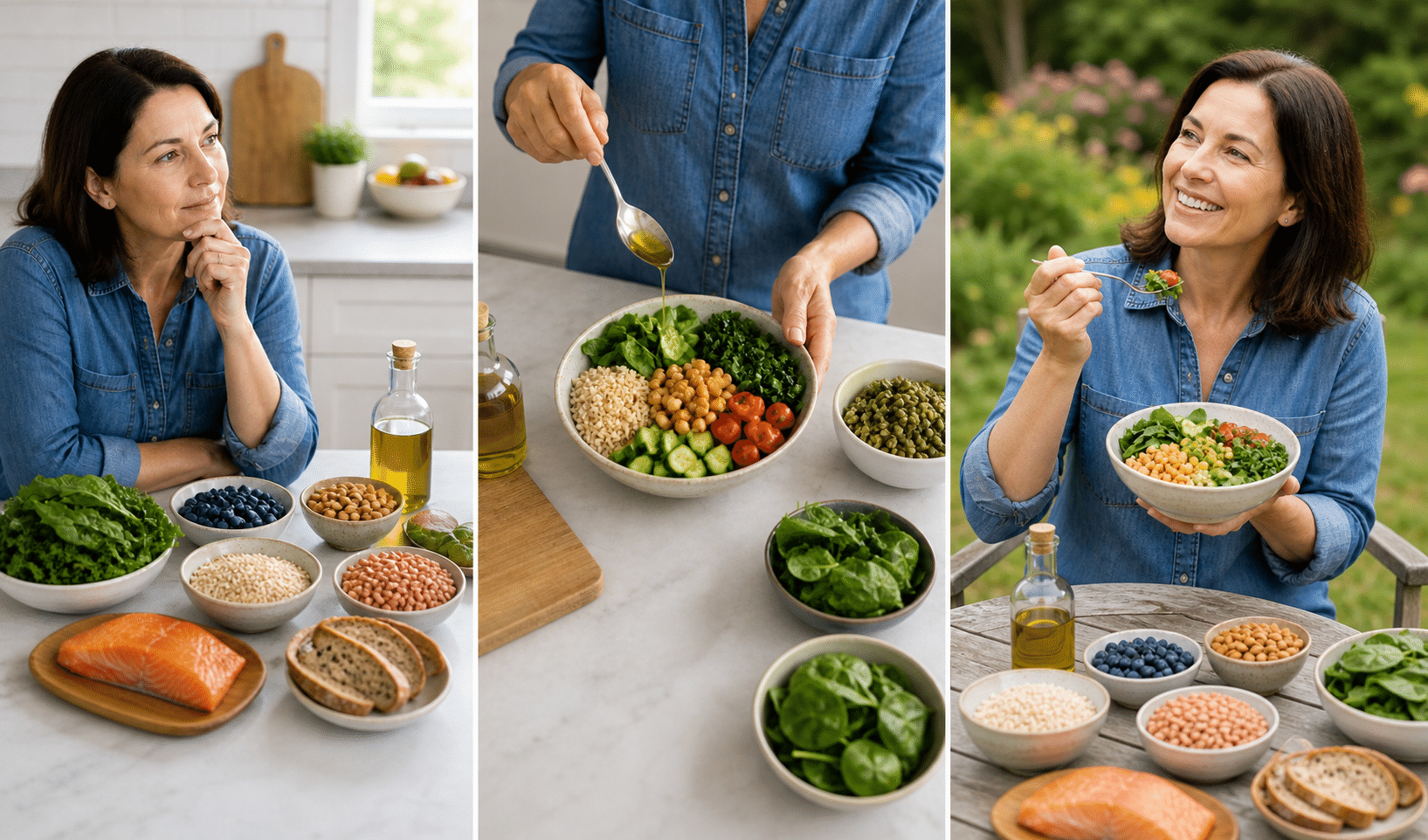
The MIND diet is often described as a way of eating for brain health. Its name combines two familiar patterns—the Mediterranean diet and the DASH diet—and its advice is refreshingly practical: eat more leafy greens, beans, berries, nuts and whole grains; limit some foods high in saturated fat and added sugar.
But the MIND diet is not a proven way to prevent Alzheimer’s disease, and following it does not require a pantry makeover. It is a flexible eating pattern, not a strict menu or a list of foods with special powers.
Here’s what the diet actually recommends, what research can and can’t tell us, and a simple way to start without overhauling every meal.
What the MIND Diet Is—and What It Isn’t
MIND stands for Mediterranean-DASH Intervention for Neurodegenerative Delay. Researchers developed the eating pattern to study whether certain foods and overall dietary habits might be associated with cognitive health as people age. It emphasizes plant foods, with fish and poultry as options, and limits several foods often high in saturated fat or added sugar.
The original plan groups foods into 10 categories to eat more often and five to limit. Its serving goals are useful guideposts, not a pass-or-fail scorecard. For example, it calls for berries at least twice a week—not because berries are a treatment, but because they are one part of a broader, healthful pattern.
Some observational research has linked closer adherence to the MIND pattern with a lower risk of cognitive decline. That kind of research can show an association, but it cannot establish that the diet itself caused the difference. In a clinical trial comparing the MIND diet with a control diet, both groups improved on cognitive tests, and the difference between them was not statistically significant. The evidence is promising enough to make the pattern worth discussing, but it does not prove that the diet prevents dementia.
The Foods the MIND Diet Puts in Focus
1. Make vegetables—and especially greens—a regular habit
The targets include at least six servings of leafy greens a week and at least one serving of other vegetables each day. Spinach, kale, collards and salad greens count; frozen vegetables can make the daily goal easier. A serving of leafy greens is often about 1 cup raw or ½ cup cooked, though portions vary by food.
Rather than treating greens as a special side dish, add them to soup, eggs, sandwiches or pasta. The goal is a steady routine, not a perfect plate at every meal.
2. Choose berries, nuts, beans and whole grains often
The MIND pattern recommends berries at least twice a week, nuts at least five times a week, beans at least three times a week and whole grains at least three servings a day. Berries can be fresh or frozen. Beans may be canned, rinsed and added to a salad, chili or soup. Oats, brown rice and whole-grain bread are everyday ways to include whole grains.
These foods also bring fiber and other nutrients to meals. If you are increasing fiber, do it gradually and drink enough fluids; a sudden jump can cause digestive discomfort.
3. Include fish and poultry; use olive oil as your main cooking fat
The original targets include fish at least once a week and poultry at least twice a week, with olive oil as the primary added fat. These are flexible suggestions, not requirements to eat a particular dish. For example, use olive oil in a vinaigrette, bake fish for dinner, or add leftover chicken to a grain bowl.
4. Keep the “limit” foods in perspective
The five categories to limit are red meat, butter and stick margarine, cheese, pastries and sweets, and fried or fast food. The original guidelines set targets such as fewer than four servings of red meat a week and fewer than five servings of pastries or sweets a week. They also suggest keeping butter or stick margarine below about a tablespoon a day and limiting cheese and fried or fast food.
These are not instructions to ban favorite foods. Think of them as reminders to make room for more beans, vegetables and whole grains. The original MIND plan also included moderate wine intake, but alcohol is not necessary for a healthy diet. Don’t start drinking for brain health; people who avoid alcohol should continue to do so.
A Simple Way to Start This Week
You don’t need a special “MIND diet” recipe. Start by building a meal around foods you already enjoy, then make one or two easy swaps. A bowl of oatmeal with berries and nuts, for instance, can cover several of the pattern’s preferred food groups.
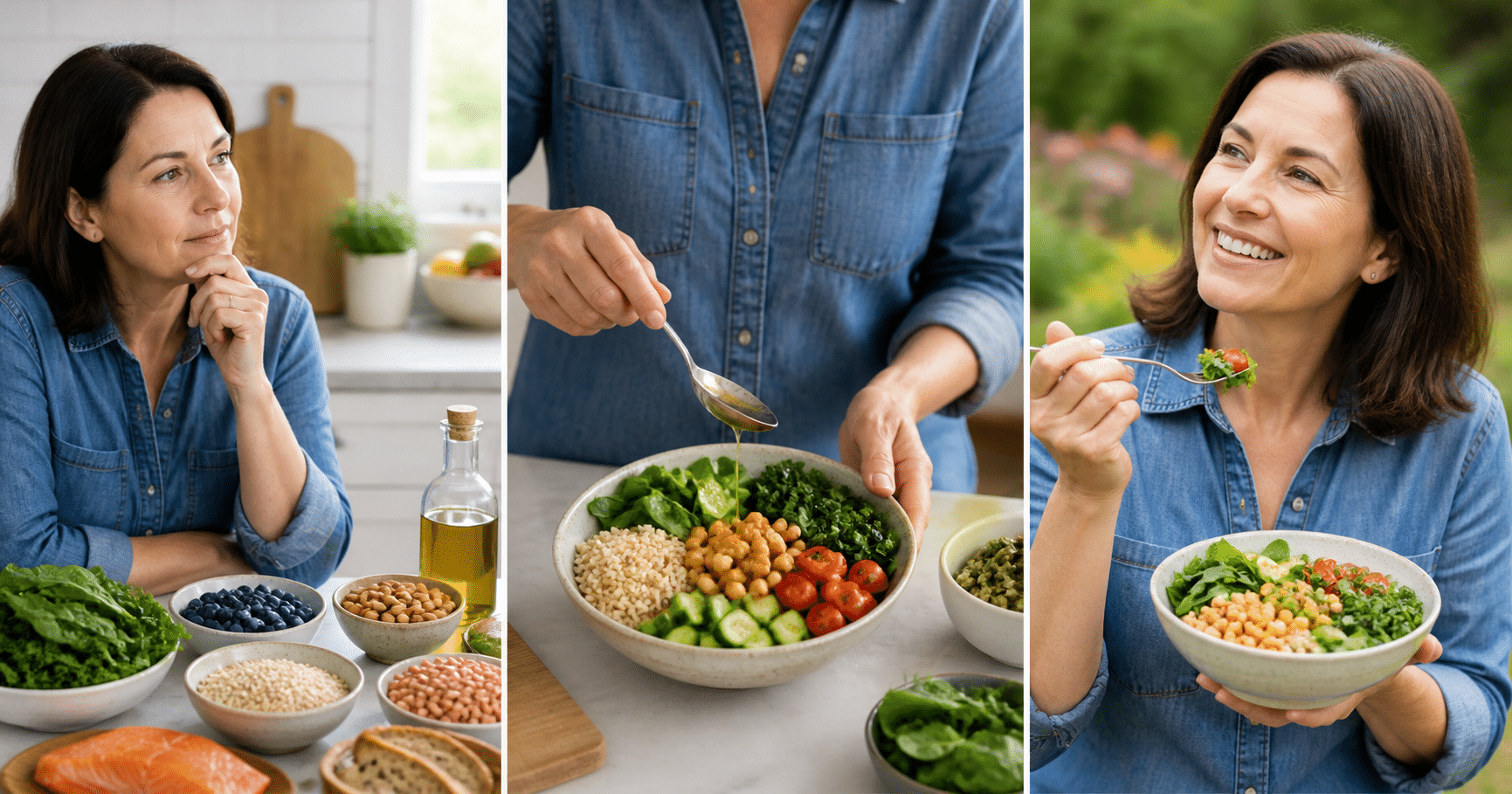
What You’ll Need for an Easy MIND-Style Lunch Bowl
- 1 cup cooked brown rice or another whole grain
- ½ cup rinsed canned beans, such as chickpeas or white beans
- 1 cup leafy greens
- ½ cup chopped vegetables, fresh or frozen and cooked
- 1 tablespoon olive oil
- 1 teaspoon lemon juice or vinegar
- Optional: herbs, black pepper, or a small handful of chopped nuts
Step-by-Step Instructions
- Cook the grain according to its package directions, or use cooked leftovers. Allow about 20–40 minutes for brown rice, depending on the variety; reheating cooked grain takes only a few minutes.
- Whisk the olive oil with lemon juice or vinegar and black pepper.
- Put the greens, beans, vegetables and grain in a bowl. Add the dressing and toss. Top with herbs or nuts if you like.
For convenience, refrigerate cooked grains and beans promptly in covered containers and use them within three to four days. Keep the dressing separate until serving. The bowl is a template: swap in leftover vegetables, another bean, or a different whole grain to use what you have.
Make the Pattern Fit Your Real Life
Rather than trying to hit every target immediately, pick one change you can repeat. Add berries to breakfast twice this week, keep unsalted nuts nearby for a snack, or replace one red-meat dinner with beans or fish. Frozen berries and vegetables, canned beans and plain oats can help keep both cost and preparation time manageable.
If you take warfarin, you generally do not need to avoid leafy greens, but sudden changes in vitamin K intake can affect how the medication works. Keep your intake consistent and ask your clinician before making a major dietary change.
The Takeaway: Aim for a Pattern, Not Perfection
The MIND diet recommends frequent vegetables, berries, nuts, beans and whole grains, alongside modest amounts of fish and poultry, while limiting some sweets, fried foods and high-saturated-fat choices. It is a useful framework for planning balanced meals—not a guaranteed way to protect memory or prevent dementia.
Start with one small addition you can keep doing. A handful of berries, a serving of beans or greens alongside dinner may be more valuable than a complicated plan you can’t maintain.