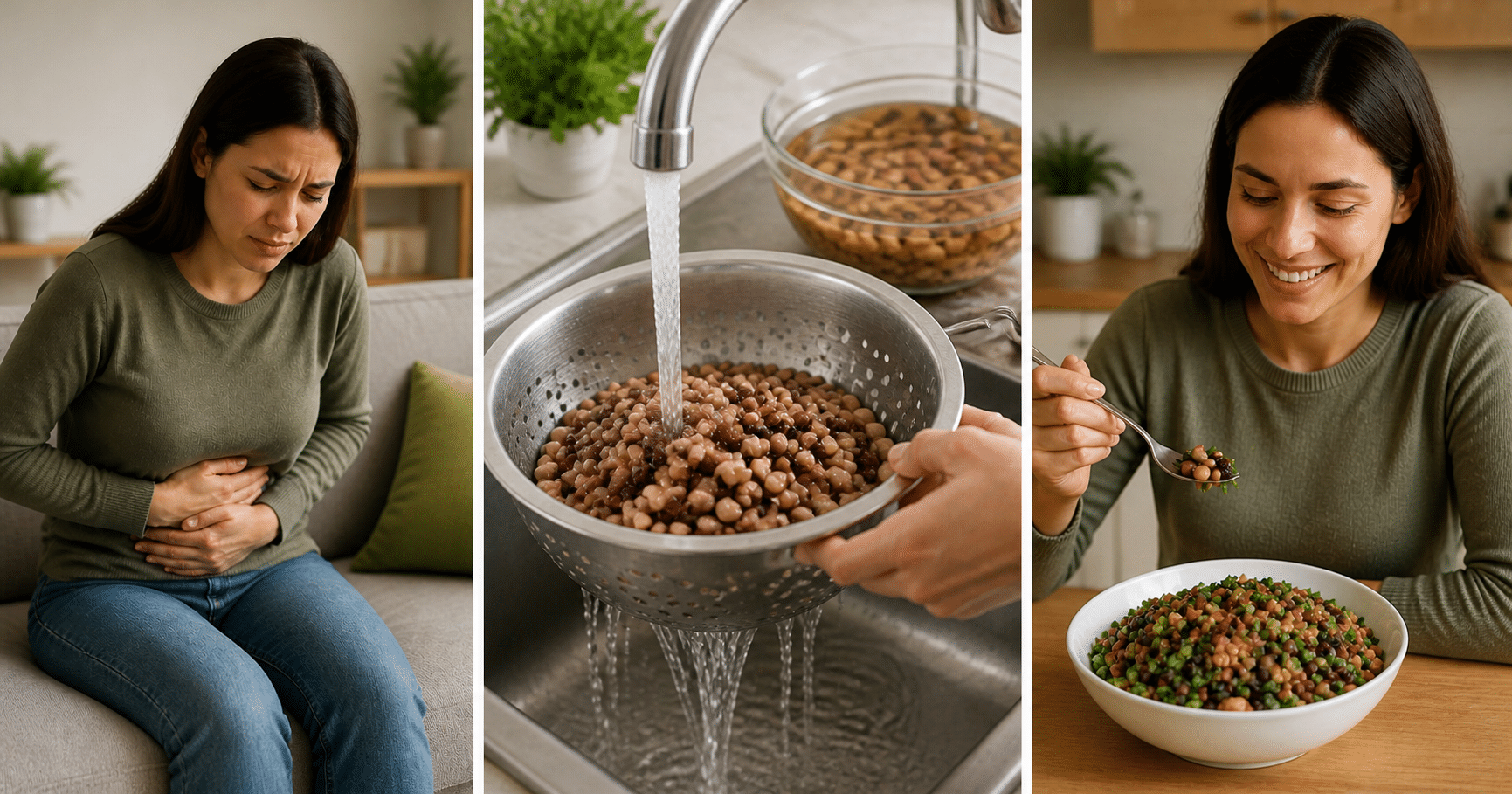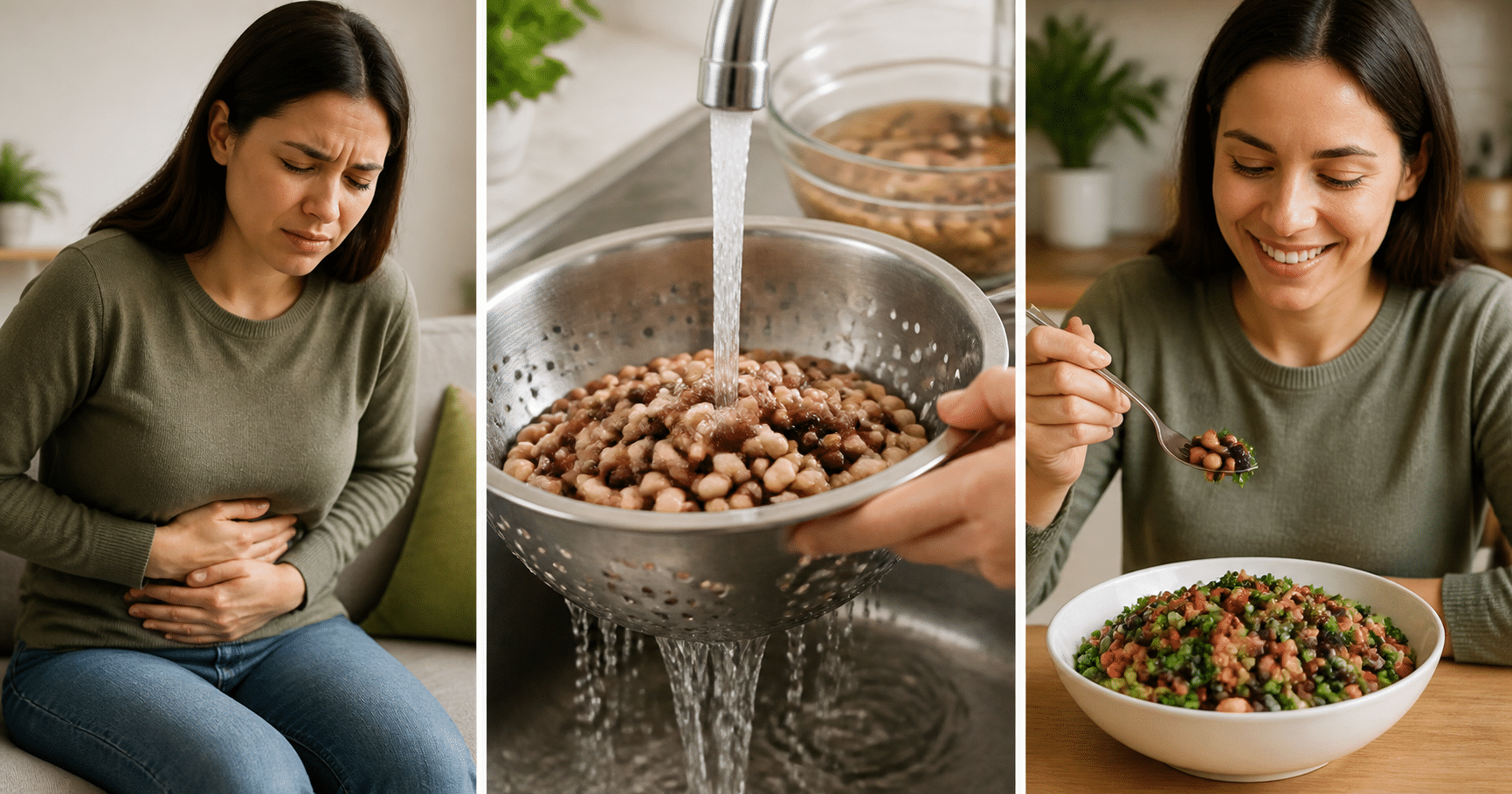
Beans have a reputation for making a meal memorable for all the wrong reasons. Yet the gas they cause is usually a normal result of digestion—not a sign that beans are unhealthy or that your body is “detoxing.”
The main culprits are certain carbohydrates that pass through the small intestine largely undigested. Once gut bacteria get to work on them, gas is a natural byproduct. How much you notice can depend on the kind of bean, how it was prepared, the size of your serving, and how accustomed you are to eating legumes.
That last detail matters: avoiding beans altogether isn’t the only option. Soaking and rinsing dried beans, draining canned beans, and easing into smaller portions may make them more comfortable to eat. Here’s what’s happening—and a practical way to prepare a batch.
Why beans make gas in the first place
Beans contain carbohydrates called oligosaccharides, including raffinose and stachyose. Humans don’t make enough of the enzyme needed to break these down in the small intestine, so they travel to the large intestine, where gut bacteria ferment them. That fermentation produces gas, which may cause bloating or flatulence.
Beans also contain fiber, which gut bacteria ferment too. Fiber is valuable for digestion and overall health, but increasing it suddenly can bring on gas or changes in bowel habits. In other words, the amount you eat—and how quickly you add it to your diet—can matter as much as the bean itself.
Some gas after eating beans is common, but severe or persistent discomfort isn’t something you have to simply tolerate. People with irritable bowel syndrome or other digestive sensitivities may react to beans more strongly, and symptoms can have causes beyond the beans themselves.
Four ways to make beans easier to enjoy
1. Start with a smaller serving
If beans aren’t a regular part of your meals, try a few tablespoons or about a quarter-cup rather than a large bowl. Give your body time to adjust, then gradually increase the portion if you feel comfortable. A sudden jump in fiber can be hard on the gut.
2. Soak dried beans, then pour off the water
Soaking helps dried beans cook more evenly and may move some water-soluble oligosaccharides into the soaking liquid. Drain and rinse the beans before cooking; don’t use the soaking water as the cooking liquid if your goal is to reduce those compounds. The effect varies, so soaking may help without eliminating gas.
3. Drain and rinse canned beans
Canned beans are already cooked, making them a convenient choice. Drain them in a colander and rinse under cool running water before adding them to a recipe. This washes away some of the liquid and may remove some fermentable carbohydrates, though it won’t remove them all.
4. Cook dried beans until fully tender
Well-cooked beans are easier to chew and use in meals. Cooking time varies by bean type, age, and soaking, so use tenderness—not just the clock—as your guide. Never put dried red kidney beans straight into a slow cooker: they need to be brought to a vigorous boil first, because improperly cooked kidney beans can cause illness.
A simple stovetop method for dried beans
This basic method works for many dried beans and makes enough for several meals. It’s a practical starting point, not a guarantee of gas-free beans.
Ingredients
-
- 1 pound dried beans, sorted to remove any debris
-
- Water for soaking and cooking
-
- Salt, optional
Step-by-Step Instructions
-
- Rinse and soak: Rinse the beans, then place them in a large bowl or pot and cover with several inches of water. Soak for 8 to 12 hours.
-
- Drain and rinse: Pour off the soaking water and rinse the beans well.
-
- Cook: Put the beans in a pot and cover with fresh water by about 2 inches. Bring to a boil, then lower the heat to maintain a gentle simmer. Cook until completely tender, checking periodically and adding hot water if needed. Depending on the bean and how old it is, this may take roughly 45 minutes to 2 hours or longer.
-
- Season and use: Add salt near the end of cooking if desired. Drain the beans, or keep some cooking liquid for soups and stews.
Kidney bean note: If cooking dried red kidney beans, bring them to a vigorous boil for at least 30 minutes before reducing the heat to simmer until tender. Don’t use a slow cooker for raw kidney beans unless they have first been boiled as directed.
Refrigerate cooked beans promptly in a covered container and use within three to four days, or freeze them in meal-size portions. Add a small amount to salads, soups, grain bowls, or pasta rather than making beans the main event at first.
Small changes that can make a difference
Keep track of the portion and preparation method that work best for you. You might find that rinsed canned chickpeas sit well while a large serving of a different bean does not. Eating slowly and chewing thoroughly may also help reduce swallowed air, which can contribute to bloating.
Some over-the-counter products contain alpha-galactosidase, an enzyme intended to help break down certain bean carbohydrates. It may help some people, but follow the product label and ask a pharmacist or clinician if you’re unsure whether it’s appropriate for you. If gas comes with ongoing pain, a major change in bowel habits, blood in the stool, or unexplained weight loss, check in with a health professional.
Make beans a gradual addition, not a challenge
Bean-related gas has a straightforward explanation: gut bacteria ferment carbohydrates that your small intestine doesn’t fully digest. Soaking and discarding the water, rinsing canned beans, cooking dried beans thoroughly, and starting with modest portions can make them more comfortable for many people.
The best serving size is the one your body handles well. A few beans added regularly can be a more comfortable beginning than a big bowl eaten all at once.