A colorful plate can look like extra work: more chopping, more groceries, and a greater chance that a forgotten bag of greens will wilt in the refrigerator. But adding variety doesn’t require a new recipe every night. A few flexible choices at the store—and one batch of prepared vegetables—can brighten meals throughout the week.
Color offers a useful shopping cue because vegetables with different pigments often contain different plant compounds, along with fiber and a range of vitamins. It isn’t a perfect nutrition score, though: a beige mushroom or white cauliflower still counts, and one vivid vegetable can’t make up for an otherwise limited diet.
The most practical goal is not to eat every color at every meal. It’s to make vegetables easy to see, reach, and use before the week gets busy. Here’s how to choose a mix, prepare some in advance, and turn it into meals without relying on a complicated plan.
Think in Vegetable Roles, Not a Perfect Rainbow
Red, orange, yellow, green, blue, and purple vegetables get their hues from various natural pigments. Those pigments are one reason color can signal variety, but vegetables also differ in fiber, vitamins, minerals, texture, and flavor. A mix of colors across the week is a simple way to avoid leaning on just one or two familiar choices.
Preparation matters, too. Roasting brings out sweetness in carrots and peppers; quick cooking keeps green beans snappy; and raw tomatoes or shredded cabbage can add freshness to a cooked meal. Some nutrients are more available after cooking, while others can be reduced by prolonged heat. There’s no single best method, so rotating raw and cooked options is practical.
Build meals around a few useful roles: a leafy or crisp vegetable, a sturdy vegetable that can be roasted or sautéed, and something ready to eat, such as cherry tomatoes, baby carrots, or frozen peas. Fresh, frozen, and no-salt-added canned vegetables can all help. Convenience is useful when it makes vegetables more likely to end up on the plate.
Four Ways to Make Color Easier All Week
1. Pick a small mix at the store
Instead of buying a long list of vegetables, choose two or three that can handle cooking and one or two that are ready quickly. For example, pair broccoli, carrots, and red peppers with bagged spinach and cherry tomatoes. If you already know what meals are planned, choose vegetables that can work in more than one of them.
2. Use a fresh, frozen, and pantry combination
Fresh vegetables are appealing, but they aren’t the only practical choice. Frozen vegetables are washed and ready to cook, and canned vegetables can be useful when rinsed to reduce some of the sodium. Keep a backup such as frozen peas, spinach, or mixed vegetables for nights when the fresh produce is gone.
3. Prepare one flexible batch
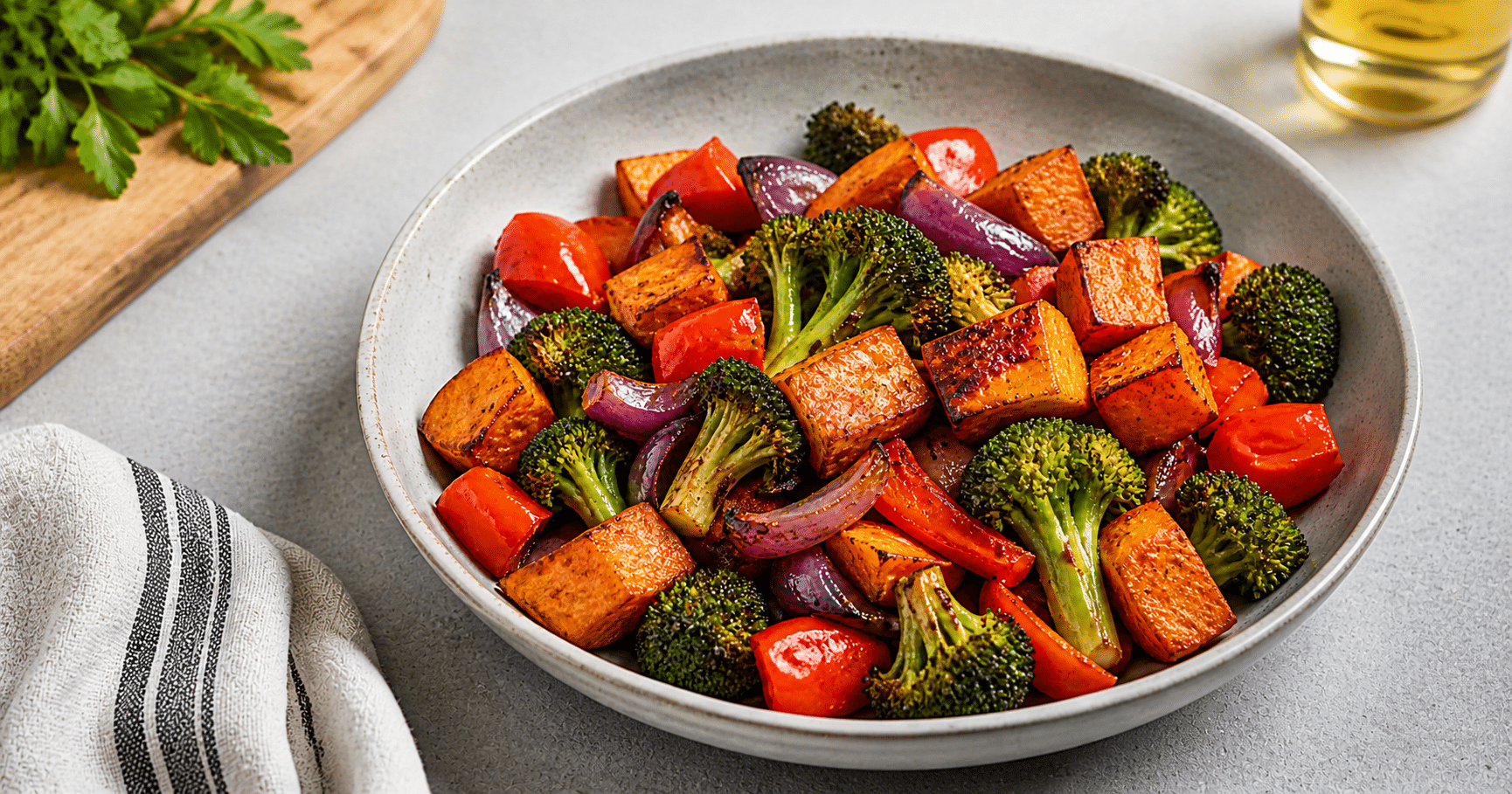
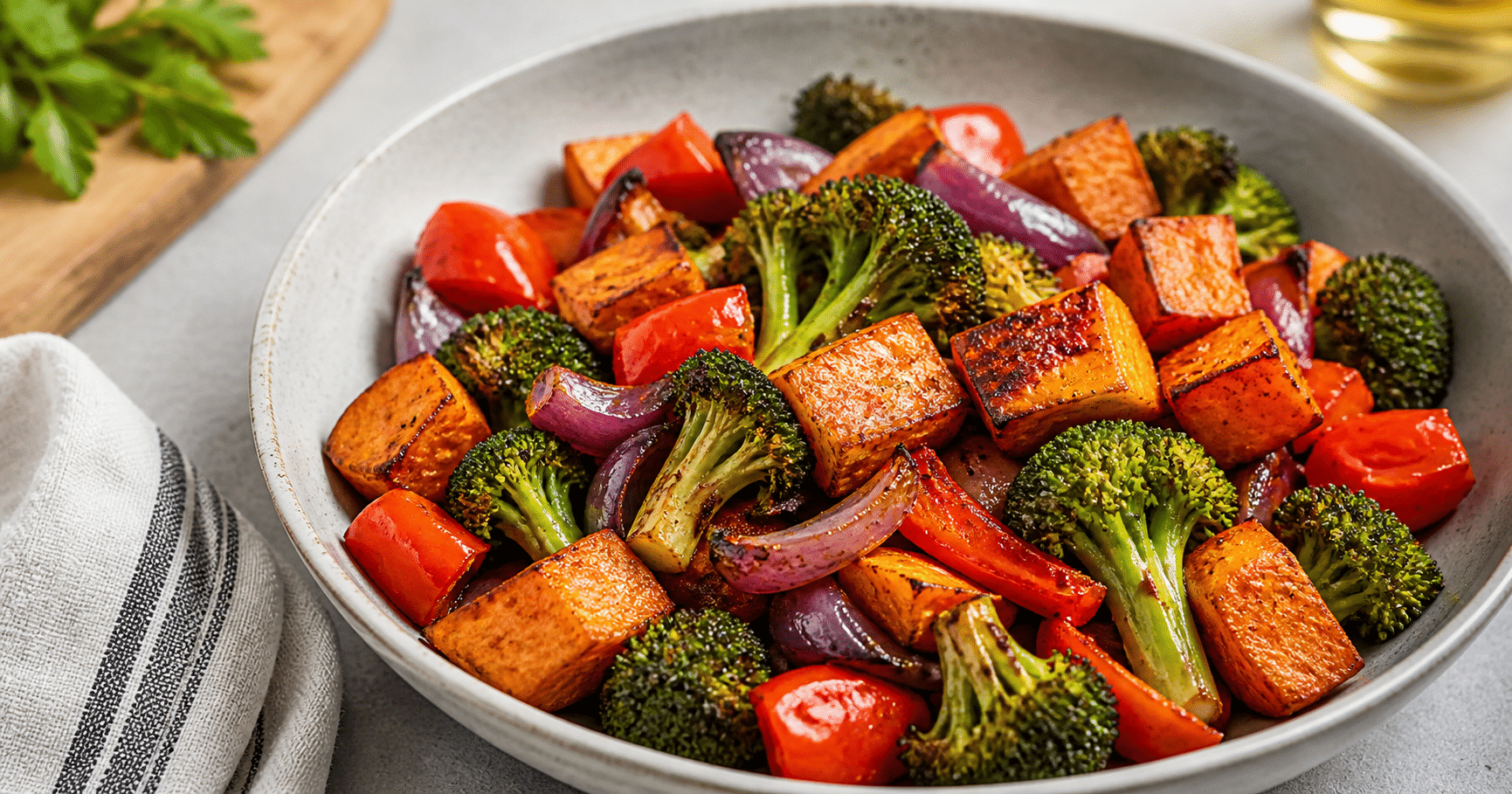
Roast a tray of sturdy vegetables early in the week, then add them to different meals rather than serving the same side every night. Use them in a grain bowl one day, fold them into eggs another day, or tuck them into a sandwich or wrap. Store washed leafy greens separately so they stay crisp.
4. Add color at the end
A meal that’s already cooked can still use a fresh vegetable. Add handfuls of spinach to hot soup, scatter chopped herbs over beans, or serve sliced cucumber and tomatoes alongside pasta. A little last-minute crunch or brightness can make leftovers feel less repetitive.
Make a Versatile Tray of Roasted Vegetables
This batch makes about four side-dish portions, with enough flexibility to carry into lunches or quick dinners. The vegetables roast together at the same temperature, but cut the denser pieces smaller so they cook in time.
Ingredients
-
- 1 medium sweet potato, cut into ½-inch cubes
-
- 2 cups broccoli florets
-
- 1 red bell pepper, cut into bite-size pieces
-
- 1 small red onion, cut into wedges
-
- 2 tablespoons olive oil
-
- ½ teaspoon kosher salt, or less to taste
-
- Black pepper, to taste
-
- Optional: 1 teaspoon dried Italian seasoning or smoked paprika
Step-by-Step Instructions
-
- Heat the oven to 425°F. Line a large rimmed baking sheet with parchment, or lightly oil the pan.
-
- Put the sweet potato, broccoli, pepper, and onion in a large bowl. Add the oil, salt, pepper, and optional seasoning; toss until coated.
-
- Spread the vegetables in a single layer, leaving space between pieces. Use two pans if needed—crowding can make them steam instead of brown.
-
- Roast for 25 to 35 minutes, turning once, until the sweet potato is tender and the edges are browned. Check earlier if the pieces are cut small.
-
- Let the vegetables cool, then refrigerate in a covered container within two hours. Use within three to four days, reheating only the portion you need.
For a quick meal, spoon the vegetables over brown rice or farro with beans, lentils, eggs, chicken, or tofu. Toss them with pasta and a little olive oil, or add them to a quesadilla. A handful of fresh spinach or chopped tomatoes can supply a different texture and color just before serving.
Keep the Plan Flexible, Not Fussy
Vegetables can lose appeal when they’re overcooked, stored wet, or bought in quantities that are hard to finish. Keep delicate greens dry and separate from cooked food, and choose smaller amounts of unfamiliar produce until you know you’ll use it. If chopping is a barrier, look for pre-cut vegetables or use frozen options.
There’s also no need to treat color as a strict rule. White cauliflower, mushrooms, onions, and potatoes can contribute variety, too. If you take medication or follow a specific diet that affects what you can eat, follow advice from your clinician rather than trying to meet a color target.
A Colorful Week Starts With One Easy Addition
Choose a few vegetables with different colors and textures, keep a convenient backup on hand, and prepare one batch that can move between meals. The aim is not a perfect rainbow or a complicated menu—it’s making vegetables an easy part of the food you already enjoy.
When dinner needs a lift, a handful of greens or a few roasted peppers may be all the color you need.