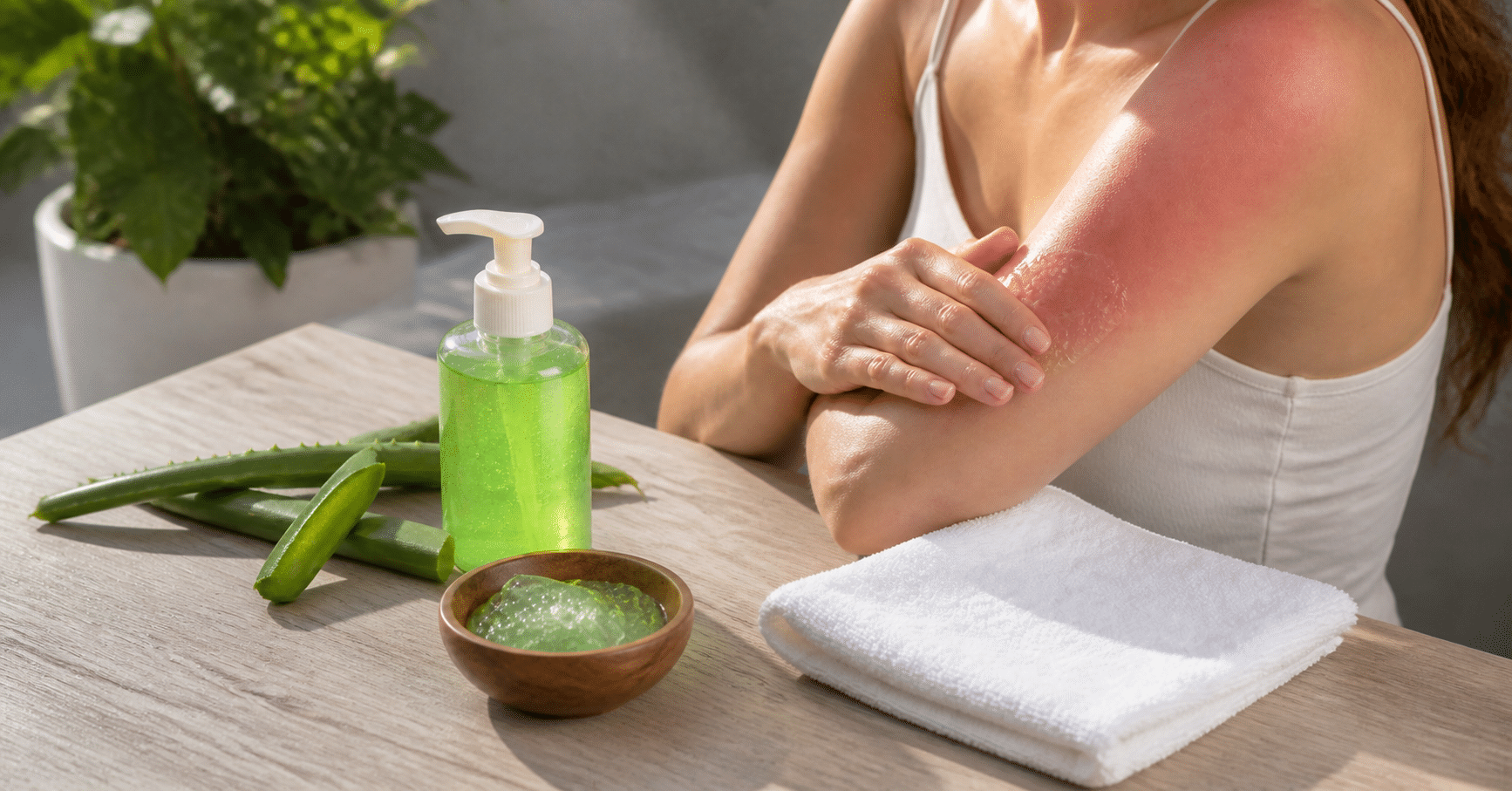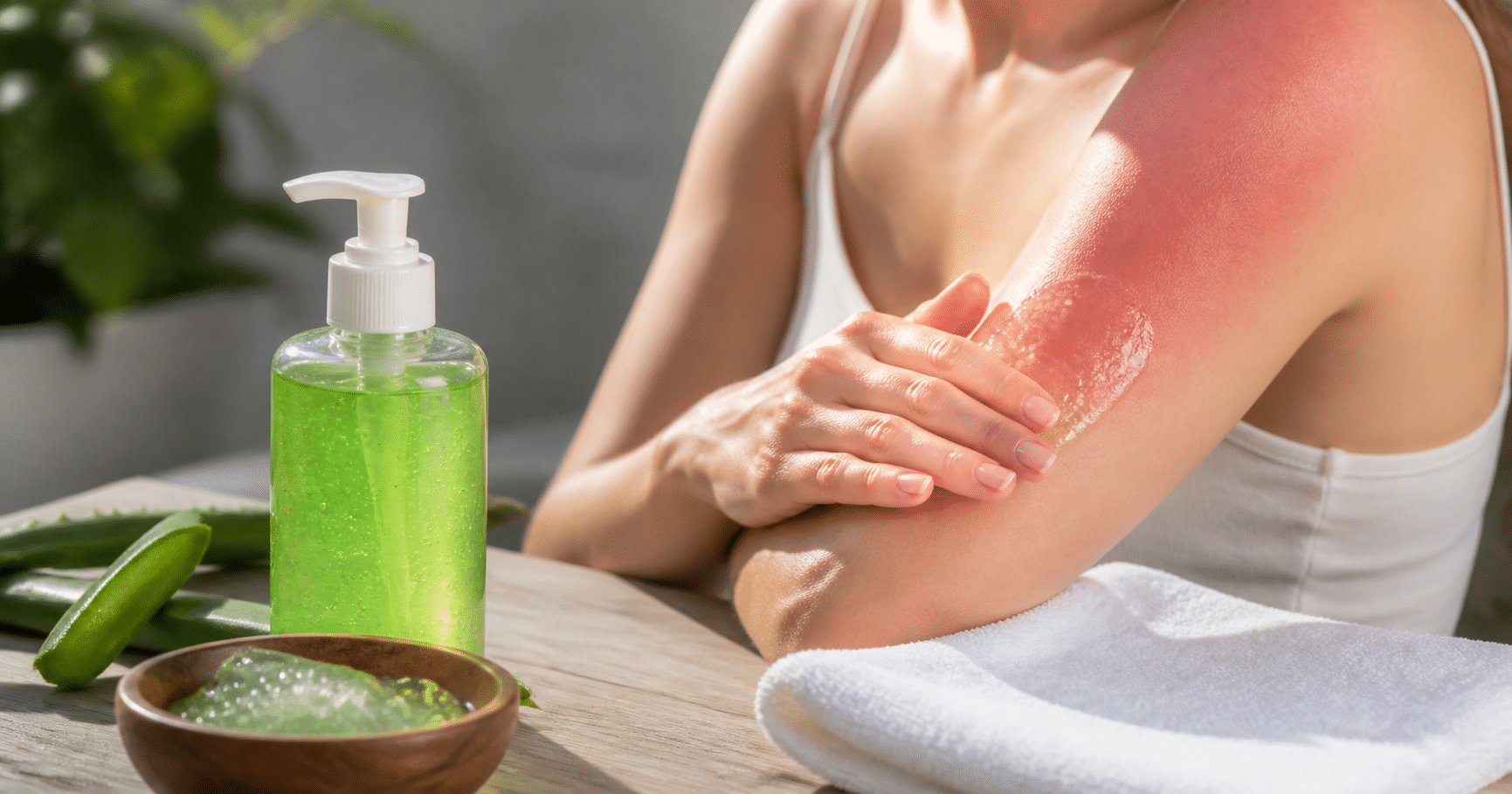
A bottle of aloe vera gel can feel like a welcome rescue when sun-warmed skin turns pink, tight and tender. Its cooling feel is real, and a simple aloe product may make a mild sunburn more comfortable while the skin recovers.
But aloe is not an antidote to ultraviolet (UV) damage. It cannot undo what the sun has done, prevent skin cancer or make it safe to spend more time outdoors. The most useful way to think of aloe is as one possible comfort measure—not a cure.
Here’s what aloe gel may do, where the evidence has limits, and how to use it without overlooking the steps that matter most after a burn.
What Aloe Vera Can—and Cannot—Do for Sunburn
A sunburn is an inflammatory response to too much UV exposure. The redness and soreness may not peak until hours after the exposure, so skin that feels only warm at first can become more uncomfortable later. Aloe vera gel contains mostly water and can leave a cooling, soothing sensation as it dries.
That comfort does not mean the burn is healing faster. Research on aloe for burns has produced mixed results, and findings about other kinds of burns do not automatically apply to ordinary sunburn. Evidence is not strong enough to say aloe reliably speeds recovery, prevents peeling or repairs UV-related damage.
For a mild burn—limited redness, tenderness and warmth without widespread blistering or other concerning symptoms—aloe can be part of basic comfort care. Cooling the skin, avoiding further sun and giving the body time to recover are just as important.
Four Useful Facts Before You Reach for the Gel
1. It may soothe the surface, not fix the underlying damage
Aloe gel can feel pleasant on hot, intact skin, especially if it is stored somewhere cool. The sensation is temporary, however, and a product that feels refreshing should not be mistaken for treatment that reverses UV injury.
If the gel stings, causes a rash or makes the skin feel worse, rinse it off and stop using it. Some people react to aloe or to added fragrance, colorants and other ingredients.
2. Choose a simple product over a complicated one
Look for a fragrance-free gel or moisturizer with aloe, ideally with a short ingredient list. Products with alcohol, strong fragrance or a “cooling” blend of multiple ingredients may irritate already-sensitive skin. Try a small amount on a limited area first.
Fresh aloe from a plant is not automatically safer or more effective. The clear inner gel can be difficult to handle cleanly, and the yellow sap near the leaf’s outer layer may irritate skin. A packaged product is generally the more practical choice for routine use.
3. Cooling the skin comes first
Use a cool, damp cloth or take a cool bath or shower. Pat the skin gently rather than rubbing it, then apply aloe or a plain moisturizer while the skin is still slightly damp. Do not put ice directly on the burn; extreme cold can injure already-irritated skin.
Keep the area out of direct sun until it has healed. Cover it with loose clothing if you need to go outside, and use shade. Sunscreen helps protect skin from additional exposure, but it does not treat a burn that has already happened.
4. Blisters change the plan
Blisters signal a more significant burn. Don’t pop or peel them, and avoid rubbing aloe into open or broken skin. Keep the area clean and covered with a loose, nonstick dressing if needed. Large or numerous blisters, severe pain or burns over a large area warrant medical advice.
A Simple Way to Use Aloe for Mild Sunburn
This is a comfort routine, not a medical treatment. It works best for mild redness and tenderness on intact skin.
What You’ll Need
-
- A clean, cool, damp washcloth
-
- A fragrance-free aloe vera gel or moisturizer
-
- Loose, soft clothing to protect the area from further sun
Step-by-Step Instructions
-
- Get out of the sun. Move indoors or into deep shade as soon as you notice the burn. Don’t wait for the redness to worsen.
-
- Cool the skin. Hold a cool, damp cloth against the area or take a cool shower. Avoid scrubbing, harsh cleansers and direct ice.
-
- Pat dry gently. Leave the skin slightly damp rather than rubbing it with a towel.
-
- Apply a thin layer. Smooth a small amount of aloe gel over intact skin. Reapply if it feels soothing and the product label allows, but stop if it causes irritation.
-
- Keep the area protected. Wear loose clothing and avoid more UV exposure while the skin is tender. Drink fluids, particularly if you have been sweating or spending time in the heat.
Store the product according to its label. Chilling it in the refrigerator can make it feel refreshing, but don’t freeze it or apply a product so cold that it is uncomfortable.
When a Sunburn Needs More Than Home Care
Seek medical advice for severe or widespread blistering, intense or worsening pain, or signs of infection such as increasing redness, swelling or pus. Fever, chills, nausea, dizziness, confusion, marked weakness or signs of dehydration can point to a more serious problem, especially after prolonged heat exposure.
For discomfort, an over-the-counter pain reliever may help some people, but it is not suitable for everyone. Follow the label and check with a pharmacist or clinician if you have a chronic condition, take regular medicines or are unsure what is safe for you.
The Takeaway: Comfort, Not a Cure
Aloe vera gel may cool and soothe mild sunburn on intact skin, but its ability to speed healing or prevent damage is not established. Use a simple product if it feels good, and pair it with gentle cooling, hydration and—most importantly—staying out of the sun while your skin recovers.
Aloe can ease the heat of a sunburn; only time and protection from more UV exposure let the skin recover.
Medical Disclaimer
This article is for general information and is not a substitute for medical advice. Contact a healthcare professional if symptoms are severe, spreading or concerning.