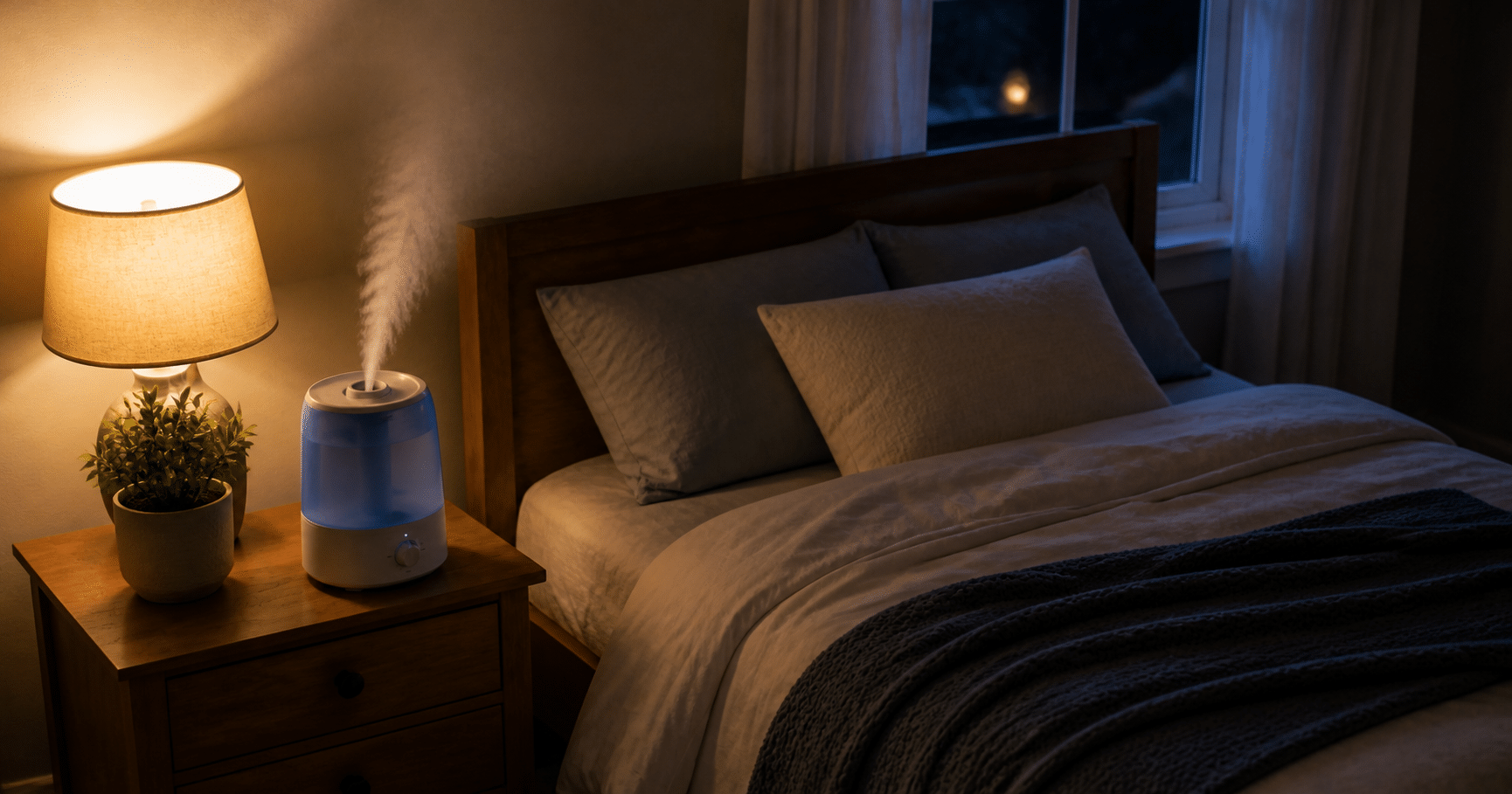
Winter heat can make a bedroom feel as if every bit of moisture has been drawn from the air. You may wake with a scratchy throat, a stuffy nose or skin that feels tighter than usual. A cool-mist humidifier can add moisture to the room—and may make dry-air discomfort less noticeable.
But turning one on is not as simple as filling the tank and forgetting it. Too much humidity can encourage mold and dust mites, while a dirty humidifier can send unwanted particles into the air. The goal is a comfortable, measured level of moisture, not a steamy room.
Here’s how a cool-mist humidifier works, what it may help with, and how to use and clean one sensibly.
How a Cool-Mist Humidifier Changes Bedroom Air
Indoor air can become especially dry during cold weather. Heating systems warm the air, and cold outdoor air generally contains less moisture than warm air; once that air is brought indoors and heated, its relative humidity can fall. A humidifier adds water to the air, helping raise that relative humidity.
When indoor air is too dry, moisture can evaporate more readily from the surfaces of the nose and throat. That may leave some people feeling dry or irritated. Adding a moderate amount of humidity can make the air feel more comfortable, though it does not treat the cause of persistent congestion, coughing or other symptoms.
Cool-mist models release moisture without heating water to create steam. Some use a fan and a wet wick; others, such as ultrasonic models, use vibration to produce a fine mist. Cool mist can be a practical choice in a bedroom because there is no hot water or steam to spill, but every type still needs regular cleaning.
What a Humidifier May—and May Not—Do
1. It may ease the feeling of dry air
If your bedroom air is very dry, adding moisture may help reduce the sensation of a dry nose or throat. It can also make the room feel less parched overnight. Individual results vary, and a humidifier should not be expected to cure a cold, prevent illness or replace medical care.
2. It can help you find a more comfortable humidity level
Aim for indoor relative humidity of about 30% to 50%. A small, inexpensive hygrometer can show whether your room is actually dry and help you avoid running the unit unnecessarily. If windows begin to collect condensation, or the room smells damp, lower the setting or turn the humidifier off.
More moisture is not always better. Persistently high humidity can support mold growth and dust mites, which may aggravate symptoms for some people. The right level depends on the home, the season and the room.
3. It is not a substitute for other dryness remedies
A humidifier adds moisture to the air; it does not directly moisturize skin or replace drinking fluids. For dry skin, a fragrance-free moisturizer may be more useful. For ongoing nasal or throat symptoms, consider other possible causes—including medications, allergies or an illness—and speak with a health professional if symptoms persist or concern you.
How to Use a Cool-Mist Humidifier in the Bedroom
Start with the room’s humidity rather than running the humidifier all night by habit. These simple steps help make the device more useful and reduce avoidable mess.
What You’ll Need
-
- A cool-mist humidifier sized for the bedroom
-
- Fresh water; distilled or demineralized water is a useful option, especially for ultrasonic models
-
- A hygrometer to monitor relative humidity
-
- A clean, dry surface away from bedding, walls and electronics
Step-by-Step Instructions
-
- Check the room first. Place the hygrometer where it can give a representative reading—not directly beside the humidifier. If humidity is already around 30% to 50%, you may not need to run the unit.
-
- Set up the humidifier as directed. Follow the manufacturer’s instructions, use fresh water and put the unit on a stable, water-resistant surface. Keep the mist from blowing directly onto a wall, mattress, curtains or other belongings.
-
- Use a moderate setting. Run the machine only as needed, and check the humidity again. If it approaches or exceeds 50%, reduce the output or switch the humidifier off.
-
- Empty and dry it regularly. Unplug the unit, empty standing water each day and let the tank and base dry. Clean the humidifier at least every third day, or more often if the manufacturer advises it. Follow the manual’s cleaning instructions and rinse thoroughly before using it again.
Small Choices That Can Make a Big Difference
Water type matters. Ultrasonic humidifiers can disperse minerals from tap water into the air, sometimes leaving a white dust on nearby surfaces. Distilled or demineralized water can reduce that mineral residue. It does not eliminate the need to clean the tank.
Keep the humidifier away from the bed if the mist leaves sheets or nearby surfaces damp. Don’t add essential oils, fragrances or inhalants unless the device is specifically designed for them; additives can damage some units or disperse substances the manufacturer did not intend.
Routine cleaning is not optional maintenance. Water left sitting in a tank can support microbial growth, and deposits can build up over time. A humidifier that is difficult to empty and clean may be a poor fit for everyday use.
A useful rule: aim for air that feels comfortable, not a room that feels damp. Your hygrometer and the condition of nearby windows are better guides than the mist you can see.
A More Comfortable Bedroom, Without Overdoing It
A cool-mist humidifier may help when bedroom air is genuinely dry, but its benefit depends on using it at a sensible humidity level and keeping it clean. Measure first, aim for about 30% to 50% relative humidity, and stop if condensation or dampness appears.
The best setting is not the one that runs longest. It is the one that makes the room more comfortable while keeping the air—and the surfaces around you—dry enough.