A saline nasal rinse can loosen thick mucus, wash away pollen and dust, and make a stuffy nose feel clearer. The method is simple—but the water matters more than many people realize.
Water that is safe to drink is not automatically safe to send through your nose. Rare but serious infections have been linked to nasal rinsing with contaminated tap water, so using the right water and cleaning the device are essential parts of the routine.
Here’s what a rinse can—and can’t—do, how to prepare one, and how to use it without turning a helpful habit into an avoidable risk.
What a saline rinse does—and what it doesn’t
A saline rinse moves salt water through the nasal passages, helping flush out mucus, pollen, and other particles. It can also loosen dried or sticky secretions. Some people use it for temporary relief from nasal congestion or allergy symptoms; research suggests nasal irrigation may ease symptoms for some people, though it is not a cure for allergies, sinus infections, or other underlying conditions.
Saline is used rather than plain water because salt helps make the solution more comfortable for the delicate lining of the nose. A measured saline packet is an easy way to get the intended concentration. Plain water can sting or irritate, and adding extra salt does not make a rinse more effective.
A squeeze bottle, neti pot, or similar device can deliver the solution. The key safety point is that the water must be distilled or sterile, or boiled and cooled. Ordinary tap water can contain tiny organisms that are harmless when swallowed but may cause serious illness if they enter the nose.
Three details that make a rinse safer and more comfortable
1. Choose water that’s safe for nasal use
Use water labeled distilled or sterile, or bring tap water to a rolling boil for 1 minute, then let it cool. At elevations above 6,500 feet, boil it for 3 minutes. Do not use bottled drinking water unless the label specifically says it is distilled or sterile; bottled water is not necessarily sterile.
If you boil water ahead of time, let it cool and keep it in a clean, covered container. For a rinse, use it at a comfortable lukewarm temperature—not hot.
2. Measure the salt instead of guessing
Premixed saline packets are convenient and help you prepare the amount of salt intended for a particular volume of water. Follow the packet and device instructions; packets and devices may be designed for different amounts of water.
If you do not have a packet, a commonly used mixture is 2 cups of safe water, 1 teaspoon of non-iodized salt, and ½ teaspoon of baking soda. Measure carefully, and don’t add essential oils or other ingredients. If the mixture burns, stop and check that the water volume and measurements are correct.
3. Keep the device clean and dry
After each use, wash the bottle or pot according to its manufacturer’s directions, then let it air-dry completely. A damp device can provide a place for microbes to grow. Don’t share your rinse device, and make a fresh batch of solution rather than saving leftovers for another use.
How to use a saline rinse at home
This method works with many squeeze bottles and neti pots, but device instructions come first. Set up beside a sink, and use only water that is distilled, sterile, or boiled and cooled.
What you’ll need
- A nasal rinse bottle, neti pot, or other purpose-made irrigation device
- Distilled or sterile water, or previously boiled and cooled water
- A saline packet made for nasal rinsing, or the measured homemade mixture above
Step-by-step instructions
- Wash your hands. Prepare the saline according to the packet and device directions, using lukewarm—not hot—water.
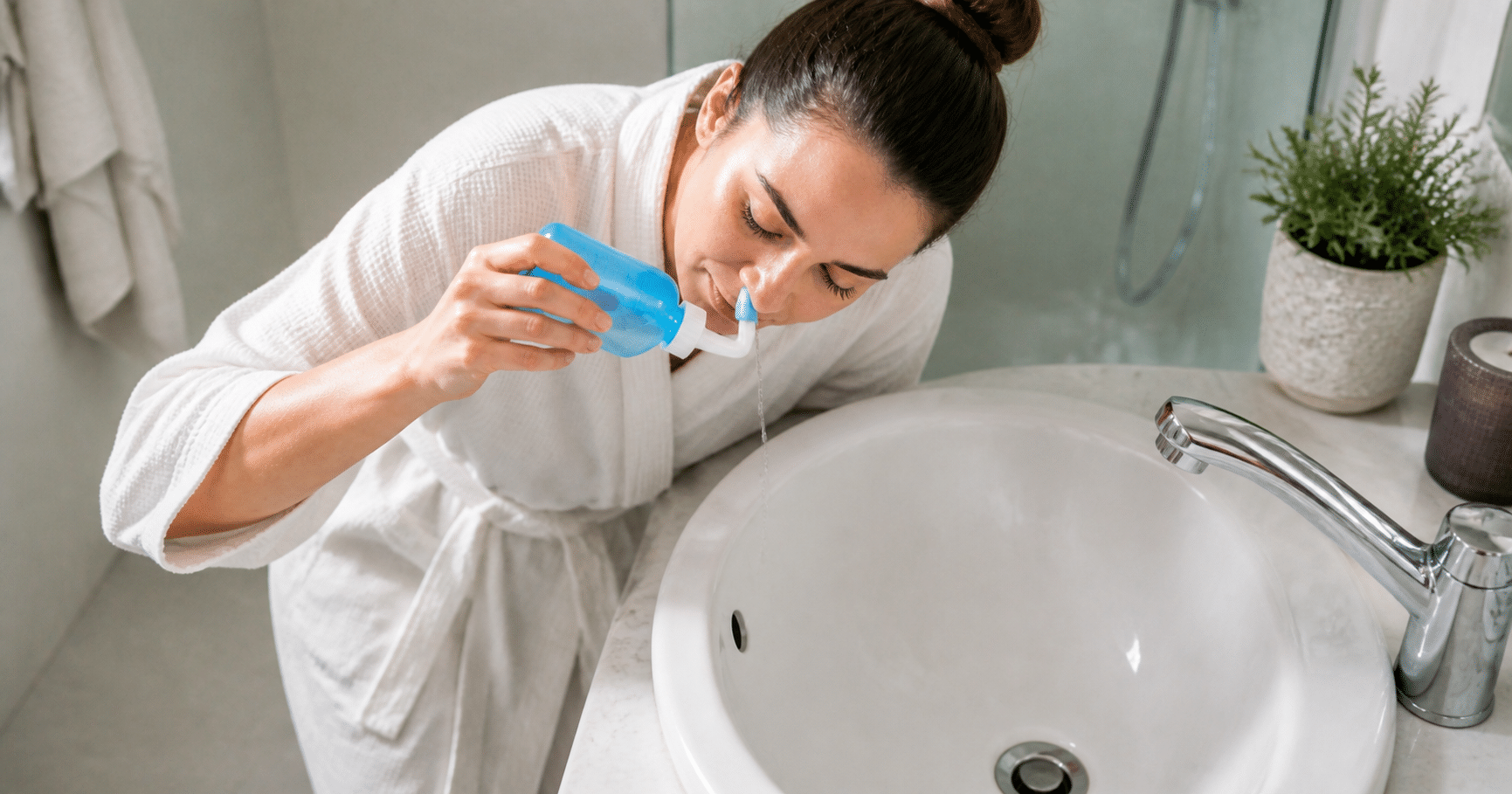
- Lean over the sink and tilt your head slightly forward and to one side. Keep your mouth open so you can breathe through it.
- Place the device tip gently at the upper nostril. Let the solution flow or squeeze gently; it should drain through the other nostril or into the sink.
- Repeat on the other side if your device directions call for it. Don’t force the rinse if it will not flow or causes sharp pain.
- When you’re finished, blow your nose gently. Wash the device as directed and leave it to air-dry.
Rinsing can feel unfamiliar at first. A steady, gentle flow is usually more comfortable than a forceful squeeze. If fluid causes persistent ear pressure, significant pain, or bleeding, stop and ask a clinician for advice.
When to pause and ask a clinician
Don’t irrigate a completely blocked nostril or push solution against resistance. If you’ve recently had nasal or sinus surgery, follow your surgeon’s instructions before rinsing. People with a weakened immune system should ask a healthcare professional whether nasal irrigation is appropriate for them.
A rinse may help clear nasal passages, but it does not replace medical care when symptoms are severe or ongoing. Contact a healthcare professional if symptoms worsen, keep returning, or come with concerning signs such as a high fever, severe facial pain, or swelling around the eyes.
A small routine, with one nonnegotiable rule
Saline rinsing is a practical way to wash irritants and loosen mucus, and some people find it soothing. Use a measured saline solution, follow your device’s directions, and clean and dry the equipment after every use.
Most important, never assume that drinkable tap water is safe for nasal rinsing. With the right water, this simple habit can stay simple.