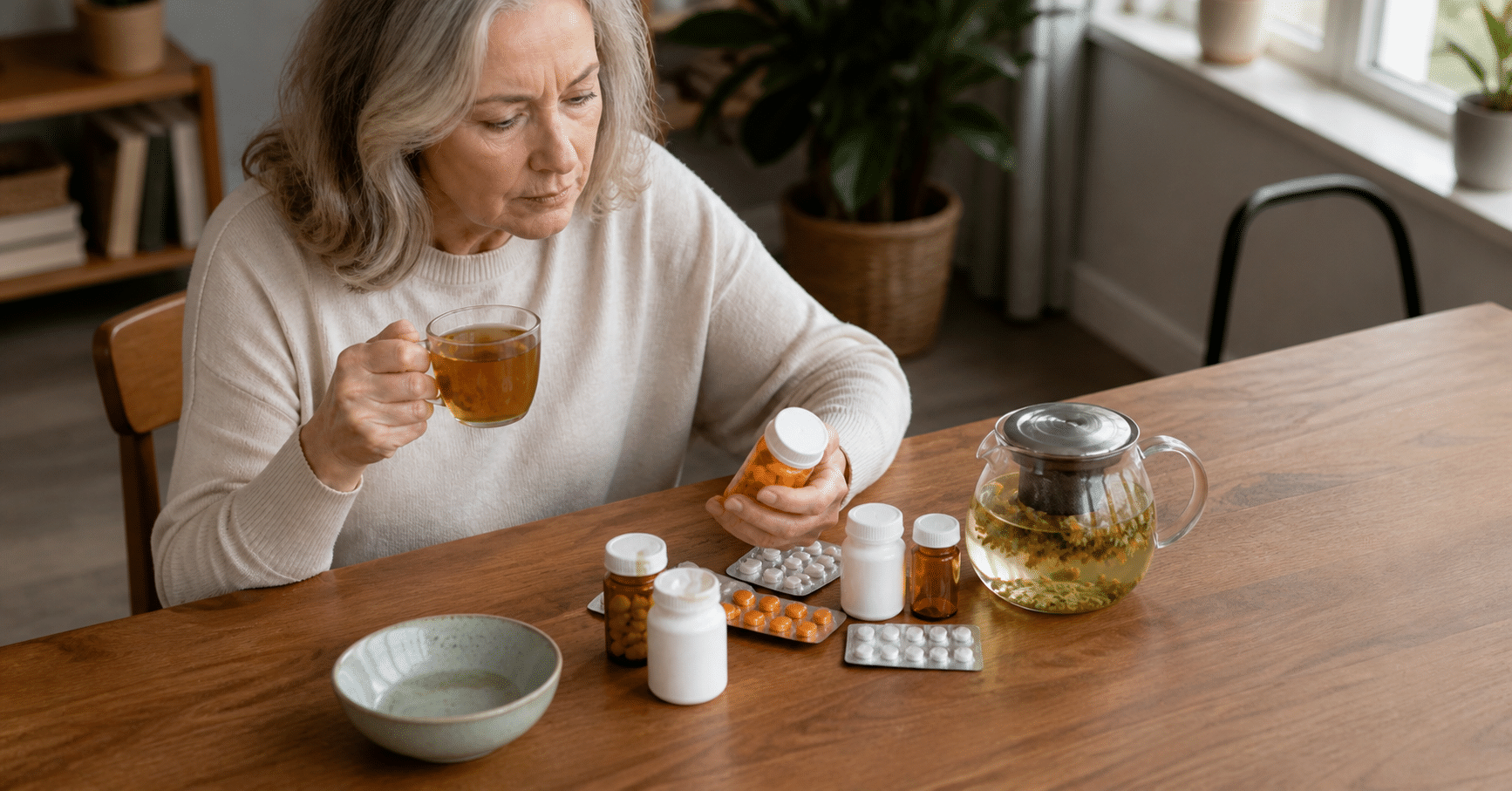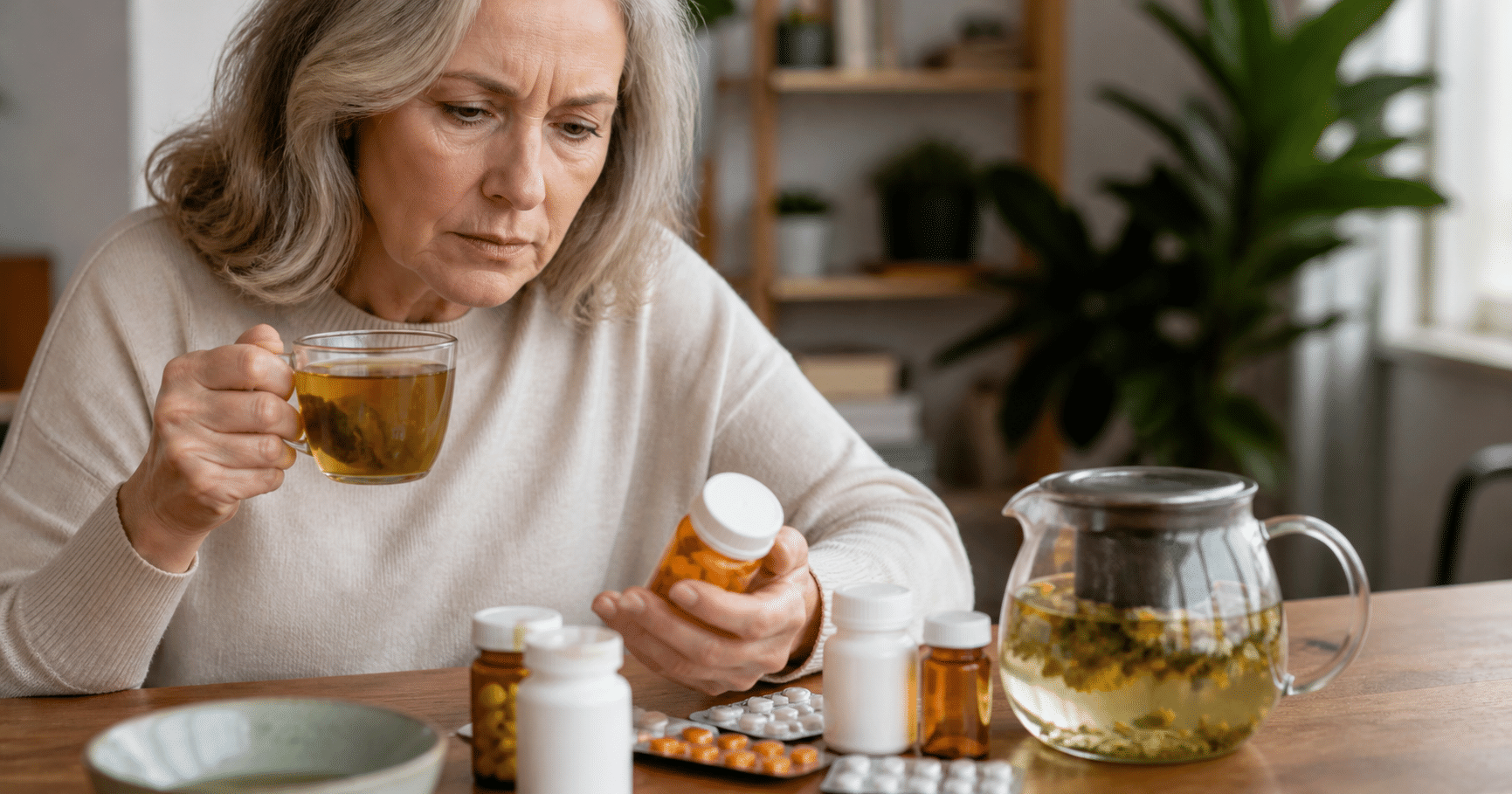
A cup of herbal tea can feel like the gentlest part of a daily routine. But “natural” does not mean chemically inactive: plants contain compounds that may change how the body absorbs, breaks down, or responds to a medicine.
The risk depends on the plant, how it is prepared, how often you drink it, and which medicines you take. A weak cup now and then is not the same as a concentrated extract, but even an ordinary tea can matter in certain combinations.
This is especially worth knowing if you take several prescriptions, use a blood thinner, or rely on a medicine that needs to stay within a narrow range. Here’s why tea can interact with medication—and how to bring your favorite blends into a medication review without giving them up unnecessarily.
How a cup of tea can affect a medicine
Medicines have to be absorbed and processed by the body. Some plant compounds can affect enzymes that break medicines down, proteins that move them through the gut, or the way the body responds to their effects. The result may be a medicine level that is higher or lower than intended, or side effects that add up.
For example, a plant that speeds up the breakdown of a medicine could make that medicine less effective. A plant with calming or blood-pressure-lowering effects might intensify similar effects from a drug. These possibilities are not equally well established for every tea; evidence ranges from known interactions to limited reports or theoretical concerns.
Preparation matters, too. A brewed tea, a powdered herb, and a concentrated capsule can deliver very different amounts of plant compounds. Blends may contain ingredients that are easy to overlook, and the strength of products can vary. “I only drink tea” is useful information for a pharmacist—but it does not automatically rule out an interaction.
Herbal teas that deserve a closer look
1. St. John’s wort may make some medicines work less well
St. John’s wort is better known as a supplement, but it may also appear in tea blends. It can increase the activity of enzymes and transport systems involved in handling medicines, potentially lowering levels of certain drugs. Interactions are documented with a range of medications, including some used after organ transplants and some hormonal contraceptives.
Because the consequences can be serious, don’t start or regularly drink St. John’s wort tea without checking with a pharmacist or prescriber. The amount in a tea may be uncertain, and the interaction potential can depend on the product and pattern of use.
2. Licorice root can affect blood pressure and potassium
Licorice-root tea may contain glycyrrhizin, a compound that can cause the body to retain sodium and lose potassium. With frequent or substantial intake, this may contribute to higher blood pressure, fluid retention, or low potassium. The concern can be greater for people taking certain diuretics, digoxin, or medicines that affect blood pressure.
“Licorice” flavoring made with anise is not the same as licorice root, so check the ingredient list. If you have high blood pressure, heart or kidney disease, or take medicines that affect potassium, ask before making licorice tea a regular habit.
3. Green tea can interfere with specific medicines
Brewed green tea is not interchangeable with concentrated green-tea extract. One specific interaction reported with brewed tea is reduced absorption of nadolol, a beta blocker; drinking the tea at a different time may not be a reliable fix without medical advice. Concentrated extracts raise different concerns and can affect the body differently from a cup of tea.
Green tea also contains vitamin K, though most is in the leaves rather than the strained drink. People taking warfarin should avoid sudden, substantial changes in green-tea or other vitamin-K intake and ask their anticoagulation team how to keep their routine consistent.
4. “Mild” calming or blood-thinning effects can still add up
Chamomile may cause drowsiness, particularly alongside alcohol or sedating medicines. Reports have also raised concerns about possible interactions with warfarin, though the evidence is limited and does not mean every cup is dangerous. Ginger and hibiscus may influence processes such as blood clotting or blood pressure, but the strength and clinical importance of these effects vary.
These examples are reasons to check a specific combination—not proof that everyone taking a related medicine must avoid the tea.
A practical way to check your tea routine
Rather than trying to memorize every possible interaction, make your tea habits visible to the people managing your medicines.
-
- Write down the full ingredients. Include single-herb teas, blends, powders, extracts, and products marketed for sleep, digestion, or “detox.” Photographing the package can help.
-
- Note how you use them. Record how many cups you drink, how strong you make them, and whether you use the tea daily or only occasionally. Include recent changes.
-
- Ask a pharmacist to check the combination. Share your complete medication list, including over-the-counter drugs and supplements. Ask whether timing, monitoring, or avoiding a particular ingredient is advisable.
-
- Don’t change a prescription on your own. If you suspect a problem, contact your prescriber or pharmacist before stopping a medicine or relying on tea instead.
-
- Keep routines steady when consistency matters. For medicines such as warfarin, major changes in diet or regular tea habits may require guidance or monitoring.
When a blend lists “proprietary herbs” without naming each ingredient, treat that as a reason to ask for more information—not as reassurance that the contents are harmless.
The cup is natural; the interaction is biological
Herbal tea can be a comforting part of the day, and many people can enjoy it safely. The key is to consider the specific plant, the amount and frequency, and the medicine—not just whether the product comes from a garden or a pharmacy.
Keep a current list of teas and medications, and ask a pharmacist before adding a potent or daily-use blend. A simple question before the first cup can help preserve both the pleasure of tea and the reliability of your treatment.
Medical Disclaimer
This article is for general information and is not a substitute for individualized medical advice. Ask your pharmacist or prescriber about herbal teas in combination with your medicines.