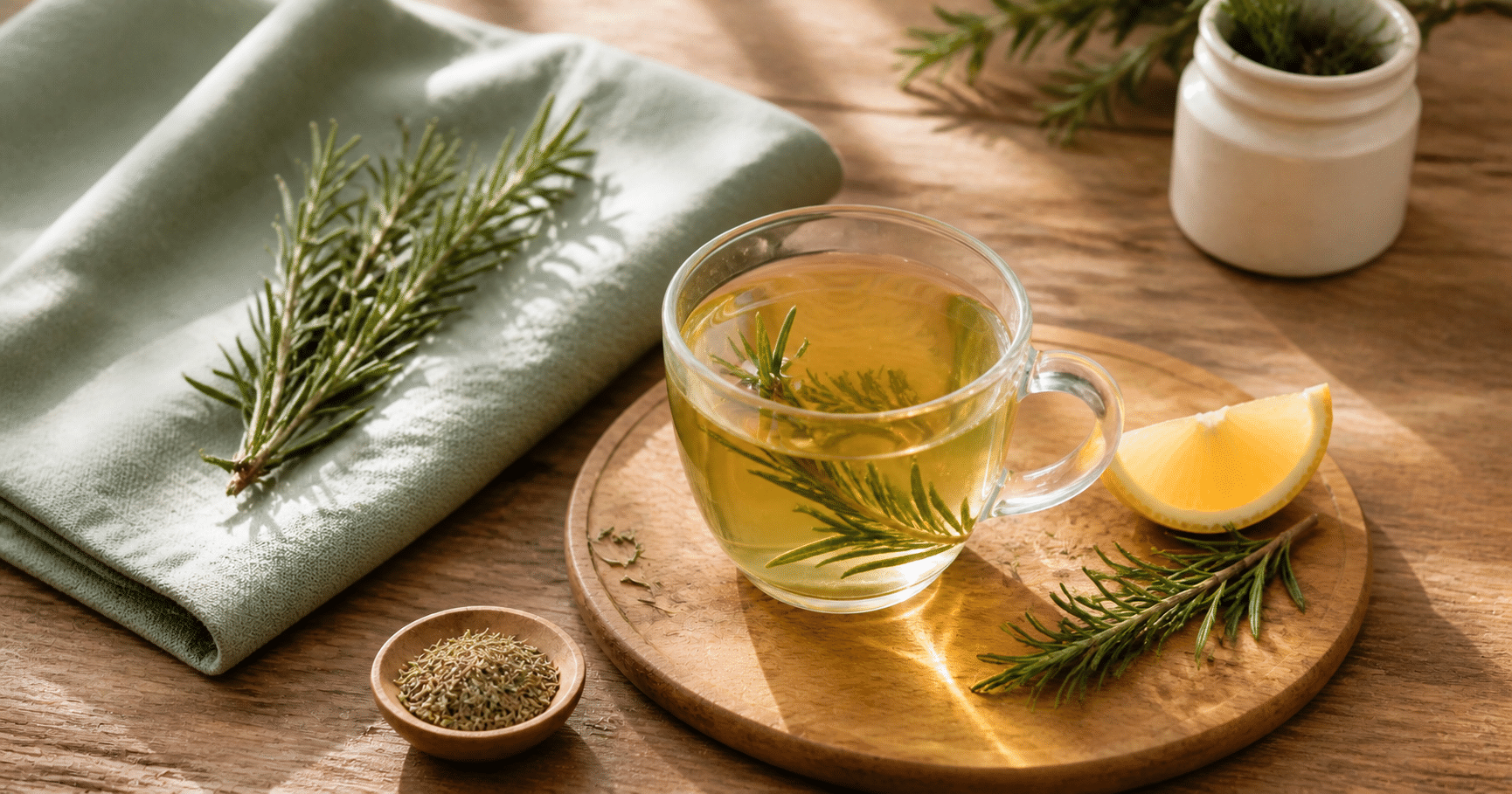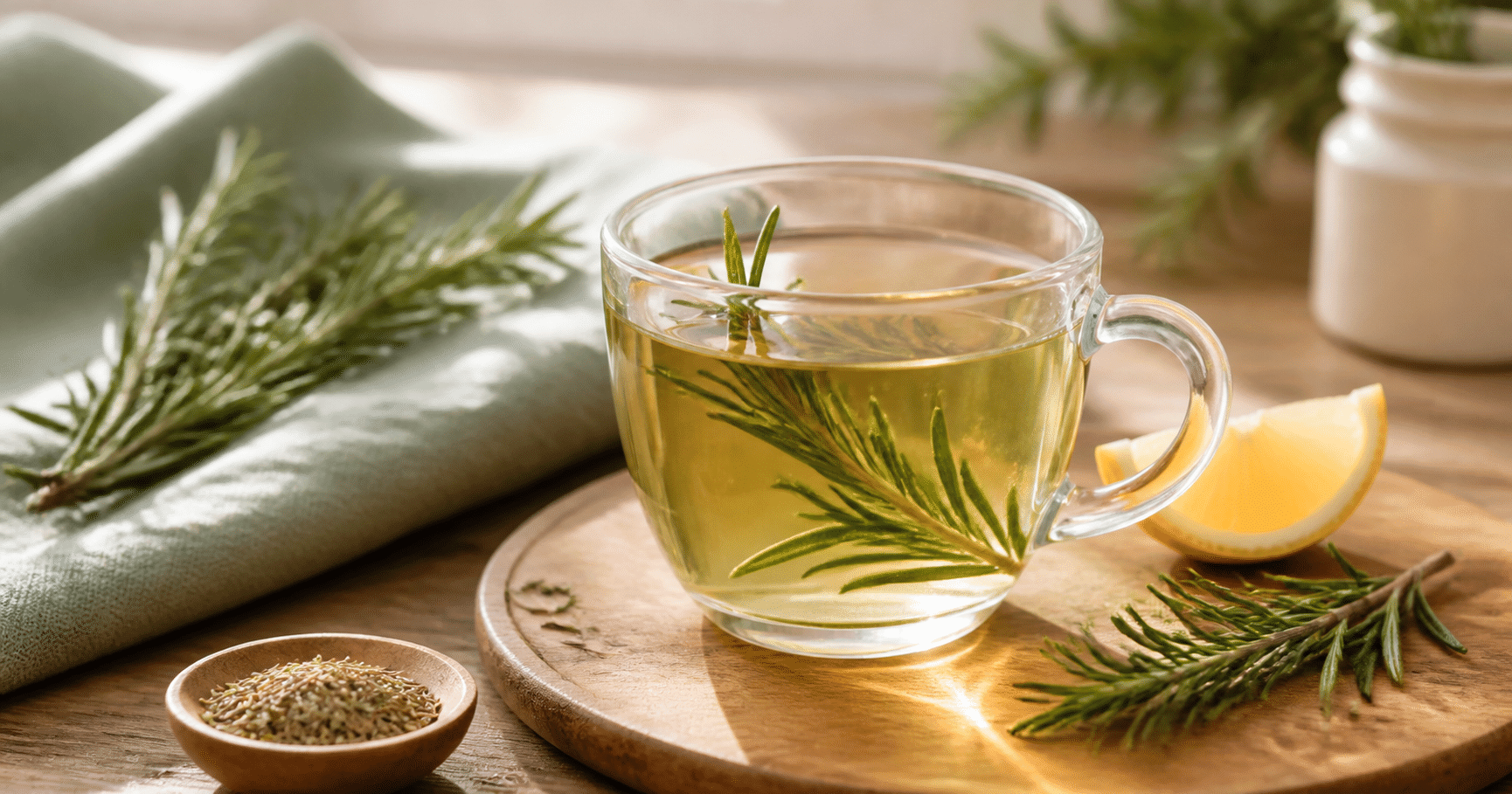
Rosemary tea has a surprisingly bold personality for a drink made from a few leaves. Its piney, savory aroma can make a simple cup feel special—but steep it too long or use a heavy hand, and the flavor can turn bitter and medicinal.
The good news is that a mild cup is easy to make. You need only rosemary, hot water, and a few minutes; the important part is knowing how much to use and when to stop steeping.
Here’s a straightforward rosemary tea recipe, ways to adjust its strength, and what to keep in mind if you’re considering it as more than an enjoyable caffeine-free drink.
What Rosemary Tea Is—and What It Can and Can’t Do
Rosemary tea is an infusion made by steeping fresh or dried rosemary leaves in hot water. It is naturally caffeine-free and has a woodsy, slightly peppery flavor. The leaves contain aromatic oils and plant compounds, including rosmarinic acid, but the amount that ends up in a cup depends on the herb, how much you use, and how long you steep it.
Rosemary is often discussed for its antioxidant compounds and its traditional use as a digestive or wellness drink. Those points don’t mean a cup of tea has been shown to prevent or treat a health condition. Research on rosemary’s compounds does not establish that drinking rosemary tea produces specific health benefits.
It’s best to think of the tea as a flavorful herbal infusion—not a treatment. If you like the aroma but find the taste too strong, a shorter steep and a smaller amount of rosemary will usually help more than adding extra sweetener.
Three Ways to Keep Rosemary Tea Mild
1. Start with a small amount
For an 8-ounce cup, begin with 1 teaspoon of dried rosemary or one small, roughly 4-inch sprig of fresh rosemary. Dried herbs can taste more concentrated, so avoid assuming that a large spoonful will make a better cup.
2. Steep briefly, then taste
Start with 3 to 5 minutes. Rosemary’s flavor can become more assertive as it sits in hot water, so taste before extending the steep. If you want a little more flavor, add a minute at a time rather than leaving the leaves in the cup indefinitely.
3. Cover the cup while it steeps
A small plate or cup lid helps hold in the herb’s aroma while the tea brews. Covering the cup doesn’t require a longer steep; it simply helps preserve the fragrant qualities that make rosemary tea appealing.
How to Make a Mild Cup of Rosemary Tea
This method makes one gently flavored cup. If you’re new to rosemary tea, use the shorter steep time first and adjust the next cup to suit your taste.
Ingredients
-
- 8 ounces hot water
-
- 1 teaspoon dried rosemary, or 1 small sprig of fresh rosemary (about 4 inches)
-
- Optional: a slice of lemon or a little honey
Step-by-Step Instructions
-
- Bring fresh water to a boil, then let it sit for about 30 seconds so it is no longer bubbling vigorously.
-
- Put the rosemary in a mug. If using a fresh sprig, rinse it first; gently rub the leaves between your fingers to release some aroma.
-
- Pour the hot water over the rosemary and cover the mug.
-
- Steep for 3 to 5 minutes. Taste at 3 minutes if you prefer a particularly mild cup.
-
- Remove the sprig or strain out the leaves. Add lemon or a small amount of honey if you like, and drink while warm.
Rosemary tea is most enjoyable freshly made. If you prepare extra, refrigerate it promptly in a covered container and use it within a day. Don’t leave brewed tea sitting at room temperature for hours.
Small Adjustments That Make a Big Difference
Fresh and dried rosemary aren’t interchangeable by volume. Dried leaves are compact and can deliver a strong flavor quickly. If your first cup tastes too sharp, use less herb or shorten the steep next time; adding more water can soften the taste, but it may also make the cup less aromatic.
Lemon can brighten rosemary’s savory notes, while honey can round off some of the herbal edge. You can also pair the tea with a light snack. Keep additions simple at first so you can tell whether you enjoy the rosemary flavor on its own.
Use rosemary leaves intended for cooking or tea, and avoid putting rosemary essential oil in a drink. Essential oil is far more concentrated than an infusion and is not a substitute for the herb. If you’re pregnant or breastfeeding, have a seizure disorder, or take medicines and plan to drink concentrated herbal preparations regularly, ask a healthcare professional first. Culinary amounts of rosemary in food are different from repeated medicinal-style use.
A Gentle Cup Is the Best Place to Start
For mild rosemary tea, use a small amount of herb, cover the mug, and begin with a 3-to-5-minute steep. Adjust one detail at a time until the flavor feels balanced to you.
Rosemary’s appeal is its distinctive aroma, not a promise of medical benefits. A light hand lets that aroma come through without turning the cup bitter.
Medical Disclaimer
This article is for general information and is not a substitute for medical advice. Ask a qualified healthcare professional about herbal products if you have a health condition, are pregnant or breastfeeding, or take medication.