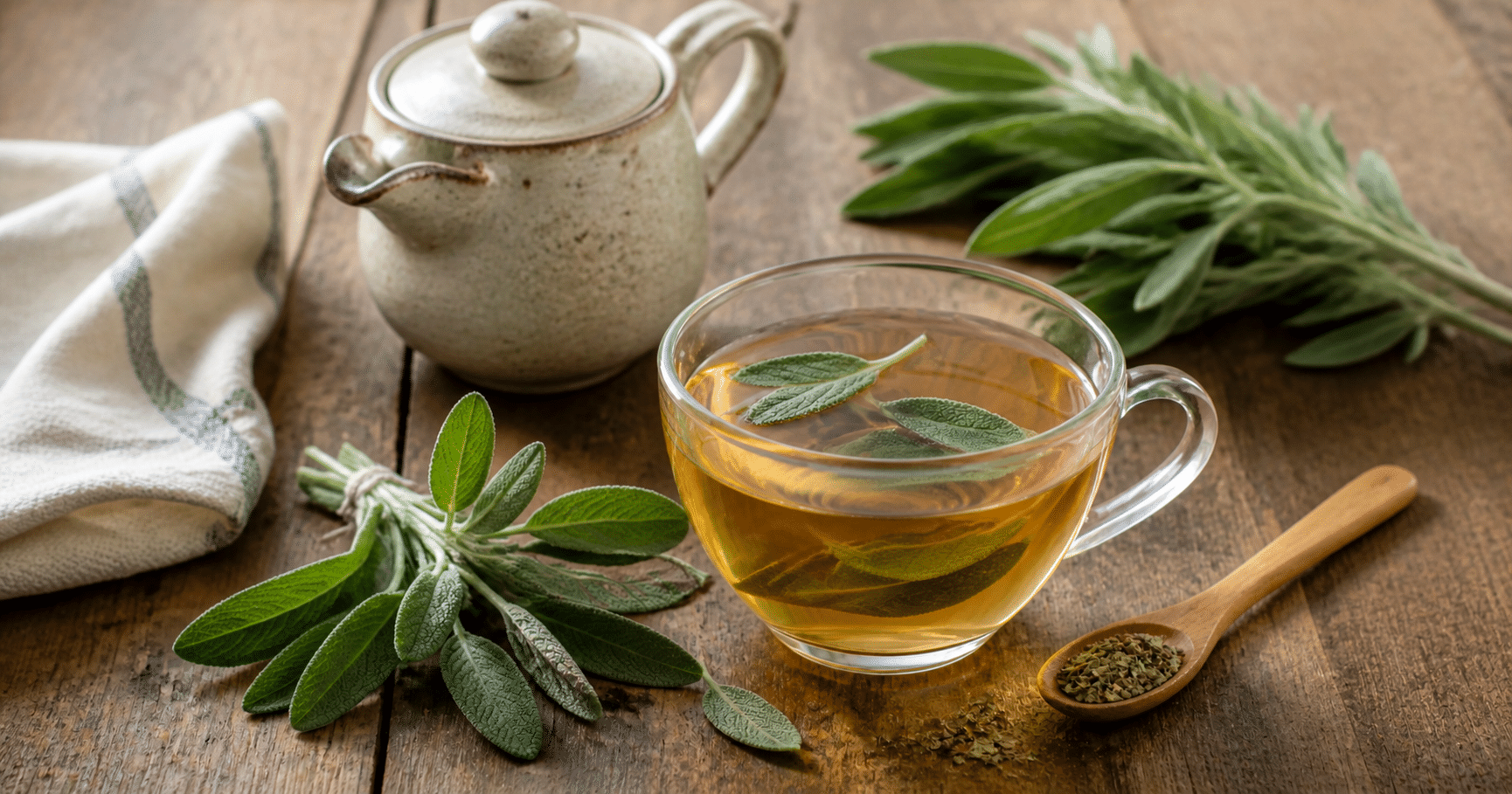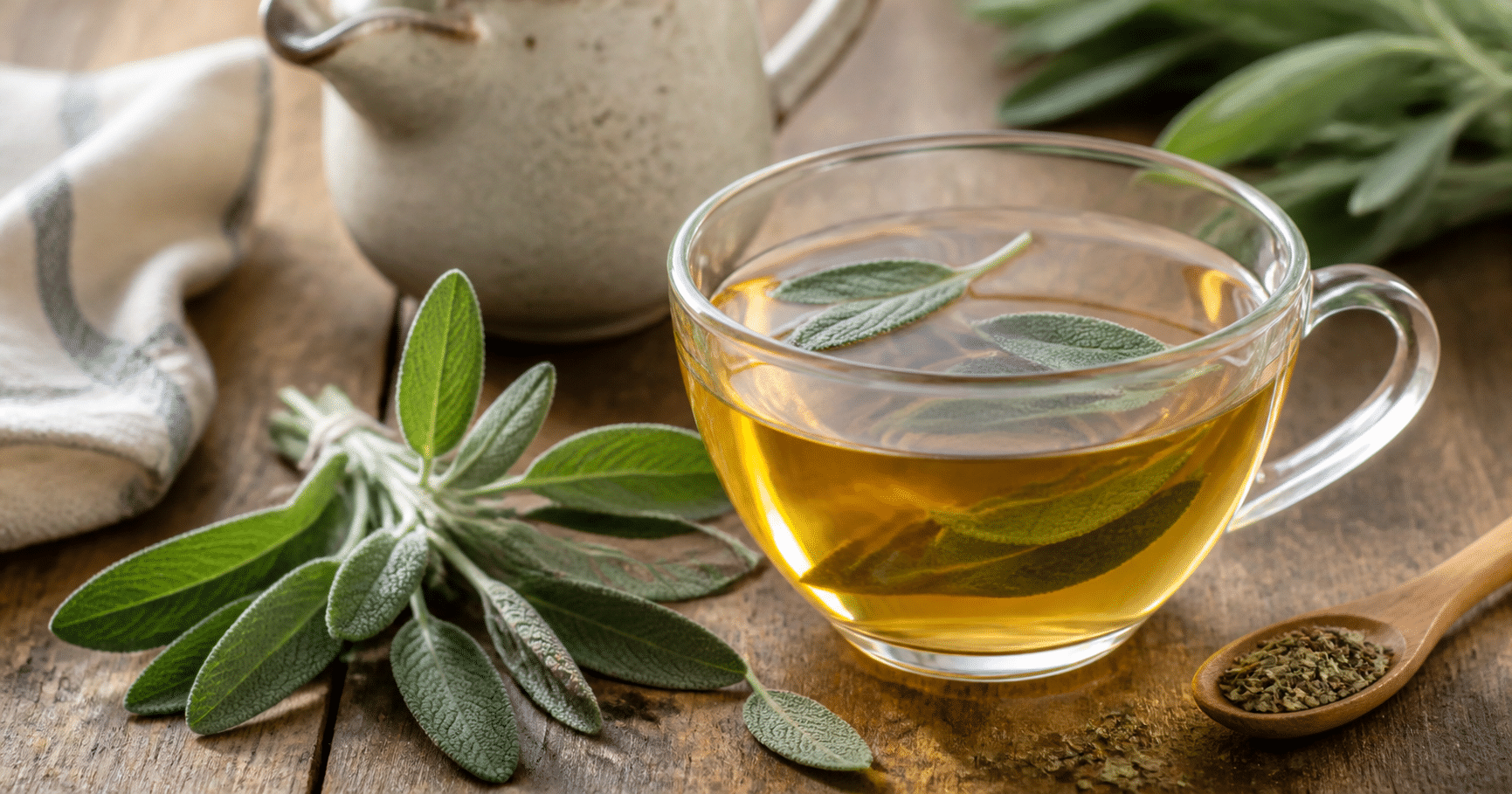
Sage tea has a savory, almost pine-like aroma that makes it feel more like a kitchen ingredient than a wellness drink. Yet the same leaves used to season stuffing and roasted vegetables have a long place in traditional home remedies.
People commonly brew sage for an upset stomach, a scratchy throat, or the warmth and sweating that can accompany menopause. Those uses are not all backed by strong clinical evidence, and a cup of tea is not the same thing as a concentrated sage supplement or essential oil.
That distinction matters: sage contains naturally occurring compounds whose amounts vary with the plant and preparation. Here’s what sage tea traditionally has been used for, what research can—and cannot—say, how to brew it, and who should be cautious.
What Sage Tea Is—and What Its Traditional Uses Mean
Sage tea is usually made by steeping the leaves of Salvia officinalis, the familiar culinary sage, in hot water. The leaves contain aromatic oils and other plant compounds, including rosmarinic acid and thujone. Their levels can vary, so a cup made with one type of sage may not be chemically identical to the next.
Traditional herbal use includes drinking sage tea for mild digestive discomfort and using cooled tea as a gargle or mouth rinse for an irritated throat or mouth. Sage has also been used traditionally to reduce excessive sweating, including sweating associated with menopause. These are historical uses—not proof that sage tea treats the underlying cause or works reliably for everyone.
Research on sage is limited and does not establish that an ordinary cup of tea prevents or treats disease. Some studies have examined sage preparations for particular symptoms, but results from extracts or other concentrated products cannot automatically be applied to homemade tea. Think of sage tea as a flavorful traditional beverage, not a substitute for medical care.
Three Things to Know Before You Brew a Cup
1. A traditional use is not the same as a proven treatment
A warm drink may feel soothing when your throat is scratchy, and the act of sipping it can be comforting. That does not mean sage tea has been shown to cure an infection or reliably relieve menopausal symptoms. Seek medical advice for persistent symptoms, difficulty swallowing, a high fever, or sweating that is new or unexplained.
2. Tea and essential oil are very different preparations
Steeping leaves in water makes a relatively mild infusion. Sage essential oil is highly concentrated and should not be swallowed or added to tea. Its thujone content can be substantial, and high exposure to thujone can be harmful, including by triggering seizures. Supplements and extracts can also deliver more concentrated amounts than a kitchen-style brew.
3. More is not necessarily better
Because sage’s active-compound levels are variable, there is no dependable way to treat a homemade cup like a measured medicinal dose. Avoid making very strong tea or drinking large amounts for long periods in an attempt to manage a symptom. If you take prescription medicine or have a chronic condition, ask a clinician or pharmacist before using sage regularly for a health purpose.
How to Make a Simple Cup of Sage Tea
This basic infusion produces one mild, savory cup. It is intended as a beverage, not as a therapeutic dose.
Ingredients
-
- 1 cup (8 ounces) freshly boiled water
-
- 1 teaspoon dried culinary sage, or about 1 tablespoon fresh sage leaves
-
- Optional: a little honey or lemon for flavor
Step-by-Step Instructions
-
- Put the sage leaves in a mug or small teapot. If using fresh leaves, rinse them first and gently bruise them between your fingers to release their aroma.
-
- Pour the hot water over the leaves. Cover the mug and steep for 5 to 7 minutes.
-
- Strain out the leaves. Taste the tea before adding anything; sage can become pleasantly savory, or overpowering, depending on the leaves and steeping time.
-
- Add a small amount of honey or lemon if you like, and enjoy it warm.
For a softer flavor, steep for less time or use a little less sage. It is simplest to make a fresh cup when you want one rather than preparing a large batch. If you have leftover tea, refrigerate it promptly and discard it if it has been sitting out for an extended period.
Who Should Be Especially Cautious With Sage
People who are pregnant or breastfeeding should avoid using sage in medicinal amounts unless a healthcare professional advises otherwise. Culinary amounts used to season food are different from concentrated extracts or repeated, strong tea, but safety information for medicinal use in these situations is limited.
Anyone with a seizure disorder should be particularly careful with sage products, especially essential oil and concentrated supplements, because of thujone. People taking medication to manage blood sugar should also check with a clinician before using sage regularly for that purpose; any effect on blood sugar is not established well enough to guide medication changes.
If you use sage tea as a gargle, let it cool first and spit it out rather than swallowing it. And if you are considering sage for ongoing symptoms, check with a healthcare professional instead of relying on tea alone.
The Bottom Line on Sage Tea
Sage tea is an aromatic, easy-to-make drink with a history of traditional use for mild digestive discomfort, mouth and throat irritation, and sweating. Those uses should not be mistaken for proven medical benefits, and a homemade infusion is not interchangeable with an extract or essential oil.
Brew a modest cup for its flavor, keep concentrated sage products out of the teapot, and treat persistent symptoms as a reason to seek advice—not as a cue to make the tea stronger.
Medical Disclaimer
This article is for general information and is not a substitute for medical advice. Consult a qualified healthcare professional about symptoms, medicines, or whether sage products are appropriate for you.