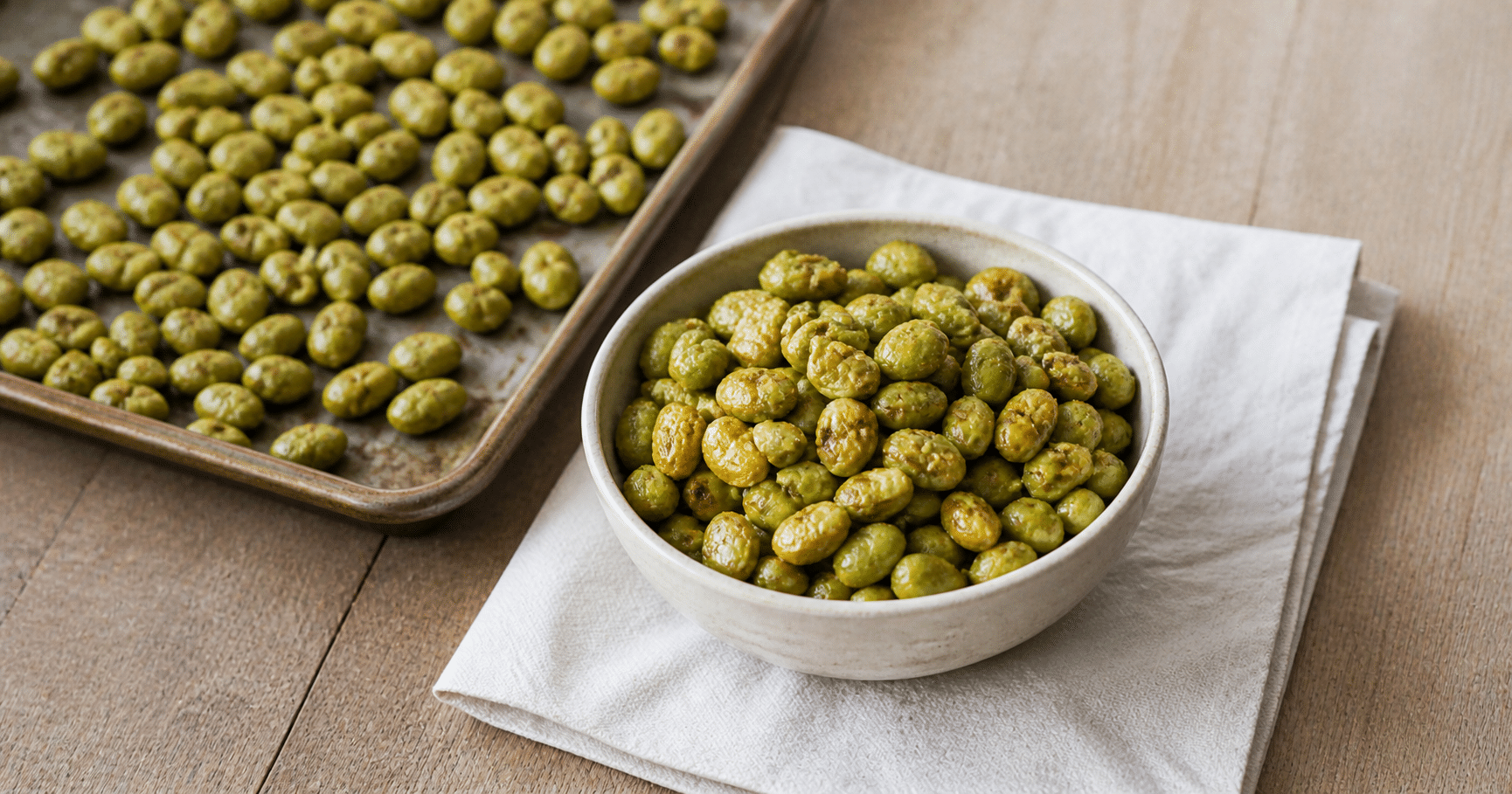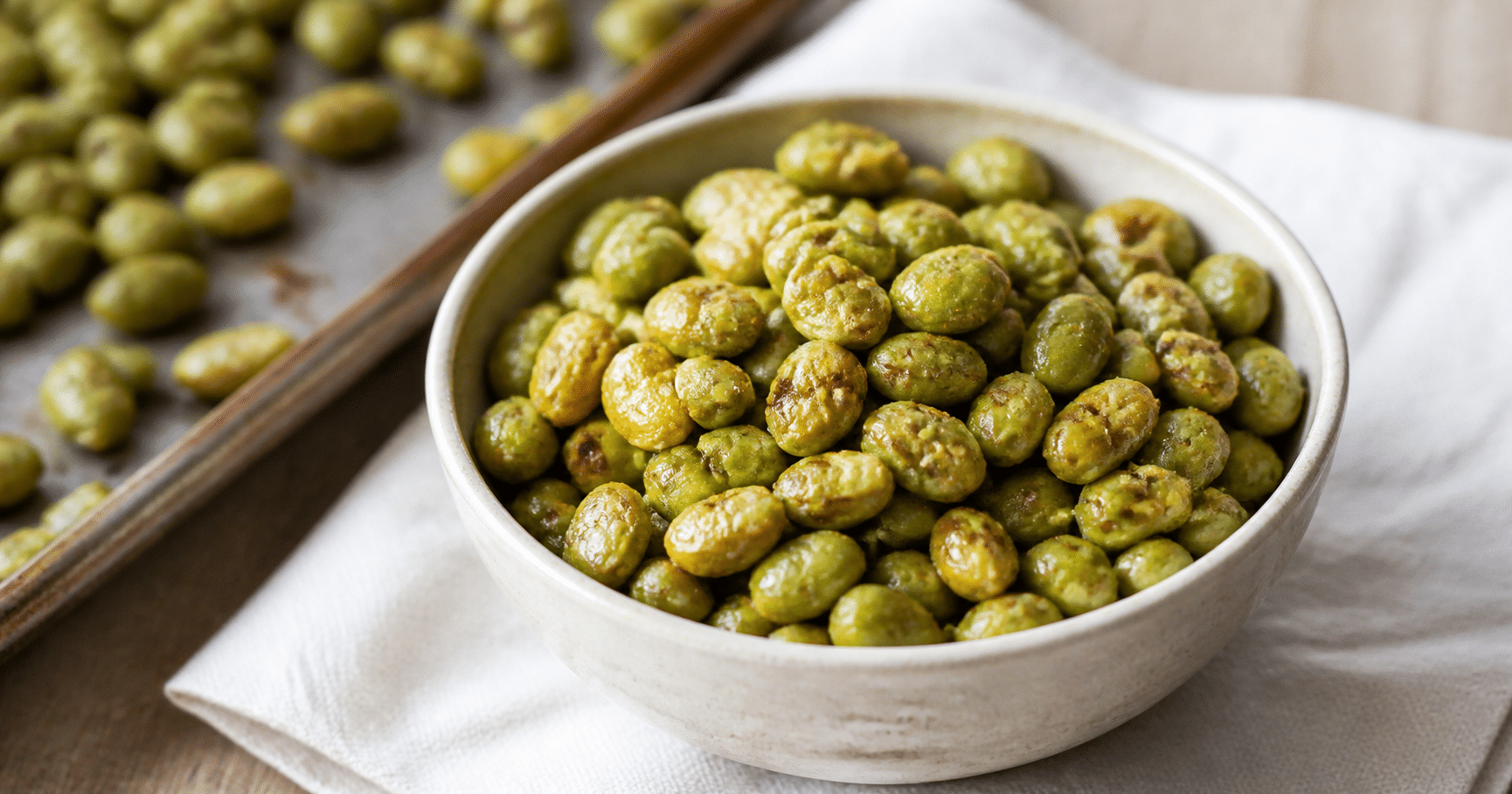
A bowl of crispy roasted edamame offers something many packaged snacks don’t: a satisfying crunch along with plant-based protein and fiber. Made from young soybeans, edamame is usually sold frozen, so this snack can start with a simple grocery-store staple rather than a special ingredient.
There’s one detail that makes the difference between crisp beans and a soft, disappointing batch: moisture. Even a little water left on thawed edamame can keep it from browning properly, so drying the beans is every bit as important as choosing the right seasoning.
Roasted edamame is easy to customize, but it won’t necessarily turn as brittle as a potato chip. The beans can have a crisp exterior and a firmer, slightly tender center—and they may soften as they sit. Here’s how to make them, what they contribute nutritionally, and how to keep the texture at its best.
Why Edamame Makes a Satisfying Snack
Edamame is the name for young soybeans harvested before they harden. Like other legumes, the beans provide protein and dietary fiber. A cup of cooked, shelled edamame has roughly 18 grams of protein and 8 grams of fiber, though amounts vary by product and serving size.
Protein helps build and maintain body tissues, while fiber supports normal digestion and can make meals and snacks more filling. Edamame also supplies nutrients such as folate, iron and potassium. It’s a useful whole-food option, but it isn’t a treatment for a health condition—and a snack’s overall nutritional value still depends on portion size, added oil and salt.
Roasting changes the beans’ texture, not their basic identity. As water evaporates, the outside dries and browns; a little oil helps seasonings cling and encourages browning. Because roasting removes moisture, a measured cup of roasted beans may weigh less than a cup of cooked edamame, so nutrition comparisons by volume can be misleading.
Three Details That Make the Crunch More Reliable
1. Start with shelled beans
Choose frozen shelled edamame, sometimes labeled “mukimame.” Edamame still in its pod is awkward to season and eat as a roasted snack. Check the package directions: some products are blanched and ready to cook, while others call for cooking before serving.
2. Dry thoroughly before adding oil
Thaw the beans, drain them well, then spread them on a clean kitchen towel and pat them dry. If they’re still wet, they’re more likely to steam than roast. A few extra minutes of drying can matter more than an extra splash of oil.
3. Give the beans room in the pan
Use a large baking sheet and arrange the edamame in a single layer. Crowding traps steam and makes browning uneven. Roast until the beans look dry and golden in spots, checking near the end; exact timing depends on bean size, how much moisture remains and your oven.
How to Make Crispy Roasted Edamame
This basic version is savory, lightly seasoned and easy to adapt. It makes about three to four snack portions from a 12-ounce bag.
Ingredients
- 1 (12-ounce) bag frozen shelled edamame
- 1 tablespoon olive oil or avocado oil
- ¼ teaspoon fine salt, or to taste
- ½ teaspoon garlic powder
- ½ teaspoon smoked paprika or ground cumin (optional)
Step-by-Step Instructions
- Heat the oven. Set it to 400°F. Line a rimmed baking sheet with parchment paper if desired.
- Thaw and prepare the beans. Thaw the edamame, then cook it according to the package directions if required. Drain well and pat thoroughly dry. Discard any pods if you accidentally bought edamame in the shell.
- Season. Toss the beans with the oil, salt and chosen spices until evenly coated.
- Roast. Spread the edamame in one layer. Roast for about 25 to 35 minutes, stirring once halfway through. Start checking around 20 minutes; remove smaller or drier beans sooner if they’re browning quickly.
- Cool before serving. Let the beans sit on the pan for several minutes. They’ll firm up as they cool. Taste and add a little more salt or seasoning if needed.
Serve them warm as a snack, or sprinkle a small handful over a salad or grain bowl for extra texture. For a different flavor, try chili powder and lime zest, curry powder, or black pepper and a little grated Parmesan added after roasting.
How to Keep the Beans from Going Soft
Roasted edamame is best soon after it cools. Once stored, humidity can soften its crisp surface, so let the beans cool completely before transferring them to a container. Keep them in an airtight container at room temperature and use within a few days; if they lose their crunch, spread them on a baking sheet and warm them in a 350°F oven for several minutes.
For the crispest result, avoid adding wet ingredients such as lemon juice before roasting. Add zest, dried spices or a finishing sprinkle of salt instead. If you want a brighter citrus flavor, squeeze on a little juice just before eating rather than mixing it into the batch for storage.
Salt is easy to adjust, which is helpful if you’re watching sodium intake. Start with less than the recipe calls for, then season to taste. People with a soy allergy should avoid edamame; anyone managing a condition with individualized dietary guidance can check with their health professional about how it fits their plan.
A Simple Snack with One Essential Trick
Crispy roasted edamame brings protein, fiber and a savory crunch to snack time, with little more effort than thawing, seasoning and roasting. The biggest keys are simple: follow the package’s cooking directions, dry the beans well and leave space between them on the pan.
Make a small batch first and adjust the spices to suit your taste. The best crunch starts before the oven does—with dry beans and room to roast.