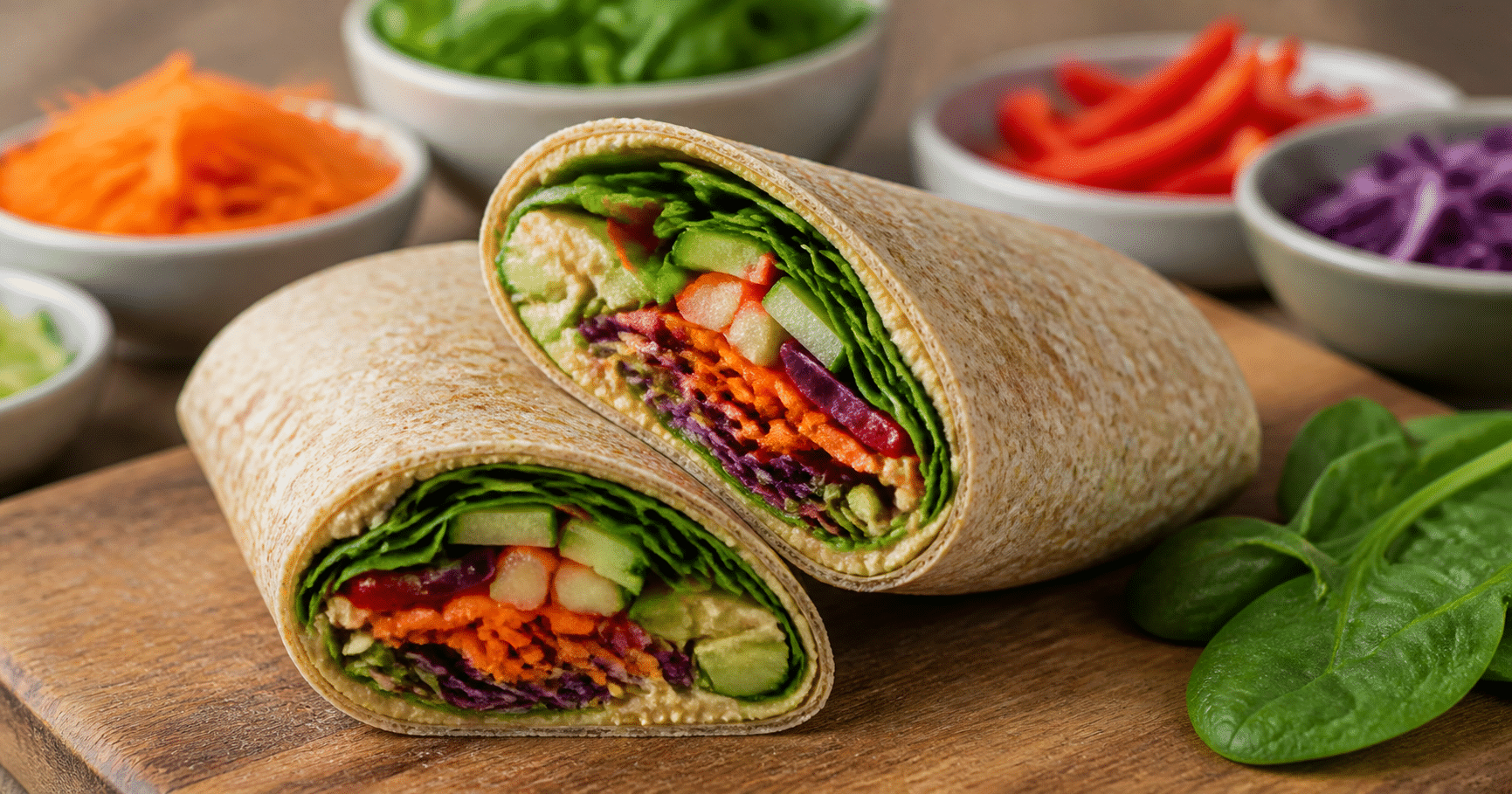
A good wrap should hold together in your hands, not collapse into a damp pile halfway through lunch. With hummus, a fiber-rich tortilla and crisp vegetables, that balance comes down to a few practical choices—not a complicated recipe.
This combination is appealing because it brings together creamy, savory and crunchy textures while making vegetables easy to eat on the go. It can also contribute fiber, a nutrient many people look for when choosing meals that feel satisfying.
One detail is easy to miss: “whole wheat” on the front of a tortilla package doesn’t guarantee much fiber per serving, and tortilla sizes vary widely. Here’s how to read the label, build a wrap that stays crisp and customize it with ingredients you enjoy.
Why Hummus, Vegetables and a High-Fiber Tortilla Work Together
Fiber comes from plant foods, including chickpeas, vegetables and whole grains. It isn’t digested in the same way as many other carbohydrates, and different types of fiber play different roles in the digestive system. A wrap can offer a convenient way to combine several plant-based sources in one meal, though the amount depends on the portions and the specific tortilla and hummus you choose.
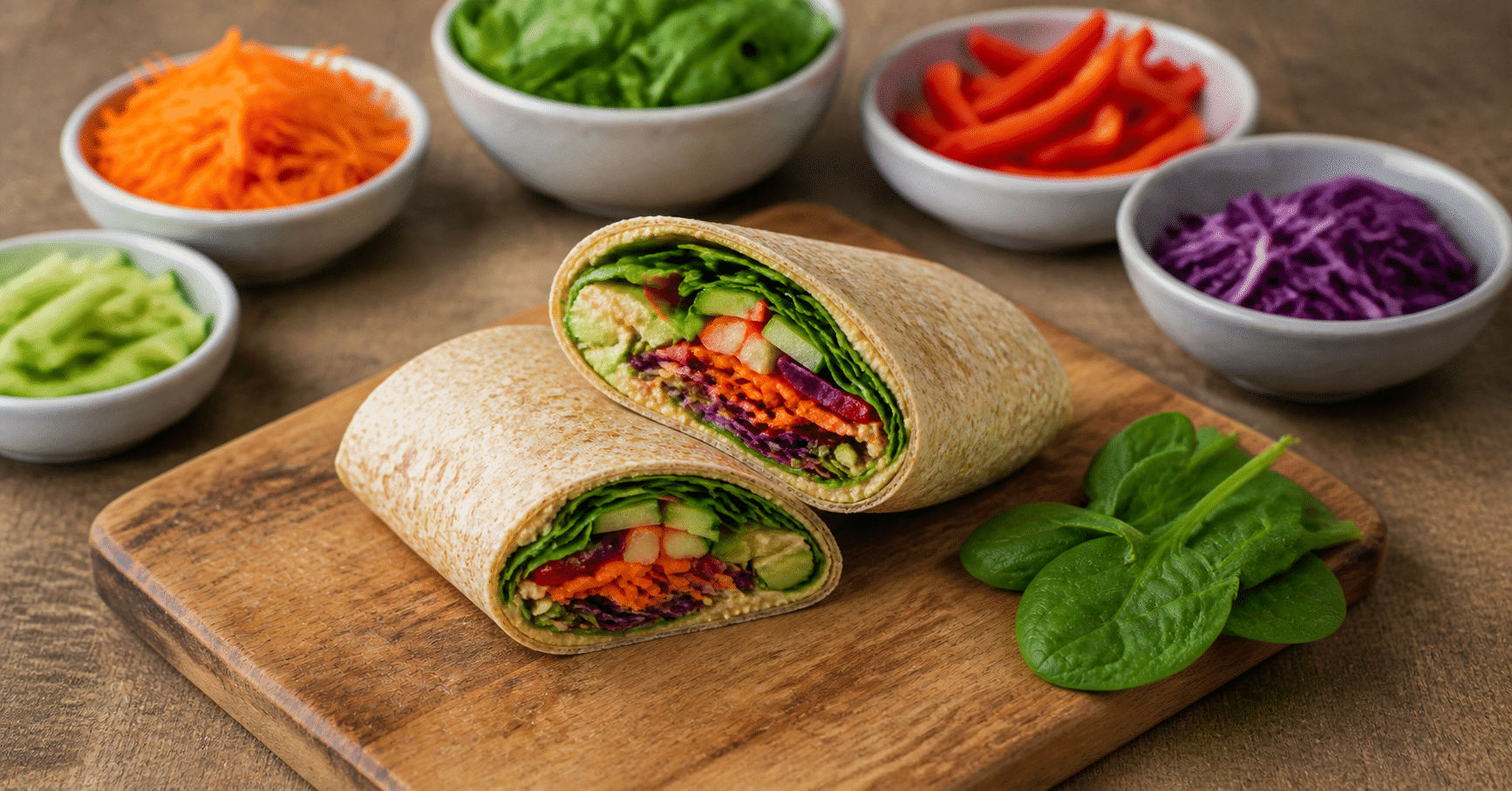
Hummus, usually made with chickpeas and tahini, adds a creamy layer and a modest amount of protein and fiber. It also helps the vegetables cling to the tortilla. Crunchy choices such as cabbage, carrots and bell pepper contribute texture and flavor; they don’t need to be cooked, which keeps preparation quick.
Think of the tortilla as the foundation rather than a guaranteed nutrition upgrade. Compare the fiber per tortilla on the Nutrition Facts label, check the serving size, and look for whole grain near the start of the ingredient list. A larger tortilla may contain more fiber simply because it’s larger, but it may also have more calories or sodium.
Three Details That Make a Better Wrap
1. Choose the tortilla by the label
“Multigrain” can describe a product containing several grains without telling you whether those grains are whole. Check the ingredient list for whole wheat or another whole grain, and compare fiber per tortilla rather than relying on package language alone. If you need a gluten-free option, look for a tortilla that meets your needs and compare its fiber content; it may differ from wheat-based versions.
2. Use vegetables for crunch, not excess moisture
Cabbage, carrots and bell peppers tend to stay crisp in a wrap. Cucumber is refreshing, but its moisture can soften the tortilla, especially if the wrap sits for a while. Pat washed vegetables dry, remove watery seeds if desired, and keep juicy ingredients in the center rather than against the tortilla.
3. Make the filling easy to roll
A thick blanket of hummus and a towering pile of vegetables can make a wrap split at the seam. Spread a thin, even layer, leave a border around the edge and keep the filling in a compact line. If you’re increasing fiber substantially, do so gradually and drink enough fluids; a sudden change may cause digestive discomfort for some people.
How to Make High-Fiber Hummus and Vegetable Wraps
This recipe makes two lunch-size wraps. The total fiber will vary with the tortilla brand, hummus and vegetable portions, so check product labels if you’re tracking it.
Ingredients
- 2 high-fiber whole-grain tortillas, about 8 to 10 inches each
- 1/2 cup hummus
- 1 medium carrot, peeled or scrubbed and grated
- 1/2 cup thinly sliced red or green cabbage
- 1/2 red bell pepper, cut into thin strips
- 1/2 small cucumber, cut into thin sticks and patted dry
- 1 cup baby spinach or tender lettuce, washed and thoroughly dried
- 1 teaspoon lemon juice, optional
- Black pepper or a pinch of smoked paprika, optional
Step-by-Step Instructions
- Prepare the vegetables. Grate the carrot, slice the cabbage and pepper, and cut the cucumber into narrow sticks. Dry the greens and cucumber well so extra moisture doesn’t soak into the tortilla.
- Season the hummus. Stir in the lemon juice and a little black pepper or smoked paprika, if using. Taste before adding salt; hummus can already be salty.
- Spread the tortillas. Lay each tortilla flat and spread about 1/4 cup hummus over the surface, leaving roughly a 1-inch border around the edge.
- Add the filling. Arrange the greens in a band across the lower third of each tortilla. Divide the carrot, cabbage, pepper and cucumber between them, keeping the pile low enough to roll.
- Roll snugly. Fold the sides inward, then bring the bottom edge up and over the filling. Tuck it under the vegetables and continue rolling. Set the wrap seam-side down; cut in half if you like.
For the best crunch, eat the wraps soon after assembling. To pack lunch, keep the vegetables and tortillas separate until mealtime, or pack the finished wraps snugly in reusable containers and refrigerate. For a sturdier wrap, use a little less cucumber or replace it with extra cabbage.
Easy Ways to Change the Flavor
Use the same method as a starting point rather than a fixed formula. Try roasted red pepper hummus with spinach, or add chopped parsley and a squeeze of lemon for a brighter flavor. A few olives or crumbled feta can add a savory note, but both may raise the sodium in the meal.
You can also make a wrap more substantial with a small amount of leftover chicken, baked tofu or drained beans. Keep add-ins modest so the tortilla still rolls neatly, and refrigerate perishable ingredients promptly if you’re preparing lunch ahead.
Useful assembly tip: Put a layer of dry greens between the hummus and wetter vegetables. It helps keep the tortilla from getting soggy while preserving the fresh crunch.
A Simple Wrap Worth Repeating
Hummus and crunchy vegetables make a flexible filling, while a carefully chosen tortilla can add whole grains and more fiber. Check the label, dry the produce and keep the filling balanced enough to roll.
The best version is the one you’ll want to make again: start with the vegetables you have, then let the tortilla’s fiber number—not its front-of-package wording—guide your choice.