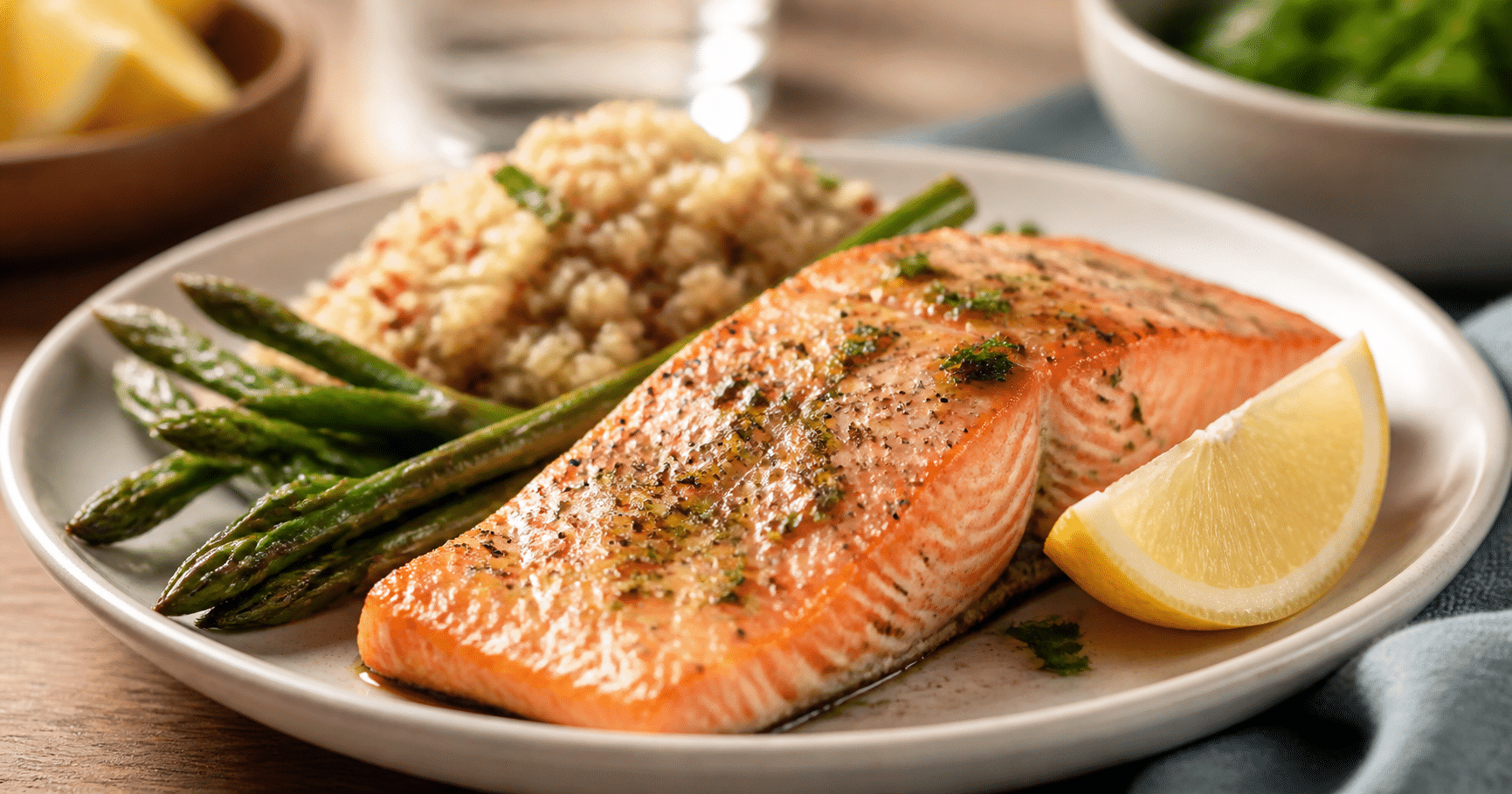
Fish is often praised as “brain food,” and there’s a good reason it comes up in conversations about healthy aging: many fish provide omega-3 fats that are important to the brain. But eating fish is not a guaranteed way to sharpen memory or prevent dementia, and the research is more nuanced than the nickname suggests.
What matters may be the bigger picture: which fish you choose, how often it appears on your plate, and what it replaces. A serving of salmon instead of a meal heavy in processed meat, for example, is a practical nutrition choice—but it is not a treatment for memory problems.
Here’s what we know about fish and cognitive health, what remains uncertain, and a simple way to make fish part of an everyday meal plan.
How Fish May Support the Brain
Fatty fish such as salmon, sardines, trout, herring, and mackerel contain the long-chain omega-3 fats EPA and DHA. DHA is a structural component of brain-cell membranes, while EPA and DHA also play roles in signaling and other body processes. The brain needs these fats, but that fact alone does not prove that eating more fish will improve memory.
Studies that follow people over time have often found that those who eat fish regularly have better cognitive outcomes than those who rarely eat it. These studies can show an association, not cause and effect. Fish eaters may also differ in other ways, including their overall diet, exercise habits, or access to health care.
Clinical trials of omega-3 supplements have not consistently shown that they prevent cognitive decline in healthy older adults. That doesn’t mean fish has no value. It means the evidence does not support treating fish—or fish oil—as a stand-alone memory remedy. Cognitive health is influenced by many factors, including blood-vessel health, sleep, physical activity, and conditions such as high blood pressure and diabetes.
Three Useful Facts About Fish and Memory
1. Fatty fish is a convenient source of EPA and DHA
Plant foods such as walnuts, chia seeds, and flaxseed provide ALA, another omega-3 fat. The body can convert some ALA into EPA and DHA, but conversion is limited. Fish provides EPA and DHA directly, along with protein and other nutrients.
Salmon, sardines, trout, herring, and Atlantic mackerel are commonly available choices. White fish can be nutritious too, though it generally contains less EPA and DHA than oily fish.
2. The pattern of eating matters more than one “brain food”
Fish can fit into a heart-conscious eating pattern, and protecting blood-vessel health is relevant to the brain as well. The American Heart Association recommends eating fish, particularly fatty fish, about twice a week as part of a heart-healthy diet. That is a practical food pattern—not a promise of better memory.
How you prepare fish also counts. Baking, grilling, steaming, or pan-cooking with a modest amount of oil keeps the meal straightforward. Deep-frying or serving fish with lots of salt-heavy sauces can change the nutritional picture.
3. Supplements are not automatically a better shortcut
Fish-oil capsules do not provide the full food package found in a fish meal, and research has not established that routine omega-3 supplements prevent dementia. Supplements may be appropriate for some people for other health reasons, but check with a clinician or pharmacist before starting one—especially if you take medicines that affect blood clotting or have a planned procedure.
How to Choose Fish for Regular Meals
Variety is a sensible approach. Salmon, sardines, trout, and canned light tuna are useful options to rotate through meals. Canned sardines and salmon can be convenient pantry staples; compare labels if you are watching sodium.
Some larger fish tend to contain more mercury. If you eat fish often, vary the types and consult current FDA and EPA fish advice, as well as local advisories for fish caught in nearby waters. For tuna, canned light generally has less mercury than albacore (white) tuna; bigeye tuna is a higher-mercury choice.
Fresh, frozen, and canned fish can all work. Frozen fish is often an easy option to keep on hand, while canned fish can turn into a quick lunch with little preparation.
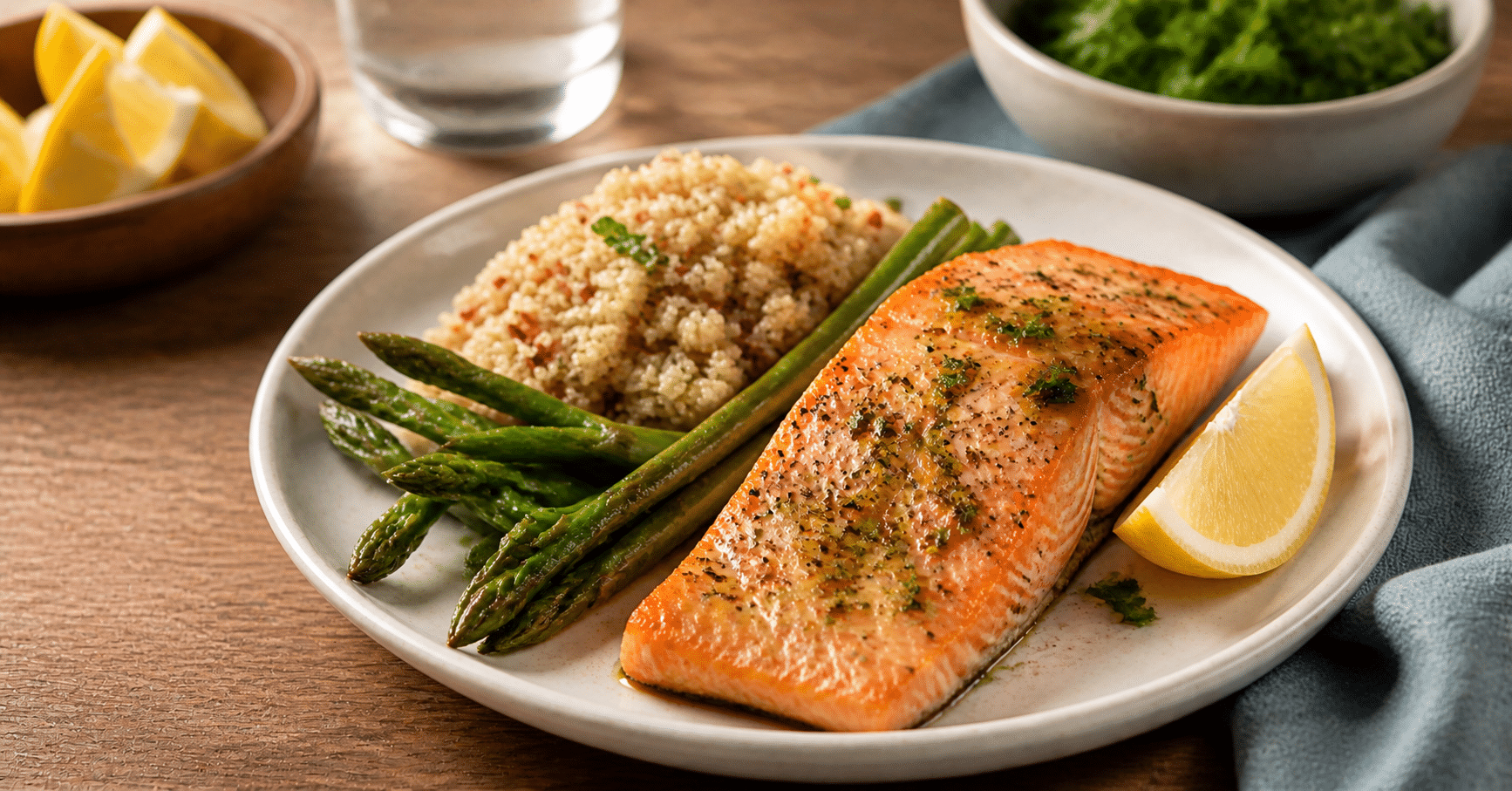
A Simple Lemon-Herb Salmon Dinner
This easy baked salmon makes two servings and pairs well with vegetables, beans, or whole grains. It is a practical way to include fatty fish in a meal without relying on a supplement or a complicated recipe.
Ingredients
-
- 2 salmon fillets, about 5 to 6 ounces each
-
- 1 tablespoon olive oil
-
- 1 tablespoon lemon juice, plus lemon wedges for serving
-
- 1 small garlic clove, finely grated or minced
-
- 1 tablespoon chopped fresh dill or parsley, or 1 teaspoon dried
-
- Black pepper, to taste
Step-by-Step Instructions
-
- Heat the oven to 400°F. Line a small baking dish or sheet pan with parchment, if desired.
-
- Stir together the olive oil, lemon juice, garlic, herbs, and black pepper. Brush the mixture over the salmon.
-
- Bake for about 12 to 15 minutes, depending on thickness. Check that the fish reaches 145°F at its thickest point, or is opaque and flakes easily with a fork.
-
- Serve with lemon wedges and a side of vegetables, lentils, or brown rice.
Refrigerate leftovers promptly in a covered container and use within three to four days. Flake cold salmon into a salad, or gently reheat it until steaming.
Keep Expectations—and Meals—Grounded
Eating fish regularly can help supply important nutrients and fit into an overall healthy eating pattern. The strongest practical case is for making it one part of a varied diet, not expecting a particular fish or supplement to protect memory on its own.
Choose fish you enjoy, prepare it simply, and serve it in place of less nutritious options when you can. For cognitive health, the steady habits around the plate matter more than any single “brain food.”