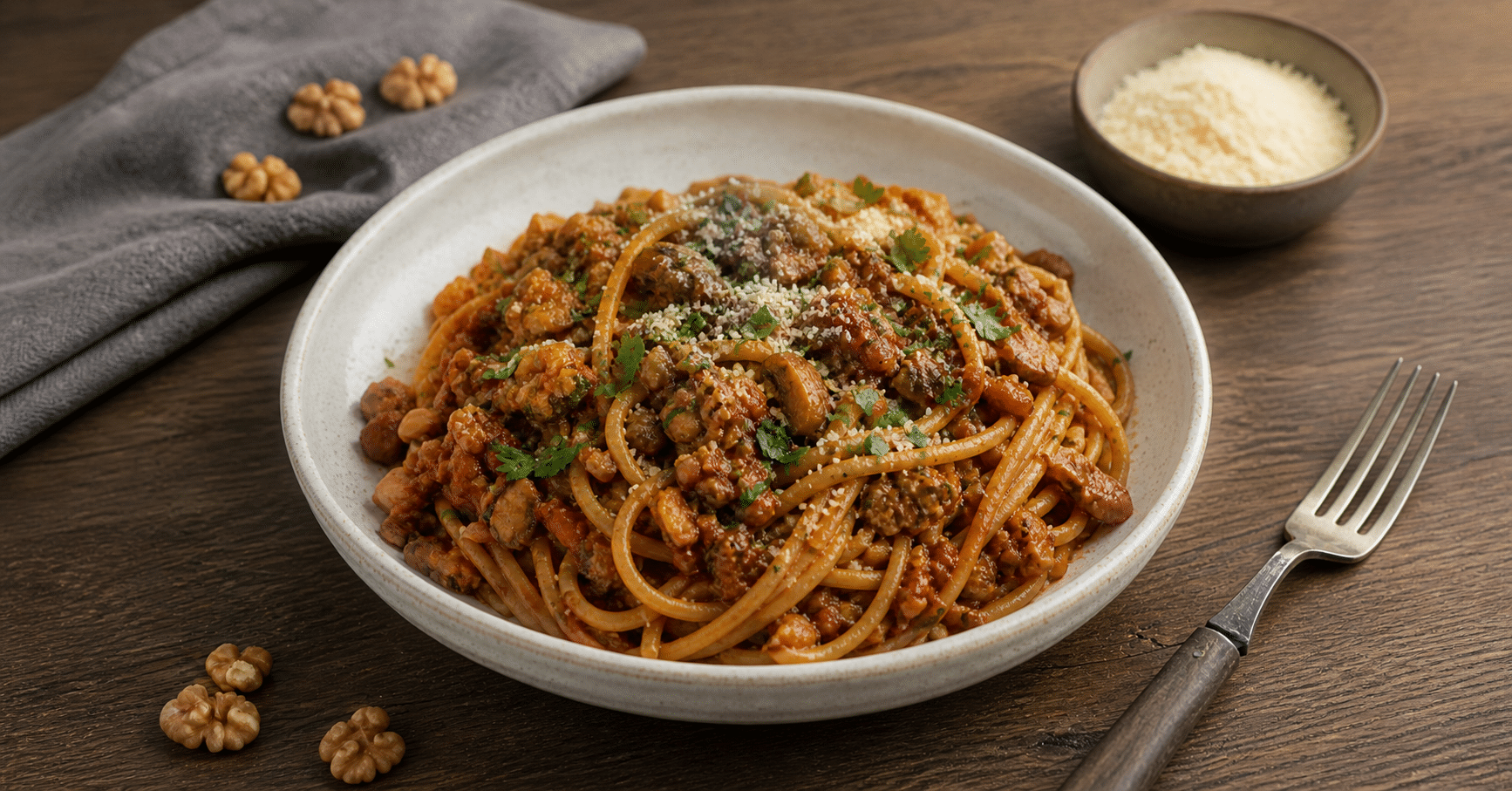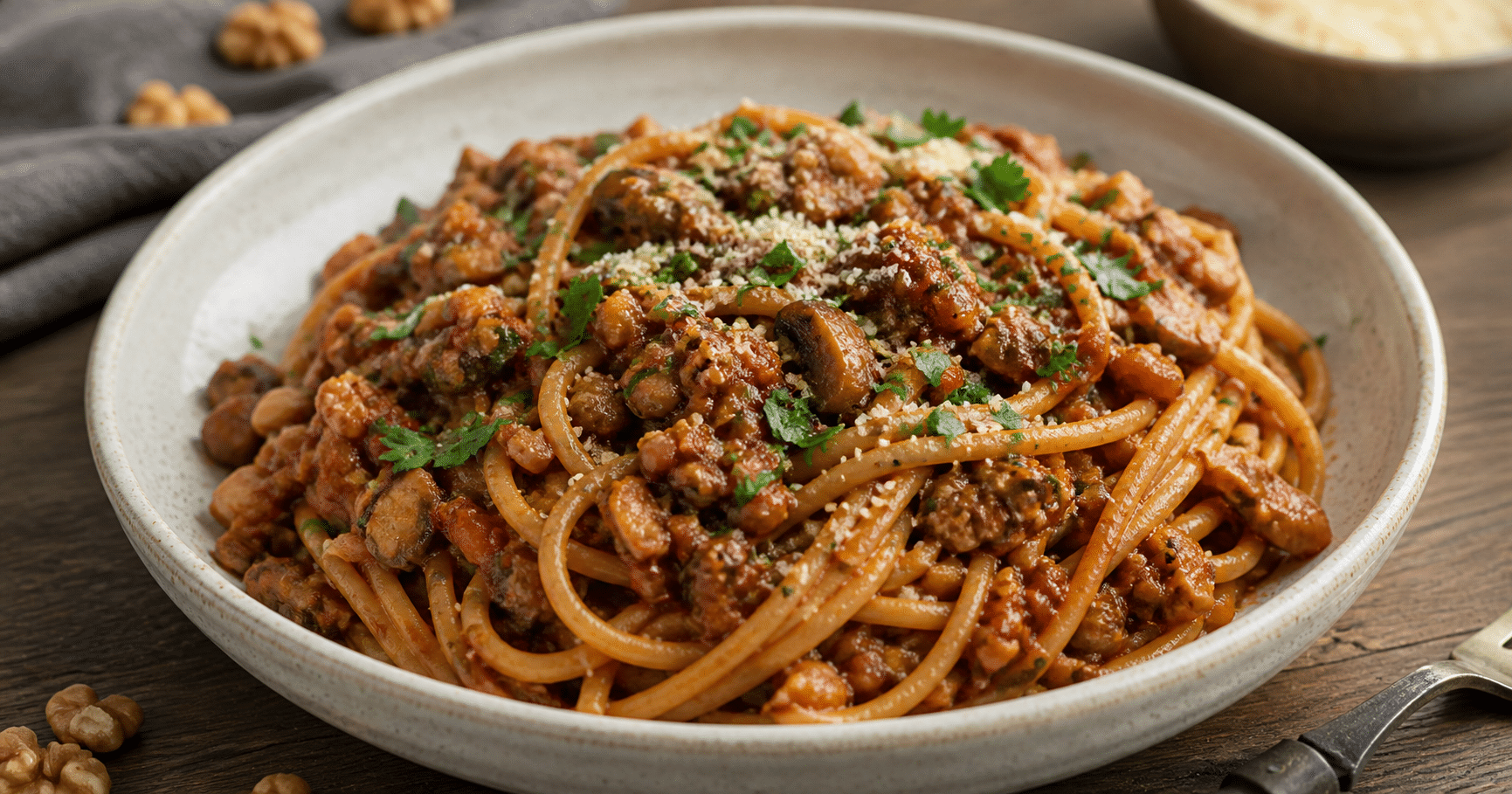
A good Bolognese is less about meat than about building layers of savory flavor. In this version, mushrooms bring a deep, earthy taste, while finely chopped walnuts add a pleasantly hearty texture. A slow simmer helps the ingredients come together into a satisfying sauce for whole-grain pasta.
The result is not meant to imitate meat exactly. It’s a vegetable-forward dinner with plenty of character—and a useful way to make mushrooms and pantry staples feel like the centerpiece of a meal.
One detail makes a noticeable difference: mushrooms release a lot of water as they cook. Give them time to brown before adding the tomatoes, and the sauce will taste richer rather than watery. Here’s why the ingredients work well together, plus a practical recipe you can adapt to what’s in your kitchen.
What Makes Mushroom and Walnut Bolognese So Satisfying?
Mushrooms have a naturally savory quality often described as umami. Browning them concentrates their flavor and gives the sauce a deeper, more rounded taste. Chopping them small helps distribute that flavor throughout the dish instead of leaving large, slippery pieces.
Walnuts contribute a different kind of richness. Finely chopped, they add a tender, slightly crumbly texture that makes the sauce feel substantial. They also contain unsaturated fats, but they are energy-dense, so a modest amount is enough to make an impact.
Whole-grain pasta brings its own nutty flavor and generally provides more fiber than refined pasta. Fiber supports normal digestion and can help make meals more filling, though individual products vary. Check the package label if you’re comparing brands, and cook the pasta until tender but still pleasantly firm.
Three Small Choices That Build Better Flavor
1. Brown the mushrooms before adding liquid
Mushrooms contain a lot of moisture. If the pan is crowded or the heat is too low, they can steam in their own liquid instead of browning. Use a wide skillet or Dutch oven, and let the water cook off before stirring in the tomato paste and other wet ingredients.
2. Chop the walnuts finely
Small pieces blend into the sauce and create a more cohesive texture. A knife works well, or pulse the walnuts briefly in a food processor. Avoid turning them into a paste; a little texture is part of the appeal.
3. Season in stages
Tomatoes, broth, cheese, and pasta water can all contribute salt. Start with a modest amount, then taste near the end and adjust. If you’re watching sodium, choose no-salt-added tomatoes and low-sodium broth, and serve Parmesan on the side.
How to Make Mushroom and Walnut Bolognese
This recipe makes about four generous servings. Allow roughly 20 minutes for preparation and 35 to 40 minutes for cooking, including the pasta. The sauce can simmer while you prepare the pasta and set the table.
Ingredients
-
- 12 ounces whole-grain pasta, such as spaghetti, rigatoni, or tagliatelle
-
- 2 tablespoons olive oil
-
- 1 medium yellow onion, finely chopped
-
- 1 medium carrot, finely chopped
-
- 1 celery stalk, finely chopped
-
- 3 garlic cloves, minced
-
- 1 1/2 pounds cremini or button mushrooms, finely chopped
-
- 3/4 cup walnuts, finely chopped
-
- 2 tablespoons tomato paste
-
- 1/2 cup dry red wine or vegetable broth
-
- 1 can (28 ounces) crushed tomatoes
-
- 1/2 cup vegetable broth, plus more as needed
-
- 1 teaspoon dried oregano
-
- 1/2 teaspoon dried thyme
-
- 1/2 teaspoon kosher salt, plus more to taste
-
- 1/4 teaspoon black pepper
-
- 1/4 cup chopped fresh parsley, optional
-
- Grated Parmesan, for serving, optional
Step-by-Step Instructions
-
- Toast the walnuts. Set a large, dry skillet or Dutch oven over medium heat. Add the walnuts and toast for 3 to 4 minutes, stirring often, until fragrant. Transfer them to a bowl so they don’t continue cooking in the hot pan.
-
- Soften the vegetables. Add the olive oil to the same pan. Stir in the onion, carrot, and celery and cook for 5 to 7 minutes, until softened. Add the garlic and cook for 30 seconds.
-
- Brown the mushrooms. Add the mushrooms and cook, stirring occasionally, for 10 to 15 minutes. They will release liquid; keep cooking until most of it has evaporated and the mushrooms begin to brown.
-
- Build the sauce. Stir in the tomato paste and cook for 1 minute. Add the wine or broth, scraping up browned bits from the pan. Stir in the crushed tomatoes, vegetable broth, toasted walnuts, oregano, thyme, salt, and pepper.
-
- Simmer. Bring the sauce to a gentle bubble, then lower the heat. Simmer uncovered for 20 to 25 minutes, stirring occasionally. If it becomes thicker than you like, add a splash of broth or water.
-
- Cook the pasta. Meanwhile, cook the pasta in salted water according to the package directions. Before draining, reserve about 1 cup of pasta water.
-
- Bring it together. Toss the drained pasta with enough sauce to coat it, adding a little pasta water if needed. Taste and adjust the seasoning. Serve with parsley and Parmesan, if desired.
Make It Work for Your Table
For a milder, sweeter sauce, use a splash of broth instead of red wine. If you prefer a more pronounced herb flavor, add a pinch of dried rosemary, but keep it restrained so it doesn’t overpower the mushrooms. A handful of chopped spinach stirred in during the final few minutes is another easy variation.
Keep leftover sauce separate from the pasta when possible; the noodles can absorb liquid as they sit. Refrigerate both in airtight containers and use within 3 to 4 days. Reheat the sauce gently with a splash of water or broth, then toss it with freshly cooked pasta or warm the noodles in the sauce.
For the best texture, let the mushrooms brown before you add tomatoes. That patient stretch at the stove is what turns a simple vegetable sauce into a deeply savory one.
A Cozy, Flexible Weeknight Bolognese
Mushrooms and walnuts bring complementary savory flavor and texture, while whole-grain pasta makes the meal hearty in its own right. The recipe is forgiving: adjust the herbs, choose wine or broth, and finish with as much or as little Parmesan as you like.
Give the mushrooms room to brown, let the sauce simmer, and you’ll have a comforting bowl built from everyday ingredients—no meat required.