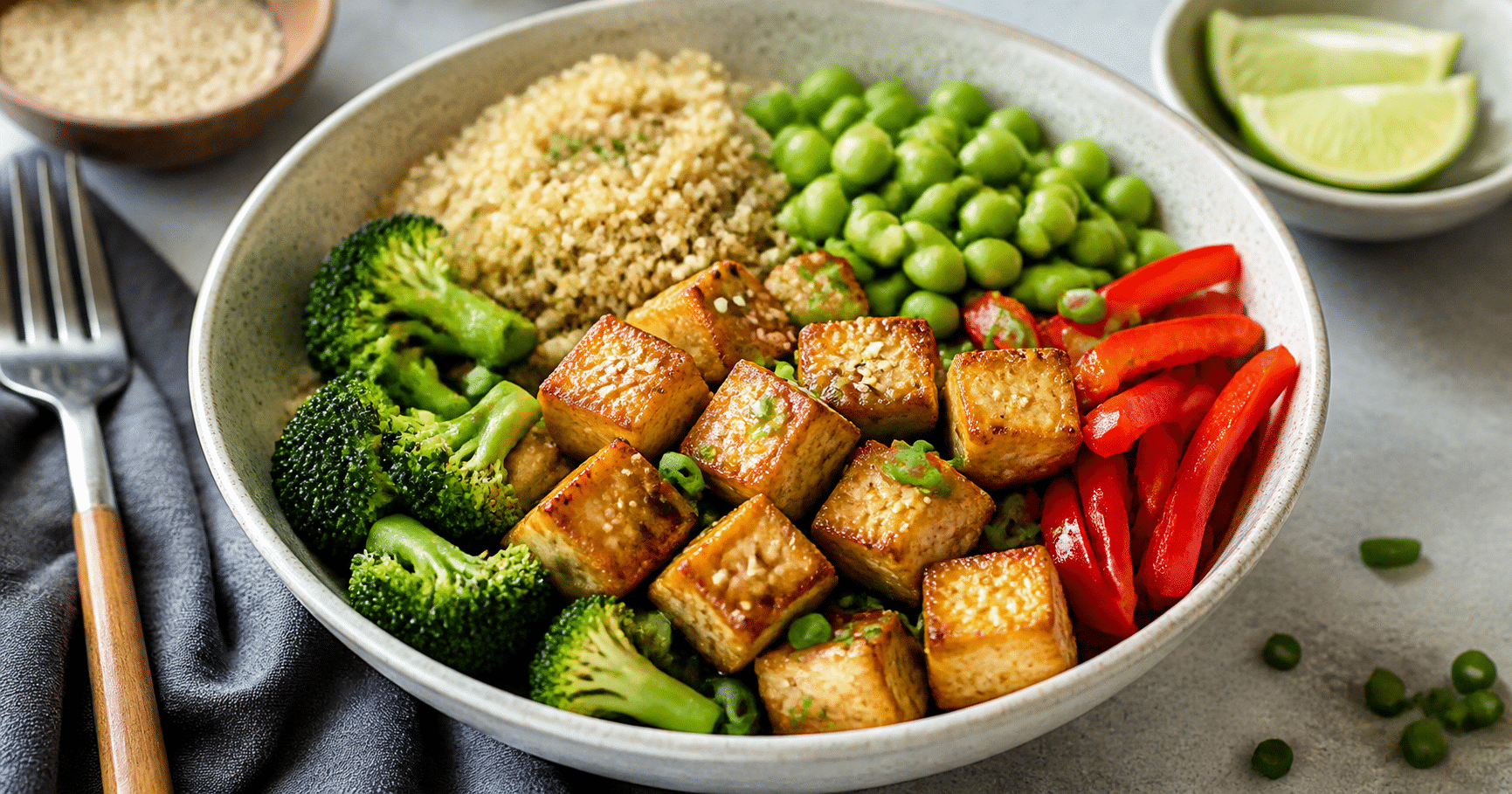
A plant-based meal can look abundant and still be short on protein. A bowl filled with vegetables, greens and a little brown rice may be nourishing, but unless it includes a substantial protein-rich ingredient, it may not keep you satisfied or contribute as much protein as you expect.
The fix isn’t complicated, and it doesn’t require combining special foods in the same bite. Beans, lentils, tofu, tempeh, edamame, nuts and seeds can all help; the key is building the meal around a meaningful portion of one or more of them.
Protein deserves particular attention as we get older because it helps maintain muscle and supports many other functions in the body. Needs vary from person to person, but a little planning can make plant-based meals more filling and protein-rich without turning dinner into a math problem.
Here’s how to choose a protein anchor, round out the plate and make a satisfying tofu-and-edamame bowl—with an estimate of how much protein it provides.
Build the Meal Around a Protein Anchor
Think of a plant-based meal as having three flexible parts: a protein anchor, a grain or starchy vegetable, and vegetables or fruit. The anchor is the ingredient that contributes a substantial share of the meal’s protein—not just a sprinkle of seeds or a small spoonful of hummus.
Good options include lentils, split peas, chickpeas, black beans, tofu, tempeh, edamame and seitan. Nuts, seeds and whole grains add protein too, but their amounts can be modest in typical portions. If protein is the goal, check the nutrition label rather than assuming that a food’s “healthy” reputation tells you how much it contains.
Protein is made of amino acids, which the body uses to build and maintain tissues, among other jobs. Plant foods provide these amino acids in different proportions, but a varied diet can supply all the essential amino acids. You generally do not need to combine complementary foods—such as beans and rice—at every meal; eating a variety of protein sources over the day is a practical approach.
For reference, the adult Recommended Dietary Allowance is 0.8 grams of protein per kilogram of body weight per day. Some experts recommend higher intakes for many older adults, but needs depend on health, activity and other factors. People with kidney disease or a prescribed protein restriction should ask their clinician or dietitian what amount is appropriate.
Three Ways to Make Plant Protein Count
1. Give the anchor a real portion
Small toppings can add flavor and some protein, but they may not do the heavy lifting. A half-cup of cooked beans or lentils is a useful start; tofu, tempeh and seitan can provide more per serving, depending on the product and portion. Compare package labels, especially for tofu and meat alternatives, since protein content varies.
2. Use more than one source when it suits the meal
A serving of beans with whole-grain bread, or tofu with quinoa, adds variety and can make a meal more substantial. There’s no need to chase a perfect combination: choose foods you enjoy and include different protein sources across the day. Soy foods such as tofu, tempeh and edamame are especially convenient because they can serve as the main protein rather than merely an add-on.
3. Spread protein across meals
Instead of leaving most of the day’s protein for dinner, include a source at breakfast and lunch as well. Try oatmeal made with soy milk and nut butter, or lentil soup with whole-grain toast. Aiming for roughly 25 to 30 grams at a meal is a practical target some people use, but it is not a universal requirement; body size, total intake and health circumstances matter.
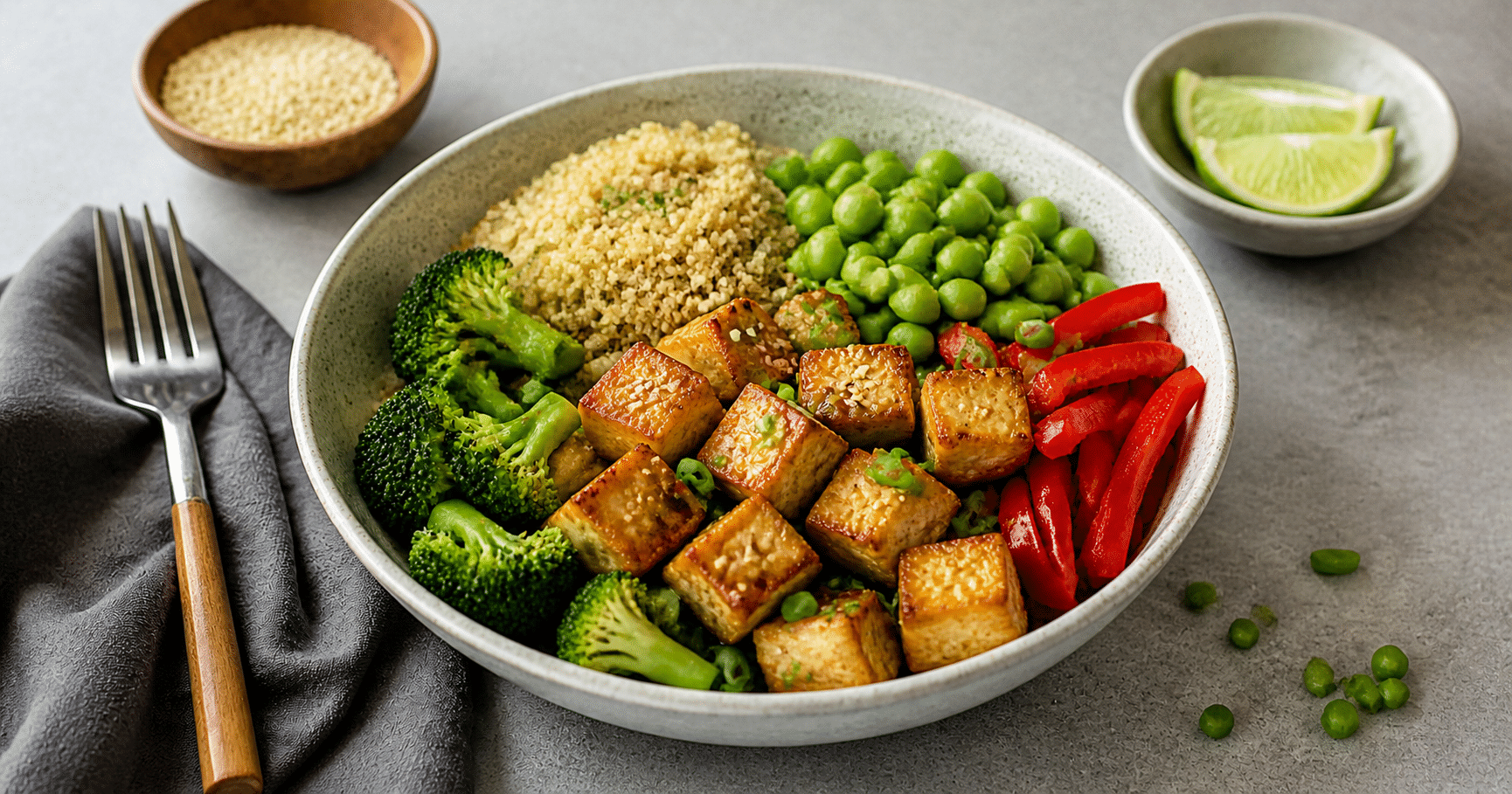
Make a Tofu and Edamame Grain Bowl
This colorful bowl combines two substantial protein sources with quinoa and vegetables. The quantities below make two servings. Protein estimates are approximate and can change by brand, so use package labels for a closer count.
Ingredients
- 14 ounces extra-firm tofu, drained and pressed
- 1 cup shelled edamame, fresh or frozen
- 1 cup cooked quinoa
- 2 cups broccoli florets
- 1 red bell pepper, sliced
- 1 tablespoon olive or neutral cooking oil
- 1 tablespoon low-sodium soy sauce or tamari
- 1 tablespoon rice vinegar
- 1 teaspoon grated fresh ginger
- 1 teaspoon sesame oil, optional
- Sesame seeds, scallions or lime wedges, for serving
Step-by-Step Instructions
- Prepare the tofu. Press it for 10 to 15 minutes if it is very wet, then cut it into bite-size cubes. Patting it dry helps it brown.
- Cook the quinoa. If it is not already prepared, cook it according to the package directions. One cup cooked will provide the base for both bowls.
- Brown the tofu. Heat the cooking oil in a large skillet over medium-high heat. Add the tofu in a single layer and cook for about 8 to 10 minutes, turning occasionally, until several sides are golden.
- Cook the vegetables and edamame. Add the broccoli, bell pepper and a splash of water to the skillet. Cover for 3 to 4 minutes, then stir in the edamame and cook until heated through. Frozen edamame should be cooked according to its package directions.
- Season and serve. Stir together the soy sauce, rice vinegar, ginger and optional sesame oil. Pour over the skillet, toss gently, and serve over quinoa with sesame seeds, scallions or lime.
Allow about 30 minutes, including time to press the tofu. Depending on the tofu and edamame brands, each serving may provide roughly 25 to 30 grams of protein from the tofu, edamame and quinoa combined. Refrigerate leftovers promptly in a covered container and use within three to four days; reheat until steaming hot.
Make the Plan Easier on Busy Days
Keep a few low-effort protein options on hand: canned beans, frozen edamame, shelf-stable tofu, lentils and plain soy milk. Rinsing canned beans can reduce some of their sodium, and frozen vegetables make it easier to build a complete meal without extra chopping.
One common misstep is counting every protein-containing ingredient equally. A tablespoon of seeds or a few nuts can enrich a meal, but usually won’t replace a serving of tofu or beans. Build around the main source first, then use grains, vegetables, sauces and toppings to make the plate satisfying.
A Simple Formula to Remember
Start with a clear protein anchor, add a grain or starchy vegetable, then fill out the meal with colorful produce. Check labels when portions or products vary, and aim for variety across the day rather than worrying about perfect food pairings.
A plant-based meal doesn’t need to be elaborate to provide meaningful protein. The most useful upgrade is often simply making the beans, lentils, tofu or edamame the center of the plate.