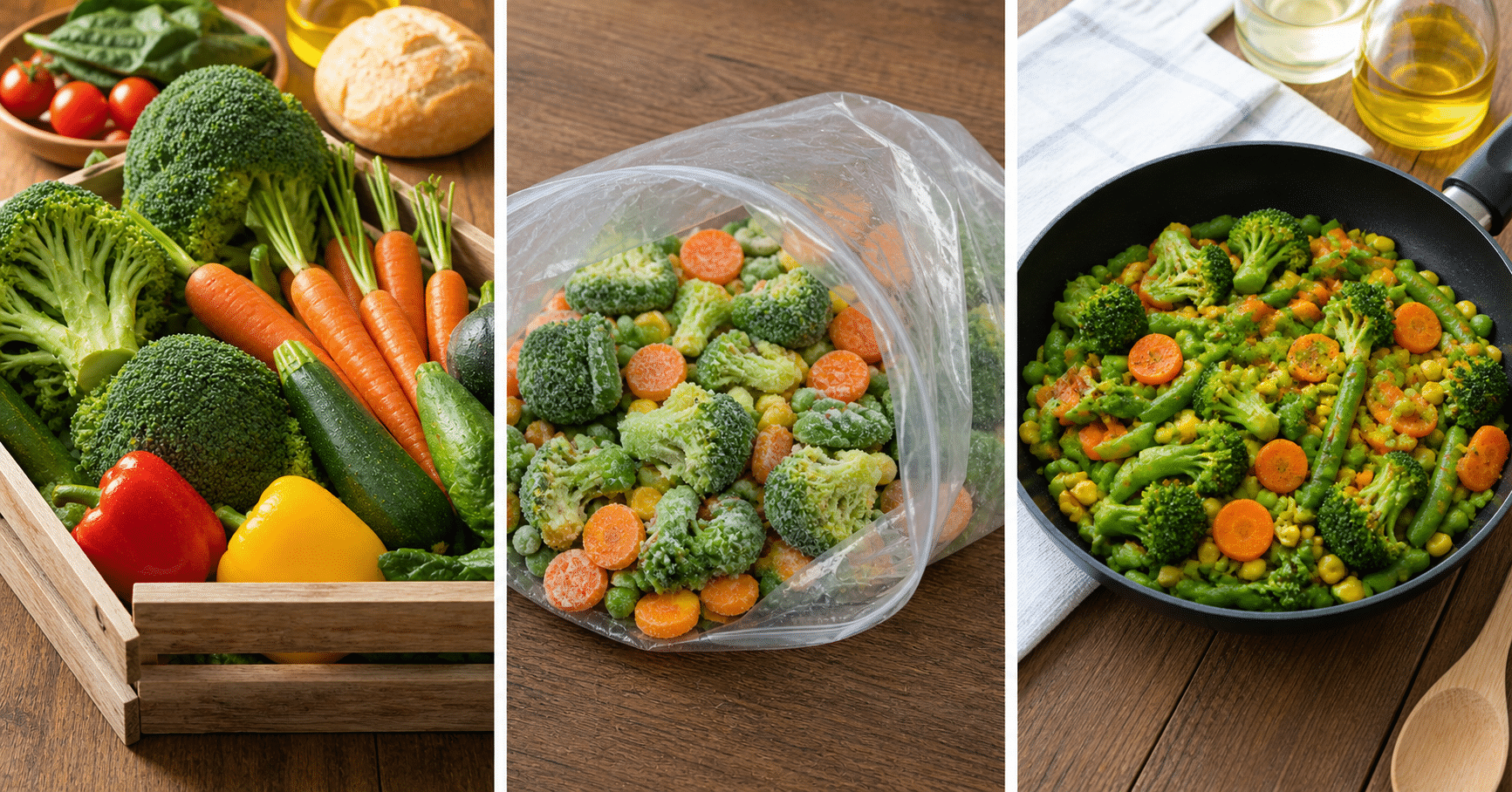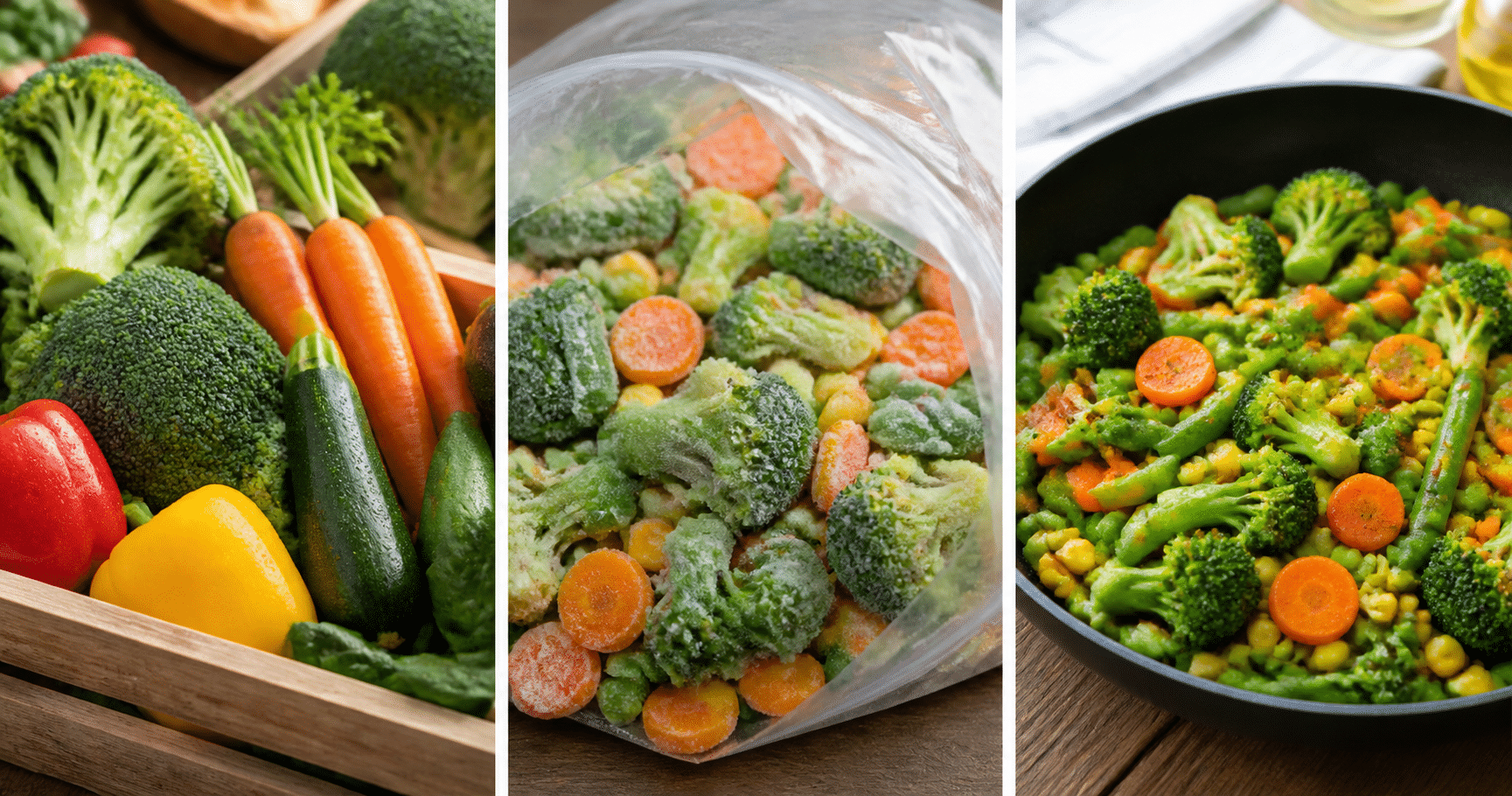
The produce aisle can make fresh vegetables look like the obvious nutritional choice. But a bag of frozen peas or spinach may be just as nourishing—and sometimes a better option than fresh vegetables that have spent days in transit or lingering in the refrigerator.
The reason is timing. Fresh vegetables can begin losing certain vitamins after harvest, while frozen vegetables are usually processed soon after picking. Freezing doesn’t preserve every nutrient perfectly, but neither does keeping fresh produce around for a week.
So are you losing nutrients by choosing frozen? Usually, the answer is more nuanced than a simple yes or no. Here’s what matters, which vegetables may benefit from freezing, and how to cook them without sending useful nutrients down the drain.
Fresh and Frozen Vegetables: What Happens to Their Nutrients?
Fresh vegetables continue to change after harvest. Exposure to air, light, warmth, and time can gradually reduce some nutrients, particularly vitamin C and certain B vitamins. The rate depends on the vegetable and how it is handled, transported, displayed, and stored at home.
Frozen vegetables are commonly blanched briefly in hot water or steam before freezing. This step helps slow the enzymes that can affect color, flavor, and texture during storage. It can also reduce some heat-sensitive or water-soluble vitamins. After that, freezing slows many changes, helping preserve much of the vegetable’s nutritional value.
That means frozen produce is not automatically more nutritious, and fresh produce is not automatically better. A freshly picked vegetable eaten soon after harvest may retain more of some nutrients than its frozen counterpart. But frozen vegetables can compare favorably with fresh ones that have been stored for several days or longer.
Fiber and many minerals are generally less affected by storage and freezing than delicate vitamins. The overall takeaway: the vegetable, its time since harvest, and how you cook it all matter more than the word “fresh” or “frozen” on the package.
Four Details That Can Make a Bigger Difference Than the Label
1. Time and storage matter for fresh produce
Fresh vegetables are not all equally perishable. Leafy greens, broccoli, and green beans may lose quality relatively quickly, while sturdy vegetables such as carrots and winter squash tend to keep longer. Refrigerate produce that needs chilling, and use delicate vegetables while they’re still crisp and fresh.
Frozen vegetables can be especially practical when you shop less often or regularly find fresh produce spoiling before you use it. Less waste means more vegetables actually make it onto your plate.
2. Blanching affects some nutrients, not everything
Because blanching uses heat, it can lower some vitamin C and folate in certain vegetables. The amount varies by vegetable and processing conditions. Freezing itself does not sterilize food, but properly frozen vegetables remain stable in the freezer when kept frozen and handled according to package directions.
Blanching also has a purpose: it helps maintain quality during frozen storage. It doesn’t mean frozen vegetables are “empty” or nutritionally worthless.
3. Cooking method can change the comparison
Water-soluble nutrients can move from vegetables into cooking water. Boiling vegetables in a large pot of water and draining it may waste some of those nutrients. Steaming, microwaving with a small amount of water, or sautéing are often convenient ways to limit that loss.
If you’re making soup or stew, the nutrients that leach into the broth stay in the meal if you eat the liquid. Cook vegetables until tender rather than extending the cooking time unnecessarily.
4. The vegetable you eat is better than the one you throw away
Convenience counts. Frozen spinach can go straight into eggs, pasta, or soup; frozen peas can be added to rice or a quick side dish. If frozen produce helps you include vegetables more often, that practical benefit is worth considering alongside nutrient comparisons.
A Quick, Nutrient-Smart Frozen Vegetable Skillet
This simple side dish works with many frozen vegetables. Cooking them directly from frozen helps avoid an extra thaw-and-drain step, and a covered pan with a little water or broth softens them without requiring a large pot of boiling water.
Ingredients
-
- 1 pound frozen mixed vegetables, broccoli florets, or green beans
-
- 1 teaspoon olive oil
-
- 2 tablespoons water or low-sodium broth
-
- 1 small garlic clove, minced, or 1/4 teaspoon garlic powder
-
- Black pepper and a squeeze of lemon, to taste
Step-by-Step Instructions
-
- Warm the olive oil in a large skillet over medium heat. Add the garlic and stir briefly, just until fragrant.
-
- Add the frozen vegetables and water or broth. Cover and cook, stirring once or twice, until the vegetables are hot and tender. Timing varies by vegetable and package size; check the package directions and avoid cooking longer than needed.
-
- Remove the lid and let excess liquid evaporate if the skillet looks watery. Season with black pepper and finish with lemon.
-
- Serve as a side dish, spoon over whole grains, or fold into an omelet. Refrigerate leftovers promptly in a covered container and use within a few days.
How to Choose Between Fresh and Frozen
Choose fresh when the vegetables look appealing, you plan to use them soon, and their texture matters—such as for a crisp salad or raw snack. Choose frozen when you want a dependable supply, need a quick addition to a cooked meal, or want to avoid produce going unused.
For packaged frozen vegetables, check the ingredient list. Plain vegetables are the simplest choice; sauces, cheese, and seasoning blends can add sodium, saturated fat, or other ingredients you may not want. If the vegetables are stuck together in a solid block, they may have partially thawed and refrozen, so choose another package when possible.
Keep both options on hand: fresh for meals you’re making soon, frozen for the nights when a quick vegetable side makes dinner easier.
The Bottom Line on Fresh Versus Frozen
You are not necessarily losing nutrients by buying frozen vegetables. Fresh produce eaten soon after harvest can be excellent, while frozen vegetables offer strong nutrition and convenience—especially compared with fresh produce that has been stored for a long time.
Pick the form you’ll enjoy and use, cook it sensibly, and don’t let the search for a perfect vegetable keep an easy serving off your plate.