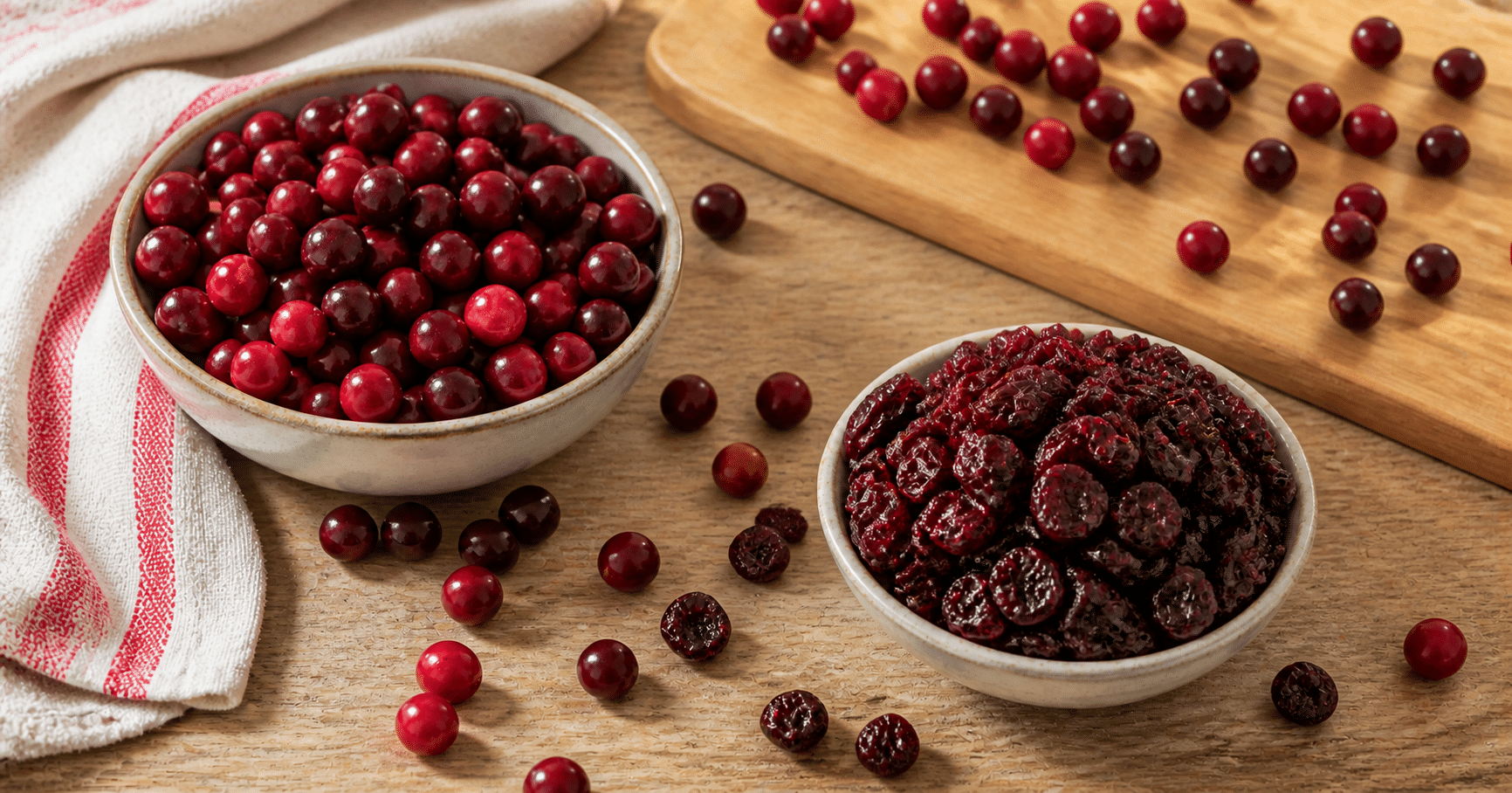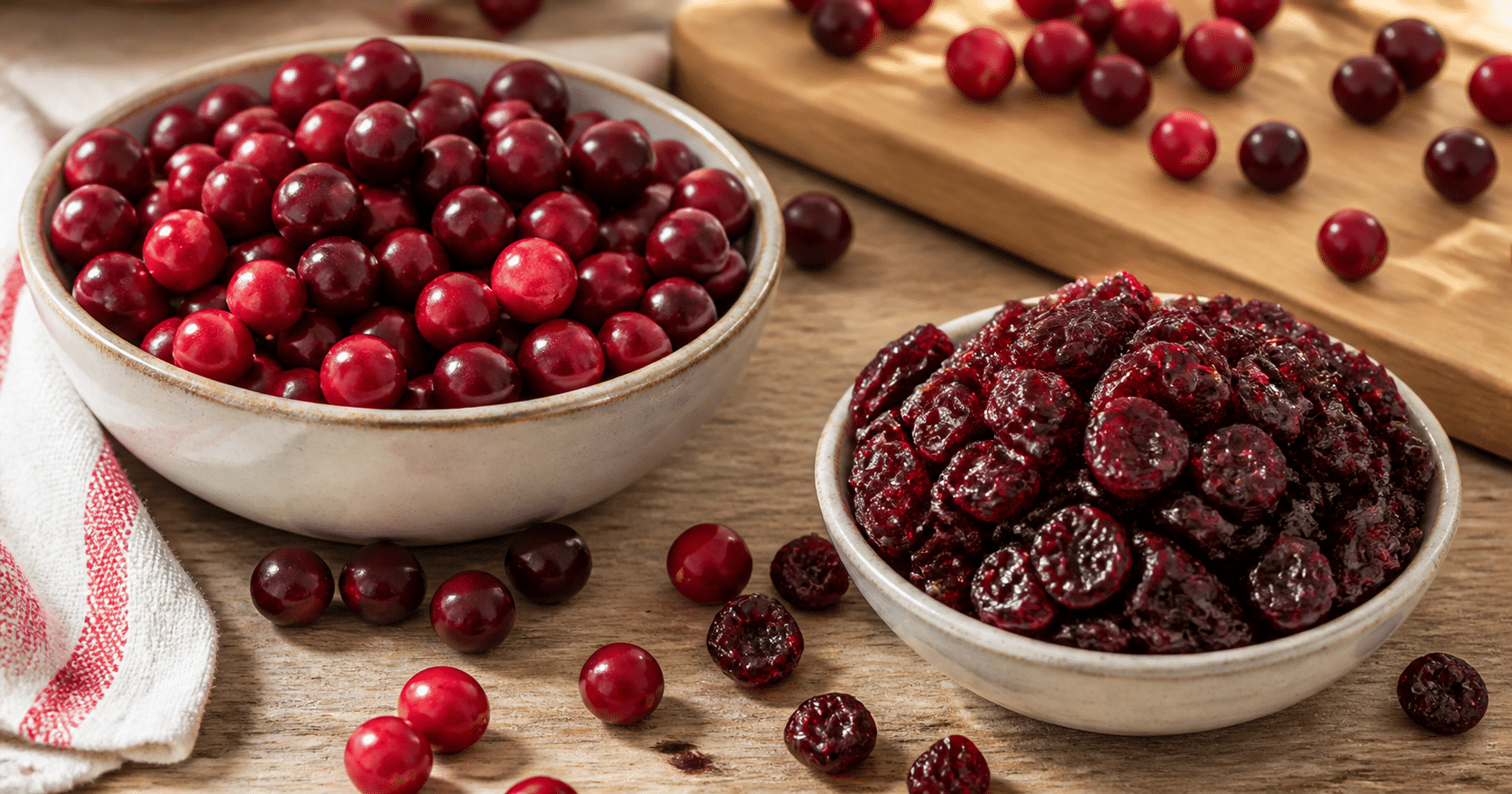
Fresh and dried cranberries may come from the same fruit, but they behave very differently in a bowl—and on a nutrition label. Fresh berries are juicy, sharply tart and low in calories. Most dried cranberries are sweetened, concentrated and easy to toss into snacks and recipes.
That difference can matter if you’re watching added sugar, looking for fiber, or simply trying to choose the right cranberry for dinner. It also explains a common surprise: a small handful of dried cranberries can deliver far more sweetness and calories than a cup of fresh ones.
Neither form is automatically the better choice. Here’s how their nutrition compares, what to look for on the package, and how to use each one well in everyday cooking.
Fresh and Dried Cranberries: What Changes?
Fresh cranberries contain a lot of water, which gives them volume and keeps their calories low. A cup of raw cranberries has about 46 calories, roughly 4 grams of naturally occurring sugar and about 4.6 grams of fiber. They also provide vitamin C and plant compounds called polyphenols.
Drying removes much of the water, so dried cranberries are more concentrated by volume. Because raw cranberries are intensely tart, many commercial dried cranberries have sugar added to make them more appealing. A quarter-cup serving of sweetened dried cranberries may contain around 100 calories and about 20 grams of sugar, but amounts vary by brand. Check the Nutrition Facts label rather than assuming every product is alike.
Both forms can fit into a balanced diet. Cranberry polyphenols are of interest in nutrition research, but eating cranberries should not be treated as a way to prevent or treat an infection or other medical condition. Their everyday strengths are simpler: flavor, color, fiber and versatility.
Three Differences That Matter in the Kitchen
1. Fresh berries bring tartness and moisture
Fresh cranberries are firm and quite sour when raw. They shine in sauces, relishes, baked goods and savory dishes, where their sharp flavor can balance sweet fruit, rich meat or creamy cheese. When cooked, many berries soften and burst, releasing juice and thickening the mixture.
Look for berries that are firm and brightly colored, and discard any that are shriveled or soft. Keep them refrigerated, or freeze them in a sealed bag; frozen cranberries can generally be used straight from the freezer in cooked recipes.
2. Dried cranberries offer sweetness and convenience
Dried cranberries are ready to eat and useful when fresh fruit would add too much moisture. Stir them into oatmeal, salads, rice pilaf, trail mix or muffin batter. Their chewy texture also makes them an easy addition to a snack plate.
Because they’re sweetened so often, compare brands for serving size and added sugars. Unsweetened dried cranberries are available, though their tartness and texture may differ. A small portion can add plenty of flavor; you may not need as much as a recipe calls for.
3. They are not always interchangeable
A cup of fresh cranberries cannot be swapped cup-for-cup with dried ones without changing a recipe. Fresh fruit contributes liquid and tartness; dried fruit contributes concentrated sweetness and chew. In baking, that difference can affect moisture, texture and how sweet the finished dish tastes.
As a starting point, use less dried fruit than fresh fruit and consider reducing other sweeteners. If a recipe depends on fresh cranberries’ juices—such as a sauce—dried berries alone will need added liquid and may produce a different result.
Simple Fresh Cranberry-Orange Sauce
This stovetop sauce is tangy, lightly sweet and easy to make ahead. Serve it with roasted poultry, spoon it over oatmeal, or use a little alongside cheese.
Ingredients
- One 12-ounce bag fresh or frozen cranberries
- 1/2 cup water
- 1/3 cup granulated sugar, or adjust to taste
- 1 teaspoon finely grated orange zest
- Pinch of salt
- Optional: 1/4 cup sweetened dried cranberries
Step-by-Step Instructions
- Rinse fresh cranberries and pick out any that are soft or damaged. If using frozen berries, there’s no need to thaw them.
- Combine the cranberries, water, sugar, orange zest and salt in a medium saucepan. Bring the mixture to a gentle boil over medium heat.
- Reduce the heat and simmer for about 10 to 12 minutes, stirring occasionally, until many of the berries have burst and the sauce has thickened. It will thicken further as it cools.
- If using dried cranberries, stir them in during the last few minutes so they soften without disappearing into the sauce. Taste and add a little more sugar if you prefer a sweeter result.
- Cool before serving. Refrigerate leftovers promptly in a covered container and use within four days.
The recipe makes about 2 cups, depending on how much the berries break down. For a looser sauce, add a splash of water while it simmers; for a sharper one, start with less sugar and adjust near the end.
Easy Ways to Choose and Use Each Kind
Let the dish decide. Choose fresh cranberries when you want a tart, juicy ingredient or a sauce that sets up as it cools. Choose dried cranberries when you want convenient sweetness without extra moisture.
- For oatmeal: Simmer fresh cranberries with the oats, or stir dried cranberries into the bowl near the end.
- For salads: Add dried cranberries sparingly, especially if the dressing or other toppings are sweet.
- For baking: Chop large dried berries for a more even bite. If substituting for fresh berries, expect a sweeter, chewier result.
- For snacks: Pair dried cranberries with unsalted nuts or plain yogurt to balance their sweetness.
A useful label-reading habit is to check both the serving size and the line for added sugars. “Cranberry” on the front of the package does not tell you how sweetened the product is.
Pick the Cranberry That Fits the Job
Fresh cranberries offer a tart flavor, water and a generous serving of fruit for relatively few calories. Dried cranberries are portable and versatile, but often bring added sugar and more calories in a smaller portion.
Keep both on hand if you enjoy them: fresh for sauces and cooking, dried for quick additions to meals. The best cranberry is the one that suits the recipe—and whose sweetness you’ve checked before it reaches the bowl.